Slant Magazine
advertisement
Advertise With Us

New Releases
 Up

 more   


Poll

The Free Will
Email  Bookmark  Print
Director(s): Matthias Glasner. Screenplay: Matthias Glasner, Judith Angerbauer, and Jürgen Vogel. Cast: Jürgen Vogel, Sabine Timoteo, Manfred Zapatka, André Hennicke, and Judith Engel. Distributor: Benten Films. Street Date: 6/24/2008. Runtime: 163 min. Rating: NR. Year: 2006.
DISC FEATURES:

Specifications:
  • DVD-Video
  • Dual-Layer Disc
  • Region 1
  • Aspect Ratio:

  • 1.77:1 Anamorphic Widescreen
  • Dolby Digital Formats:

  • German 2.0 Surround
  • DTS Digital Formats:

  • None
  • Subtitles/Captions:

  • English Subtitles
  • Features:

  • Audio Commentary by Director Matthias Glasner and Co-Writer/Star Jürgen Vogel
  • Original Theatrical Trailer
  • Critical Essay by Time Out New York Film Critic David Fear
  • DISC RATINGS:

    Image:
    3 stars
    Sound:
    3 stars
    Extras:
    2.5 stars
    Overall:
    3 stars

    3 stars
    The Free Will
    by Nick Schager
    Posted: June 23, 2008

    character study of two people desperately fighting for a seemingly unattainable life, Matthias Glasner's The Free Will is rigorous and wrenching, and made all the more impressive by the fact that one of its protagonists is a relatively empathetic serial rapist. Trying to elicit compassion for Theo (Jürgen Vogel, who co-wrote the script), who in the graphic opening scene beats and sexually assaults a bicyclist after being fired from his job, appears on the face of things like a bid for cheap sensationalism. Yet as his measured, patient tale bears out, Glasner isn't interested in shock and awe; instead he intently concentrates on specific human conduct as a means of examining whether, per the film's semi-ironic title, man has control over his innate inner impulses. It's a question of fate and freedom that hangs over Theo's provisional reintegration into German society after nine years in a psychiatric ward, a process spiked with the ever-present threat of violence that's further complicated by his eventual, strained romance with Nettie (Sabine Timoteo), who's recently moved out of her father's home after some unspecified but hinted-at abuse.

    Theo's first assault, shot with up-close-and-personal immediacy, exhibits a touch of Irréversible prurience, as the director's explicitness revels as well as reveals. And the suspense wrung from Theo's subsequent stalking of a waitress and department-store employee—as taut and gripping as these sequences are—can feel a tad tasteless. Nonetheless, the director's staging is stark and strapping, vividly portraying Theo's painful attempts to stay straight-and-narrow in the face of constant temptations, be they women with whom he casually comes into contact, or sexualized billboards that taunt his efforts to achieve normalcy. Despite these alluring attractions, however, Free Will avoids playing a societal blame game, opting not to point the finger at external forces but to scrupulously investigate personal motives. Glasner does so through an attentive yet oblique story that's packed full of in-the-moment details but not, always, vital contextual information, so that Theo's extended history of deviant behavior isn't immediately revealed, and Nettie's tumultuous past—and final-act motivations—are kept murky in order to maintain tension. If such a strategy seems dubious at times, it's still one enlivened by the director's navigation of Theo's multifaceted psychological impetuses, as well as his depiction (via Nettie's meeting with a woman raped by Theo) of twisted victim-victimizer dynamics.

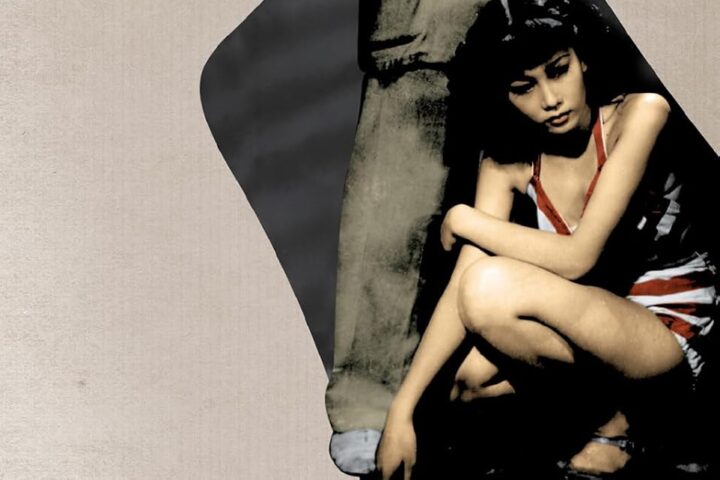
    Glasner's film eventually substitutes Theo's perspective for that of Nettie, a switch that seeks to further our empathy for Theo by creating a more detached view of his inability to control or alter his behavior. The unavoidable heinousness of Theo's actions makes this a difficult task to execute, though Vogel's and Timoteo's equally acute, fierce performances mostly do the trick, bestowing their characters with an emotional complexity and passion that allows the focus to remain on piercing action-reaction relationships. All the while, Glasner's direction is uncompromising, gritty and technically adept, especially with regard to his canny employment of the film's signature composition, in which close-up faces are pushed to the side of the frame so that smaller background figures can be seen. It's an arrangement that brings to mind that of a thought bubble, of a person's deep, urgent contemplation of another, that piercingly conveys the present state of Theo and Nettie's mutating, barbed bond. And thus it's fitting that Free Will—a meditation on predestination but also, more pressingly, of two lonely, damaged souls' arduous search for comfort and succor—closes with that same spatial construction, this time reconfigured so that its powerless protagonists are united, via love and death, in autonomous action.

    Image/Sound
    The anamorphic widescreen transfer exhibits a bit of unwanted edge enhancement, but otherwise, its mediocre contrast levels and modest film grain are faithful to the director's intentions. Audio is limited but clear.

    Extras
    A subtitled commentary track by director Matthias Glasner and co-writer/star Jürgen Vogel is the prime supplement, and though it's not always gripping, the two rarely go silent for long stretches, and ably mix production anecdotes with their thoughts on story, character and aesthetic construction. Also included is a trailer and a booklet essay by Time Out New York critic David Fear.

    Overall
    The contemplative rape film Irréversible wished it were.


    Advertisement


    Advertisement
    Advertisement

    Staff    Slant on Facebook    Slant on Twitter    Contact    Media Kit    Privacy Policy    Terms of Service    RSS

    Copyright © 2001 - 2009 Slant Magazine