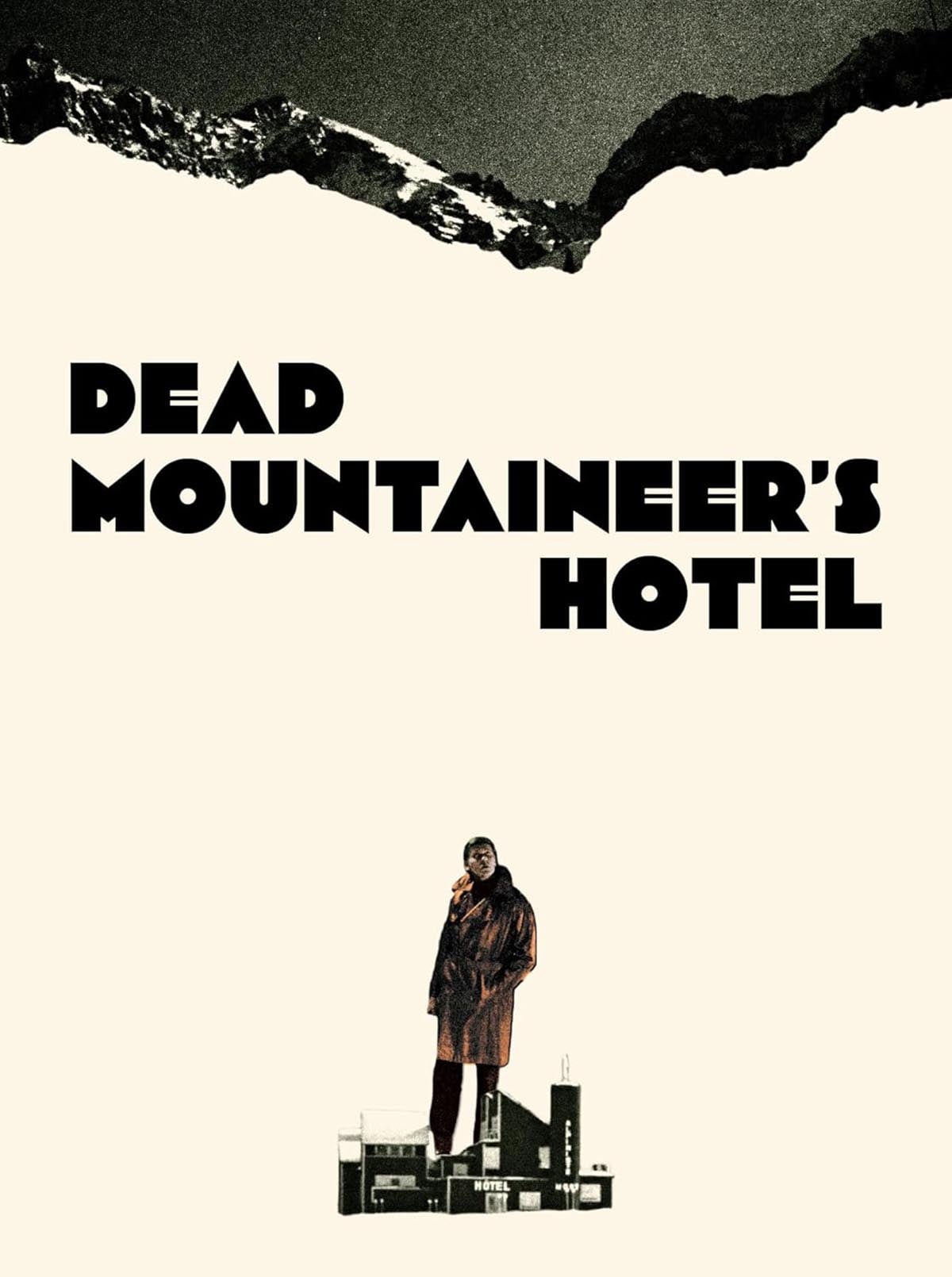
 Written by Arkady and Boris Strugatsky, and based on their 1970 novel, the Estonian production Dead Mountaineer’s Hotel is a surreal genre mash-up that opens like an Agatha Christie-style locked-room mystery before shifting gears during its last act to an otherworldly bit of sci-fi strangeness. The film came out the same year as Andrei Tarkovsky’s Stalker, also based on a Strugatsky novel and partially filmed in Estonia, though the two films couldn’t be more different when it comes to tone and overall approach to the material.
Set in an unnamed Western European country, Dead Mountaineer’s Hotel opens when Inspector Glebsky (Uldis Pūcītis) arrives at the titular alpine resort, answering to an anonymous report of a crime, only to find nothing much going on, even if the motley band of guests all seem more than a little off. There’s cranky traveling salesman Moses (Kārlis Sebris), mug of booze always in hand; his stylish trophy wife (Irena Kriauzaitė), who changes designer outfits and elaborate hairstyles from scene to scene; adventure-seekers Olaf and Brun (Tiit Härm and Nijolė Oželytė); and physicist Simonet (Lembit Peterson), who literally climbs the wall for mountaineering practice.
Presided over by a proprietor (Jüri Järvet) with a penchant for outré folklore, the hotel is a modernist maze of glass and reflective surfaces, all twisty hallways and disorienting changes of level. The walls are festooned with then cutting-edge hyperrealist artworks, the lobby dominated by a wall-sized portrait of the dead mountaineer after whom the hotel has been renamed. It’s a truly amazing three-story triumph of set design.
When Olaf turns up murdered, his head turned around 180 degrees, the game is truly afoot, and Glebsky goes into detective mode, grilling the guests and compiling alibis. But the further he plunges into the affair, the less things add up. The narrative turns as tricksy as the architecture, abruptly shifting into reverse for expository flashbacks, and breaking into a snow-dappled dream sequence wherein Glebsky has an eerie encounter with the deceased mountaineer.
Director Grigory Kromanov frequently composes shots with objects partially obstructing characters, as though to signify Glebsky’s blinkered view of events, and uses mirrors and other reflective surfaces to suggest the potential for duplicity among the guests. The latter tendency reaches its apotheosis when several characters seemingly encounter their own doubles. For this part of the film, cinematographer Jüri Sillart adopts a trademark noir style, replete with chiaroscuro lighting schemes that revel in shadow-laden interiors. The resultant claustrophobia stands in direct contrast to the vast sun-dazzled landscapes outdoors.

Dead Mountaineer’s Hotel’s sci-fi element involves robots and alien observers who are unwillingly drawn into participating in native affairs, also a key theme of the Strugatskys’ 1964 novel Hard to Be a God (memorably adapted in 2013 by Aleksei German). At film’s end, Glebsky is faced with a moral dilemma: Either he can do his duty as a self-described “conservative and conformist” cop, or else respond to the situation as an empathetic human being.
That he decides on the former, with tragic consequences, is clearly meant as a none-too-subtle jab at hidebound authority. Not coincidentally, Glebsky is the only character with a Slavic surname. He’s the prototypical hero of Soviet cinema, here turned on his ear by Estonian filmmakers and Russian screenwriters who often found themselves on the censor’s shitlist.
Image/Sound
Deaf Crocodile offers Dead Mountaineer’s Hotel in a 2160p UHD transfer, a 4K restoration sourced from a 6K scan of the film’s original 35mm interpositive, and the results stunningly capture Jüri Sillart’s moody cinematography, all brooding shadowy interiors and sun-dazzled snowy exteriors. The film’s color scheme is fairly muted overall, but certain flourishes, like the bright orange neon swoop over the dead mountaineer’s gigantic portrait, really stand out, especially given the HDR treatment. Grain is evident but well-managed; blacks look satisfyingly deep and uncrushed; and the fine details of the chic costumes and production designer Tõnu Virve’s elaborate sets and décor are rendered quite discernible. Audio comes in an Estonian DTS-HD Master Audio two-channel mono mix that sounds quite strong, excellently conveying composer Sven Grünberg’s eerie, minimalist electronic score.
Extras
Film historian Michael Brooke, an avowed expert on Eastern European cinema, delivers a typically excellent and highly informative commentary track that delves into every aspect of the film’s production history, the various stages of script development, the careers of cast and crew, and more. The featurette “Snow Job,” from Dr. Will Dodson and Ryan Verrill, looks at the film’s overarching themes and its use of cinematic space. An excerpt from a documentary on composer Sven Grünberg shows him discussing his contributions to the film, including the fact that Arvo Pärt had the job at first until he decided to emigrate to Vienna, and why the two “songs” in the film use deliberately garbled lyrics. A making-of doc from 2010 is definitely more than your average EPK puff piece. Finally, there’s a very short bit of BTS newsreel footage from 1979.
Overall
Grigory Kromanov’s delightful, little-seen genre mash-up Dead Mountaineer’s Hotel from 1979 is given a fantastic 4K makeover from Deaf Crocodile.
Since 2001, we've brought you uncompromising, candid takes on the world of film, music, television, video games, theater, and more. Independently owned and operated publications like Slant have been hit hard in recent years, but we’re committed to keeping our content free and accessible—meaning no paywalls or fees.
If you like what we do, please consider subscribing to our Patreon or making a donation.