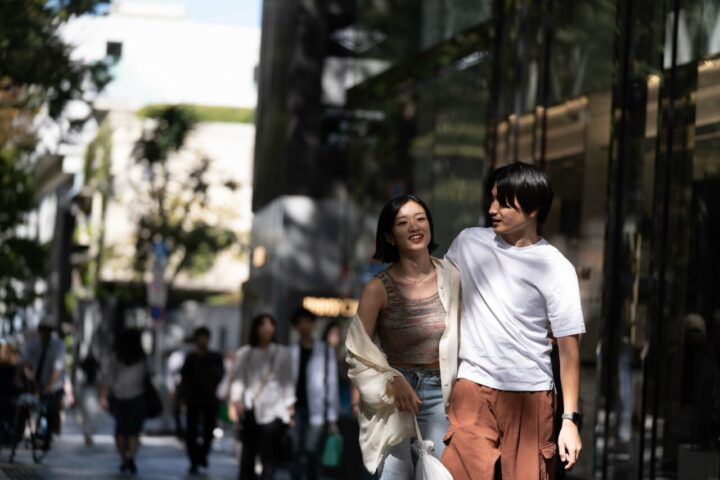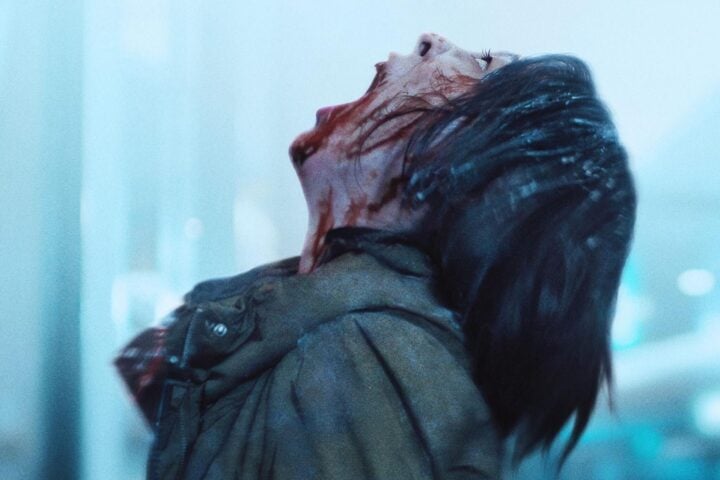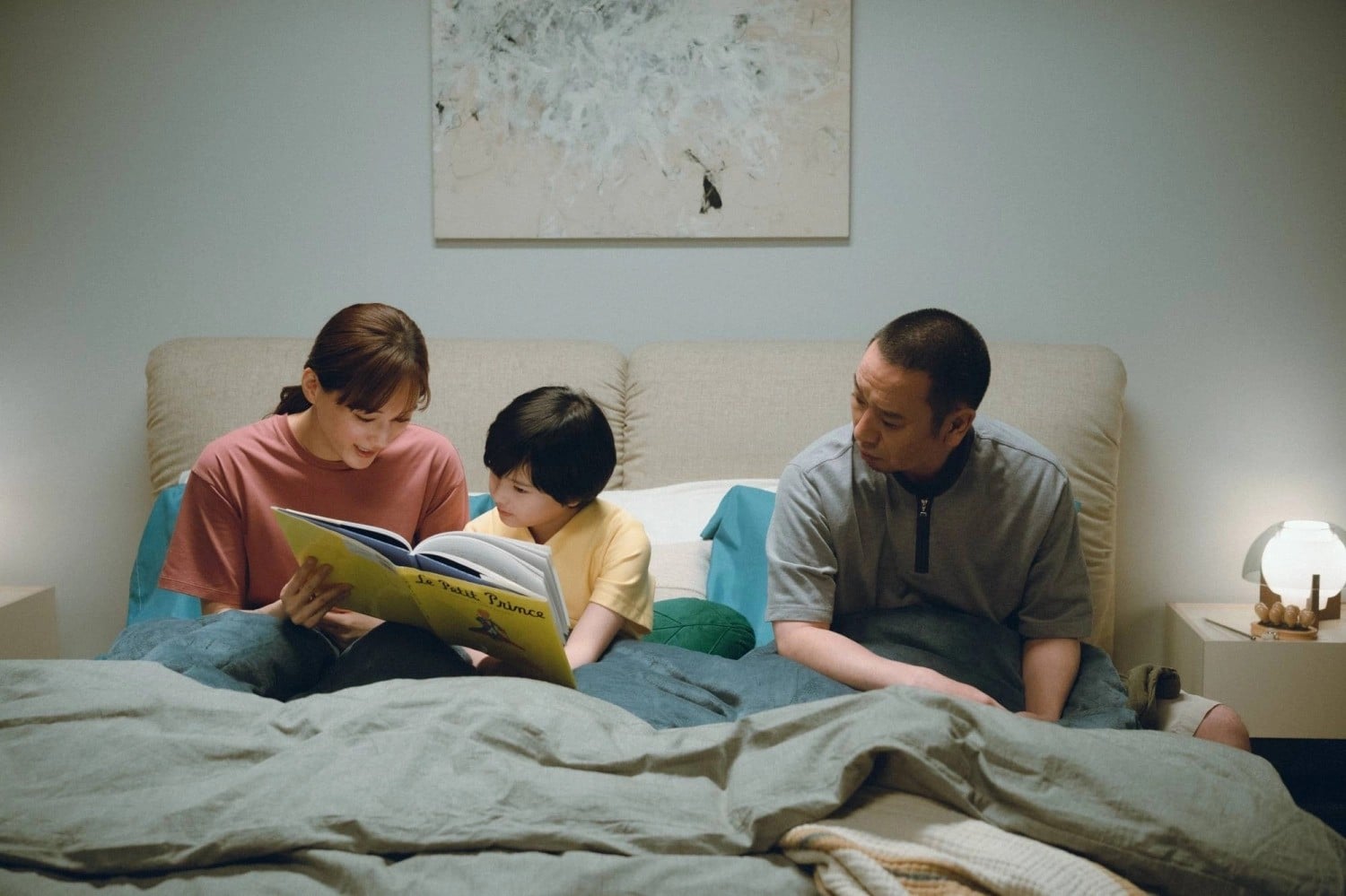
In Kore-eda Hirokazu’s Sheep in the Box, two years after the death of their son, a married couple hears about a program created by a tech company named REbirth that rents A.I.-powered humanoids to bereaved families. Though Otone (Ayase Haruka) immediately embraces the humanoid Kakeru (Kuwaki Rimu) as her own, Kensuke (Yamamoto Daigo) is initially skeptical, to the point that he insists that Kakeru call him “mister” rather than “father.”
As an early on-screen title indicates, Kore-eda has set his film in the near future, “near” being the operative word. Kore-eda is less interested in creating a discomfiting futuristic world than in addressing one close to our present. He’s also operating in familiar narrative and thematic terrain. Familial bonds have been a frequent arena of examination for him, whether organic or, in the case of Shoplifters and Broker, surrogate. His interest in exploring the ways family members process grief goes back to his 1995 debut feature Maborosi. Like Nobody Knows and I Wish, Sheep in the Box demonstrates Kore-eda’s fascination with children’s inner lives.
Kore-eda has even dealt with artificial companions before, specifically in 2009’s Air Doll, about an inflatable sex doll who comes to life and discovers for herself what it means to be human. By contrast, the humanoid Kakeru is only curious about human behavior insofar as it helps him achieve a larger purpose. Kakeru exists mostly as a vessel for Otone and Kensuke to emotionally reconnect. Both are ridden with guilt about what they perceive as their roles in Kakeru’s death in a hit-and-run, as they were distracted in different ways from picking him up from school on that fateful day. Only through their humanoid rental, an emotional blank slate that bears a physical resemblance to Kakeru, do they eventually learn to forgive themselves and each other.
Kore-eda would seem to believe that such creations can be helpful if used sensitively, which may strike some viewers as a curious stance in light of recent incidents involving people committing suicide at the urging of A.I. chatbots. With Kore-eda’s typically gentle manner clashing with pointed jibes at tech companies exploiting people’s emotional pain for profit, the film’s view of how technology is used in modern society comes off as wishy-washy. His plotting is similarly noncommittal. The effort to make a mystery out of the police’s so-far-fruitless search for the driver who killed Kakeru ultimately proves minimal at best, and the intimations of darkness surrounding the hunt for a serial child kidnapper feel jarringly out of place.
Kore-eda is most committed to a New Age-y transcendence that finds its fullest expression in a mawkish finale. The film’s title refers to an episode in Antoine de Saint-Exupéry’s The Little Prince in which its narrator, after multiple attempts to draw sheep at the prince’s request, draws a box and says there’s a sheep inside. Early on, Otone reads this passage to Kakeru, not realizing until much later that this humanoid version of her son is her equivalent of the sheep in the box: a figure without an inner life beyond whatever she wants to project onto it.
It turns out, though, that Kakeru has an ulterior motive, one hatched with other humanoid children with whom he’s managed to connect. Sheep in the Box, like Ildiko Enyedi’s Silent Friend, fleetingly touches on the idea of trees having consciousness, with Kakeru and a crew of misfit artificial boys and girls like him planning to take refuge in a forest. Many of the humanoid children give the abuse they endured from their owners as the reason for their retreat, but why Kakeru feels a need to join them, given that neither Otone nor Kensuke ever raise a hand against him, is a question that, like so many others in the film, remains frustratingly unanswered. In such moments, Sheep in the Box shows nothing more clearly than its untapped potential.
Since 2001, we've brought you uncompromising, candid takes on the world of film, music, television, video games, theater, and more. Independently owned and operated publications like Slant have been hit hard in recent years, but we’re committed to keeping our content free and accessible—meaning no paywalls or fees.
If you like what we do, please consider subscribing to our Patreon or making a donation.