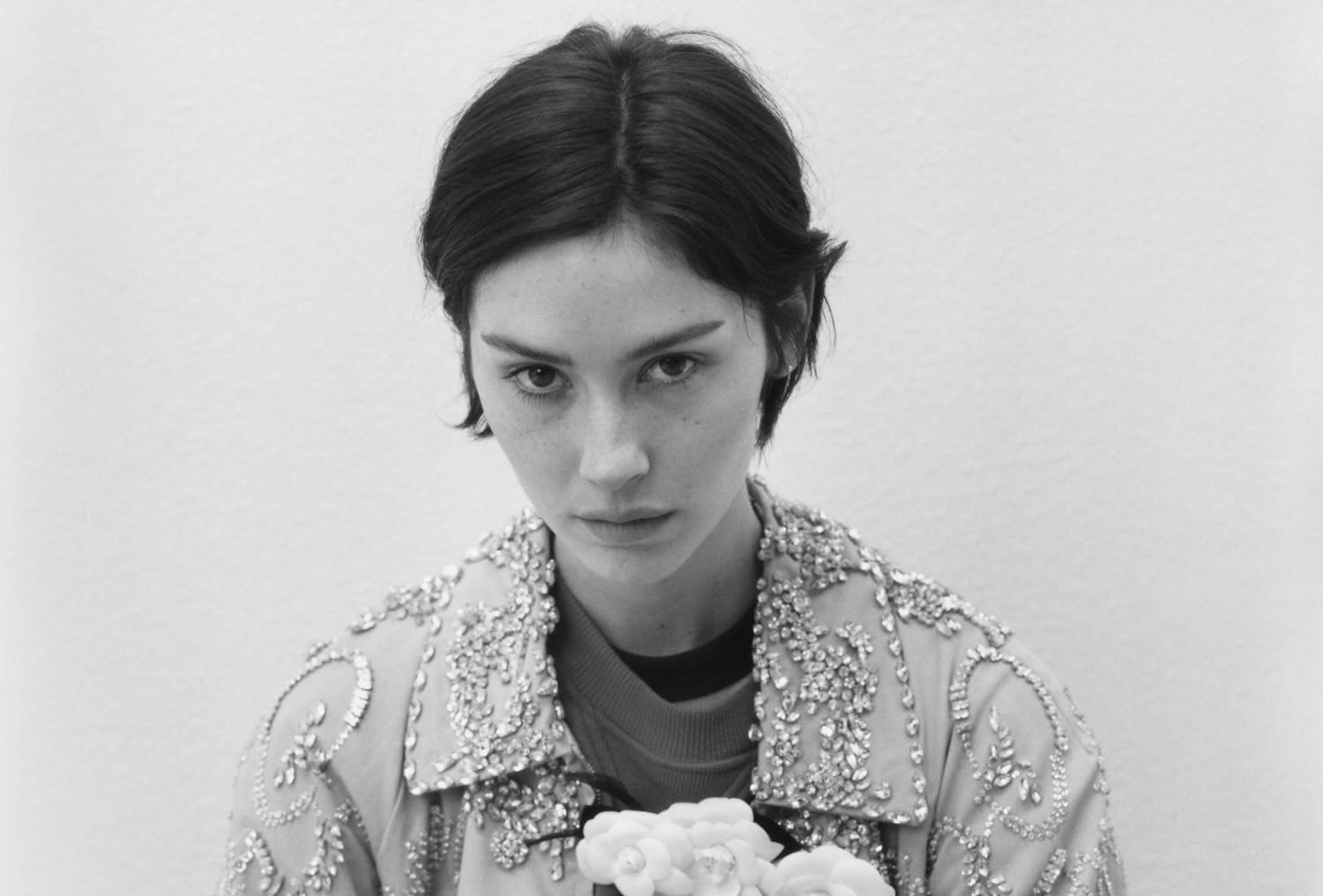
If there’s a defining feature to be found on Gracie Abrams’s third studio album, Daughter from Hell, it’s the music’s unrelenting prettiness. A polished, quasi-anonymity blankets the album in a fog of treacly depthlessness. The 26-year-old singer-songwriter has yet to discover a sound or sensibility that truly distinguishes her from either her contemporaries or the ultra-confessional female singer-songwriters who paved the road for her.
To her credit, Abrams finds the right balance between the natural gusto of her lower register and a breathy, tender soprano on songs like the title track and the charmingly waltzy “Good Reason.” Once a leading culprit of Gen Z’s affinity for “cursive singing,” her evolution as a singer is undeniable, even if you’d still be hard-pressed to pick her voice out in a sad-pop girlie lineup.
As with her 2023 debut, Good Riddance, and its follow-up, 2024’s The Secret of Us, much of the album was produced by mellow folk maestro Aaron Dessner of the National—all gently patted pianos keys and acoustic guitar strings, and synths that swirl over drums that are never properly kicked. When Justin Vernon’s falsetto harmonies arrive on “Broke My Heart” and “Humming,” it only adds to the sense that we’re listening to Kroger-brand Folklore.
As a lyricist, Abrams has a tendency toward grandiose declarations of how her emotions manifest physically: She wants to “scream til [she’s] burning up” on “Mews,” and is “living with a knife in [her] side” on “The Knife.” There’s nothing wrong with a little hyperbole to express the feelings of navigating young womanhood, but her descriptions of the specific origins behind such melodrama remain vague. “Imaginary Friend,” co-penned by boyfriend Paul Mescal, finds her getting hot and bothered by a ghostly presence in her kitchen, a premise that could have been quirkily funny but evaporates when she sings, “You’re a figment of my imagination and I fucking hate it.”
Another such case is “Men Like You,” where Abrams seems to be skewering a typical social-climbing D-bag before singing, “Girl, I know men like you.” It’s a startling moment that recontextualizes the song, but nebulous lyrics like “How dare you make me choose between myself and shallow” don’t add any clarity to the exact contours of the situation she’s presenting, limiting any opportunity for us to gather insight into her past—and therefore who she is in the present.
On the album’s Dan Nigro-assisted “Look at My Life,” Abrams leans into the airless therapy-speak of her generation—“Do I look high-functioning or is my façade crumbling?”—for a barnstormer of a track about how bad of a time she’s having now that all her dreams have come true. The smirking self-awareness arises like an oasis in the rest of the album’s desert of histrionics, and it points to just how much fun Abrams’s music could be if she steers away from her post-Swiftian mumblecore musings and learns to boldly embrace her own voice.
Since 2001, we've brought you uncompromising, candid takes on the world of film, music, television, video games, theater, and more. Independently owned and operated publications like Slant have been hit hard in recent years, but we’re committed to keeping our content free and accessible—meaning no paywalls or fees.
If you like what we do, please consider subscribing to our Patreon or making a donation.