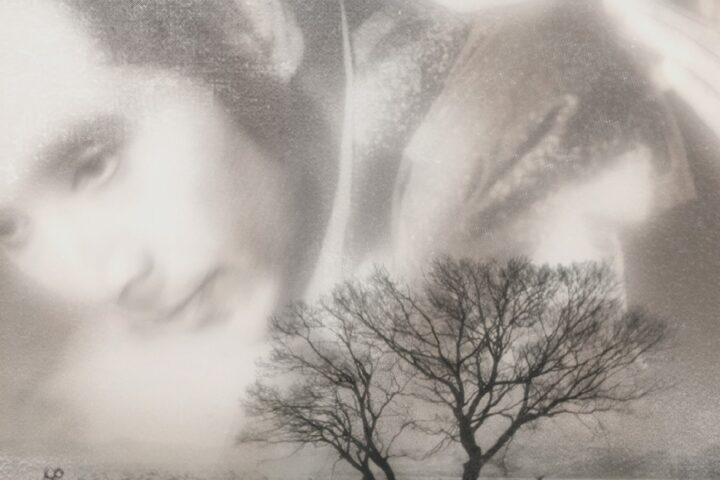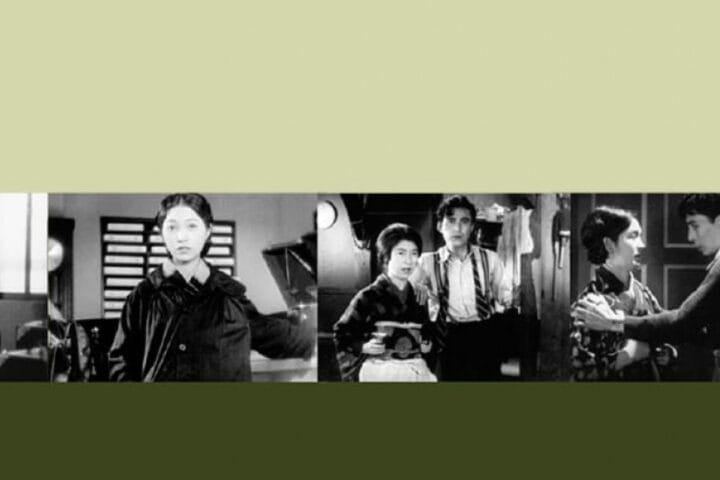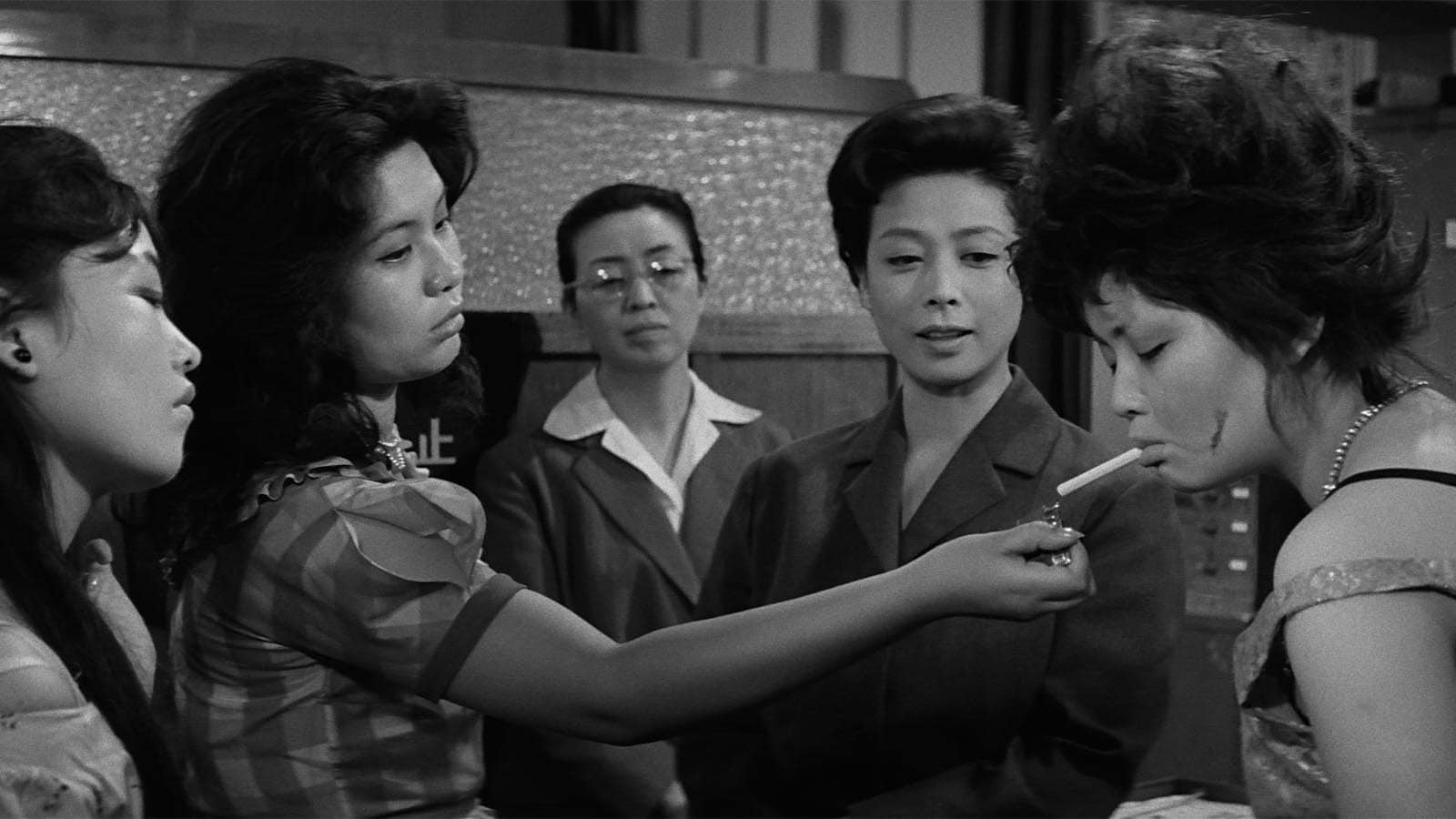
Throughout her legendary acting career, Tanaka Kinuyo performed in over 200 films, including ones by Ozu Yasujirō, Mizoguchi Kenji, Kurosawa Akira, Naruse Mikio, and Shimizu Hiroshi. Despite working with such masters, Tanaka’s six directorial efforts lurked in obscurity outside of her native country. It’s a disheartening but sadly unsurprising oversight, as outside of Sakane Tazuko—who made her only film, the now lost New Clothing, in 1936—Tanaka was the only other woman to direct films in Japan until after she died in 1977.
This, of course, only further confirms the notion that even when women were given the reins to direct in the mid-20th century—in Japan as well as in Hollywood, as was the case with Dorothy Arzner and Ida Lupino—their contributions were given little fanfare and quickly swept into the dustbin of history. Across the half-dozen films that Tanaka directed, she tackled a broad range of topics, including wounded masculinity in the wake of World War II, the after-effects of the Prostitution Prevention Law, and variations of feminine independence and forbidden romance.
Tanaka’s first two films saw her working with two of the directors she acted for, with Kinoshita Keisuke writing her 1953 debut, Love Letter, and Ozu penning her 1955 follow-up, The Moon Has Risen, with co-writer Saitō Ryōsuke. The lasting impact of the war on the Japanese public reverberates through both films, with Love Letter elegantly examining the different emotional and psychological trauma that inflicted men and women in the post-war years, with shame, humiliation, and desperation hanging in the air like harbingers of a doomed future.
As one might expect from a film written by Ozu, The Moon Has Risen has a lighter touch than Tanaka’s debut, trading that film’s harsh social realism for a gentler tale of matchmaking that brims with humor and bittersweet romanticism. The impact of Ozu is felt in the scenario, along with the impassive presence of one of his favorite actors, Ryū Chishū, playing a widowed father.
But through her compassionate examination of the youngest of the three daughters, Setsuko (Kitahara Mie), Tanaka captures the ebbs and flows of her heroine’s emotional life in a much more intimate and direct manner than is typical of Ozu. The film also has some stylistic similarities to Ozu’s work, including pillow and tatami shots, but its deep sensuality and the striking modernness to Kitahara’s performance—she would star in the film that kicked off the Japanese New Wave, Crazed Fruit, just three years later—are decidedly un-Ozu-like.
Tanaka’s focus on complicated women and the myriad issues that affect them was more intensely felt in her next three films, which were all written by women. Tanaka Sumie wrote the magnificent Forever a Woman and Girls of the Night, each of which follow resilient women who refuse to be confined, or defined, by the social limitations being forced upon them. The first is a full-fledged melodrama and the other a social issue film, and both show an uncommon interest, especially for the time period, in women’s bodily and personal autonomy.
If Tanaka showed herself adept with various genres, her other two directorial efforts, The Wandering Princess and Love Under the Crucifix, find her equally at home filming elaborate period pieces, and in vibrant color. These films are more expansive in both narrative and visual scope, each tracing the implacable forces of history. And while Tanaka nimbly captures Japan’s shifting of international allyship in one and state-sanctioned religion in the other, she still empathetically and scrupulously connects them to the evolving yet ceaseless struggles of women who remain fiercely determined to retain their agency in a world hell-bent on dismissing them.
Eclipse Series 48: Tanaka Kinuyo Directs is now available on Blu-ray.
Since 2001, we've brought you uncompromising, candid takes on the world of film, music, television, video games, theater, and more. Independently owned and operated publications like Slant have been hit hard in recent years, but we’re committed to keeping our content free and accessible—meaning no paywalls or fees.
If you like what we do, please consider subscribing to our Patreon or making a donation.