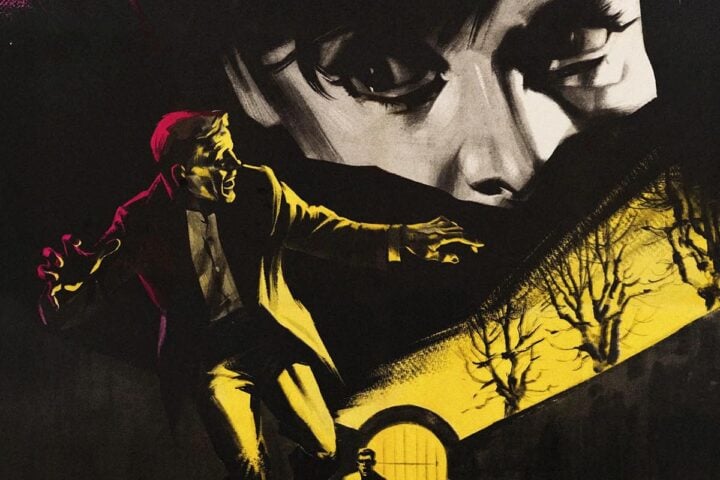
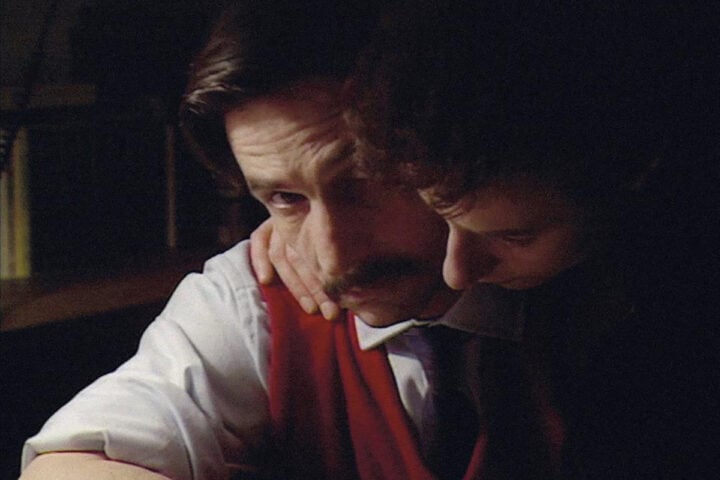
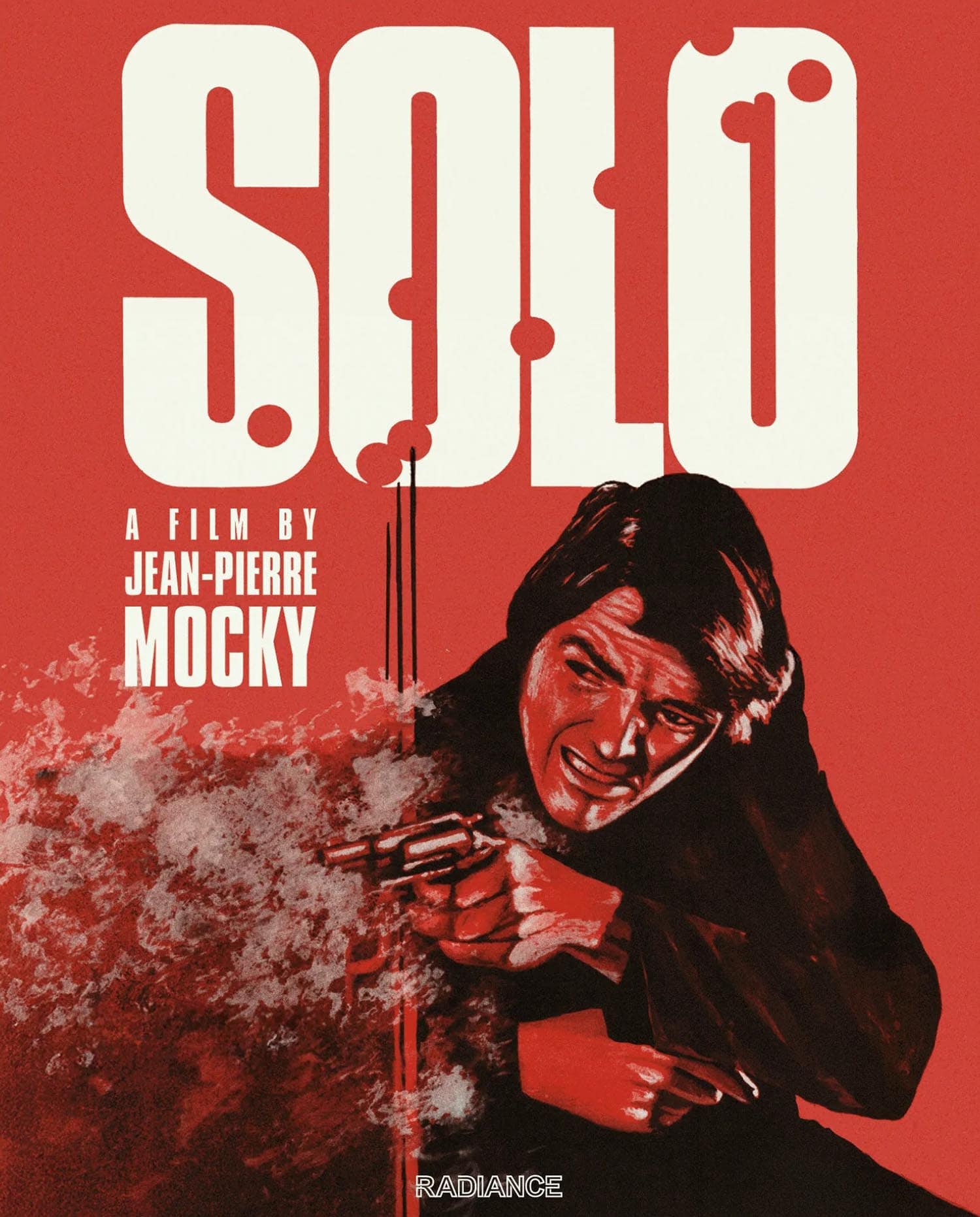
 Set in the aftermath of the May 1968 riots in France, Jean-Pierre Mocky’s Solo is permeated by an aura of malaise and despair. Taking place over the course of one night, this moody 1970 thriller, written by Mocky and Alain Moury, is populated almost exclusively with characters who either blindly and violently attack those in power or situate themselves in a way to comfortably benefit from them.
Virgile (Denis Le Guillou) is a leftist revolutionary who, along with two accomplices, murders a group of wealthy men and young women during an orgy at a country villa, while his apolitical brother Vincent (Mocky) gets by skimming jewels off the bourgeois crowds that he plays the violin for. At one point, Virgile’s friend Marc (Éric Burnelli) tells Vincent that he and his friends [avoid rep?] want to “destroy everything,” to which the latter coolly replies, “Tomorrow, when they’re buried, others will replace them.”
While Vincent’s motives for tracking down Virgile, who’s on the run, initially pit him as a traditionally moral hero, he’s quickly revealed to be just as egotistical as anyone else and protective of his brother not out of any ideology, but rather out of macho instinct. These characters seem unconsciously aware that they don’t stand to benefit from any meaningful political and social change, so they become addicts to pleasure and pain.
Underscored by Georges Moustaki’s mournful, dirge-like theme, Vincent’s nocturnal journey across Paris, trying to track down a brother he hasn’t seen in years, ultimately proves futile. That the cops are, unsurprisingly, in on protecting the image of the wealthy victims only adds to the sense of helplessness that pervades the film. And while the tragic finale is imbued with a similar brand of fatalism found in numerous French New Wave films from the early-to-mid-1960s, Solo’s ending is uniquely, resolutely downbeat, suggesting that neither violence nor apathy will shield anyone from the corrupting forces of power and wealth.
Image/Sound
Radiance’s transfer of a 4K restoration by Éclair Classics boasts strong detail and contrast throughout. Black levels are impressive, whether in scenes out on the Paris streets or in low-lit interiors, the image is rich in texture and depth, and the splashes of red peppered throughout are suitably vibrant. On the audio front, the uncompressed mono cleanly presents the dialogue and robustly presents Georges Moustaki’s somber score.
Extras
The first of three archival interviews is with screenwriter and star Jean-Pierre Mocky from 2018. Mocky delves into the film’s casting process and developing the script with Alain Moury, and he amusingly reveals how the genesis of the story was him overhearing two teens at a cafe in late 1968 talking about the need for revolution. In interviews from 2022, actor Anne Deleuze shares her experiences on set as an upstart and Mocky’s assistant and friend Eric Le Roy discusses how the film was unique at the time for being in conversation with French society in the wake of the May ’68 riots. Also included with this release are an image gallery with original promotional materials and a booklet with a pair of 1970 interviews with Mocky that touch on the various challenges he faced during his directorial career and the social critique found in Solo.
Overall
Jean-Pierre Mocky’s moody, melancholy thriller, set in the aftermath of the May 1968 riots in France, gets a gorgeous new transfer courtesy of Radiance Films.
Since 2001, we've brought you uncompromising, candid takes on the world of film, music, television, video games, theater, and more. Independently owned and operated publications like Slant have been hit hard in recent years, but we’re committed to keeping our content free and accessible—meaning no paywalls or fees.
If you like what we do, please consider subscribing to our Patreon or making a donation.