
Much ado has been made about the death of the monoculture, slain and deposed as it has been by an individualized hyperculture, marked by the constant churn of content rarely built to last (don’t even get us started on A.I.). But if anything, the quantity of music from the first half of 2026 has demonstrated that while not every album is destined to become as big a blockbuster as Olivia Rodrigo’s You Seem Pretty Sad for a Girl So In Love, artists of various genres continue to deliver career-defining music that, crucially, has something to say about the times we live in.
Look no further than Feeble Little Horse and Ratboys’s equally searing and heart-swelling indie rock, or Vince Staples and Genesis Owusu’s slyly insurgent (and genre-bending) hip-hop. Elsewhere, just in time for America’s 250th birthday, country-pop princess Kacey Musgraves and newcomer Ella Langley cut through the heavily male-dominated country music complex with their giddy, tender takes on contemporary Americana. And despite what Charli XCX has to (cheekily) say about it, the escapist realm of the dance floor has only gotten brasher and livelier thanks to Underscores, Slayyyter, and Horsegiirl’s radiant electropop.
Even as we await new releases from some of pop music’s most prominent heavy hitters over the next several months, these are the 25 albums that we just can’t stop listening to…so far. Michael Savio
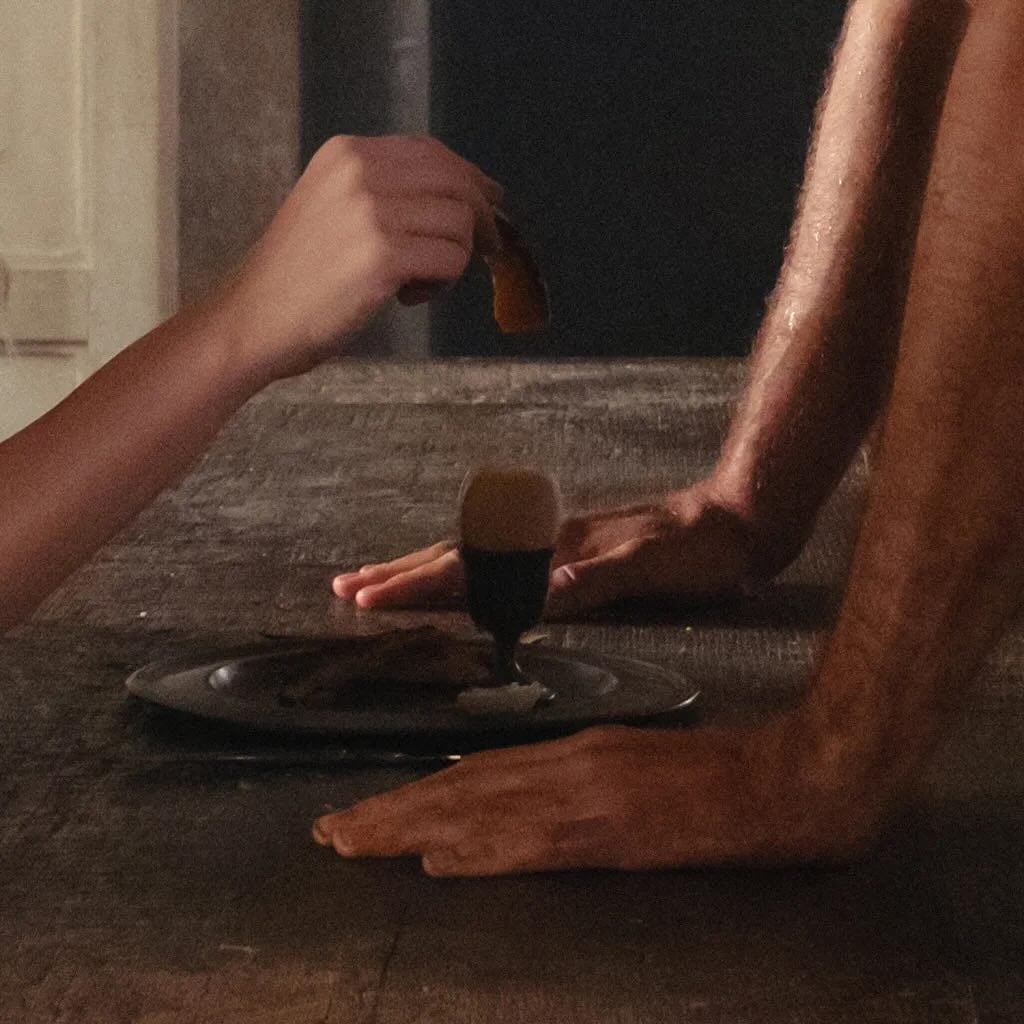
Charli XCX, Wuthering Heights
Charli’s Wuthering Heights soundtrack sonically mirrors the film’s penchant for bodice-ripping bombast and grief while standing on its own. It’s often loud and discordant, filled with droning synths and screeching strings that underlie Charli’s digitally manipulated vocals. And yet, somehow the album manages to be as startling and satisfying as a clandestine carriage-house hook-up. Many of its highlights spring from the production styles crashing up against or bleeding into one another. The strings, arranged by Gareth Murphy, prove a welcome addition to Charli’s usual soundscape, bringing a wry grandeur to her hyper-pop instincts that anachronizes and cinematizes her music a la early Lana del Rey. In less than 90 seconds, the interlude “Open Up” nearly wordlessly evokes the fatalistic heartache forever embedded in the rock walls of Wuthering Heights—the kind of tragedy that feels both timeless and as pressing as ever. Savio
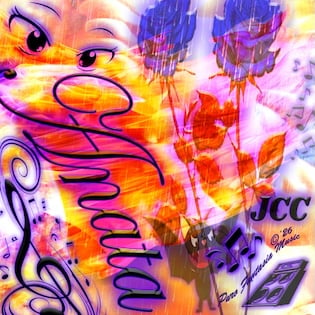
Joshua Chuquimia Crampton, Anata
Plenty of guitar-driven rock albums make a virtue of finesse. Some are bloodless and self-important, asking to be congratulated for technique alone. Anata has zero patience for any of that, as Joshua Chuquimia Crampton—half of sibling duo Los Thuthanaka—goes for impact instead, with overloaded chords, blunt melodic figures, and riffs that hit hard without losing their luster. Dedicated to the Andean ceremony honoring Pachamama, the album clangs, glows, and keeps moving forward, its lo-fi crackle warming the din as repeated guitar figures build into something dense and strangely hypnotic. The melodies are pushed through buzz, twang, and percussive thud until prettiness feels beside the point. “Chakana Head-Bang!” even announces the album’s premise in the title: ceremonial music with heavy-rock body language. Anata is loud and raw, but its greatest achievement is how it flaunts virtuosity without feeling the need to take a bow. Paul Attard
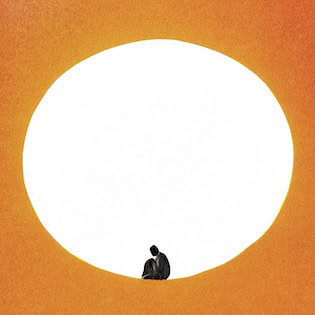
Death Cab for Cutie, I Built You a Tower
Ben Gibbard has long tapped the well of sorrow, but a set of recent misfortunes of varying weights (a divorce, the deaths of loved ones, the Mariners throwing their shot at the 2025 World Series) finds him anchored by a familiar state of despair. It’s a marvel, then, that Death Cab for Cutie’s I Built You a Tower doesn’t wallow in maudlin grief. In fact, it’s the band’s most spirited album in years and sees them broadening their sound into thrilling new directions. “How Heavenly a State” laces gnarly feedback across its post-punk backbeat, while jangly bells twinkle alongside the guitar licks of the surprisingly cheery “Pep Talk.” There’s an urgency to Gibbard’s confessional musings and the band’s unfussy production that propels the album forward. Even as the storms “never seem to end” on the melancholic “The Flavor of Metal,” Gibbard accepts that sometimes all you need to get through the days—and an indie-pop album about grief—is “a little light to find its way through the cracks.” Savio
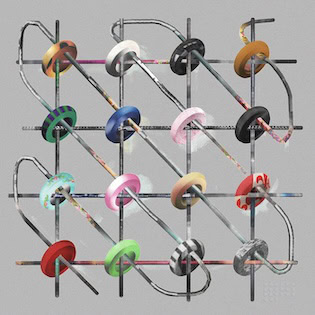
Feeble Little Horse, Bitknot
Feeble Little Horse’s Bitknot is bigger and better than the Pittsburgh trio’s 2023 breakout Girl with Fish in every way except its actual length. Contrast in both proportion and vibe are inherent to Feeble Little Horse’s appeal. The group’s preferred mode is pairing singer and bassist Lydia Slocum’s unsuspecting, mild-mannered vocals with waves of distortion and guitar fuzz. Little sounds sprung from a laptop—the flute noise on “Poison,” the springy synth on “Rewind”—make for a nice dichotomy with the fierce guitar walls. Any time Bitknot starts to slip into shoegaze-y sprawl, the band keeps it in check, moving to the next part of the song. Which is to say, they’re rhythmically on point—their brevity, song for song and album for album, isn’t due to a lack of ideas but a structural intelligence. When Feeble Little Horse goes long, as they do on “Dior,” their first song that clocks in over three-and-a-half minutes, their muscularity and control is still very apparent. Bitknot is a noise-pop opus in miniature. Charles Lyons-Burt
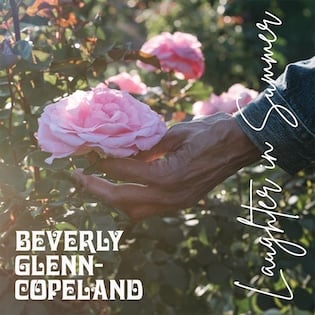
Beverly Glenn-Copeland, Laughter in Summer
On Laughter in Summer, his first album since he publicly announced his dementia diagnosis, ambient-pop pioneer Beverly Glenn-Copeland and his wife and artistic collaborator, Elizabeth, sing to each other with arresting tenderness. Their declarations of love are so direct and deeply felt that they almost suggest the listener has intercepted some private communication. “You/My heart, my joy, my life/My homе on Earth/Here with you,” Elizabeth sings on the title track. The album primarily comprises reworks of Glenn-Copeland’s earlier songs, including “Ever New,” a highlight off his 1986 album Keyboard Fantasies and a staple of the new-age musical canon, which he re-recorded as a duet with Sam Smith for the 2024 compilation Transa. Beyond serving as a succinct overview of Glenn-Copeland’s influential catalog, though, Laughter in Summer is first and foremost a testament to resilience, and to the enduring love and serenity of the artist’s music. Eric Mason
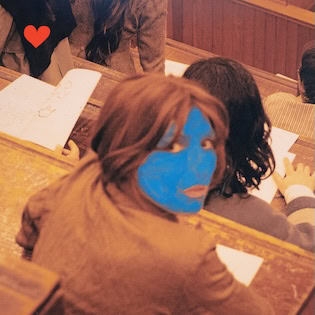
Aldous Harding, Train on the Island
Even by Aldous Harding’s typically strange standards, Train on the Island is surprisingly cryptic. With its sparse, deceptively simple arrangements and lyrics that blur the line between nonsense and poetry—“No one knows what I’m into/I’m only riding that symbol”—Harding’s restraint is the album’s greatest strength. And because she doesn’t overplay her hand, the songs’ unexpected turns feel genuinely unexpected. Train on the Island introduces motifs that resurface later in surprising ways. The album’s use of minimalist space and thematic repetition give lines like “Why wouldn’t I wanna meet ya?,” which appears on “One Stop” and later on “San Francisco,” an unusual weight, tempting listeners to search for connections. “Great things inside have sat long enough,” Harding teases on “Worms,” but Train on the Island never fully reveals what those things might be. Its mysteries aren’t puzzles to be solved so much as perplexities to be admired. Nick Seip
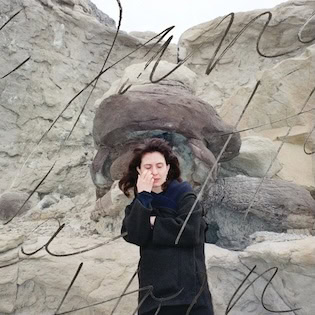
Jana Horn, Jana Horn
The songs on Texan singer-songwriter Jana Horn’s third studio album don’t contain choruses. They unspool unhurriedly, turning over lyrical ideas and gradually working out musical ones. Indeed, these 10 reflective and hollowed-out folk tunes sound like the journal entries of a lost friend. Lyrics like “She’s password-protected through the night” and “I was more like a feeling for a while/Not even mine, not even one of mine” are both relatable and mysterious enough to keep you listening. Horn seems to be swimming in a mess of contradictions and self-negations, but she doesn’t come off overly downcast or morose; instead, there’s a contentedness to her searching. Tiny details, like the way Horn imperceptibly murmurs the title of “Come On” or the lightning-bolt austerity of the track’s drums, resound hauntingly. The album’s crafty subtleties and strange, intentional imperfections elevate it to something like a series of observational incantations. Lyons-Burt

Horsegiirl, Nature Is Healing
The delightful debut album from Horsegiirl—the brainchild of German DJ, singer, and producer Stella Stallion—Nature Is Healing is loaded with earworms, hard-bass muscle, and straight-faced lyrical absurdity, a potent combo not heard since the heyday of fellow Teuton maniacs Scooter and Brooklyn Bounce. It’s a deliriously silly, sneakily sturdy blast of Euro-rave pop that makes most respectable dance music sound downright ordinary. A half-horse, half-human disc jockey singing about wellness, lust, and barnyard enlightenment over Balearic club beats sounds like the kind of gimmick that burns hot for a fraction of a second before getting swept into the algorithmic dustbin. But what keeps the album from curdling into novelty is that Stallion treats the supposedly unserious with a deadly serious level of musical craft. There’s no IDM here, apart from some glitched-out musique concrète on “Fun Guy Gungi,” but this is still intelligent dance music in the plainest, least chin-stroking sense. Attard
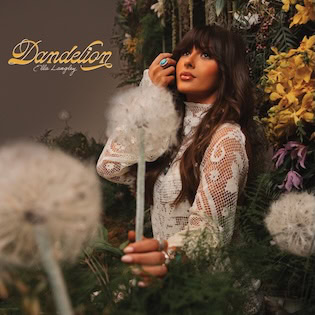
Ella Langley, Dandelion
Ella Langley’s Dandelion is slick as hell and, like most streaming-era chart monsters, runs too long. But once you accept the bloat and gloss as features, not bugs, the album’s virtues become far clearer. Think of it as the sharper, less dead-eyed cousin to Morgan Wallen’s I’m the Problem: blockbuster country-pop with actual quality control, tailor-made for arena rafters and blown-out Ford F-150 speakers. Take the hit “Choosin’ Texas,” where the machinery appears effortless: sharp wordplay, an even sharper hook, and classic honky-tonk backbone, polished within an inch of its life but not hollowed out by it. Better still, “I Gotta Quit” legitimately rocks, especially when Langley stops the song cold to tell the memory of a former lover to “scram,” then lets the band crash back in like nothing happened. Elsewhere, “Last Call for Us” is a modern Patsy Cline-style country waltz, heavy on pedal steel and after-hours regret, while the buoyant “Butterfly Season,” a duet with Miranda Lambert, makes internal growth sound less like therapy than hard-won survival. Attard
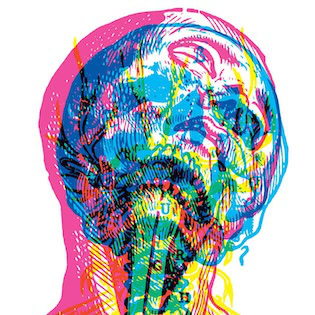
Mandy, Indiana, Urgh
On Urgh, noise-rock band Mandy, Indiana draws the titular guttural response out into a half-hour’s worth of clenched teeth and bad vibes. Distorted 808s, cracking snares, pitch-warped vocals, saw-toothed guitars, and sheets of feedback land hard and askew across the album’s 10 tracks. The harrowing “Life Hex” features a schoolyard chant atop pounding drums and murky synth arpeggios, while rapper Billy Woods joins in on the album’s feverish paranoia with “Sicko!,” his dry delivery making the song feel even more airless and accusatory. By the closer, “I’ll Ask Her,” all that clenched disgust finally locks onto a worthy target: After a litany of mental gymnastics and victim-blaming, singer Valentine Caulfield lets the truth about a “boy” who’s “a man, really” break through over blaring electronics with the fury someone done letting politeness launder cowardice. Urgh, indeed. Attard
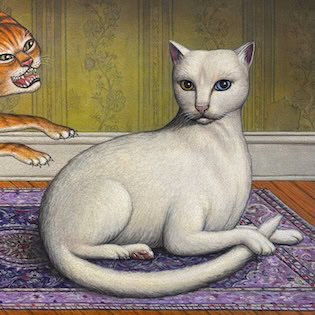
Mitski, Nothing’s About to Happen to Me
There was a sense of danger looming just out of sight on Mitski’s The Land Is Inhospitable and So Are We. On her follow-up, Nothing’s About to Happen to Me, that danger has drawn closer, and it’s taken the form of gendered violence. “Would you have liked me better if I’d died/So you could tell my story the way it ought to be?” the singer-songwriter asks on the eerie “Dead Women,” and she confronts her hypervigilance on the frenetic “Where’s My Phone,” where she arrives at a troubling epiphany: “I keep thinking, ‘Surely, somebody will save me’/At every turn, I learn that no one will.” Homing in more on Mitski’s psyche than its predecessor, the album embraces a sense of claustrophobia, as on “Charon’s Obol,” a mournful allegory about a home becoming one’s personal hell. The climactic “If I Leave” draws on contrasting elements of Mitski’s most cathartic songs, pairing explosive electric guitars with lyrics about self-negation and hopelessness: “I ride through a tunnel/And it’s dark the whole way.” Especially exquisite is the bossa nova-inspired “I’ll Change for You,” a ballad about the relief of realizing you’re at your low point, and a paragon of Mitski’s incisive writing about melancholy. Mason
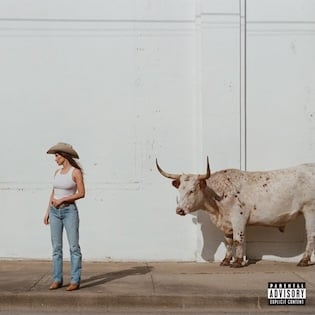
Kacey Musgraves, Middle of Nowhere
Written in the wake of a painful breakup, Middle of Nowhere sees Kacey Musgraves taking stock of her life and returning to her hometown of Golden, an abandoned railroad town in eastern Texas. Embracing change is a key theme that runs throughout the album’s 13 tracks, as the singer-songwriter fixates on life’s liminal spaces, whether it be the solitude of suddenly being single again or a small town in transition. There’s a palpable melancholy to Middle of Nowhere’s songs, a mood that’s perfectly matched by the arrangements, which likewise vividly conjure the locations Musgraves sings about. Of course, it wouldn’t be a Kacey Musgraves album if it didn’t push beyond Nashville’s city limits, as it does on “Horses & Divorce,” a duet with Miranda Lambert that borrows from Mexican norteño music. If Musgraves seemed slightly adrift in the years since 2018’s Golden Hour, Middle of Nowhere marks a true homecoming. Steve Erickson
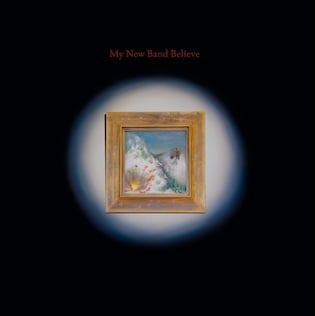
My New Band Believe, My New Band Believe
Fans of Black Midi will detect familiar ideas in the music of former bassist Cameron Picton’s new band, though they’re expressed with a different vocabulary. My New Band Believe’s self-titled debut sticks mostly to acoustic instruments, with spacious arrangements that place a greater focus on sudden shifts in mood and tempo, and Picton picking up guitar and lead vocals (his voice is more pleasant than Black Midi frontman Geordie Greep’s). The eight songs on My New Band Believe feel fluid, almost improvised, and vary wildly in length, from two to eight-and-a-half minutes apiece. They’re restless, reflecting an equal degree of love for British folk and the more experimental strains of classical music, even venturing into Beatles-esque pop but never staying there for more than a few minutes at a time. Erickson
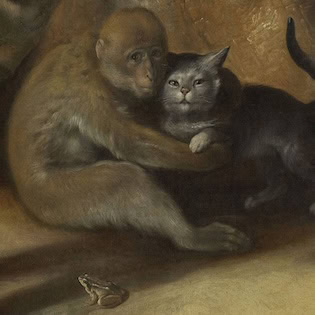
Bill Orcutt & Mabe Fratti, Almost Waking
With a track record going back to his ’90s noise-punk band Harry Pussy, Bill Orcutt has worked in many registers, but Almost Waking represents something new for the guitarist and songwriter. Guatemalan cellist Made Fratti serves as the album’s dominant voice, contributing vocals, melodies, and overdubs of her instrument over Orcutt’s guitar loops. She expands upon the simplicity of the guitar parts, adding harmonies and color across the album’s eight tracks. On “Forced and Forced and Forced,” Fratti bows away at a heavily distorted cello, and she supplies the rumbling bassline on “Steps on the Sun.” The music is quite austere, yet it still expresses a varied sonic and emotional range: You don’t need to know the title of “The Heaven of Our Misery” to feel the pain it contains. Almost Waking also reaches for a peaceful space, achieving something that feels fresh and innovative: dream pop unplugged. Erickson
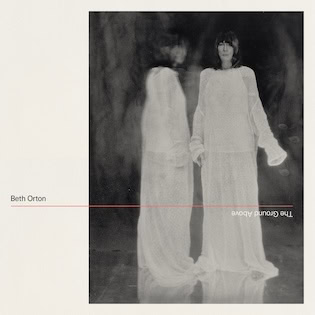
Beth Orton, The Ground Above
“I’m invincible as grief,” Beth Orton croons rather unconvincingly on the title track to her ninth studio album, The Ground Above. That’s not a slight on the veteran singer-songwriter’s ability to interpret her own lyrics. Rather, Orton’s lack of conviction telegraphs that, by album’s end, her grief will have washed away with the rising of the sun. At first, though, she’s content to sit with her sadness, enveloped in the proverbial dark night of the soul. The singer’s voice is as distinct and beguiling as ever, with some newly creaky, lived-in edges that nicely complement the songs’ jazzy undertones. At times, she’s almost indecipherable—frustrating because her lyrics are worth mulling but forgivable since her voice is so expressive all on its own. As the album’s closing track builds to its climax, Orton wakes up to the reality that, for us humans, just making it through the night is perhaps its own kind of invincibility. Sal Cinquemani
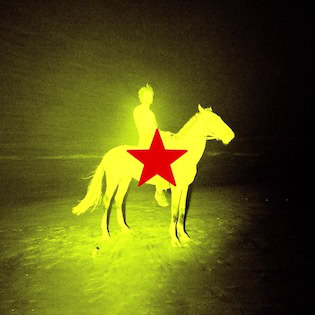
Genesis Owusu, Redstar Wu & the Worldwide Scourge
As Vince Staples does on Cry Baby, Genesis Owusu brings hip-hop and rock together to enhance the political punch of both. Manosphere bros are a recurring target throughout the Ghanaian-Australian musician’s third studio album, Red Star Wu & the Worldwide Scourge. “The Worldwide Scourge” calls out transphobia, xenophobia, and the genocide in Gaza; “Pirate Radio” grabs right-wing grifters by the throat; and “Death Cult Zombie” calls out misogynists who seek answers in false prophets (“Andrew Tate pod while you working your fitness/Still can’t figure out why you can’t get any women”). The album’s production is slick, but ominous keyboards and ripping guitar noise cut through the gloss. Likewise, Owusu proves himself equally adept at singing and rapping on tracks like “Blessed Are the Meek,” and his resistance to being pinned down into one genre is part of a refusal to tone down his voice in any way. Erickson

Ratboys, Singin’ to an Empty Chair
Each song on Ratboys’s Singin’ to an Empty Chair plays out like a conversation between two people that continues after one of them has left the room. A longing for connection can be felt throughout the album, with unguarded language that moves between tenderness and frustration, framing intimacy as a risk worth taking regardless of the outcome. Just when things threaten to get too heavy, though, the band introduces a more playful tone. On “Burn It Down,” singer Julia Steiner sounds like she’s drowning, accompanied by sunburnt guitar squalls: “Deep down you know it’s wrong…It’s never gonna change.” Rather than tie things up neatly, the band lets these emotions play out, giving them space to burn out across seven minutes. This willingness to let the songs breathe extends to Singin’ to an Empty Chair’s construction. Ratboys recorded these songs in various locations, and as a result each one feels like its own world. Kylie Kohner
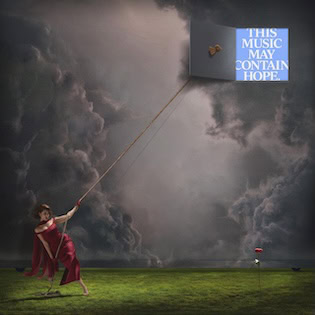
Raye, This Music May Contain Hope
The term “cinematic” is too often thrown around by critics to describe music that doesn’t quite earn it, but with composer Hans Zimmer and the London Symphony Orchestra on board, Raye’s This Music May Contain Hope actually delivers the goods. The British singer-songwriter sets the scene with a spoken intro set to lush, melodramatic strings, while the aptly titled “Fin” closes the album with what sounds like an end-credits theme song. This Music May Contain Hope also reaffirms Raye’s refusal to be pigeonholed into any one genre. Throughout, she explores not just classical music, but French chanson (“I Will Overcome”) and big band (“I Hate the Way I Look Today”). Elsewhere, “Fields,” an ode to the signer’s granddad, is underpinned by gospel tones, while the Al Green-assisted “Goodbye Henry” draws on American soul. As much as Raye obviously admires the music of the past, though, her songs are very much rooted in the present, with references abound to modern conveniences like Uber and smartphones. On This Music May Contain Hope, maximalism proves to be an effective cure for the loneliness epidemic. Erickson
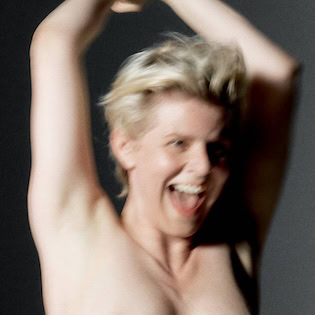
Robyn, Sexistential
On her first studio album in eight years, Robyn proves that she’s still capable of transposing the most overwhelming emotional experiences into dizzying dance-pop ecstasy, and she does so with a signature playfulness and brazenness. Sexistential sees her reprising the sensual sci-fi production of 2010’s Body Talk, making the tricky business of maturing into middle age feel almost intergalactic. Largely sticking to the tried-and-true formula of pairing her impassioned voice with longtime producer Klas Åhlund’s retrofuturistic dancehall soundscapes, Sexistential doesn’t reinvent the wheel so much as reaffirm how Robyn keeps it spinning so smoothly. Robyn’s last album, 2018’s Honey, was a relatively subdued foray into the type of dreamy house music you might hear at an after-after-party. It signaled that she might be hanging up her dancing shoes and following in her pop forebearers’ footsteps into more “mature,” albeit experimental, club music. But her idea of maturation isn’t to go calmly into the night, but rather to crash-land onto the dance floor. Savio
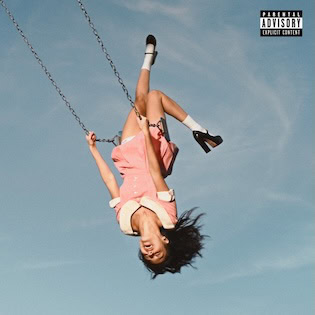
Olivia Rodrigo, You Seem Pretty Sad for a Girl So In Love
On “The Cure,” the thematic climax of her third album, You Seem Pretty Sad for a Girl So In Love, she feels “so alone” that she “might as well be on the moon.” On past albums, she might have assumed that her knight in shining armor would stave off her inescapable self-doubt, but not even love can rectify the ailment of being too smart and self-aware for your own good. And, unfortunately for Rodrigo and her audience of overthinkers, she’s learning that shit is chronic. Rodrigo’s bread and butter has always been in transmuting the mundane yet enormous feelings that accompany young womanhood into cinematic pop bangers—fitting for the 23-year-old representative of a generation raised on screens and the belief that romanticizing one’s misfortunes is the key to finding meaning in them. But You Seem Pretty Sad for a Girl So in Love sees her taking this skillset to a new level, imbuing its vivacious 13 tracks with a level of emotional and sonic complexity that 2021’s Sour and 2023’s Guts only hinted at. Savio
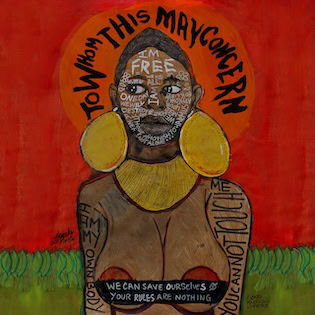
Jill Scott, To Whom This May Concern
Jill Scott returns after more a decade with a collection of rich and varied R&B songs that are as earnest, curious, and authentic as ever. With its messages of empowerment and basking in the good that life has to offer, To Whom This May Concern at times feels a bit Obamacore: “Be Great” and “Àṣẹ” hum with a sense of defiant positivity and appreciation, daring us to push past our cynicism. Scott is aware that things are bad, but she wants us to show up anyway—and we trust her because she speaks to us now like a wise elder. But the songs, from the lively “Liftin’ Me Up” to the vocal house of “Right Here Right Now,” aren’t musically stodgy. The beguiling “A Universe” is a moving reflection on unexpectedly finding new love in middle age, while Scott refuses to sing the blues on “Pay U on Tuesday.” It isn’t that she’s hiding from pain or numb to the exploitation she sees in the world—she just chooses to tap into joy. This is high-vibration, grown music done right. Lyons-Burt
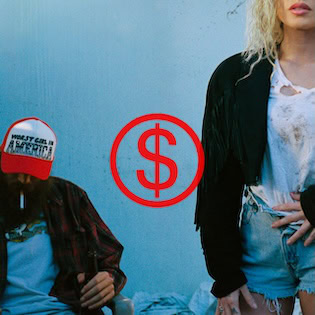
Slayyyter, Wor$t Girl in America
Her third studio album channels all of her wildest impulses, but its clamorous highs and thrumming lows are meted out with care and precision. It’s ironic that this abrasive kiss-off to anyone still sleeping on her is poised to be the singer’s most commercially successful release to date. “Baby, this is do or die,” indeed. That literal ultimatum—from the blood-soaked “Cannibalism!”—captures the indelible spirit of hysteria and hyperbole coursing through Slayyyter’s best songs. Lyrically, Wor$t Girl in America is more of a conceptual riff on the up(per)s and down(er)s of acting out than the statement of intent suggested by its virtuosic production. Above all else, the album’s pleasures derive from hearing Slayyyter find a sound that’s unmistakably hers. Wor$t Girl in America concludes with a pair of songs—“What Is It Like, to Be Liked?” and “Brittany Murphy”—that leave less of an impression, but it’s not for any slump in lyrical caliber. Wor$t Girl in America experiences the kind of comedown that’s expected after so much turbulence. Alexander Mooney
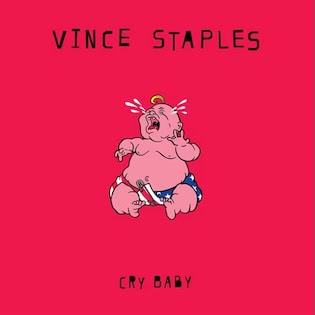
Vince Staples, Cry Baby
Vince Staples’s foray into rap-rock, Cry Baby, may be his boldest stylistic venture since 2017’s Big Fish Theory. Throughout, the Long Beach rapper mines righteous indignation for biting observations on systemic injustice in politics, media, and music. Opener “Blackberry Marmalade” bristles with heavy electric guitars reminiscent of post-punk, a musical movement born of disillusionment with the commercialization of punk rock in the 1970s and ’80s. Staples recontextualizes the tortured mood and subversive ethos of the genre as he raps about appropriation and the perpetual threat of violence against Black Americans: “Just know that they miserable/And know that behind every smile/They thinkin’ ‘bout killin’ you.” If on “Blackberry Marmalade” Staples is an omniscient narrator of American injustice, on the fuzzy “Do You Know the Devil” he’s a wounded casualty of music industry exploitation, and on the riotous “Go! Go! Gorilla” he’s left constantly looking over his shoulder after an experience with police brutality. With each new angle, he builds a dark but vivid image of the U.S., ending with a sobering reflection on “7 in the Morning” as he asks, “Why is death our entertainment?” Mason
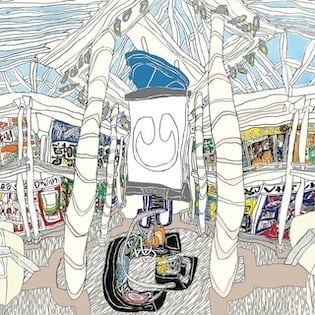
Underscores, U
With U, the follow-up to Underscores’s 2023 album Wallsocket, April Harper Grey achieves a critical balance between the two pillars that define hyperpop: leftfield experimentation and infectious hooks. A love letter to the titular artform, lead single “Music” represents the former; the track is propulsive, visceral, and over the top, built from throbbing bass synths and heavily processed yet highly melodic vocals. Meanwhile, “Bodyfeeling” showcases the album’s more accessible instincts, dipping into the muffled R&B of a Dijon and Mk.gee while channeling something distinctly Robyn-esque in its vocal melody and lyricism. By reflecting different corners of the pop landscape back onto itself, U reveals an artist so enamored with the possibilities of pop that her enthusiasm becomes contagious, reminding us why we fell in love with her in the first place. Seip
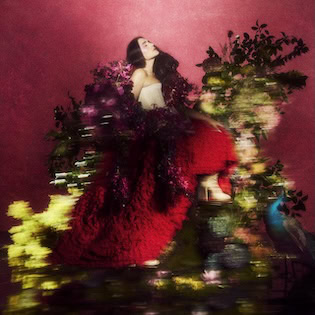
Jessie Ware, Superbloom
At first, Jessie Ware’s latest album seems like a faithful continuation of the British singer’s triumphant mid-career shift from smoldering soulstress into prelapsarian disco-pop diva. But while the transcendent Superbloom trades in the scintillating synth patterns and funky basslines of 2020’s What’s Your Pleasure? and 2023’s That! Feels Good!, it also showcases a stronger, more pronounced level of technical mastery and artistic confidence. Key to this, of course, is Ware’s voice, a multidimensional instrument that can envelop you like petals of a flower in one moment and crack through you like lightning the next. Pop music is built for fleeting escapism—into the nostalgic past, utopic future, or alternative present. But thanks to Ware’s effervescent vocals and era-agnostic production style, the escapism of Superbloom lingers so long that it starts to feel not so much like a fantasy at all but a promise of something brighter and more perennial. Savio
Since 2001, we've brought you uncompromising, candid takes on the world of film, music, television, video games, theater, and more. Independently owned and operated publications like Slant have been hit hard in recent years, but we’re committed to keeping our content free and accessible—meaning no paywalls or fees.
If you like what we do, please consider subscribing to our Patreon or making a donation.