“When can I reap the fruits of my perseverance?” asks Naney (Debora Lobe Naney) early in Promised Sky, Erige Sehiri’s second fiction feature. The question echoes through the film, which casts a patient, documentarian’s eye on the lives of three immigrant women from the Ivory Coast living together in Tunisia. This heart-wrenching drama about a makeshift family trying to stay afloat is buoyed by vulnerable performances and some spectacular imagery, even as the script spreads itself thin.
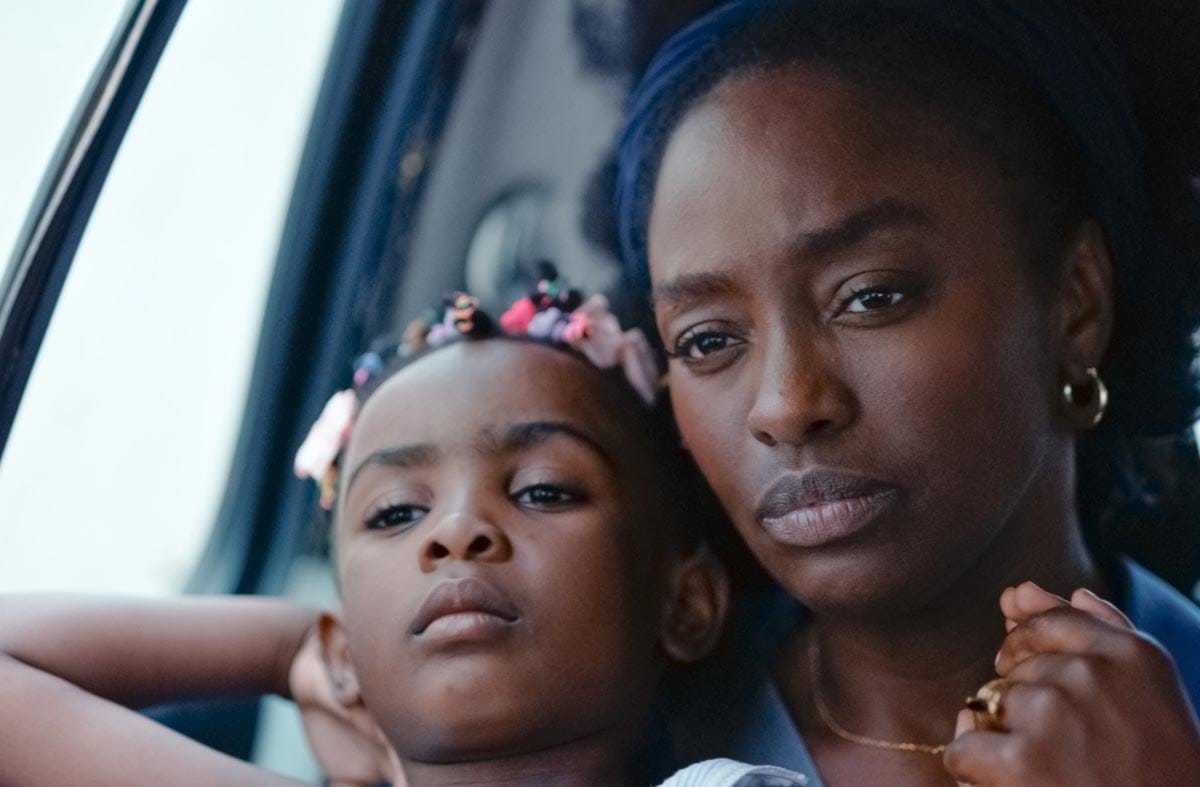
There’s a lived-in quality to Promised Sky that’s evident from its opening scene, during which Marie (Aïssa Maïga), Naney, and Jolie (Laetitia Ky) give a young girl, Kenza (Estelle Kenza Dpgbo), a bath. It’s a playful moment between them, though it’s readily clear that Kenza is an orphan as she tells the women about how she survived a recent shipwreck.
Across subsequent scenes—of Naney, a hustler estranged from her daughter, and Jolie, an engineering student, partying at the club, shopping at grocery stores, and going to church service led by Marie—Sehiri sensitively spotlights her characters’ individual lives across scenes that unfold quietly: a peaceful afternoon where Marie practices a sermon; an unsuccessful attempt to hail a cab; and a soccer game that sees Jolie sprinting for joy after scoring a goal.
Between its close-up shots and blue-hued cinematography, Promised Sky casts a soulful, almost nostalgic eye over the lives of its characters, while lending specificity to its depiction of shared experiences of womanhood through snapshots of the dehumanization that migrants endure. From ominous news reports to the hostility of authorities, the characters are subjected to a constant hum of racism, and we see each woman deal with this in their own ways.
Less effective is the way the film weaves this theme into the story. At a certain point, Jolie and Marie fade into the background, with the focus shifting to Naney and her plan to make enough money on the streets to secure funds to see her daughter. The plan goes awry, suggesting a planned detour ahead of the requisite reconciliation between Naney and Marie.
By the end of the film, we learn of the trauma that informs Marie’s reason for why she’s hesitant to send Kenza into foster care, while Jolie has a harrowing experience with the police. But these dilemmas are abruptly resolved, with one montage and a burst of upbeat music doing the sort of heavy lifting that feels discordant after the quiet revelations of the film’s first half.
Since 2001, we've brought you uncompromising, candid takes on the world of film, music, television, video games, theater, and more. Independently owned and operated publications like Slant have been hit hard in recent years, but we’re committed to keeping our content free and accessible—meaning no paywalls or fees.
If you like what we do, please consider subscribing to our Patreon or making a donation.