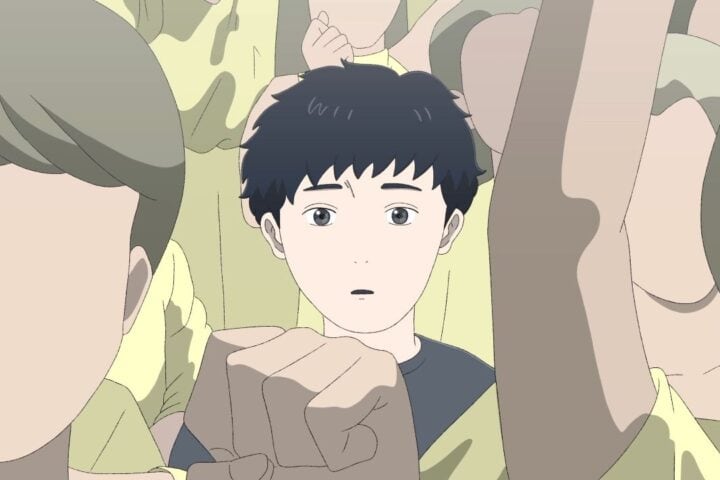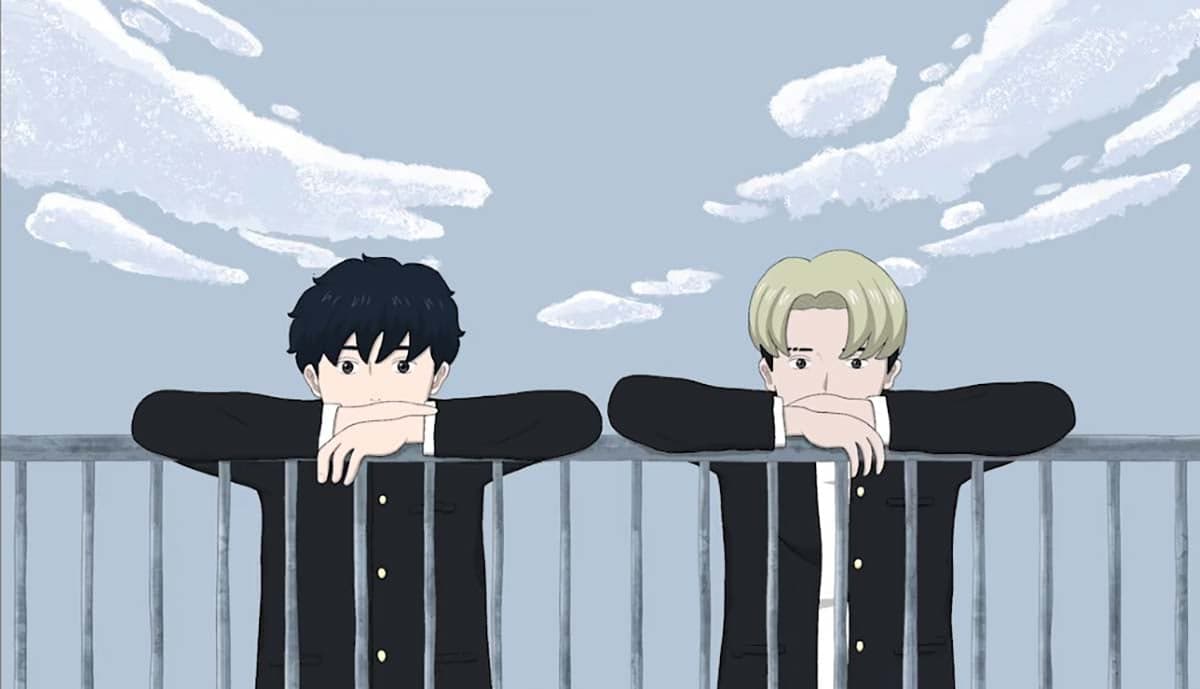
Autodidact Suzuki Ryuya’s first feature-length film, Jinsei, is a curious work of outsider animation tackling childhood trauma, social dysfunction, societal collapse, and J-Pop. It’s a lo-fi chronicle of a century-spanning life on the fringes of fame. Experimenting with homemade animation after quitting his job during the Covid pandemic, Suzuki worked his way up through a handful of irreverent shorts before successfully crowdfunding Jinsei, which he wrote, directed, drew, edited, and scored in a period of 18 months.
Ahead of the theatrical release of Jinsei, I spoke to Suzuki about his influences and process, his impassive main protagonist, and the drastic stylistic upheaval around the film’s halfway point.
You’re a self-taught animator who began animating during adulthood. What resources did you find most helpful in acquiring that skill?
I studied animated GIFs and animated stamps, and I would take them apart frame by frame to study how the movement worked. That’s how I learned animation.
Compared to your early shorts, Jinsei feels a lot more serious in tone. What made you decide to make this shift?
First off, thanks for watching my shorts. The longest film I’ve done so far was about 20 minutes or so, and now we’re talking about 90 minutes, so I knew that each theme could be explored in much more detail. So that’s kind of how it became the current film.
Your work contains a lot of references to Western films, animation, and music, and fewer to Japanese anime. What would you say generally are your biggest influences in terms of film, comics, animation, anything?
I would say this is true of not just this film, but that the tension that I build in my work [generally] comes a lot from the films of Kitano Takeshi, Martin Scorsese, and Paul Thomas Anderson. I was inspired by them a lot when I was a student. When it comes to composition, I would say Stanley Kubrick is one of the people that I reference the most.
It feels like your style is very conversant in internet memes, dark humor, and the like, in the way the tone or subject of things we experience online will shift drastically from one moment to the next. Do you spend a lot of time online or on social media, and have you gotten a lot of online feedback?
I actually feel like I do like watching a lot of videos and content, but I don’t really spend much time on social media at all, so I don’t tend to know the current fads very much.

Probably for the better! So the first half of Jinsei feels like a more conventional drama, and then the second half doesn’t go at all where you expect. Did you always envision the film as making this extreme swerve?
I would say yes. I did have in mind that sort of shift, because this was 10 [chronological] chapters and I knew that in 2025, which is the sort of midpoint of the film, I wanted there to be this shift. It’s kind of straightforward storytelling up until then, and then I really started doing more improvisational storytelling after that, and that synchronized with the time period, I think. Because it’s something that hasn’t happened yet, I wanted to have it be more improvisational.
You’ve mentioned in other interviews that while the protagonist of Jinsei is the same age as you, he’s not a representation of you. How relatable do you find him? And do you think in the end that he’s a good or noble character?
I tried not to project myself too much onto this character, but he does have some similarities, I suppose, and it’s hard not to somehow project. This main character is quiet and he suddenly becomes violent, and I don’t know if I have that aspect in me. I think these characters in this film think they’re really cool, like that’s their image of themselves. I do want to sort of go against what I believe is wrong, and you know, stand up for what’s right. But people say a lot that they see me in the main character, and I’m not sure what that is. I think that’s kind of weird.
Others have described your work as outsider art. Looking at Jinsei, a theme that stood out to me was being an insider and throwing that status away. Does this theme have special significance to you personally, or to your worldview?
I’ve only lived thirtysomething years, but I’ve suddenly met people, I’ve suddenly lost people, and I think it’s the same for the protagonists in this film. I hadn’t seen that portrayed very much in anime, where characters suddenly lose someone or suddenly meet someone, but that’s real life, so that’s kind of what I wanted to portray.
Do you feel that there are things you did with this film, or would like to do with your next one, that could only be accomplished as an independent animator? Do you hear from any animation studios, and would you want to work with one?
I would like to step it up and have a team to work with. That’s a dream that I have, but I was able to make a whole film on my own, [so] I do feel like I probably will do it again at some point.
Since 2001, we've brought you uncompromising, candid takes on the world of film, music, television, video games, theater, and more. Independently owned and operated publications like Slant have been hit hard in recent years, but we’re committed to keeping our content free and accessible—meaning no paywalls or fees.
If you like what we do, please consider subscribing to our Patreon or making a donation.