
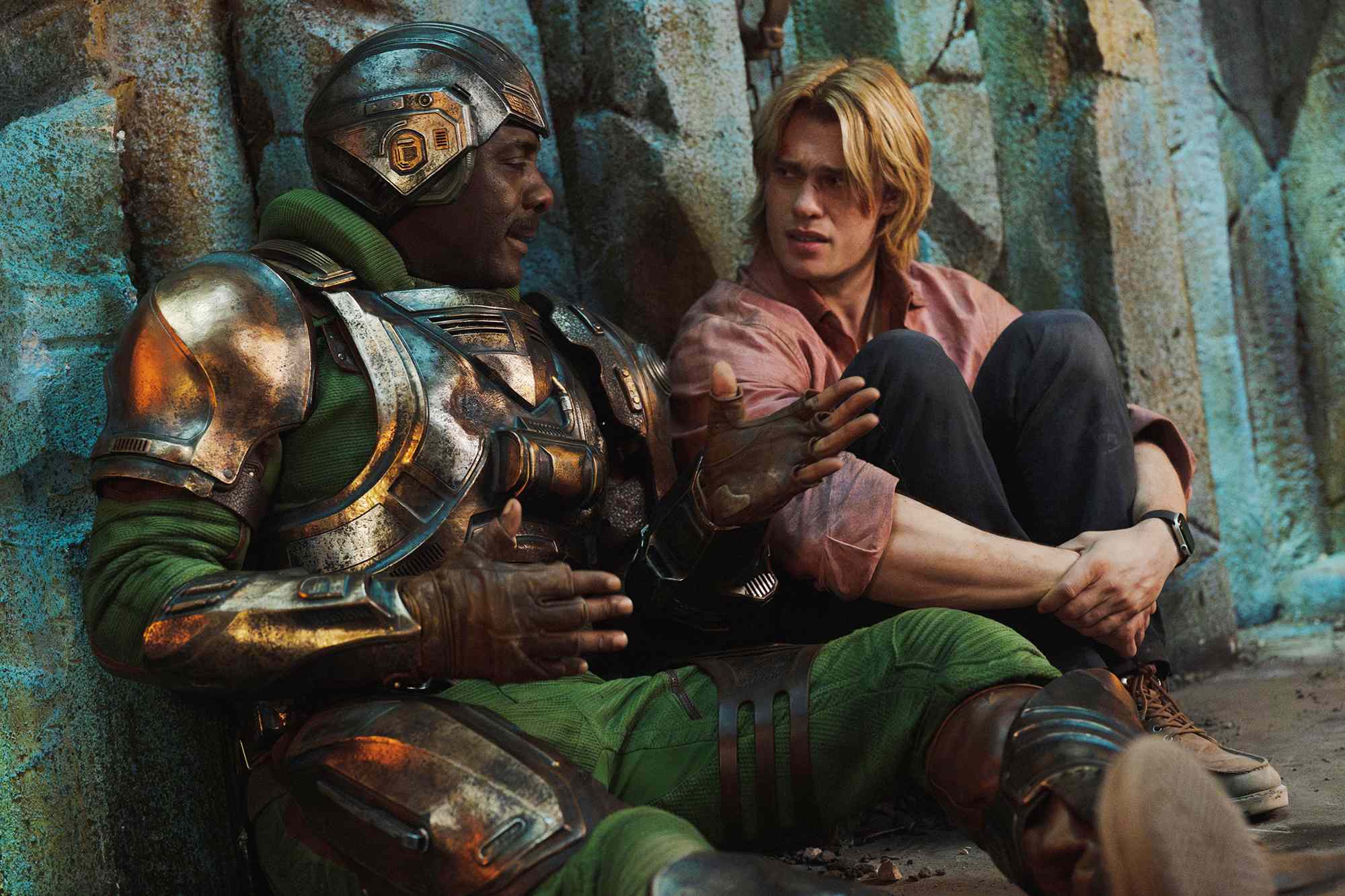
Putting aside the nostalgia that many kids of the 1980s have for the adventures of Prince Adam, there’s not a whole lot to be gained culturally from hauling out He-Man-flavored Member Berries for mass consumption in 2026. The tragedy of Masters of the Universe, directed by Travis Knight and written by Chris Butler, Aaron Nee, and Dave Callaham, is that it locates the one fertile angle that would make a movie about a blond, buff, sword-wielding barbarian interesting in 2026, only to bury its heartening Barbie-style deconstruction under every terrible action-comedy instinct plaguing modern blockbuster filmmaking.
The film starts with a flashback to a young Adam (Artie Wilkinson-Hunt), prince of the verdant, far-away world of Eternia, playing with his friends, making them laugh, and being kind to everyone around him. His father, King Randor (James Purefoy), attempts to beat an (un)healthy respect for the sword into him, to no real avail, which becomes a problem when Skeletor (Jared Leto) and his minions show up to stage a coup and steal the royal family’s Sword of Power.
Adam is thrown into a portal with the sword, losing it during the trip, and is subsequently raised on Earth. He eventually grows up into a handsome HR rep (now played by Nicholas Galitzine), an indefatigable promoter of conflict resolution through words. When he finally manages to track down the Sword of Power, Adam is whisked back to Eternia by his childhood friend Teela (Camila Mendes), only to find Eternia’s mightiest heroes living under abject tyranny. The only thing standing between Skeletor and total domination is whether Adam can balance the gentle emotions that are core to who he is with the violence necessary to save the world.
That’s the overarching tale being told by the film, and it’s a great angle. But the devil is in the details. Not since the dark days of early-2000s comic-book and video-game adaptations has a film been so embarrassed to be itself, and tried to appeal to the audience more likely to laugh at it instead of with it. There isn’t a single character interaction so vital that the filmmakers don’t choose to insert an awkward, stuttery, sub-Marvel-quality quip. Every silly character name is clowned on, and not one Office-beaten cliché about workplaces goes untouched.

Masters of the Universe’s fight scenes, in particular, are bombastic, hard-hitting, even appropriately dramatic at times. But every time the film gains momentum, cheap attempts at comedy cripple those moments at the knees. Of course, despite being a film laser-targeted to the fortysomethings who were actually kids when He-Man held cultural sway—y’know, the ones who got really, really mad, and for the worst possible reasons, about ND Stevenson’s fantastic She-Ra revival—Masters of the Universe is, ostensibly, a kids’ movie, and kids will likely be okay with silly jokes killing the Frank Frazetta-lite aura of the film at its best.
That would be easier to accept if the film picked a lane and stuck to it. Is Adam a bumbling soy boy whose willingness to want to de-escalate tensions with his enemies is going to get himself or others killed? Or is he a dangerous barbarian who can ruin a whole room of Skeletor’s baddies without splitting a single blond end of his perfect hair? The scenes where Adam is the former are too dedicated to cringe-y slapstick to land as a serious option, and the film is all too eager to show him as the latter, connective narrative tissue be damned.
Similarly, Leto’s Skeletor is stuck in a strange limbo between the Shakespearean-tinged genocidal threat of Frank Langella’s 1987 live-action take on the character and Alan Oppenheimer’s mustache-twirling Saturday-morning caricature. And Brie’s Evil-Lyn vacillates between pure gothic camp and witchy, dommy-mommy, bloodthirsty ambition. The consistent inability to thread the needle between comedy and drama permeates every single element of this Masters of the Universe, usually winding up landing on comedy by default.
Early on, Adam describes Eternia as the heart of the galaxy and Castle Grayskull as the heart of the heart. Masters of the Universe has a beating heart—thoughtfully recontextualizing He-Man as a different presentation of masculinity—and it’s bolstered by a cartoon-perfect representation of the original cartoon’s menagerie of characters and their powers. But the poorly executed, jingling-key cheap elements piled up around that heart are enough to clog it until it explodes.
Since 2001, we've brought you uncompromising, candid takes on the world of film, music, television, video games, theater, and more. Independently owned and operated publications like Slant have been hit hard in recent years, but we’re committed to keeping our content free and accessible—meaning no paywalls or fees.
If you like what we do, please consider subscribing to our Patreon or making a donation.
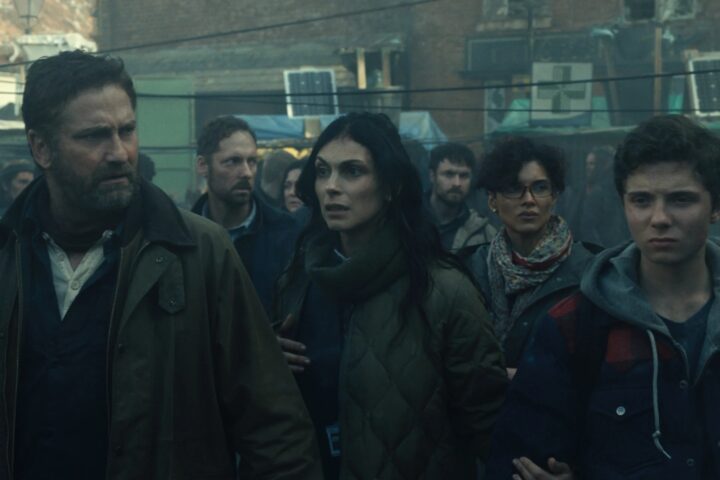
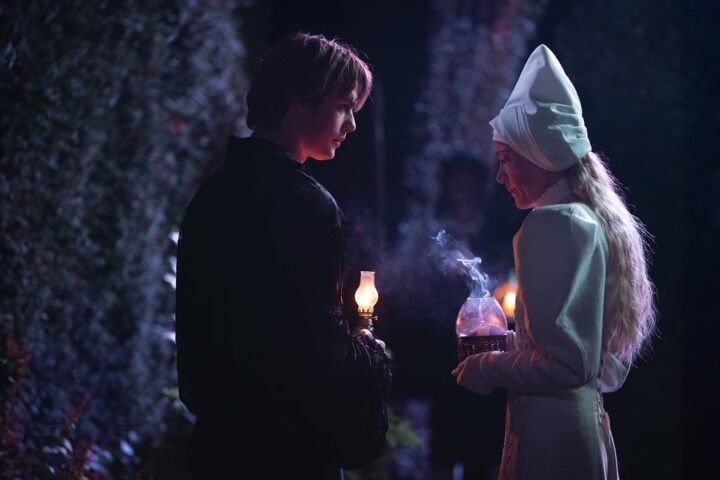

The most odd part of this movie was the marketing leading up to the premier. It was being presented as this deconstruction or modernized version or whatever they were playing at, but the opposite is true.
The human character of Adam is completely wussified because of his HR workplace woke training. When he finally finds his “sword” (this couldn’t be more thinly veiled), he rediscovers (with some help from a hot girl in Teela) his true nature, shedding the so-called modern and “correct” sensibilities of the current western world. Only then does he become He-Man and have the power to actually defeat the threat of Skeletor.
This is such a blatant criticism of the modern western world that it should come with a warning label and should be obvious to anyone. The rest of movie is essentially fluff jokes and attempts at nostalgia hooks (I had He-Man toys as a kid) that really will appeal to only die-hards who even remember this stuff, who ever that may be, and there’s not really much to trap a general audience; half a star higher than I would have given it.