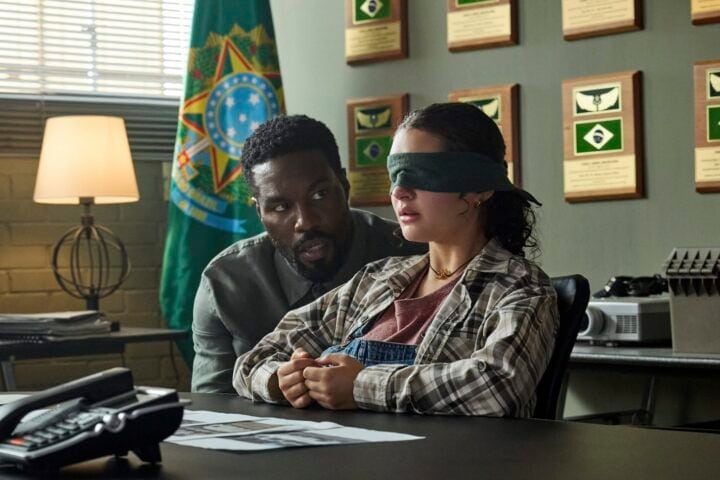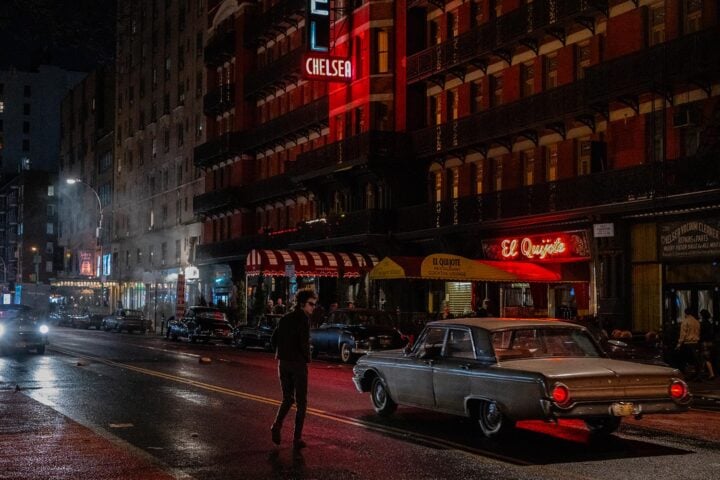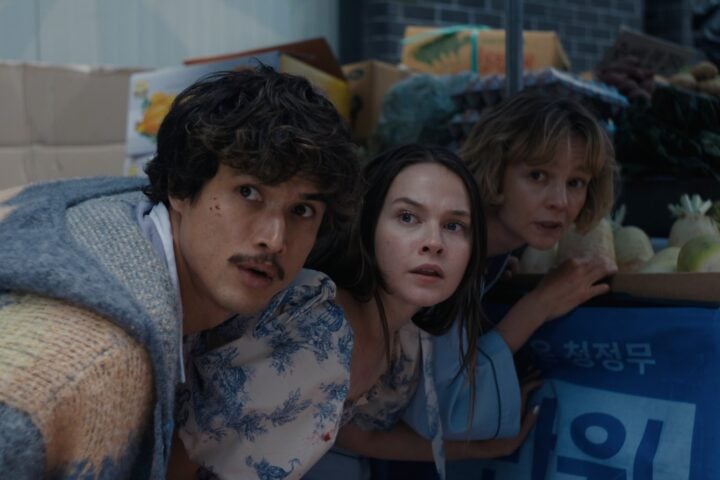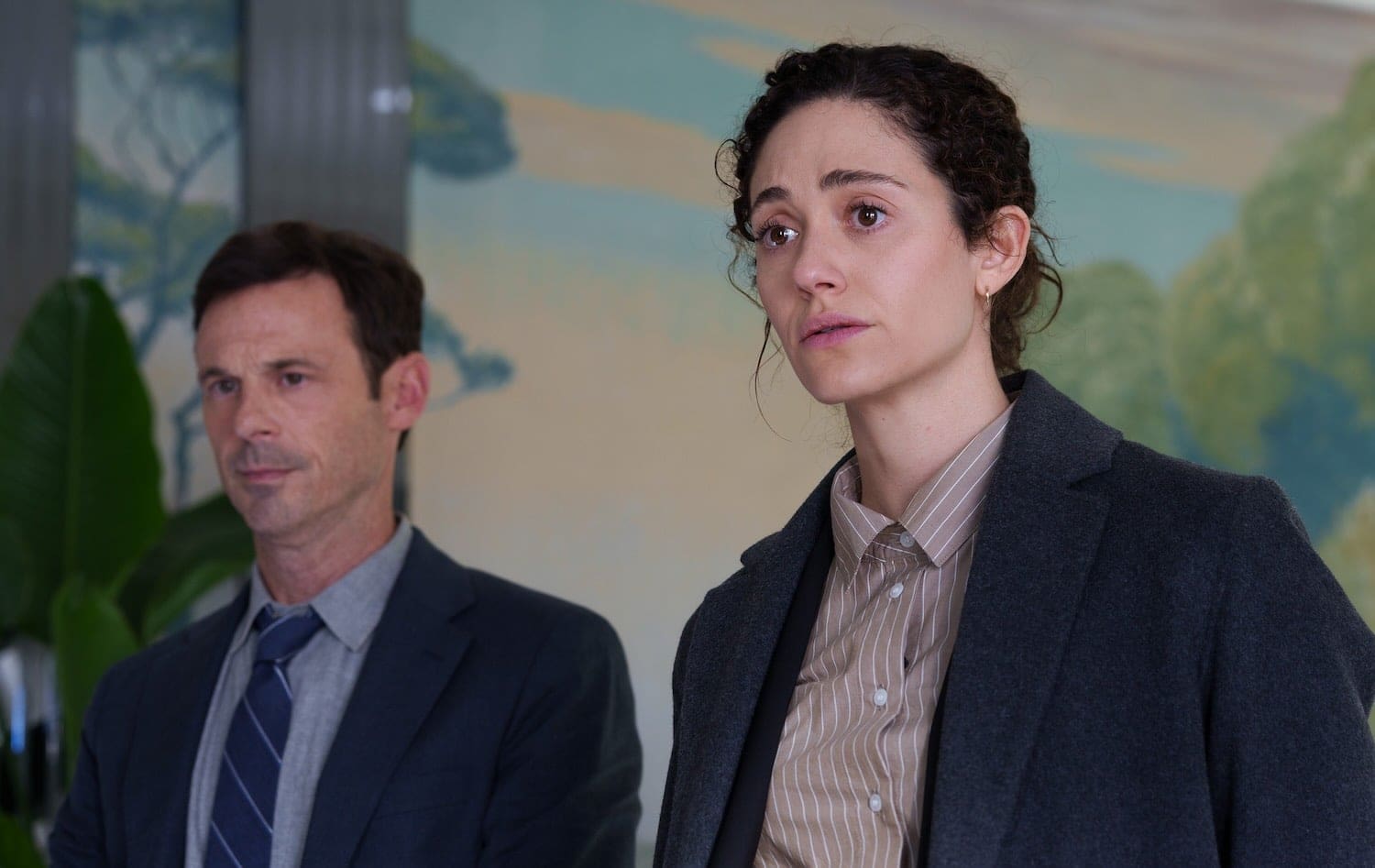
In the first episode of Hulu’s Furious, F.B.I. agent Alice Black (Emmy Rossum) visits the head of New York’s sex crimes division, Nora Washington (Quincy Tyler Bernstine), while working on a case about a potential female serial killer, Catherine (Lola Petticrew), who’s also a sexual assault survivor. Nora is busy reviewing child pornography, says her assistant (Layan Elwazani). In the meantime, she tells Alice, “We have cheese balls, if you’re hungry.”
That sums up Furious in a nutshell: horrifically bleak subject matter interjected with odd, facile whimsy. It’d be a tricky tonal feat to pull off for any series, but this one would have benefited from a more daring commitment to its neo-noir bona fides. Instead, it winds up neither sophisticated, pulpy, nor unique enough. A more apt title would have been Buzzkilling Eve.
One clue that helps explain the show’s lack of originality can be found in the credits, which state that it’s “inspired by” Bob Rafelson’s 1987 film Black Widow, a schlocky psychological thriller that saw Debra Winger’s data analyst going undercover to hunt down a mistress of disguise who marries and murders rich men. Furious loosely updates the film for the modern age, taking on sex trafficking and a system that maintains the narrative that, per Nora, “women are supposed to be hit and raped and go away and die quietly, not start murdering people.”
A key alteration to the story is that Catherine’s motivation is not money but something else entirely, as she hops from billionaire victim to victim without so much as snagging a 20 from their wallets on the way out. Alice becomes the only member of the F.B.I. capable of both finding and understanding Catherine, with the secrets to Alice’s own troubled past shedding light on the case and providing her with a measure of empathy for disturbed women. As Nora helpfully suggests, “Victims of violence are often the most violent.”

Even though Furious unfurls the specifics of its central conspiracy across eight episodes, the series spells out its ethos so early that it neuters any iota of suspense: Both the plot and the interior developments of the characters fail to get any more complex than the pop-psychology logic that “hurt people hurt people.” Catherine, in particular, feels too flat, and Petticrew can’t match her need to appear charming with the show’s need for her to appear menacing.
In addition to a photographic style that lacks flair and far too many plug-and-play stock characters, Furious features graphic torture scenes, insinuations of sexual violence against minors, and endless stomach-churning portrayals of trauma. These topics deserve a story that incorporates their sickening brutality without losing sight of what makes for compelling TV.
Creator Elizabeth Meriwether managed this feat before, with Dying for Sex, a laugh-out-loud tearjerker chronicling a terminally ill woman’s sexual awakening. On paper, Furious doesn’t seem to share many qualities with that 2025 dramedy, but an interest in how wronged women reclaim sexual and material power—whether from a for-profit medical system negligent about women’s pain or a slice of society that views them as disposable—comes through in both.
Unfortunately, Furious can’t manage to translate its righteous sense of indignation into a thriller that rewards its viewers with either pulse-pounding excitement or characters worth caring about. There are sprinkles of lightness throughout (Steve Way, of Ramy fame, is a delight anytime he’s on screen), but they don’t gel with the show’s darker edges. This procedural-cum-revenge fantasy doesn’t conjure fury so much as a sense of what could have been.
Since 2001, we've brought you uncompromising, candid takes on the world of film, music, television, video games, theater, and more. Independently owned and operated publications like Slant have been hit hard in recent years, but we’re committed to keeping our content free and accessible—meaning no paywalls or fees.
If you like what we do, please consider subscribing to our Patreon or making a donation.