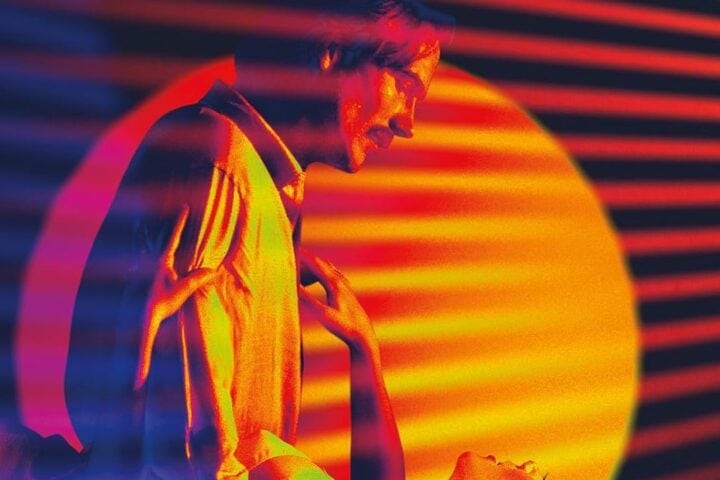
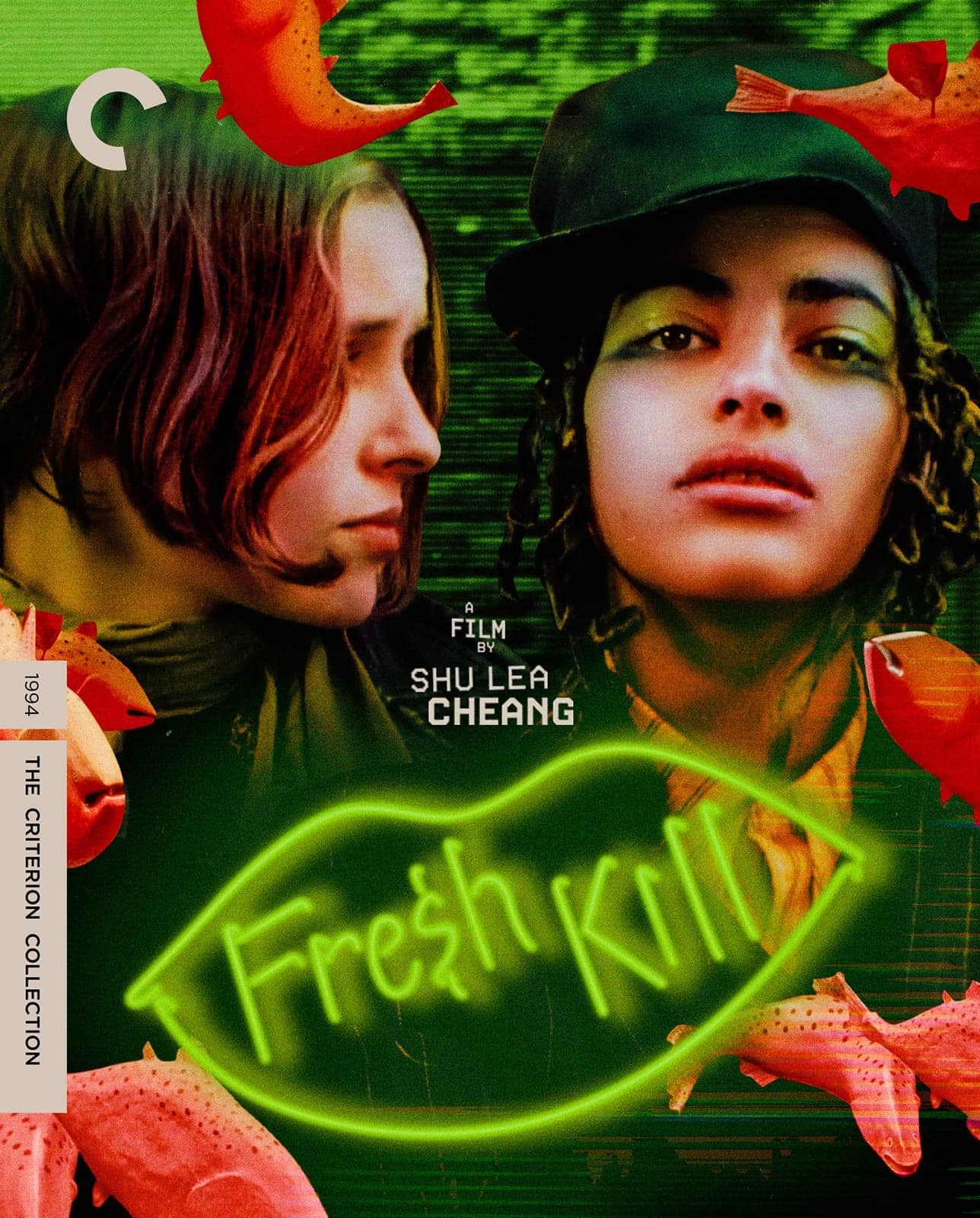
 Shu Lea Cheang’s Fresh Kill is as forceful as its title implies. Unfolding as a hallucinatory montage of Marxist critiques, ecofeminist diatribes, and queer, futuristic, dystopian imagery, the multimedia artist’s 1994 feature-length directorial debut is a prescient work of sci-fi agitprop from the early internet era. Think of it as a Godardian cinematic essay restructured for the MTV, channel-surfing age.
Opening in the Fresh Kills Landfill in Staten Island, the film partly follows the misadventures of a lesbian couple, Shareen (Sarita Choudhury) and Claire (Erin McMurtry), struggling to get by in a heavily polluted metropolis. While the former salvages electronics and other detritus from the junkyard, the latter works at a hip sushi joint serving radiated fish. This includes the newly popular fish lips on the menu, which sometimes turn the mindless yuppie and finance bro clientele green and causes them to utter gibberish, which isn’t much less unintelligible than the stream of numbers and corporate speak they normally spout.
When Shareen and Claire’s daughter, Honey (Nelini Stamp), is kidnapped, Fresh Kill briefly transforms into a sci-fi corporate nightmare. While both the kidnapping and the rampant pollution are traceable back to the multinational GX Corporation, the film’s kaleidoscopic transmissions of direct-to-camera addresses, highly stylized vignettes, and snippets of moralizing pundits and television hosts frequently glimpsed on old television sets aren’t terribly concerned with forming a cohesive narrative.
Fresh Kill instead sticks to a restlessly inventive mode of collage as it attacks late capitalism from all sides, whether through its depictions of GX’s various buyouts and mergers and its repackaging and rebranding of (literally) toxic products or the public’s seeming indifference to climate crisis, mass surveillance, and advertising that both spurs on and satiates its impulses.
When sushi chef and computer hacker Jiannbin (Abraham Lim) says, “The system works, but not for me,” it’s a rare moment of self-realization in a world where everyone appears to have been beaten down into a perpetual state emotional detachment. Fresh Kill doesn’t prescribe easy solutions. It’s magic isn’t only in foretelling the trajectory of exponentially increasing corporate malfeasance over the past three decades, but also in how presciently, and inventively, it foretells the psychological costs and social damage that the widespread flow of information ushered in by the internet would have in the 21st century.
Image/Sound
Criterion’s 1080p presentation of a new 4K restoration looks fantastic. The color balancing is naturalistic, while still highlighting the often splashy colors in the production and costume design. Black levels are also strong, particularly in scenes set inside the sushi restaurant. The image is consistently sharp, while details are impressive whether in close-ups of the actors’ faces or wide shots of the junkyard. On the audio front, the 2.0 surround sound is more than serviceable, with crisp, clear dialogue and a robust presentation of Vernon Reid’s eclectic score.
Extras
In newly recorded interviews, director Shu Lea Cheang and actor Sarita Choudhury talk about working together on the film. Cheang also discusses her media activism in the 1980s and the influence that European art films had on her, while Choudhury reminisces on her career in film and theater and connecting with Cheang through her installation work. Cheang also appears in a 2024 conversation with scholar Jigna Desai and in a short profile by the Guggenheim, touching on her short films, the genesis of Fresh Kill, and using technology to confront issues of gender and race discrimination. There’s also a brief doc about the 30th anniversary tour of the film that covers the self-distribution process and the positive reception of this work that feels timelier than ever. Rounding out the package is a foldout booklet with an essay by artist and technologist Mindy Seu, who provides a fascinating analysis of the film’s political and feminist critiques.
Overall
Shu Lea Cheang’s overlooked indie gem from 1994 gets a strong new transfer and solid slate of extras courtesy of the Criterion Collection.
Since 2001, we've brought you uncompromising, candid takes on the world of film, music, television, video games, theater, and more. Independently owned and operated publications like Slant have been hit hard in recent years, but we’re committed to keeping our content free and accessible—meaning no paywalls or fees.
If you like what we do, please consider subscribing to our Patreon or making a donation.