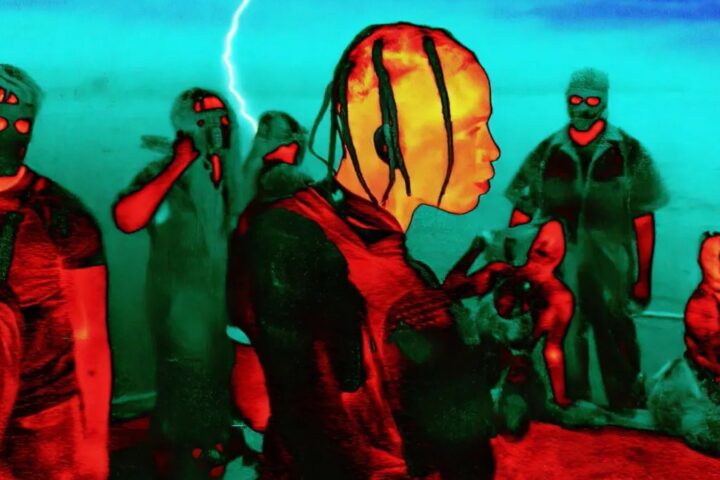
Stillz’s Barrio Triste is closer in some ways to the spirit of Reddit- and YouTube-educated filmmakers like Kyle Edward Ball (Skinamarink) and Kane Parsons (Backrooms) than its association with executive producer Harmony Korine might suggest. Stillz, in his Betacam-shot feature debut, luxuriates in the blurry slurry of pixels that seal off his recreated 1980s Medellín slums in their own bubble of historical, socioeconomic, and—increasingly, as the meandering mood piece barrels from hyperrealism into magical realism—metaphysical reality.
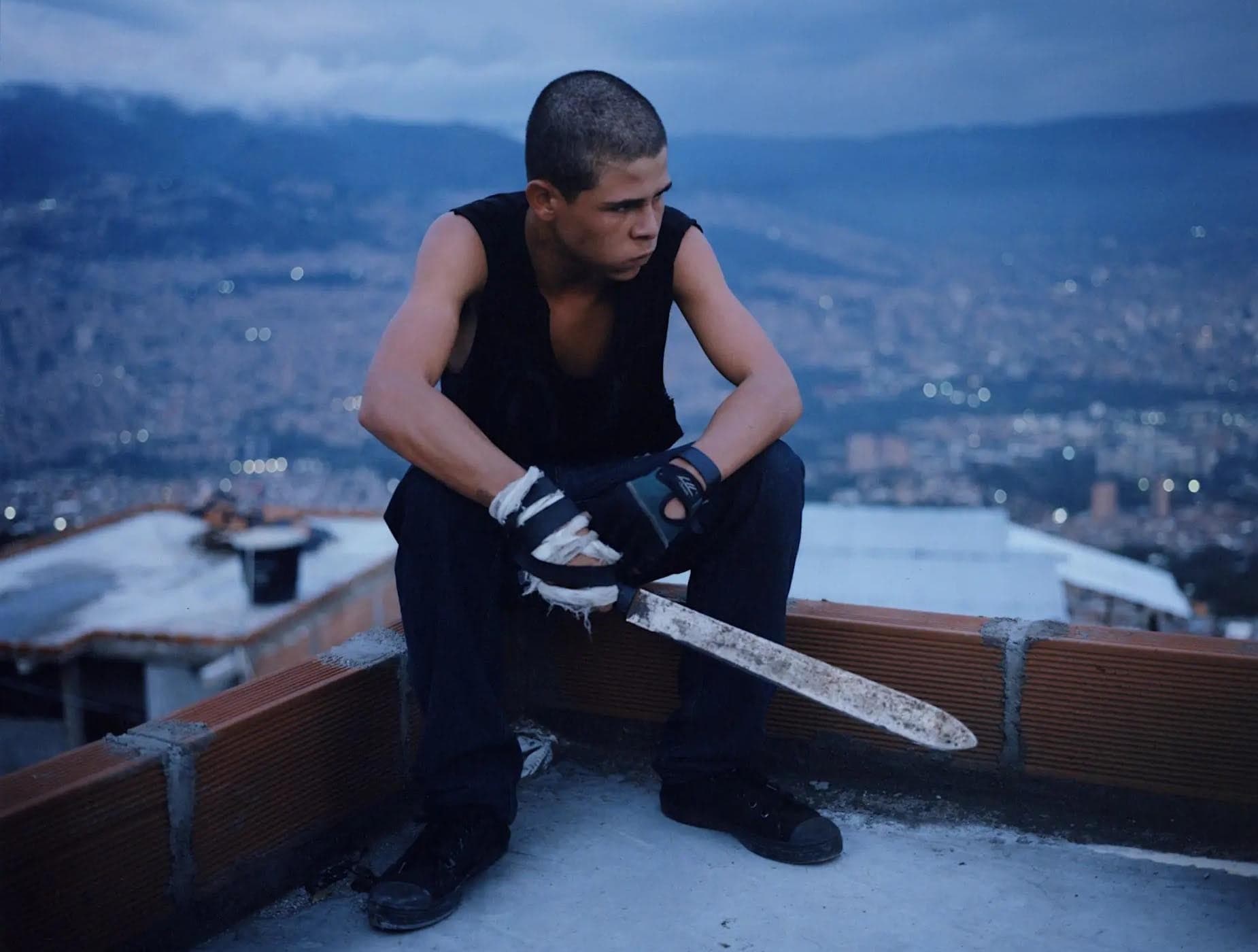
Shot entirely on location, Barrio Triste follows a youth gang of tween hoodlums who snatch a camcorder from a local news reporter and begin obsessively filming their own activities. We see these gaunt boys up close, with their scabbed skin, shaved heads, and ripped jeans, as they squat and dance and drink and tease one another in the shantytown’s dusty alleyways.
Images tend lightly toward the uncanny, with help from the impressionistic thrums of composer Arca’s electronic soundtrack. When we see a half-dozen shirtless boys crammed into a brick shack, gawking silently at TV static or stroking an oddly placid pet rabbit, the music moans hypnotically, and as the group’s de facto leader, Piojo (Juan Pable Baena), lopes angrily down a street kicking parked cars, an angry bass matches his thrashing movements.
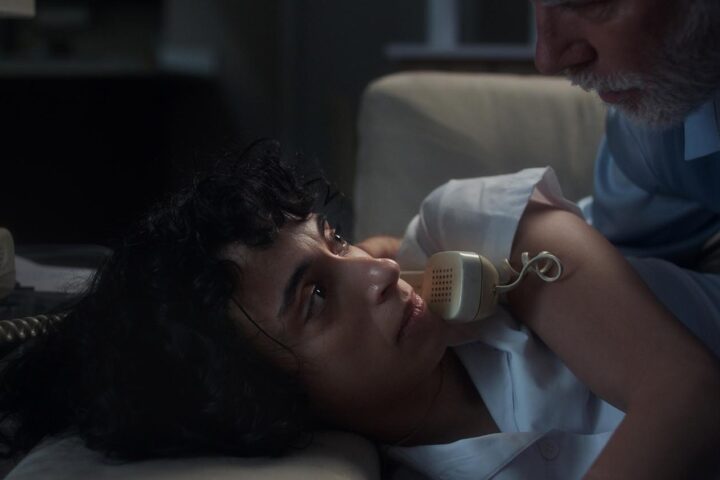
Early overtures toward a City of God-style crime plot involving a jewelry heist gone wrong prove to be a feint, as the film drops even the vaguest semblance of narrative to capture increasingly wordless, thinly connected sights and sounds of the slums and the boys’ ritualistic world within them. As day passes into night, lit by the distant neon of the city center and roaring crimson of fires in the ruins, the film leans into horror-adjacent magical realism, with Slenderman-like angelic and demonic figures emerging from the inky clouds of pixelated darkness to claim the lost children—peacefully or violently. (Interspersed throughout the film are close-up cutaways of a tearful Piojo speaking to an unidentified interlocutor on camera in a message to his “future self,” confessing his crimes and stereotypical insecurities, about parents, death, and happiness.)
Barrio Triste relies on a mood of disaffected melancholy, if without a clear direction. Straddling the line between empathetic realism and aestheticized poverty porn, it suggests Korine’s Gummo but without that film’s textured characters and performances. As a prefabricated memory of a time, place, and subculture, it also doesn’t hold a candle to films that have captured similar subjects as they were and are, such as Nobody Is Innocent, Sarah Minter’s powerful 1986 docudrama about Latin American youth rebellion. But Stillz’s film does at least memorably express his interest in Betacam as a haunted format in which realism and fantasy coexist.
Since 2001, we've brought you uncompromising, candid takes on the world of film, music, television, video games, theater, and more. Independently owned and operated publications like Slant have been hit hard in recent years, but we’re committed to keeping our content free and accessible—meaning no paywalls or fees.
If you like what we do, please consider subscribing to our Patreon or making a donation.