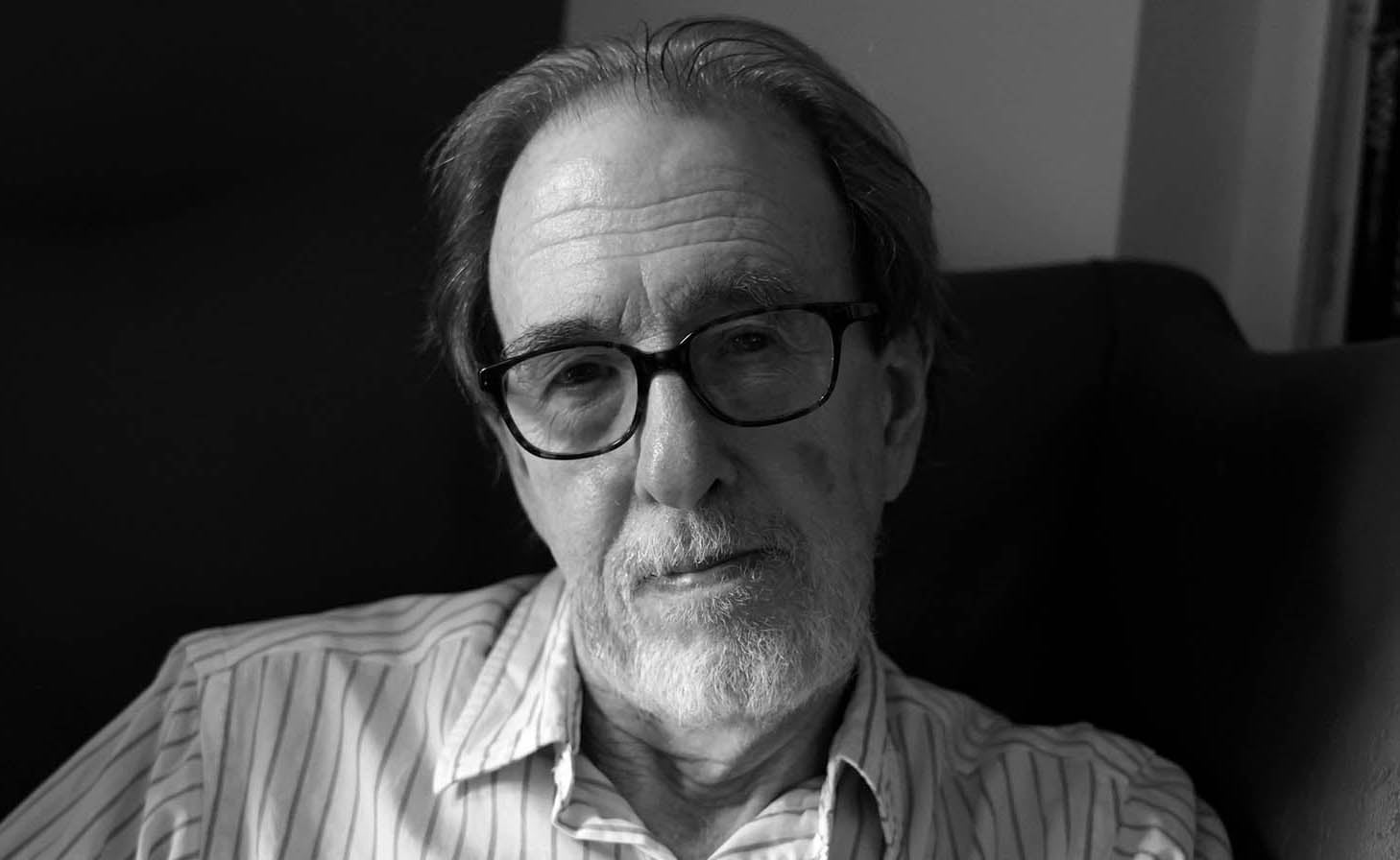
Ross McElwee is no stranger to dealing with death in his films. In 1993, he grappled with the loss of his father in Time Indefinite. At the time of the documentary’s release, he told an interviewer, “The filmmaking itself, in its attempts to confront death directly, to somehow paint it into a corner, turns out to be just another denial of death—a way of distracting the filmmaker from dealing with death and then getting on with life.”
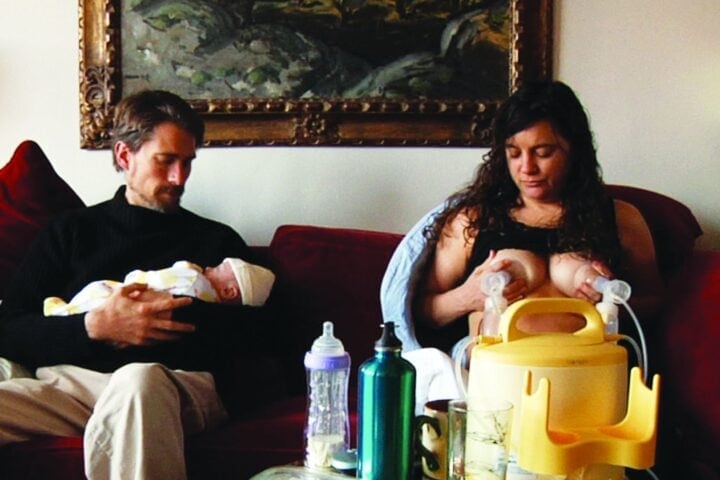
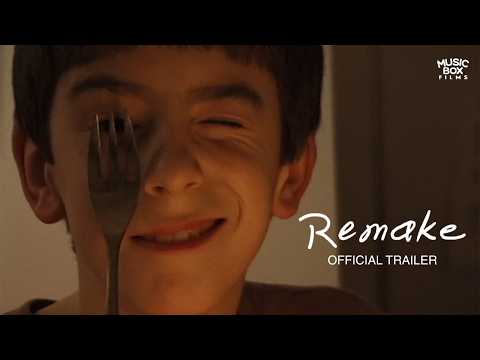
Decades later, McElwee found himself staring down another loss: his 27-year-old son Adrian’s death by opioid overdose. The film he made in response to this tragedy, Remake, takes an opposite approach to death than Time Indefinite. Through processing a video archive that includes footage shot by Adrian himself, McElwee unblinkingly faces the paradox of his son’s virtual presence and physical absence as each passing day threatens to relegate him further into the realm of memory. Remake thus functions as a tribute to both the power of documentary to reconstitute the past and a concession of its limits to supplant it.
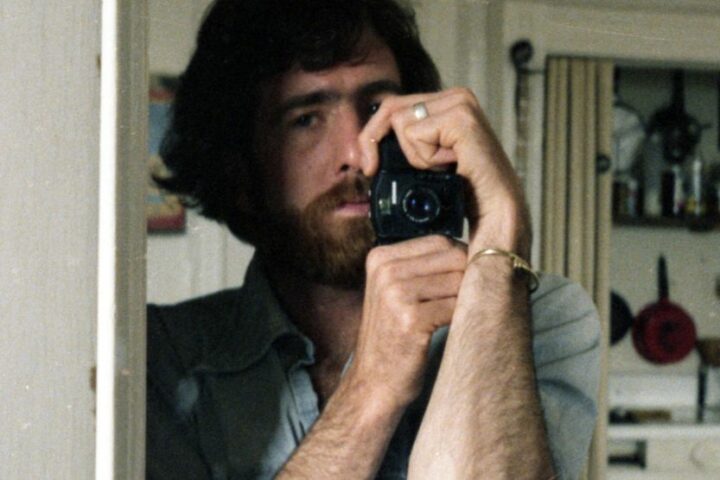
This investigation of Adrian’s life and death dovetailed poetically with another idea already in progress for McElwee: documenting the attempts to adapt his breakout film, 1985’s Sherman’s March, into a fictional work. That project, in which the director grapples with his singleness and Southernness, now feels like a progenitor of everything from reality TV to social media storytelling. Both self-reflexive journeys for McElwee in Remake drive home the painful realization that documenting his life can neither pause time nor preserve people.
I spoke with McElwee ahead of the theatrical debut of Remake at New York’s Film Forum, which will also screen Sherman’s March the week prior. Our conversation covered how his editing collaborations unlocked a new style of filmmaking, why he excised a storytelling device that enumerated opioid deaths, and what he thinks of himself as now if not a filmmaker.
Over the course of your career since Sherman’s March, the autobiographical style of filmmaking has gone from being novel to essentially a default mode of popular image-making. Since you’ve also worked as a professor, how would you instruct students to keep the focus on the perspective over the persona?
People don’t want to see me or hear from me. They want to see what I see. My son said, “Why can’t you appear before the camera more than you do?” But, yes, it’s been an interesting two decades. I’ve actually retired from teaching, but my students were all coming through with the idea of making nonfiction films, which meant making TikToks or something like them. Of course, we were giving them 16mm equipment to work with, but we quickly realized [that we were] going to be doing something different. They’ve actually adjusted quite well.
The first few assignments we sent them out in groups of two, [making] it a little more difficult to just film yourself. And using 16mm equipment, which you only have an allotment of 20 minutes to film, and it’s bulky. The 16mm film has to be loaded into camera magazines. It’s antithetical to the way that they’re used to firing off little quick videos on their phones. There actually hasn’t been such a huge problem of making the transition from analog to digital in terms of teaching.
As a fellow son of the South now living above the Mason-Dixon Line, has grappling with the paradoxes and contradictions of southern identity been helpful as a framework in sifting through other identities?
For me, there’s a component of awkward challenging that one senses as you look at my films over the years. Part of it is perpetually being defined as an outsider. Even when I’m down South filming, I live up North. What does that mean? Even when I’m up North, I’m from the South, so I’m always undergoing a compromise in how I feel about filming, and also how I’m perceived as a subject in the film. I tried to use that to some positive effect in creating a persona who drives the films forward. Someone who’s a little perpetually confused as to where he is in this world of North and South, and you could extend the metaphor to quite a few other things.
Walker Percy was the person that I identified with when I was younger. His novel The Last Gentleman was a seminal book for me in which he explored a lot of these contradictions of being a Southerner, but also dealing with what it means to meet people from the North. I think that it’s not so much literally about the South versus the North for me. It’s much more about perpetually finding myself in an outsider position. Not because of anything in my character or my persona, but more because I’m holding a camera. That makes me a different kind of being.
Remake’s coda gets at this idea that the camera is a tool for you to connect but might also serve as a shield keeping others from doing the same. Has this been a challenge you’ve gotten better at reconciling, or have others around you just come to accept this blurring of life and art that the camera facilitates?
I think both things are true. When I was experimenting with that, it was awkward in Sherman’s March because there weren’t a lot of people doing it. There were some, but not a huge number, and certainly wandering around the South with a camera was a very unusual thing for people who lived there to encounter. I managed to somehow work that into my persona, so people trusted me to film their lives. I think part of that has continued, although I think people are much more used to people with cameras filming real life. It’s become somewhat easier in some ways, but also more difficult because people are now much more aware of the fact that anything that anybody films of them can end up on the internet, and then you no longer have control of the image that you’ve allowed to be made of yourself. So, times have changed.
In previous interviews, you’ve described your own presence in the work as akin to playing a character who was a version of yourself but not the whole self. Did Remake require more of your true, vulnerable self?
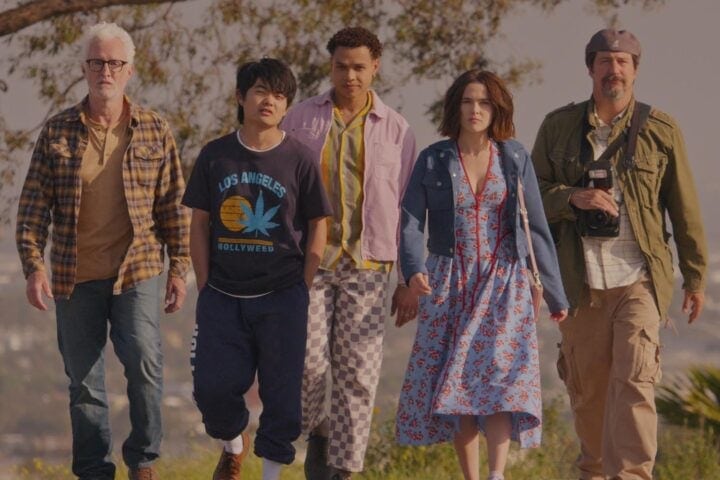
I think in the beginning, I do play that character. It’s not really playing a character. It’s just exaggerating a certain quality about what’s real in you. In this case, it was this curiosity about intersecting with Hollywood, and seeing if it’s possible that they could take one of my documentaries and turn it into a fiction film, and how ironic and surreal it was for me. I play with those notions a bit, and it’s humorous and self-deprecating for the most part. I think it does change completely when my son dies, and I think at that point on, what you called the true self, or a truer version of the self, is what I fell into letting drive the film forward.
How did the decision to narrate the film to Adrian come about? Was it different from how you think about voiceover in your other work?
I can’t remember exactly how it happened, but I think I was just looking at the crayfish footage in the very beginning and end of the film. I actually remember audibly talking to him as I was watching footage and beginning to organize it, and using the second-person singular “you” when I’m thinking about Adrian. Then, suddenly I said, “Maybe part of the film, if not all of it, should be in the second person as a direct address to my son who’s no longer there.” I realized it did probably have a place in the film because I sampled it out on some people, and it just seemed to be appropriate. The whole film, that would be too much.
But no, I’ve never done it before, and I think it takes the film into a different mode than I’ve worked with. It becomes more like a letter to my son, who’s in a place where he can never receive the letter. It’s an epistolary attempt to connect with him, and it seems to work.
Both Sherman’s March and Remake follow micro and macro storylines, with larger political concerns inevitably bleeding into your personal life. How do you balance those in a cinematic narrative?
There’s no formula. I’ll say both with nuclear weapons and the opioid crisis, there’s a connection there that I never really directly thought about. Both are incredibly destructive forces that have been unleashed on the world, but I think it’s always been a matter of deciding how my addressing these issues can be done in a way that’s perhaps different and more effective than the way other documentary filmmakers have tried to address [them]. There have been dozens of films about nuclear weapon proliferation, both then and even more now. Of course, opioids have gotten a tremendous amount of press and presence in the world of documentary filmmaking, and I didn’t want to do that approach where it would really be objectively about just that.
At one point, I had little title cards that appeared in Remake, which started to do the countdown of how many people had died on opioids, which wasn’t ever addressed by me in these experiments that I did. I was just letting the cards pop up, and then the film would resume being about my life with whatever I was filming with Adrian or whatever was happening with Sherman’s March. I thought my intention at that point was to try and say the father is so distracted by all of these other things that he’s dealing with, he’s not even aware of what’s going on out there. Because on one level, I read the papers just like everybody else, but it didn’t seem to have anything to do directly with my life. At a certain point, I realized it was breaking up the film too much, so I abandoned that approach. But it kind of comes back at the very end where I do say the whole opioid catastrophe has caused me to be really angry at so many different sources, and I give a grocery list of places where I hardly know how to vent my anger.
Did Joe Bini, your co-editor, bring any of the texture from his work on fictional material with filmmakers like Andrea Arnold and Lynne Ramsay?
Joe brought his skills to help me solve major passages of the film that I was stymied by. I’d been working on the film for quite a while before Joe came in, and as to whether they derive from or reflect his work on other films, I guess they do. Looking back on it now, I don’t know if anything I saw that he edited was transferred over to the passages that Joe edited.
But let me just also say about his presence in the film that he wasn’t only a wonderful editor, but he also worked with us for a couple of months. I felt his humanity and his way of relating to me as a filmmaker who’s struggling with this project was something I really hadn’t experienced before in an editor. Of course, I’ve only had one or two editors before this because I’ve always edited in my own films. But working with him was just such a pleasure in a way that’s hard to articulate because he was just a really great person to work with, indefatigable and coming up with ideas all the time about how to improve something. But I can’t answer your question specifically about whether I can trace connections to those films. I never tried to do that.
I think we’re always the sum of our influences and experiences, and at a certain point you can never disentangle them. I’m thinking about those glimpses of your archive that represent the mental state of feeling like the reels of your life are out of order, which has a certain expressionistic quality that I see in Ramsey and Arnold but less so in your previous work. Were there elements of Remake that required you to rethink elements of your style and aesthetics?
Oh, sure, the whole premise of the film! I’ve never tried to deal with something so personally tragic. My father died, and that’s certainly part of Time Indefinite, but it’s quite a different thing when a parent dies as opposed to a son. Do you have children, just curious?
I do not.
It’s just a totally different, negative experience. But I’m usually in search of comic moments when I’m filming life around me, my own life, the lives of others, and that went out the window with this particular film. And the other component, by the way, is that a lot of this footage was shot by my son, and it occupies an important stretch of the movie. I had no control over what he shot, and I actually discovered quite a bit about his life by looking at that footage.
So, I think it’s radically different for me to make a film like this. Again, Joe was instrumental, and with Patrick Saxer, the associate editor, they kept coming up with ideas to do interesting cross-cutting between the present, which wasn’t the true present of the film at that point, and the past as represented by the home movies that I’d shot. I would’ve done some of that, but not as much as they did, and it was gratifying to see that work out as well as it did in the film.
A frequent refrain in Remake is your narration “I used to be a filmmaker.” Do you know what you are now, or has making this film brought you closer to an answer?
What I am now is someone who’s on the road pushing his film at the behest of his distributor as hard as he can. To be honest, I have no idea what I’ll do next. It could be another film of some kind that’s radically different from Remake, and maybe radically different than any film I’ve made previously. I just don’t know. I’m not forcing myself to really make that decision yet.
Since 2001, we've brought you uncompromising, candid takes on the world of film, music, television, video games, theater, and more. Independently owned and operated publications like Slant have been hit hard in recent years, but we’re committed to keeping our content free and accessible—meaning no paywalls or fees.
If you like what we do, please consider subscribing to our Patreon or making a donation.