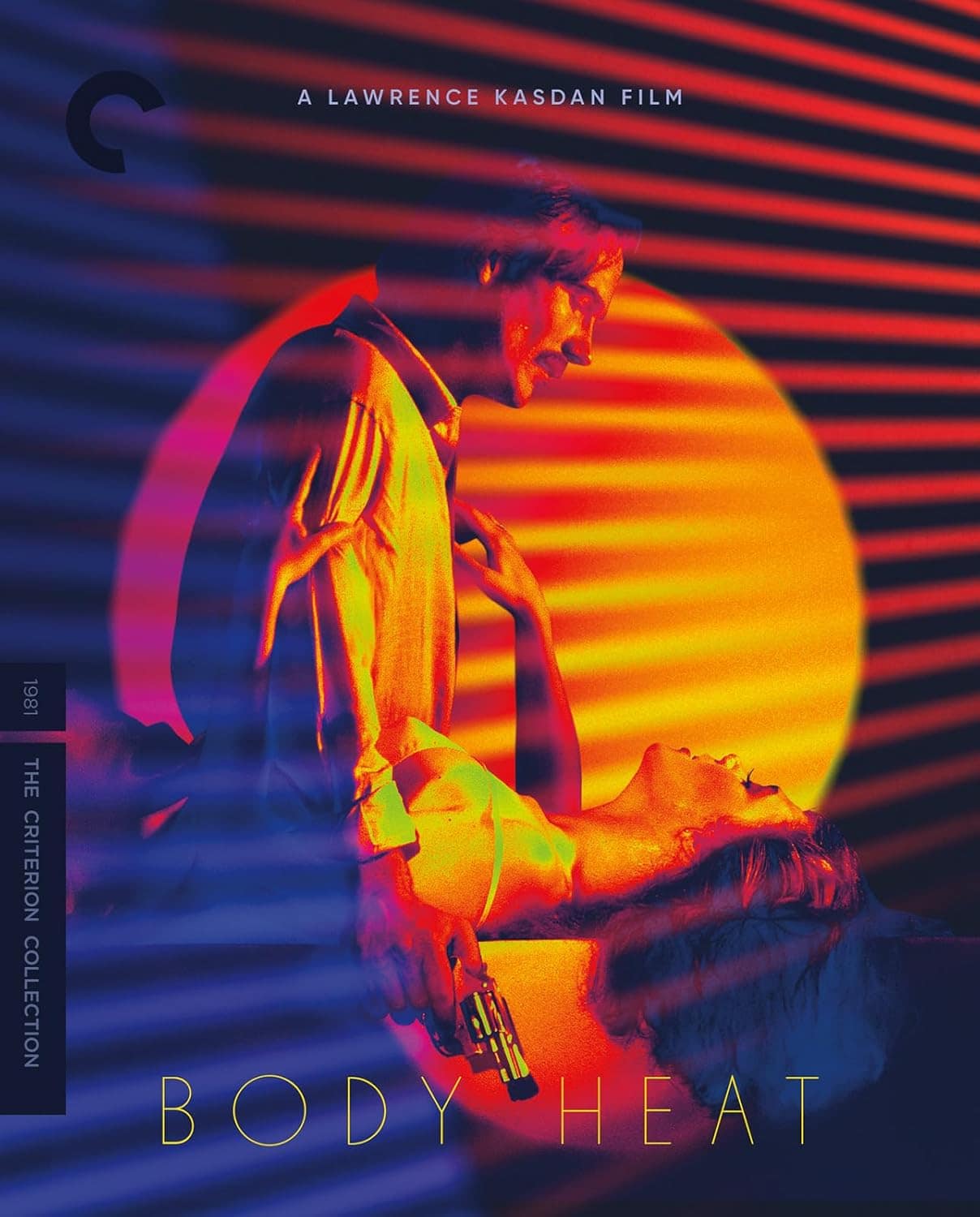
 Writer-director Lawrence Kasdan’s Body Heat provided the hot-blooded template for a spate of 1980s and ’90s films that ranged from neo-noirs like The Grifters and After Dark, My Sweet to the veritable inundation of erotic thrillers that followed in the wake of Basic Instinct. While earlier films like Point Blank and The Long Goodbye (which might better be termed revisionist noirs) tended to parody or deconstruct the genre’s abiding tropes, these newer neo-noirs innovated by upping the ante when it came to graphic depictions of sex and violence.
Body Heat owes a substantial debt to Billy Wilder’s Double Indemnity for the architecture of its twisty storyline. Ambulance chaser attorney Ned Racine (William Hurt) takes up with wealthy, bored Matty Walker (Kathleen Turner), whose possibly mobbed-up husband, Edmund (Richard Crenna), only shows up in town some weekends. Steamy sex inexorably leads to a murder plot, after which events go increasingly awry for Ned, as they will in your archetypal noir narrative.
The dialogue, especially in the teasing exchanges between Ned and Matty, exhibits distinct traces of Wilder’s snappy patter between Walter and Phyllis. As Body Heat progresses, and the noose slowly tightens around him, Ned has to increasingly spar with cynical prosecutor Peter Lowenstein (Ted Danson) and Detective Oscar Grace (J. A. Preston), the film’s unyielding moral center, its Barton Keyes analog. Early on, Graces notes that, under the influence of the heat wave assailing Miranda Beach, “Pretty soon people think the old rules aren’t in effect.” But in the world of Body Heat, the abiding strictures of morality prove ineluctable.
As a director, Kasdan finds some astute visual techniques to articulate the film’s thematic concerns. As in many classic noirs, window blinds abound, signifying the compromised vision that affects Ned in his relationship with Matty. Blinded by sex, he never sees her for who she truly is until it’s far too late. Red, the color of passion, figures prominently in Body Heat’s color scheme. Whereas the striking visual composition of the final encounter between the lovers uses the contrast between Matty’s white clothes and the black pall into which she finally disappears attempts to recreate the monochromatic aesthetic of classic noir.
At two key moments in the film, the camera executes unexpectedly dramatic and seemingly unmotivated movements. It suddenly swoops down on Ned standing by his car right before he breaks into Matty’s house for their first tryst. And later it dizzyingly cranes up to a God’s-eye view over Ned’s office when they agree to murder Edmund. Beyond serving as visual punctuation of a sort, these cinematic gestures serve thematic ends. The former seems slyly to imply that Ned’s decision might just signal his downfall, while the latter suggests that some potentially omniscient force may be monitoring this fateful decision.
Body Heat’s final moments, set in a seemingly tropical paradise, are wonderfully ambiguous. Matty seems to have achieved everything that she ever wanted, as indicated by the entry in the college yearbook that in the previous scene Ned received in jail, revealing her true identity. But the look on her face indicates that she, too, resides in a prison—emotional, existential, and maybe even metaphysical—entirely of her own making.
Image/Sound
The 2160p UHD transfer of Body Heat, sourced from a 4K scan of the original camera negative, excellently captures the moody cinematography by Richard H. Kline. Shades of those almost ubiquitous reds and oranges really pop in the HDR 10 presentation. Black levels are totally uncrushed, resembling inky pools of darkness in the frequently moody nighttime scene. Grain in the low-light scenes like Ned’s fog-bound drive to the Breakers looks well-managed.
Audio comes in DTS-HD Master Audio stereo or 5.1 surround options, the former offering the original theatrical experience, the latter opening up the film’s modestly active soundscapes. Both mixes admirably present composer John Barry’s wonderfully evocative score that modulates from sultry jazz to Hitchcock-era Bernard Herrmann.
Extras
In an on-camera interview shot earlier this year, Lawrence Kasdan discusses his student years, working with George Lucas and Steven Spielberg, segueing into directing with Body Heat, and more. In another recently shot piece, editor Carol Littleton and film historian Bobbie O’Steen discuss the former’s many collaborations with Kasdan, before zeroing in on the process of cutting Body Heat, paying specific attention to two key sequences. Interesting mention is made about how Littleton’s background in music plays a role in her editing process.
A three-part making-of doc from 2006 features Kasdan, Littleton, Kline, Barry, and actors William Hurt, Kathleen Turner, and Ted Danson. (Hurt and Turner also turn up in short interviews that were shot right after the making of the film.) Also included is a selection of deleted scenes, which can be viewed together or separately, and the film’s trailer, a panoply of potent imagery set to the sound of wind chimes. Lastly, the enclosed booklet has a typically incisive essay from author Megan Abbott about the film’s use of noir aesthetics and archetypes.
Overall
Body Heat is a remarkable example of pouring new wine in old bottles, not so much reinventing the noir genre as paving the way for the aesthetic excesses of the 1980s and ’90s.
Since 2001, we've brought you uncompromising, candid takes on the world of film, music, television, video games, theater, and more. Independently owned and operated publications like Slant have been hit hard in recent years, but we’re committed to keeping our content free and accessible—meaning no paywalls or fees.
If you like what we do, please consider subscribing to our Patreon or making a donation.