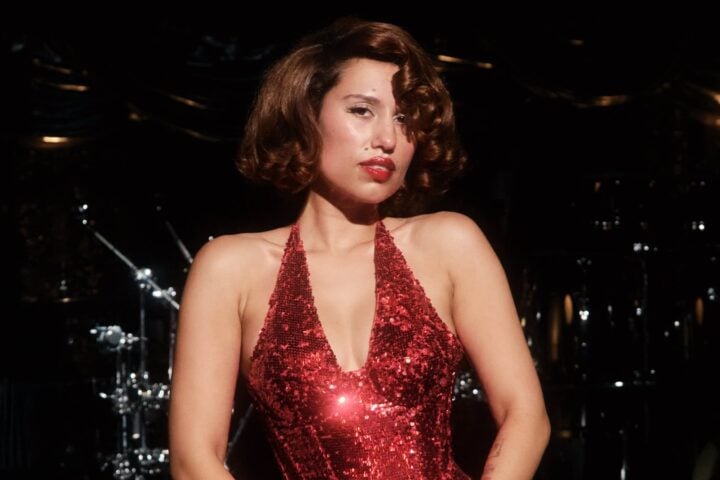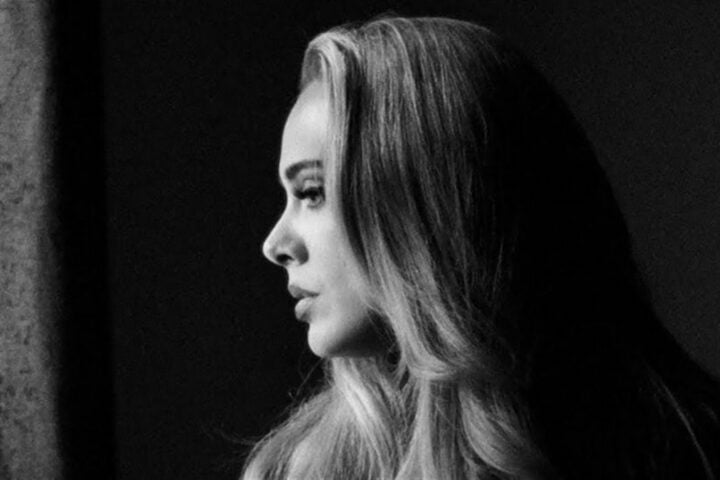
Newcomer Sienna Spiro’s enormous voice and ballads about heartbreak have already earned her comparisons to Adele and Amy Winehouse. But the British singer-songwriter clearly wants more from us than just a good cry. She fears losing everything that she loves, and her debut album, Visitor, sees her moving from clinging to the people and moments she treasures to loving them because they have the audacity to pass her by.
Among the current wave of British soul-pop sirens, Spiro stands out from Raye, Olivia Dean, and Lola Young as the most deliberately old-fashioned. Visitor’s songs sound beamed in from an earlier decade, and this choice runs deeper than nostalgia: A young artist who presents herself as a visitor from another era dovetails with songs about things that refuse to last.
The album’s live instrumentation is reflective of the warmth and permanence Spiro seems to be chasing in her personal life, and Philadelphia-soul strings are draped over nearly every track here. Opener “This Is My House,” which features a sample of the late poet Nikki Giovanni’s “My House,” introduces the album’s central tenet: The fear of being temporary to others begins with feeling like a stranger to yourself, and the first “house” Spiro reclaims is her own, turning years of estrangement from her body into an act of ownership.
Similarly, “Great Expectation” finds Spiro stuck in New York, waiting on a man who promised to fly out and see her. She imagines their reunion in vivid detail, and the fantasy version of him, she admits, beats out the real one, since a daydream stays loyal in ways that a person rarely does. Over tumbling piano and bright percussion, the chorus turns loss into a grin—“If happiness is just an illusion/You were the best I ever had”—while background harmonies swell like a crowd cheering a woman who’s decided her fixation was worth it.
Elsewhere, the title track features a 20-piece orchestra, recorded live in a single take. When Spiro sings, “I want to be remembered,” her terror of fading from someone’s memory is captured in the swelling strings, recorded and preserved forever. In stark contrast, “Pure” strips away the sweeping musical accoutrements, delivering a numbed confession about depression that’s deafening in its quietness.
At times, Visitor’s ballads glide by on tasteful orchestral sheen when a little texture would have added some needed grit. But these lapses are minor, and on the jazzy finale, “Mono No Aware,” Spiro homes in on the lesson she’s been circling throughout the album: that people and moments become even more precious when they disappear, and the cure for dreading their ending is to love them even harder while they’re still here.
Since 2001, we've brought you uncompromising, candid takes on the world of film, music, television, video games, theater, and more. Independently owned and operated publications like Slant have been hit hard in recent years, but we’re committed to keeping our content free and accessible—meaning no paywalls or fees.
If you like what we do, please consider subscribing to our Patreon or making a donation.