 Ira Sachs’s 1996 debut feature The Delta didn’t exactly arrive amid a total drought of LGBTQ representation in American cinema, but with the benefit of 20/20 hindsight, it’s striking how revolutionarily identity-vague (for lack of a better term) it feels compared to many of its contemporaries.
The ’90s, for better and worse, produced a glut of earnest, crusading works that invariably stressed coming out as not only the supernova cornerstone of every gay person’s life, but one that also reduces gay life to a set of strict binaries—gay or straight, closeted or out, sad or happy. The Delta, when held against the amiable optimism of Beautiful Thing, Get Real, or Trick, feels almost surreal in its lack of sexual generalization. This isn’t a film where characters, first and foremost, exist for the purpose of guiding their audiences into feeling seen, feeling safe and feeling validated. It’s far slipperier than that, and underlines the extent to which Sachs has devoted his entire career to leaning into the mysteries of human sexual behavior.
The Delta drifts lackadaisically between a pair of young men in Memphis, Tennessee, who, following what would otherwise have been a one-night stand, stretch a chance second encounter into something resembling flitting intimacy. The boyish Lincoln (Shayne Gray) has a girlfriend but floats in and out of the city’s gay spaces, shy but handsome enough to command everyone’s attention and also maintaining the upper hand in every potentially dangerous situation that he samples. That’s until he meets Minh “John” Nguyen (Thang Chan), a biracial immigrant who, in halting English, seems to directly challenge Lincoln into sharing of himself beyond the transactional nature of cruising. Like the film itself, Lincoln and Minh never stray from the ambulatory, hovering always on the outside of their interactions and, ultimately, themselves.
Sachs’s career is littered with characters who don’t fit into any of the boxes that seem predetermined for them. That’s patently true of Lincoln, whose clean, smooth good looks and potent combination of privilege and pugnacity ought to see him blazing trails, not slinking to them under cover of night. But it’s Minh, having already spent his youth trying to reconcile his Black and Vietnamese ancestry in the South, who more successfully resists categorization, almost by necessity. With an improvisatory spirit that betrays Sachs’s early interest in John Cassavetes, The Delta seems to mysteriously change course about which character is the film’s true protagonist as often as the film’s own cinematic approach quietly changes gears, formally aligning it more closely with, say, Apichatpong Weerasethakul than Cassavetes.
Compared to the aforementioned “coming out” fairy tales, The Delta seems uninterested in the moment of rupture that so many queer films of its era treat as both inevitable and redemptive. Sachs focuses exclusively on the long, unmarked stretches before and after. Lincoln exits The Delta returning to his girlfriend, to his daylight self, and the film presents this not with condemnation but with something closer to melancholy inevitability. But both men remain opaque, their identities, sexual or otherwise, less a destination than a river they keep crossing without ever quite reaching the other side.
Image/Sound
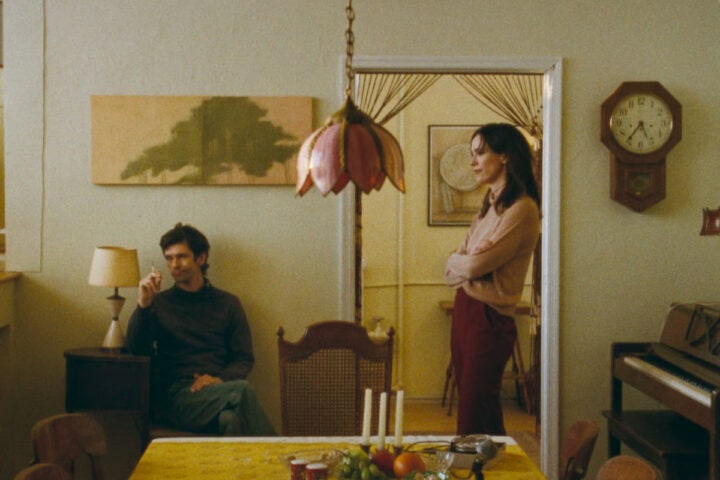
Ira Sachs shot The Delta on 16mm, giving the whole film a rich, largely nocturnal texture reminiscent of a half-remembered dream. Criterion’s 2K digital restoration is remarkably tactile and moody, with the haze of the Mississippi River palpable throughout. It’s not a showroom-worthy effort, but it more than capably conveys The Delta’s humid atmosphere. Adding to the effect, the lossless mono audio faithfully renders the film’s intimate, naturalistic sound design, rife with nightshade crickets and ambient, half-heard dialogue.
Extras
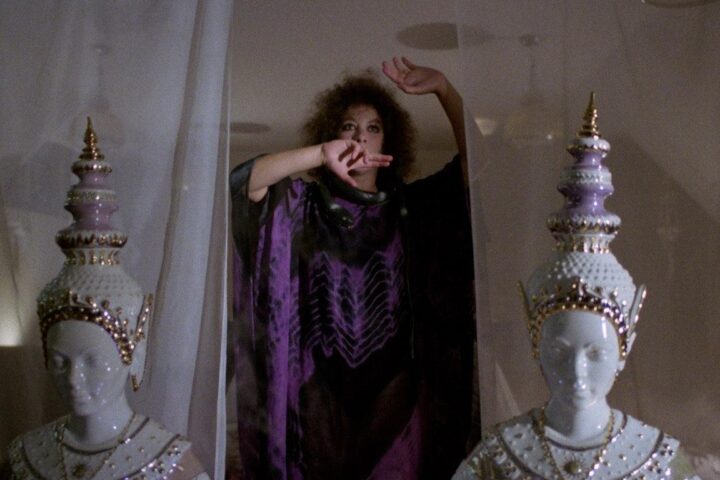
First and foremost, Criterion’s presentation of Sachs’s debut feature includes two key shorter works from prior to The Delta’s production. Vaudeville, from 1991, is a nearly hour-long portrait of a traveling troupe of performers, many LGBTQ, working out their interpersonal dramas while trying not to ruffle feathers in mid-America. While the short certainly feels indebted to John Cassavetes, it’s also a boldly pro-gay document from the waning Reagan-Bush era. It’s joined by “Lady,” a half-hour 1993 showcase for Dominique Dibbell’s one-woman show, closer in sentiment to something like Portrait of Jason, by way of the house of Kuchar.
Supplementing The Delta itself is a quarter-century-old commentary track from the film’s DVD release, which finds Sachs sharing insights from a far less established point in his career (he hadn’t even yet completed his sophomore effort, Forty Shades of Blue). Bringing things full circle is a fresh discussion on the film between Sachs and friend (and frequent Slant contributor) Keith Uhlich, complete with Harold Bloom namechecks and a clear declaration from Sachs that Lincoln (who’s frequently described by reviewers as being bisexual) was always intended to be read as gay, not bi. Rounding out the set is another acutely perceptive booklet essay by Reverse Shot’s Michael Koresky.
Overall
The Criterion Collection’s release of The Delta makes a solid case for Ira Sachs’s daringly abstruse vision of queer life outside of easy categorization.
Since 2001, we've brought you uncompromising, candid takes on the world of film, music, television, video games, theater, and more. Independently owned and operated publications like Slant have been hit hard in recent years, but we’re committed to keeping our content free and accessible—meaning no paywalls or fees.
If you like what we do, please consider subscribing to our Patreon or making a donation.