In her follow-up to 2022’s Amanda, writer-director Carolina Cavalli explores many of the same themes from her debut feature, so much so that The Kidnapping of Arabella might as well be a sequel. This has a lot to do with the return of Benedetta Porcaroli, who gives just as mesmerizing a performance as she did in Amanda, playing what is, in essence, the same role: an oddball misfit, but an older, more troubled version this time around.
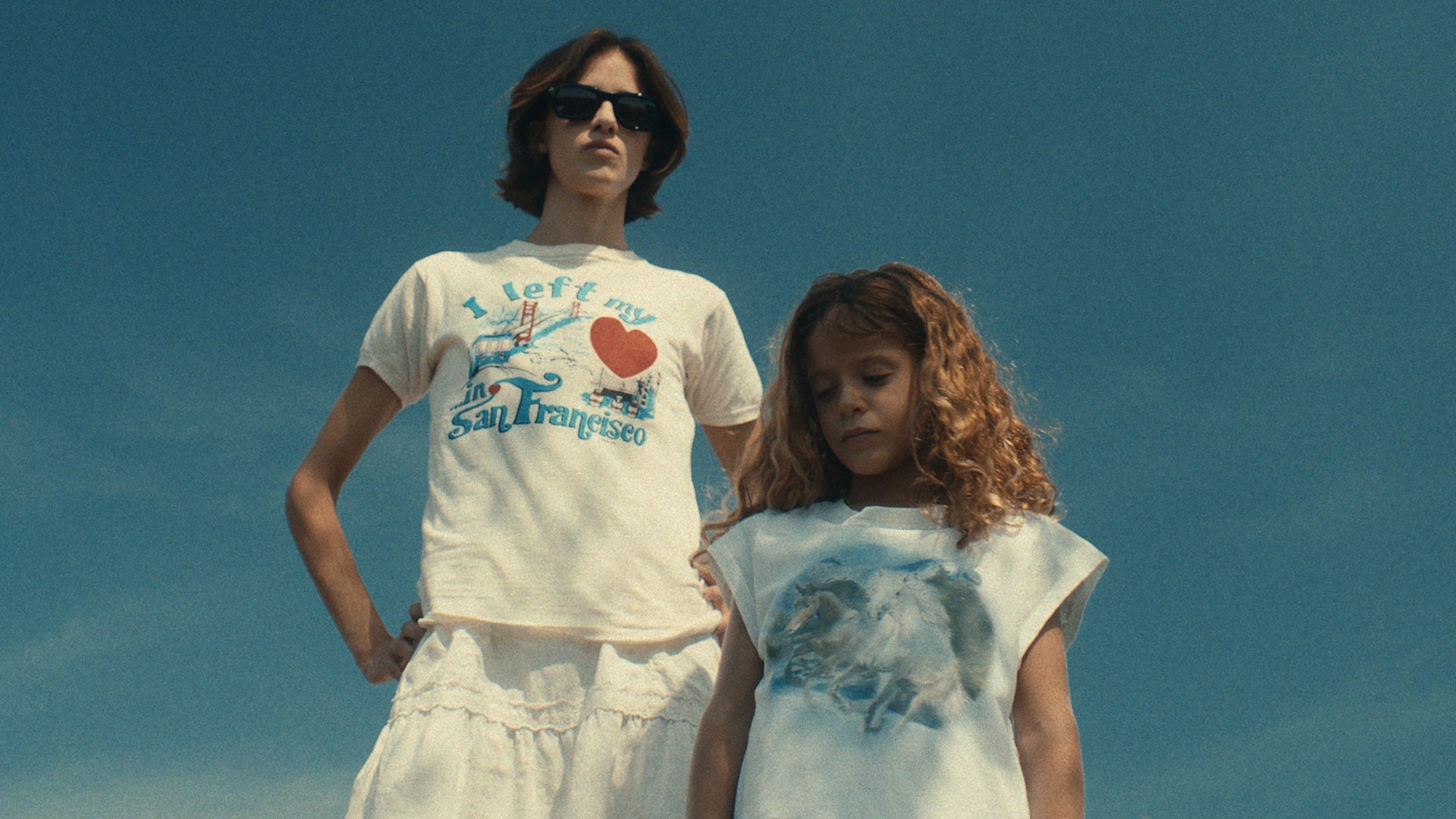
Holly (Porcaroli) is a lonely and adrift physics student. After a stressful day at work, she encounters the eight-year-old Arabella (Lucrezia Guglielmino) unattended in the parking lot of a Taco King. The little girl, desperate to run away from her divorced novelist of a father (Chris Pine), leads Holly to believe that she’s a younger version of Holly herself and needs saving. The film’s title leaves little room for doubt that Holly, who concludes that there’s been some kind of rupture in the space-time continuum, isn’t in her right mind.
The next stretch of the film sees the pair one step ahead of the ineffectual police, with Holly playing a sort of mother figure to Arabella. The loose structure of the road movie allows for a series of quirky gags, as when Holly checks them into a motel and, in an effort to conceal their identity, calls herself “Brittany the Pooh.” It can be hard to tell, at times, just how intentional this enforced quirkiness is. Throughout, the film inhabits a hyperreality where American-style fast-food chains and names butt up against the Italian setting and language itself.
Holly may take herself seriously, but Arabella and the camera alike see a sad folly in her brooding, alienated posture, even if, ultimately, they both still treat her with sympathy. Still, this tinge of irony renders the film darker than its predecessor, despite its light-hearted surface, and a shade more cynical too. Porcaroli’s quirks come off more pathological than defiant, even as Cavalli flirts with the grating archness of a Wes Anderson or Jean-Pierre Jeunet film.
The anti-climactic climax, though, rescues the film from obnoxious whimsicality. Holly’s plan is to rendezvous with a famous dancer, Granatina (Eva Robin’s), who once played a sort of mother figure to her. Holly, who’s mourning the recent loss of her mother, remembers the woman as the only person to ever tell her she was special. Holly plans to redeem her disappointing life by having Granatina make her “younger self” into a ballerina, but the encounter doesn’t go as envisioned. As the acerbic, money-grubbing dancer says, “Dreams fall apart. At the beginning, it’s hard to let them fall, but they drop quicker and quicker, as if shat out by pigeons.”
It seems like a minor detail, but among Granatina’s possessions is a painting of a Madonna and child that she claims was painted by Lorenzo Lotto. It depicts a woman with stringy hair and crazy eyes, baring her breasts and holding a violin—not, as Arabella points out, a child. In this image, Holly seems to recognize her delusion, and the fantasy of meeting her past self crumbles.
The Kidnapping of Arabella stages a tug of war between Hollywood’s dream factory and Italian neorealism, and the latter appears to have the final say, given the film’s belief that mothers can’t just be replaced on a whim. It’s refreshing how Holly becomes aware of her own volatility, and as such the character is difficult to dismiss as quirky for the sake of being quirky. Still, it’s hard not to miss Porcaroli’s recalcitrance in Amanda, as her character in that film is allowed to be an outsider without trivializing or pathologizing her strangeness.
Since 2001, we've brought you uncompromising, candid takes on the world of film, music, television, video games, theater, and more. Independently owned and operated publications like Slant have been hit hard in recent years, but we’re committed to keeping our content free and accessible—meaning no paywalls or fees.
If you like what we do, please consider subscribing to our Patreon or making a donation.