The House Next Door

Archive: September, 2010

New York Film Festival 2010: Film Socialism

Film Socialism

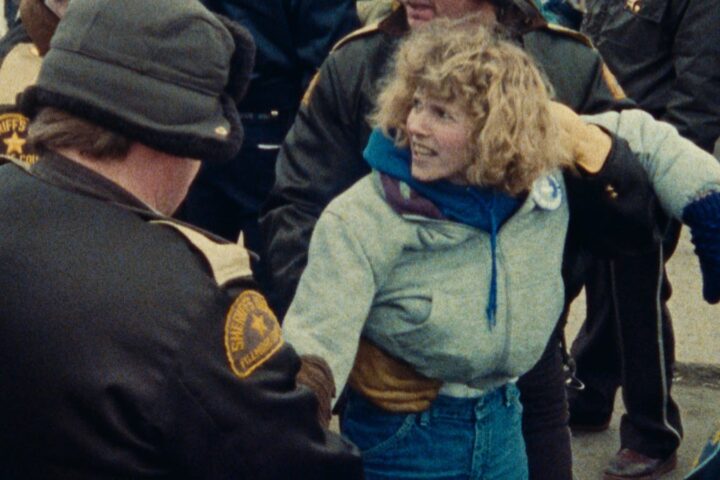
Jean-Luc Godard's Film Socialism left me in a familiar state, or at least a state familiar from my handful of previous experiences with the French New Wave master's late work. Bafflement would be a simplistic way of describing this reaction; more precisely, it's this feeling that one has just witnessed something certainly interesting, and possibly great, yet just a bit—okay, maybe more than a bit—beyond my grasp, at least for the moment.

That, of course, is hardly meant to be a negative if one feels that the rewards, intellectual, emotional, or otherwise, were ultimately worth the confusion. And in the case of Godard's latest cinematic salvo…well, I feel like I might be onto something as to what he is up to here.

Throughout his long career, Godard has consistently been fascinated with deconstructing images: genre tropes/archetypes (think much of his early-1960s output); still photographs (e.g. Letter to Jane, he and Jean-Pierre Gorin's 1973 poison-pen letter to Jane Fonda); visual art (his 1982 Passion comes immediately to mind); and, more recently, images produced by digital media. In some ways, Film Socialism is a culmination of his purely image-based obsessions, picking up a lot of threads he first proposed in his eight-part Histoire(s) du Cinema video-essay series. Here, images have the power to obfuscate as much as they can reveal. How much of the reality of family life can the two-person camera crew in the film's second act—set within and around the home of a family with two precocious children—truly capture with their limited access? How close to historical, personal, or political truths can movie images or cultural artifacts really get? Continue Reading »


Tags: , , , , , , ,

5 Comments »

Understanding Screenwriting #59

Coming Up In This Column: The Town, Easy A, Going the Distance, Something's Gonna Live, Cameraman: The Life and Work of Jack Cardiff, Hollywood: A Third Memoir (book), California Dreamin', Captain Horatio Hornblower, White Collar, Nikita, Mad Men, but first…

3-D

Stop the Presses: On the front page of the September 13-19, 2010, issue of Weekly Variety, Jeffrey (EVERYTHING IS GOING TO BE IN 3-D NOW AND FOREVER!) Katzenberg was quoted as saying, "Consumers are more and more cautious. The lure of 3D is not panning out."

Fan Mail: "AStrayn" took exception to my notion that "The Suitcase" episode of Mad Men would work as a stand-alone episode and felt I was saying that viewers who did not have a history with the show would "understand everything." I never claimed they would "understand everything." In any stand-alone episode of a serialized show, obviously people who already know the show will get the most out of it. But in a good stand-alone, which I think "The Suitcase" is, knowing all the backstory of the characters and the situations is not as crucial as it is for other episodes. That's one of the reasons shows do them—so Emmy voters who may not watch the show on a regular basis can still appreciate them.

I agree with David E. that Lord Love a Duck (1966) is one of Lola Albright's great performances, but I have to admit that the last time I saw the film, I did not like it as much as I had the first time. The big problem with the script is that Barbara Anne's friend and mentor Alan is so obviously her gay best friend that it is completely unbelievable when he turns out to be straight and in love with her. Well, it was 1966, after all. Continue Reading »


Tags: , , , , , , , , , , ,

3 Comments »

Bored to Death: Season Two

Bored to Death

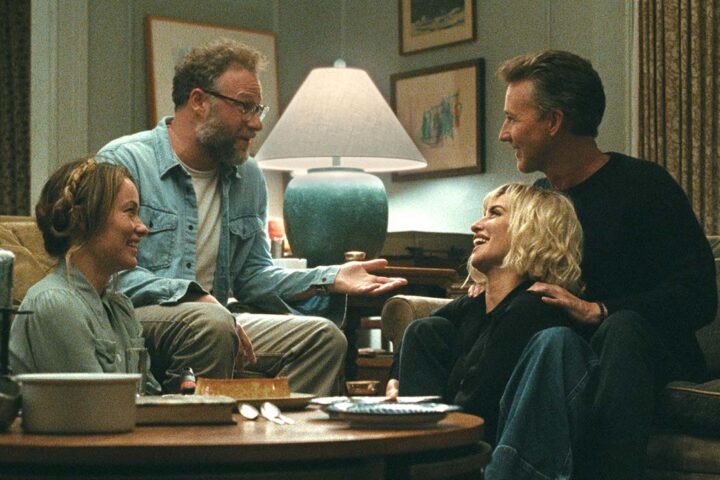
There are 2.5 million people in Brooklyn; 1.1 million people nationwide tuned in to season one of Bored to Death, but it's hard not to suspect most of them were in the show's heartland. With those built‐in numbers (there's nothing a particular kind of white twenty/thirtysomething Brooklynite loves more than celebrating themselves in the ostensible name of community), there's no reason Bored couldn't have rolled along for a good long time pandering solely to the interests of a small coterie of people who think jokes about brownstones are funny.

Bored wasn't anyone's idea of a great show; the conceit of a struggling writer turned private eye didn't go anywhere in particular, and Jonathan Ames has zero range or insight. But that proved to be zero problem. Instead, Jason Schwartzman, Ted Danson and Zach Galifianakis sat around in various configurations and talked shit, which is all you really need if you like those actors. Schwartzman basically revisited I Heart Huckabees (all nervous twitches and sexual fear), Galifianakis glowered through his beard to compensate for his insecurities and Danson—finally freed from the constraints of network television and able to let his not‐so‐inner misanthrope loose—walked around saying things like "Men face reality, women don't. That's why men need to drink." It was all highly enjoyable. Continue Reading »


Tags: , , , , ,

No Comments »

New York Film Festival 2010: Elegant Elegies: The Films of Masahiro Shinoda

Killers on Parade

"[I am] not interested in the future or in utopian ideals. I would like to be able to take hold of the past and examine it from different angles." —Masahiro Shinoda

"Modernization. Get with it." —line from Shinoda's film Killers on Parade

Masahiro Shinoda was born in 1931, the year Japan invaded China. His strongest childhood memory was of Emperor Tojo's surrender to the Allied forces, and with it the announcement that the Emperor was not a god, but a man. "I felt that all the gods who had lived in Japan had become mortal," he told a UC Berkeley interviewer, and the feeling of helpless disillusionment stayed with him. This early loss, he claimed, helped him feel for myriad groups. The Americans couldn't grasp WWII's impact on the Japanese, he told another interviewer, just as the Japanese couldn't understand the pain of Chinese women who had been raped at Nanking.

I have only seen eight of Shinoda's 30-plus features, 12 of which are showing in the New York Film Festival's Masterworks retrospective, but the common theme running throughout them is sympathy for the oppressed. It doesn't matter the group, nor the cultural setting, though indeed Shinoda was prone to making period films. He conveyed this open humanism with a precise formal control, masterful use of black-and-white CinemaScope and edits as clean as a paper-cutter's chops, all of which still prove stunning.

He studied other mediums before film. Unlike past masters such as Akira Kurosawa, Kenji Mizoguchi, and Yasujiro Ozu, whose pre-filmmaking backgrounds had been in visual art, Shinoda concentrated on literature and theatre (he was one of only three theater history students at his university). Like peer filmmakers Shohei Imamura and Nagisa Oshima, Shinoda gained a great awareness of European culture, claiming to have learned as much from Shakespeare as he did from kabuki. Continue Reading »


Tags: , , , , , , , , , , , , , ,

No Comments »

New York Film Festival 2010: Of Gods and Men

Of Gods and Men

I walked out of Of Gods and Men convinced I hadn't liked it. It was my second movie of the day, and I walked to the subway, eager to forget it on my way to a third.

Another critic approached me. "What'd you think?"

"I thought it was very static," I said, as we stepped onto the train. "Xavier Beauvois has no idea how to cut on action, so that it's just a lurch from one still composition to another."

"I thought the depth of field was amazing." Continue Reading »


Tags: , , , ,

No Comments »

Lean on the Big Screen: The Bridge on the River Kwai

The Bridge on the River Kwai

These days anyone can watch a masterpiece of world cinema on their cell phone. A familiar contemporary debate frames this as either a welcome innovation or a detestable crisis. You want to see a film. Questions arise. Will it be the iPhone or the multiplex? The Criterion DVD on your laptop or the print at Film Forum? Those who unequivocally elevate the static theater screen over the wide array of portable devices have no better evidence to bolster their argument than David Lean's magnificent epics. "Imagine watching Lawrence of Arabia on your iPod!" they tell us. "Such a reduction in size would greatly diminish the film's superlative visual power and therefore result in a less fulfilling experience." I personally feel ambivalent about the general issue—hell, faced with the proliferation of options, I'm just plain confused—but in Lean's case the nature of his work automatically dictates the necessity of the theater experience. I first encountered Lawrence on the enormous screen at the Ziegfeld. I recall that when the film ended I stumbled through the sumptuous lobby in a desperate search for the water fountain, feeling as if I too had just crawled across the desert. Continue Reading »


Tags: , , , , , ,

1 Comment »

Death of a Statesman: The House of Steinbrenner

The House of Steinbrenner

Most owners of professional sports franchises are fairly anonymous figures. They sign checks, they raise ticket prices and, if they're lucky, at some point they raise a championship trophy just long enough to hand it over to their team's coach or star player. George Steinbrenner was an exception. Like Jerry Jones of the NFL and Mark Cuban of the NBA after him, Steinbrenner wasn't just a Major League Baseball team owner, he was a team icon, as intrinsic to the New York Yankees' identity as the team's famous pinstripe uniforms. From 1973 until roughly 2005, when he faded from view, people were free to loathe Steinbrenner or to romanticize him, but they couldn't ignore him. He was the face of the franchise—and happily so. Steinbrenner didn't just own his team, he ruled over it, which is why when a deteriorating Steinbrenner handed over primary control to his son Hal, in 2008, it felt less like a business transaction than a political regime change. Sure, the Yankees stayed in the Steinbrenner family, just like Cuba is still under the direction of a Castro. But for all that might remain the same, the ceding of power by a notoriously impulsive, ironfisted overseer would leave the empire he built forever changed. Just like there can only be one Comandante, there could only be one Boss.

In The House of Steinbrenner, Barbara Kopple captures this familial transfer of sports authority with a historian's sense of scope and a prophet's sense of consequence. Two months removed from Steinbrenner's death and less than two years since the Boss officially handed over the reins to his son Hal, these events might be too timely to fully appreciate in the present, but Kopple documents them as if anticipating their future significance, aware that whatever successes or failures the Yankees have over the next 30 years will be traced back to this point. The latest in ESPN Films' "30 for 30" series, The House of Steinbrenner is about the end of an era. In a less than two-year span, George yielded to his children, the "original" Yankee Stadium was replaced by "new" Yankee Stadium, hot dogs were joined by sushi in the Bronx and, across the street, one generation of construction workers tore down their fathers' installations. Sports, with their seasonal schedules, are naturally full of beginnings and endings, but this was something different, something greater. At its best, Kopple's film captures an organization and its fans in the midst of moving forward while consumed by all that they're leaving behind.


Tags: , , , , , ,

No Comments »

New York Film Festival 2010: Uncle Boonmee Who Can Recall His Past Lives

Uncle Boonmee Who Can Recall His Past Lives

"The past isn't dead. It isn't even past." —William Faulkner

There's a new game in international cinema, one that began at least 15 years ago but that American audiences are only just discovering. Dave Kehr described some of the movement's features in The New York Times this past March: ambiguous-to-incomplete narratives, unknown and/or nonprofessional actors whose real lives inform their performances, a mixture of fictional and documentary material in the screenplays, and action unfolding in studied long shots, which can run for several minutes and in which the chief focus is on how the character interacts with his or her environments, both manmade and natural.

Kehr was writing specifically about the Portuguese filmmaker Pedro Costa, and also mentioned Roy Andersson (Sweden), Lisandro Alonso (Argentina), and Jia Zhang-Ke (China). He could have easily mentioned Thailand's Apichatpong Weerasethakul, currently producing the most exciting work of any of them. It's true that Apichatpong's films can be difficult to get into; when I first saw his 2004 film Tropical Malady, I found myself swooning over the delicately photographed, lyrically motorbike-bound gay love story in the first half and checking my watch, over and over, during the long nighttime hunt for a glowing-eyed tiger in the second. Lacking knowledge of Thai culture or its mythology, I felt, quoting Jonathan Rosenbaum on an earlier Apichatpong film, "a lack of an analytical context in which to place this material." Continue Reading »


Tags: , , , , , , , , , ,

No Comments »

New York Film Festival 2010: LennonNYC

LennonNYC

According to a title card that comes at the end of LennonNYC, a new documentary about John Lennon's up-and-down life during the 1970s after he relocated to the U.S. from England, the film would not have been possible without the extensive participation of Lennon's widow, Yoko Ono. Ono's participation might explain the generally hagiographic tone of Michael Epstein's film, which, despite efforts to humanize the by-now-canonized rock icon, mostly ends up presenting a sentimental, near-saintly portrait of him even when, in the mid-'70s, he is at his lowest point mentally during his own "lost weekend" living apart from Ono in Los Angeles. (It's telling, for instance, that the film focuses more on Lennon's devoted relationship to his second son, Sean, and makes only a passing acknowledgment of his more troubled relationship with first son, Julian, born during the height of his Beatles years.) Continue Reading »


Tags: , , , , ,

No Comments »

New York Film Festival 2010: Le Quattro Volte

Le Quattro Volte

The shot begins with an overhead view of goats on the left side of the frame, a diagonal fence separating them from the road on the right. A group of men in Roman costumes pass under an archway, walking down the road; by the time a man bearing a cross joins them, you realize that it's Easter. Then a dog follows, small in the frame, and people chasing it. The camera follows it down, then back uphill as it barks at a boy. In its chaotic hurry the dog unhooks the piece tying a truck to the wall. The truck starts rolling down toward the hill, gradually, slowly. The camera follows the dog downhill again, and as it's moving we hear the off-screen sound of a crash. The dog runs back up to see goats pouring through the arch. Over the course of one shot, nature's flooded the town; and when the film finally cuts, it's to a goat on top of a table. Continue Reading »


Tags: , , , , ,

No Comments »

New York Film Festival 2010: Robinson in Ruins

Robinson in Ruins

Robinson in Ruins, the latest film from British filmmaker Patrick Keiller, is an incredibly dense experimental documentary/cine-essay that tells a tale of the titular Robinson, recently released from prison and currently traveling through England photographing various landscapes while ruminating on a heady combination of historical, political, economic, agricultural, and architectural topics.

But Keiller has an interesting way of telling his "story," such as it is: His film consists entirely of static shots of Robinson's filmed landscapes—wide-open nature, wheat farms, opium fields, military bases, historical landmarks, and plenty more; once in a while, even some human figures pop up on the sidelines, while Keiller's voiceover narration provides running commentary over the images. The style will most likely be familiar to Keiller acolytes, of which I am admittedly not one; this is the first film of his I've seen, and while I can't say I was riveted by every single minute (the film tends to become especially dry and academic when it delves into the nooks and crannies of the history behind a given British landmark), there is enough formal interest and visual beauty in it that it makes me interested enough to explore his previous work—which includes an earlier installment in the Robinson saga, Robinson in Space. Continue Reading »


Tags: , , , , , ,

No Comments »

New York Film Festival 2010: Poetry

Poetry

Mija (Yun Jung-hee) is the antithesis of the title character in Bong Joon-ho's Mother. Where the mother in that film insisted that her son was being framed for the murder of a young woman, doggedly tracking down leads until she unearthed the truth, Mija knows as soon as she hears it that Wook (Lee David), the impassive grandson she's raising, was partly responsible for the suicide of a girl in his high school class. For Mija, the question is not how to prove Wook's innocence, but how to do something much harder: She must figure out what justice looks like in a case like this and how to make sure it is done, without betraying her beloved grandson. Continue Reading »


Tags: , , , , , ,

No Comments »

The Little Foxes at New York Theatre Workshop

The Little Foxes

Perhaps the most shocking aspect of provocateur Ivo van Hove's slick remounting of Lillian Hellman's The Little Foxes is that it really isn't that shocking. The man who allowed Hedda Gabler to be humiliated by a flood of tomato juice and employed a hot dog and Hershey's syrup to illuminate The Misanthrope turns almost cuddly in comparison this time around. Sure, a woman gets dramatically socked in the gut three times in a row and another dry humps a wall, but the closest it gets to beverages and condiments is a mimed sip of good 'ol Southern java. This would seem to be a criticism, and even though this critic truly craved some of van Hove's signature eyebrow-raisers (it's a melodrama, guy!), it's quickly discerned that Hellman's stinging indictment of a plantation-owning family's greed ("[The] people who raped the Earth, and those who stood around and watched them do it") really needs no trickery at all to remain a grabber. Continue Reading »


Tags: , , , , , , , , , ,

No Comments »

Music Video: The Noice's "Paparazzi"

With Gaga taking some time off from video-making to petition for the repeal of Don't Ask, Don't Tell (it failed to pass the Senate today. Why do Republicans—and Blanche Lincoln—hate our troops so much?), what better time than now for fans, drag queens, and cineastes to pay tribute or create their own versions of past Gaga hits? That's exactly what NYC-based creative team The Noice has done with their take on last year's "Paparazzi":


Tags: , , , , , ,

No Comments »

Mad Men, Season 4, Episode 9, "The Beautiful Girls"

The Beautiful Girls

Some Mad Men episode titles are more difficult to decipher than others. "The Beautiful Girls" (written by Dahvi Waller and Mattew Weiner, and directed by Michael Uppendahl) is, as it turns out, all about the girls. At one point, in a scene near the end, the episode could almost be a Fellini film, with Don Draper (Jon Hamm) in the Mastroianni role, as seemingly every woman in his life parades around him.

The primary challenge for "The Beautiful Girls" is to be as much about the women themselves as it is about how they relate to the men. Mad Men sets this challenge out for itself; after the parade-of-women scene, Don is removed from the equation and the episode closes solely on the women. Joyce (Zosia Mamet) returns and gives a rather inane speech (sort of sounding like a Salinger character, or something) to Peggy (Elisabeth Moss), where she compares men to vegetable soup and women to the soup pot, saying, "They heat 'em up, they hold 'em...they constrain them," before adding, "but who wants to be a pot?" I'm not sure why vegetable soup is Joyce's preferred metaphor, but with the final shot of Joan (Christina Hendricks), Faye (Cara Buono), and Peggy together in an elevator, it's clear that we're supposed to see the women of Mad Men as the soup, rather than the pot. Continue Reading »


Tags: , , , , , , , , ,

4 Comments »