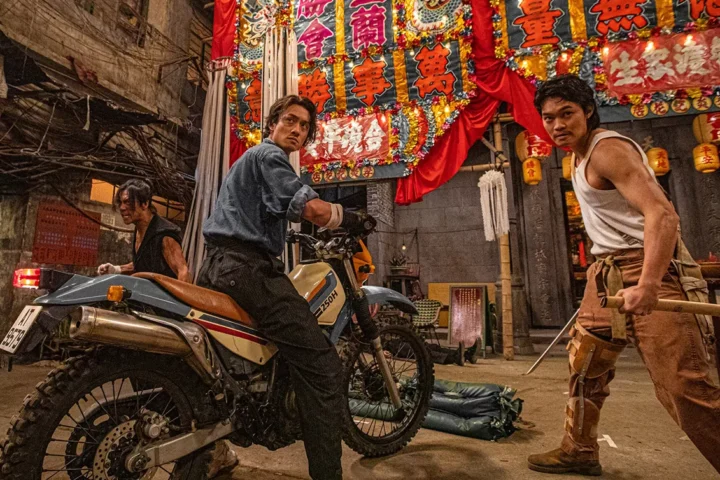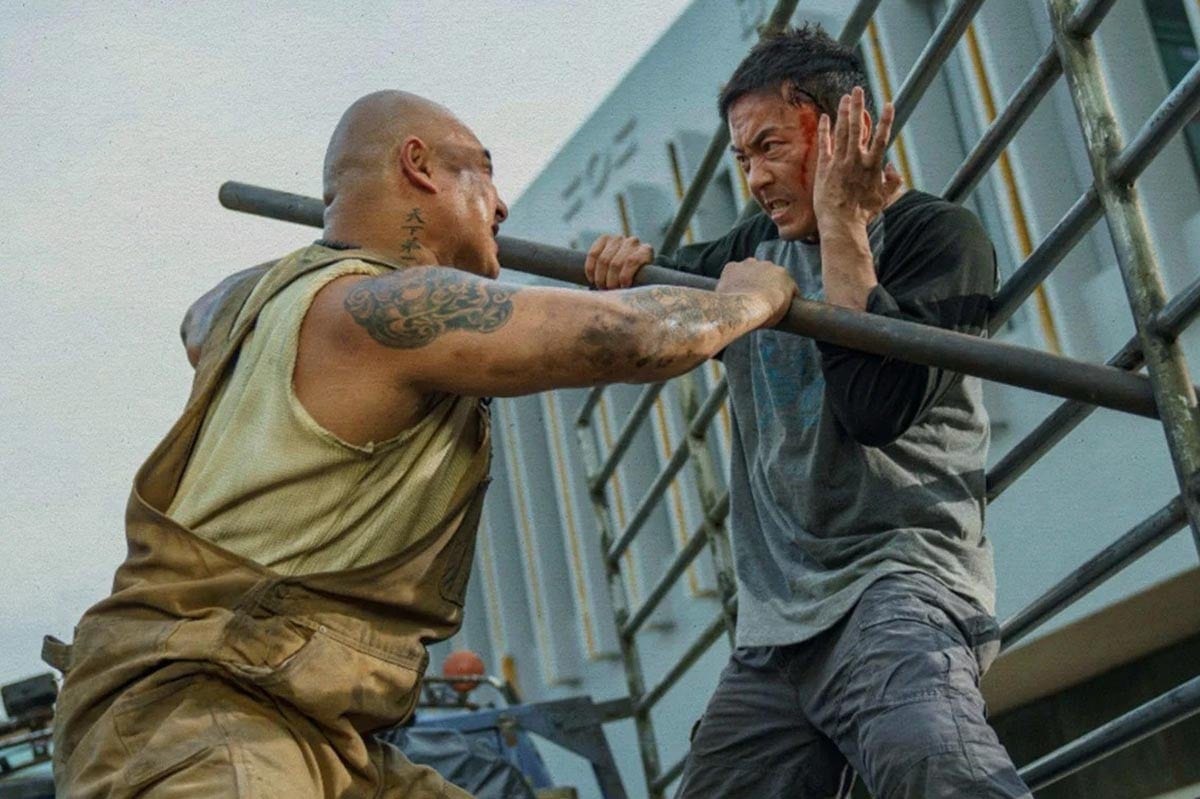
In the decade since the release of the first John Wick, a number of low- to medium-budget action movies have tried to capitalize on that franchise’s elaborate fight choreography, even as they’ve also leaned too heavily on its slavish interest in world-building. Tanigaki Kenji’s The Furious, then, feels like a breath of fresh air, an ambitiously staged brawler that understands that narrative simplicity is the core of a truly relentless, propulsive action movie.
When mute handyman Wang Wei’s (Xie Miao) daughter (Yang Enyou) is kidnapped by a gang of child traffickers, he sets off in pursuit upon being stonewalled by cops. Along the way, he pairs up with Navin (Joe Taslim), a journalist who’s also run afoul of the trafficking ring. Once the elemental parameters of the story have been established, The Furious moves through an unceasing series of some of the most dazzling martial arts sequences in recent memory.
Himself a stunt coordinator before he moved into the director’s chair, Tanigaki planned the film’s insanely free-flowing fight choreography with stunt director Sonomura Kensuke. Almost no maneuver is a single move, instead combining, say, a suplex with a midair counter that’s then cut off by another assailant flying into frame with a kick. Weapons predominantly consist of hammers and blades, but, more often than not, the film’s heroes and henchmen use only their fists and feet to cause damage to one another. They weave around each other as if their bodies were liquid—at least right up to the moment that a limb bends in a way it isn’t supposed to and suddenly everything becomes solid again just so it can snap.
Particularly impressive is the handling of pile-ons of attackers. At all times, Wang and Nivan must contend with the overlapping attacks of goons and bosses, scarcely able to slide around a knife thrust without colliding into someone else’s fist. Paradoxically, this lends credence to their superhuman endurance against wildly outmatched numbers, highlighting the lightning reflexes and desperation behind their strikes in a way that humanizes their badass indefatigability.
The most obvious point of comparison for the film’s nonstop kinetic force is Gareth Evans’s Raid movies. But where those films often obscure their fight choreography with frantic editing and close-ups, The Furious favors wider shots and a cutting strategy that adds a visceral oomph to a completed move rather than a jumbled approximation of first-person intensity.
At times, the threadbare plot threatens to weigh down the rare moments where things slow down to reset, with dialogue that occasionally sounds like it went through several rounds of translation and emerged awkwardly cadenced and blunt. But those distractions from the action are few and far between, all but guaranteeing that The Furious is sure to be the fastest entry into the genre canon since George Miller’s Mad Max: Fury Road.
Since 2001, we've brought you uncompromising, candid takes on the world of film, music, television, video games, theater, and more. Independently owned and operated publications like Slant have been hit hard in recent years, but we’re committed to keeping our content free and accessible—meaning no paywalls or fees.
If you like what we do, please consider subscribing to our Patreon or making a donation.