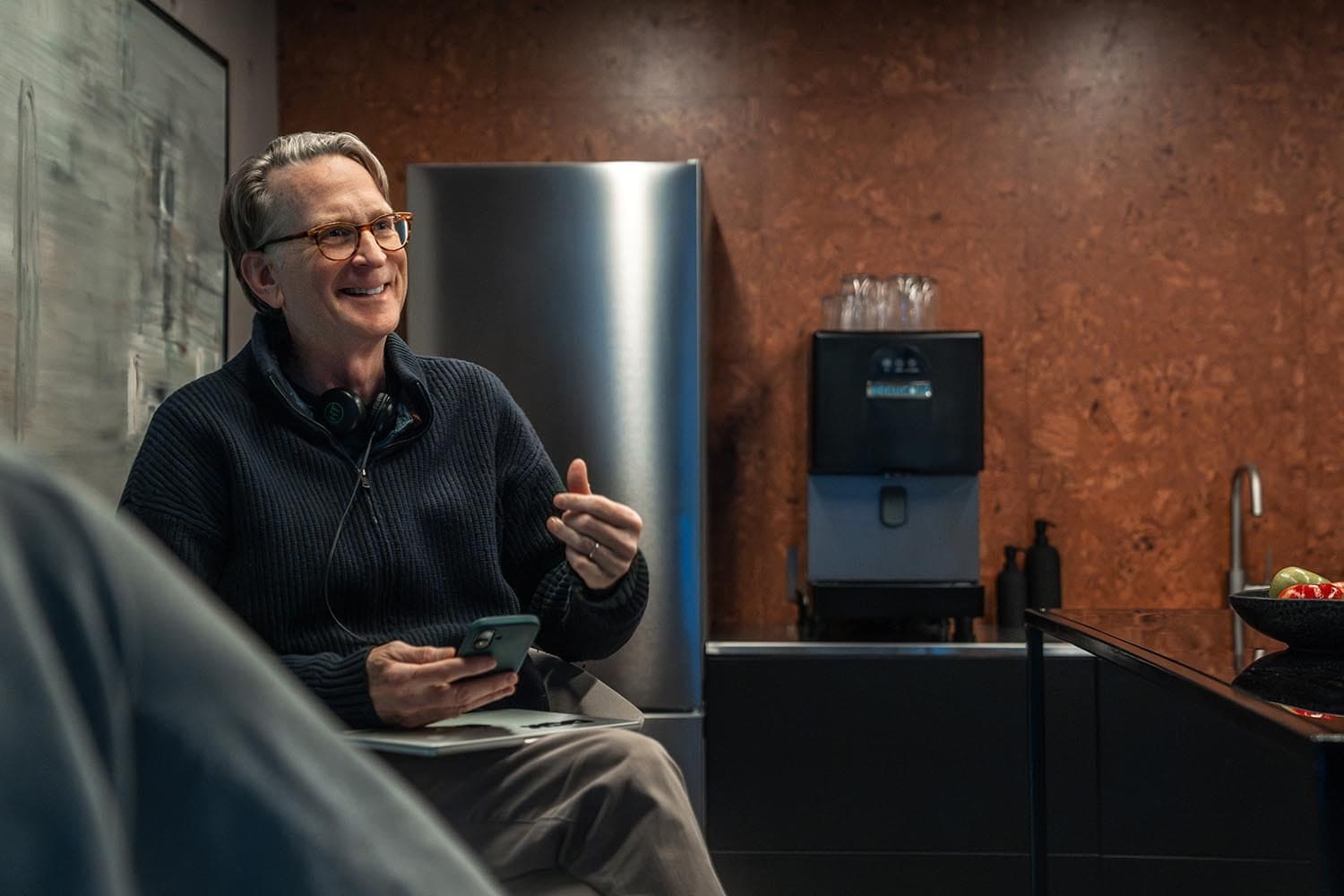
When Steven Spielberg wanted to revisit the idea of the government covering up the existence of aliens, it was David Koepp who received a 52-page treatment that the filmmaker had written in his iPhone’s Notes app with the charge to turn it into a screenplay. With Disclosure Day, his fifth script directed by Spielberg, Koepp has now reclaimed the rank of being the filmmaker’s most frequent writing collaborator. (Their partnership has also extended through Koepp’s continued script guidance over the Indiana Jones and Jurassic Park franchises once Spielberg’s involvement became only producorial.)
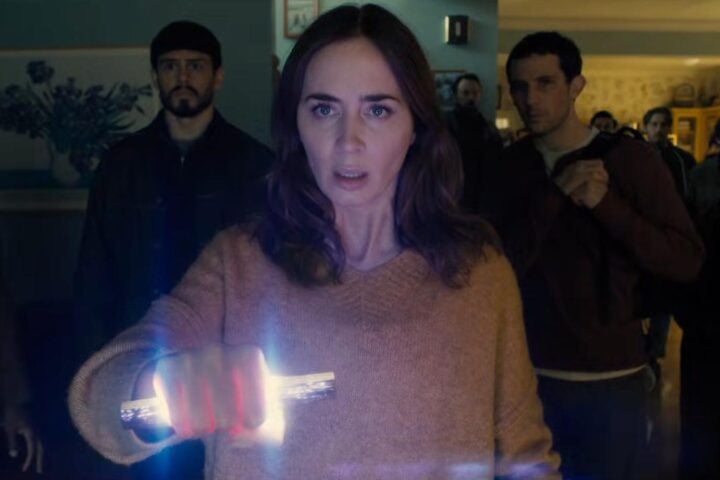
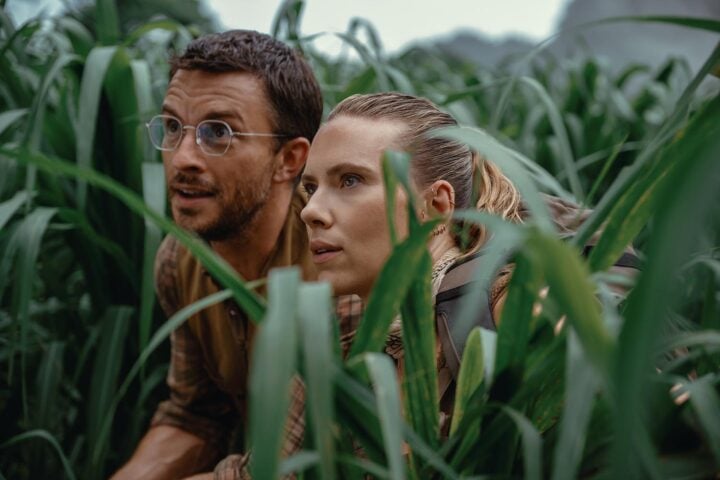
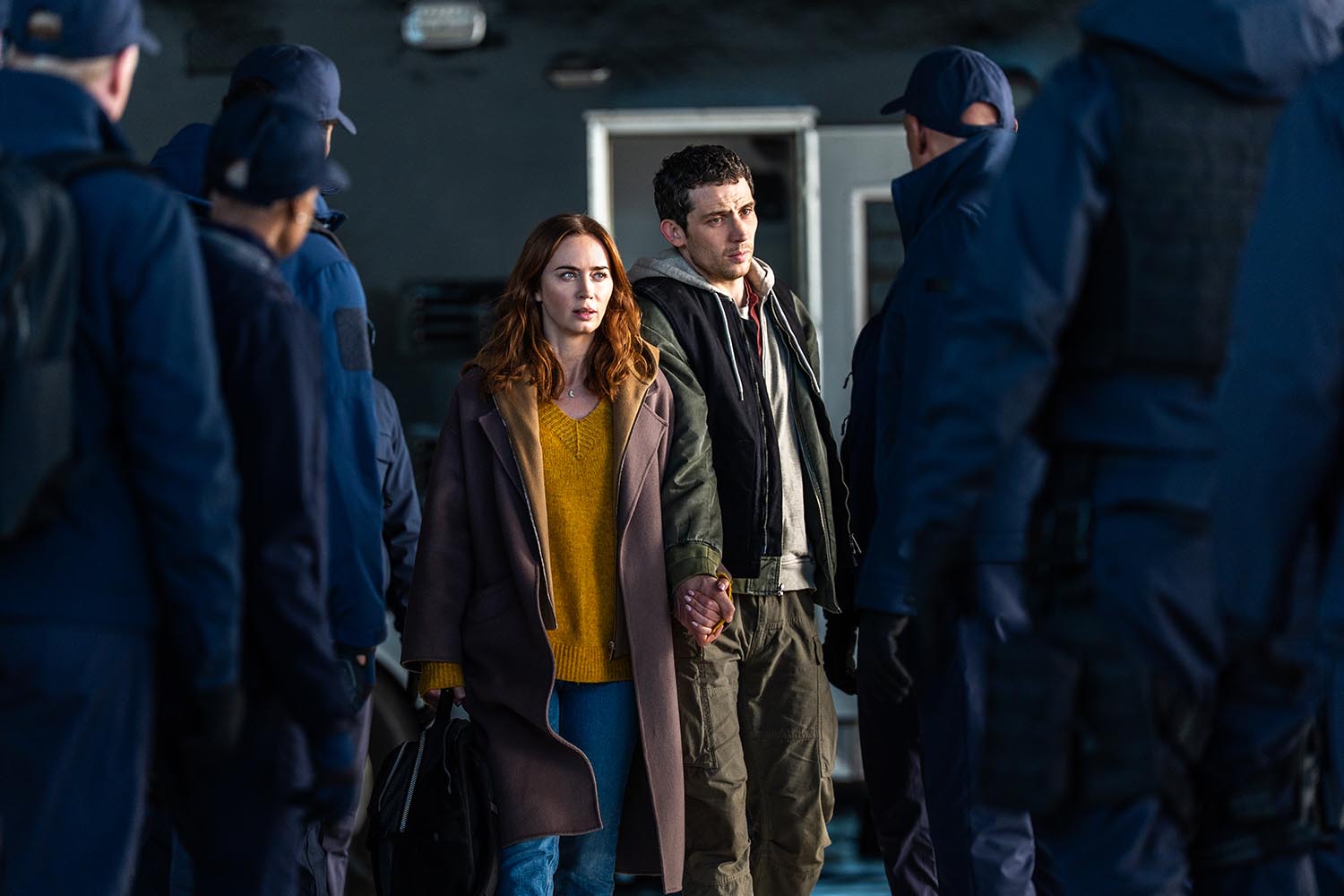
For Disclosure Day, Koepp packaged all of Spielberg’s curiosity and paranoia about UAPs into a cross-country chase thriller. The film hews most closely to the converging trajectories of two apparent strangers, Kansas City weather reporter Margaret Fairchild (Emily Blunt) and cybersecurity whistleblower Daniel Kellner (Josh O’Connor). Their attempts to recover fuzzy childhood memories pull them physically and emotionally closer throughout the film.
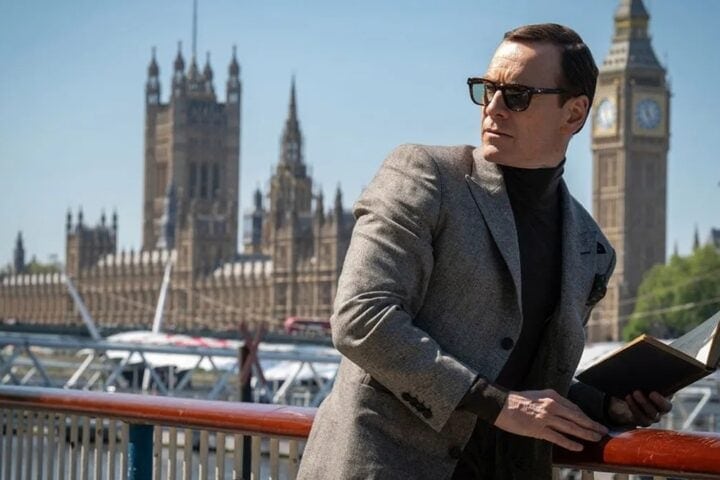
The film’s two heroes each possess a key to unlocking the mystery of extraterrestrial life going beyond the historical evidence that Daniel holds. It’s this truth that Daniel, alongside a coterie of true believers led by his handler, Hugo Wakefield (Colman Domingo), seeks to announce to the public. A classic Spielbergian adventure ensues as Margaret and Daniel defy the military-industrial complex, as embodied by the shadowy agency WARDEX and its ruthless leader, Noah Scanlon (Colin Firth), and orchestrate their grand disclosure.
The aperture of Koepp’s lens on Spielberg’s concept gradually opens to reveal why Margaret and Daniel’s encounters with aliens uniquely position them to lead the charge. And through it all, the script remains unwaveringly rooted in a humanistic belief that people have the right to know if other forms of life exist. The optimism of Disclosure Day’s insistence that knowledge can be a tool for empathy and enlightenment feels downright radical in a political climate where information is most frequently used as a weapon to divide.
I recently spoke with Koepp about how he collaborated with Spielberg on Disclosure Day, why writing versions of it from the perspective of each character helped to unlock the story, and what he hopes viewers take away from the film.
You’ve likened adaptation to someone pulling up with an oak tree in your driveway, and you having to make sure it can grow in your yard. Does that hold true for something like Disclosure Day, where Spielberg is credited with the story?
Yeah, but in this case, somebody pulls up and says, “This flower is the most important thing to me in my life, will you please plant it in your yard and don’t let it die?” It was his story, and he carried it around in his head for 20 years. I think I felt, particularly in the first draft or two, a real overweening responsibility to not screw it up. Thankfully, we worked on it for a long time over a period of two years, and that eased. I was able to view it as my story as well as time went by. But at first, because you want to respect source material and, of course, I have such respect for Steven. I wanted to not screw it up, but to not screw it up is not the right approach. You can’t play a basketball game that way. You have to be loose and play.
How did you start to make it your own—or become a co-gardener in this, if we’re extending the metaphor?
We’re going with this metaphor, I like it! Just time went by. What was very nice is that he left me on my own in the first draft. Once I laid out how I’d restructure this, flesh out that, change this guy to this, and the various normal things you do, I think he wanted me to go do it and not so much hear from me. He was like, “Well, I’m here. If you want to talk something through, call me.” He’s a very good collaborator and very skilled. He wants you to go run with it. He wants your input because he knows, in the end, he can make it way he wants it. But he wants you to make those choices first. He might choose cheese, and I might choose pepperoni, but he wants to have your full input, and then he can put his stamp on it.
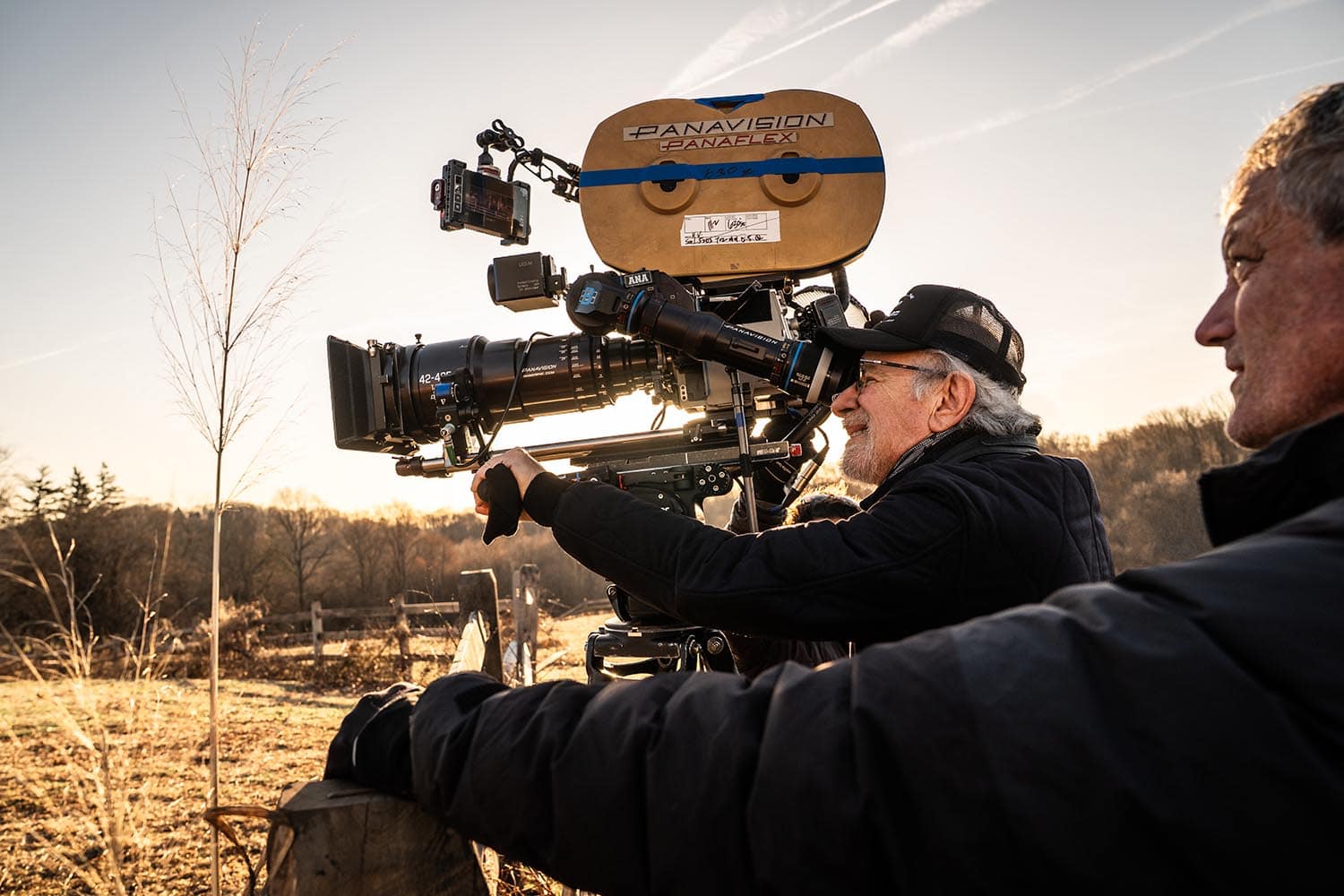
You’ve said that your best draft is usually the third, and I think the final count on Disclosure Day was 42. What’s happening in all those revisions in the middle?
It wasn’t that we tore it up 41 times and got to 42. The standard process in the first drafts have a lot of revision, and by the 42nd, you know, you’re changing four lines in two scenes. But what happened? The reason I think it was so many drafts is that we went through a period where I think he reread the script every day for a year and had notes. He read it as if it was fresh. I’d be in New York, he’d be off in, I don’t know, Timbuktu, and I’d wake up to 30 texts with ideas. I think that process over time just resulted in this real refinement that I think made it terrific.
You created different drafts treating each character as if they were the protagonist of Disclosure Day. How did that unlock different elements of the film?
Yeah, that was a really vital process that started because at one point he [Spielberg] said, “I feel like we’ve been paying so much attention to Margaret, we’ve kind of ignored Daniel a little bit. Can we talk only about him for a minute?” Then, that turned into a draft about Daniel. It’s not that I was changing the whole story so that he’s in every scene. It’s just only thinking about the script from that one character’s point of view and forgetting all the other notes you might have. It helped his character so much that we then decided to do it for all five of them, and it was just a matter of taking a week or 10 days for each with that monomaniacal point of view.
Is that akin to the way everyone experiences life as the protagonist, even if they’re a supporting character in terms of how the edit plays out?
Exactly, and it’s how good actors come in looking at it from their point of view. I always say a good actor acts like their character’s lawyer, and they protect the interests of their client.
Were those drafts from each perspective given to the actor playing the character?
No, it was all still what’s going to be in the movie. Eventually, yes, they saw [the results]. But you don’t want to overwhelm them with numerous drafts. Periodically, you’d say, “Here’s where we’re at now.”
Spielberg is such a master of visual style, particularly in capturing scenes with a handful of long-held shots rather than splicing them together with montage. While you’re not going to give camera direction in a screenplay, does knowing a director’s visual language change the way you write?
To an extent, but he’s always going to interpret it and do it in a way that you didn’t see coming. For example, the sequence when Margaret goes to the TV station for the first time is a four-and-a-half minute oner. She speaks her Korean and has like 18 other challenges that I can’t even get my head around. Never in a million years did I anticipate that would be a oner. I didn’t write it as a oner. In fact, I wrote it with cuts so that we go from place to place. He interpreted it and said, “This will make it feel more real. This will make it feel more timely and believable.”
Occasionally, I’ll write a cut. I’ll say, “Oh, he’s going to love this because it goes from this to that,” and he does. I write toward a director when I know who the director is, but mostly, that’s in terms of tone. I know what Steven Soderbergh’s tone might be for a script I’m writing for him, and I think I know what Spielberg’s tone will be. So that’s where you make your adjustments.
Spielberg has been transparent about 9/11 imagery inspiring War of the Worlds, which you wrote. Whenever it came to Disclosure Day, was the subtext was something that you were talking about as openly?
Openly, no. I think that we all live in the same soup. For example, Close Encounters comes out of a 1970s-era, “Hey, maybe the government’s lying to us” paranoia. Fifty years later, we know the government is lying to us. We live with so many lies everywhere. Social media is nothing but lies. So, it grows out of that. It feels timely because we live now in this time.
Was there an element in Disclosure Day of pushing back against some of what we’re seeing in the current era? So much of the film is driven by this desire to get the objective truth out, but when that’s happened in reality, people interpret it through their filter bubbles. The film’s idea that the truth can be this both liberating and uniting force feels almost like a countercultural idea in this soup.
Well, yes, but it depends on how you interpret the events after the end of the film and how you speculate those might go. I think Steven’s speculation about what might happen and my speculation are different. I believe after the events of the film, eventually, humanity would get to a place where we’re bettered, and we’re in a more peaceful place. But I think getting to “eventually” might be a very painful and violent process.
How did the spirituality and faith angles of the film get formed?
Jane’s character [Daniel’s girlfriend, played by Eve Hewson] had a religious background from the beginning, which I think is important. If you look at movies set in space, they almost always become philosophical and talk about our place in the universe. It’s the overview effect: When astronauts go into orbit around the Earth, it changes their feelings toward the Earth. They think about it differently when they stand on the moon. They think about it as a whole rather than its component pieces, as we do on Earth. I’m thinking about you and the other people in this room as individuals, not as a whole or as an orb hanging in endless void. That notion of religion taking into account, “Does God exist? What is our place in the universe?” has to go hand-in-hand with extraterrestrials. I think you’re making a mistake if you don’t consider it.
I was moved by the moment where Margaret channels people’s loved ones by taking on their form. It reminded me a lot of a scene in your film, Ghost Town, where Ricky Gervais’s character settles the unfinished business of the ghosts, as another great example of the power of empathy. Is it safe to say that you’d co-sign the statement in the film that empathy is the ultimate evolutionary advantage?
Yeah, I do agree with that. I also agree with Noah’s points that it’s going to be ugly, but Hugo’s point that empathy is the most powerful evolutionary trait, I absolutely agree with. It’s another way of saying cooperation, and no human event worth anything has been achieved without cooperation. The agrarian revolution 10,000 years ago happened because we all decided to plant, harvest, and store crops together, and that was when the human race took off and took hold. I think that now our survival depends on empathy and cooperation.
In other interviews, you’ve waxed poetically about that special time in life from roughly 14 to 24 when your neural pathways are most open to be formed by exciting art. We were both fortunate enough to have Spielberg’s cinema forming us at that time in our lives. How do you hope young viewers who are getting introduced to his work through Disclosure Day are formed by the film?
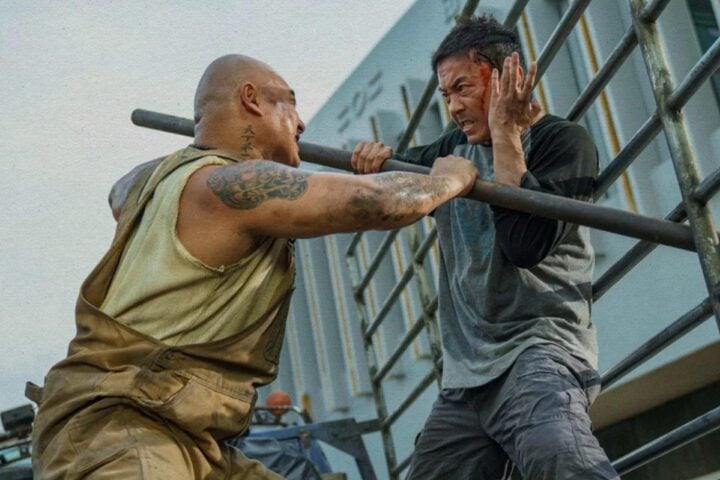
For aspiring filmmakers, what I hope they can take away is that you can have some really interesting ideas and have people sit down and talk about meaty topics in the context of a very entertaining genre movie. This movie is really breathless, and it has some action sequences in it that just blow me away. That the bottle in which our fine wine is contained is that of a three-day chase, I would find encouraging and exciting if I was a young storyteller.
And what about people in general?
Consider the person around you, even if you might not agree with them. Maybe try to see the world from their point of view.
Since 2001, we've brought you uncompromising, candid takes on the world of film, music, television, video games, theater, and more. Independently owned and operated publications like Slant have been hit hard in recent years, but we’re committed to keeping our content free and accessible—meaning no paywalls or fees.
If you like what we do, please consider subscribing to our Patreon or making a donation.