The House Next Door

Author Archive

Dede Allen: The woman who turned film violence into poetry

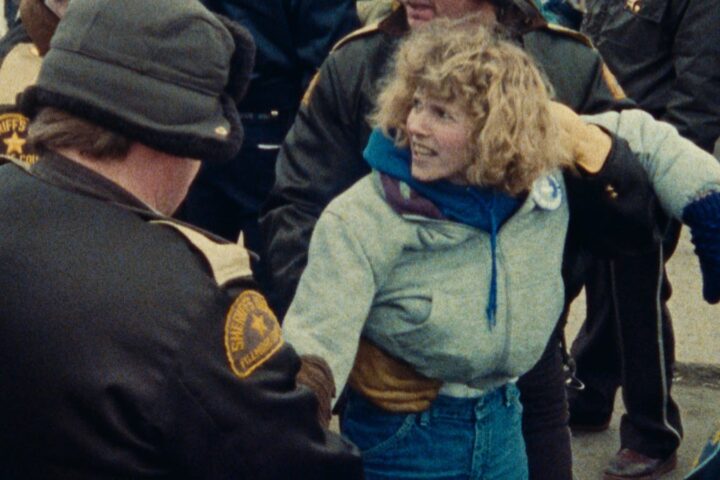
Dede AllenDede Allen, who died Saturday at age 86, is being described as an accomplished film editor, and she certainly was that. She was best known as the Oscar-nominated editor of Arthur Penn's Bonnie and Clyde (1967), a film that deftly navigates many different modes (gangster film, satire, psychosexual drama, cornpone comedy) and deploys adventurous cuts and slow motion to transform violence from an event into a statement. Allen also edited other notable films, including The Hustler, Rachel, Rachel, Serpico, Dog Day Afternoon, Night Moves, Slap Shot, Reds, The Breakfast Club and Henry and June. And she was the head of postproduction at Warner Bros. for eight years in the 1990s.

But that abbreviated résumé doesn't begin to capture the soul of her work. Like a great actor or composer, Allen could adapt her talent to suit a given subject without stifling her personality or her aesthetic.

She could build an action scene with the best of them: think of the "Attica!" sequence in Dog Day,  or the whistle-blowing cop hero of Serpico disarming a hostile fellow officer; or the slow-building train station sequence from Reds, Louise scanning every passenger car and knot of bodies for a glimpse of her lover John Reed, her hopes sinking with each successive reaction shot. She had fearsome technical chops. The aborted police raid on the bank in Dog Day is a blizzard of quick cuts covering action inside and outside the building, some of which appear on-screen for a second or less.


Tags: , , , , , ,

No Comments »

Dennis Hopper: The American Dreamer

Dennis HopperDennis Hopper's recent announcement of terminal cancer jump-started a long-overdue appreciation of his art and life. He got a star on Hollywood's Walk of Fame last month (finally), and newspaper and blog appreciations are starting to pop up, focusing mainly on Hopper the performer. That makes sense: Hopper's career spanned a half-century's worth of theater, cinema, TV and recorded music; his list of collaborators stretches from Elizabeth Taylor and John Wayne through Kiefer Sutherland and Gorillaz.

Still, one hopes descriptions of Hopper's directorial career don't start and end with Easy Rider. Hopper's 1969 debut is notable for its alternately ecstatic and lacerating portrait of the counterculture, the then-unusual use of pre-existing pop songs for its soundtrack, adventurous editing and its status as the first independently financed feature to become a mainstream smash. But there's more to his directorial résumé than philosophical bikers.


Tags: ,

No Comments »

The Middle Word in Life: What we think about when we think about Dennis Hopper

Click here to view the video essay in its original context at Moving Image Source.


Tags: , ,

7 Comments »

Lacking Shelter at Home and Abroad: Teza

Teza

It's all in the eyes. Remember that as you watch Teza.

Written and directed by the Ethiopian-born filmmaker Haile Gerima (Sankofa, Ashes and Embers) over more than a decade, this film is an autobiographical drama about a rural villager who journeys to Europe from Ethiopia and back again. He sees his country transformed from a pseudomonarchial dictatorship into an equally savage Marxist hellhole; gains an education and loses his innocence; falls in and out of love; makes and loses friends; and endures enough trauma to fill nine lives. Yet he ultimately finds reason to truly live again, rather than merely exist.

Blending thumbnail sketches of 20th-century European and African history, intimate personal drama, nightmares, hallucinations and meditative landscape shots, Mr. Gerima's film has all the hallmarks of a career summation—and early on it seems fated to collapse beneath the weight of its ambitions.

Instead, it soars, thanks to Mr. Gerima's bracingly direct storytelling. We see this confused, vicious, sprawling world refracted through, and reflected in, the eyes of this movie's hero, Anberber—a onetime villager turned Westernized doctor and intellectual who enters the film in middle age, gray-haired and potbellied, limping home on a prosthetic leg. As played by the Ethiopian-American actor Aaron Arefe, the character is a psychologically complex individual with an Everyman's charm.


Tags: , , ,

No Comments »

To Have and To Have Not: Class Envy in Film Noir

Click here to see this video essay in its original context at the L Magazine.


Tags: , , ,

No Comments »

This Video Will Get You Laid

Read the original entry at the L Magazine by clicking here.


Tags: ,

No Comments »

Ranting in Pictures

Ranting in Pictures

"Star Wars: The Phantom Menace was the most disappointing thing since my son."

That's the daffy opening line of filmmaker Mike Stoklasa's "Star Wars: The Phantom Menace Review," an insightful, rudely funny takedown of George Lucas' prequel. And it's as good a place as any to start an appreciation of a hybrid of the video essay and the mash-up—an emerging format that's often more entertaining than the work it cannibalizes.

Let's start by distinguishing straightforward mash-ups and video essays from works created by Stoklasa and his siblings-in-spirit. The term "mash-up" was first applied to musical works that combined existing pieces of recording music in order to create something new. The YouTube equivalent is defined by Wikipedia as a work that "combines "multiple sources of video—which often have no relation to each other—into a derivative work, often lampooning its component sources or another text." (Examples include those now-ubiquitous clips in which somebody puts, say, Joe Pesci's "Funny how?" monologue from Goodfellas into the mouth of Elmo, or turns Stanley Kubrick's The Shining into a heartwarming family comedy with music cues by Peter Gabriel and Thomas Newman.)


Tags: , , , , , , , ,

No Comments »

How to Remake Rambo for $95.51

[Editor's Note: This is Matt's latest video essay for the L Magazine. The introduction is reprinted below, with the video embedded.]

"The old formula of committed madness feels apropos here," says Nicolas Rapold in the current issue of the L, reviewing Flooding with Love for the Kid, Zachary Oberzan's solo restaging of David Morrell's novel First Blood, the basis for the Rambo films; Flooding with Love plays for a week at Anthology Film Archives beginning Friday, January 8th. In this video essay, Matt Zoller Seitz dissects this D.I.Y. psychodrama. (A transcript of the narration can be found here.)

Matt Zoller Seitz is a filmmaker/writer, and the creator of The House Next Door.


Tags: , , , , ,

3 Comments »

We Love the Aughties: A End-of-the-Decade Clip Party, Parts 1 and 2

These two videos by Matt Zoller Seitz and Richard Seitz were commissioned by The L Magazine in conjunction with their series of articles about the decade in film. To read individual essays about 2000-2004 by the magazine's film staff, click here. To read about 2005-2009, click here.


Tags: , , , , , , , , ,

9 Comments »

Image of the Decade: Osama and the Towers

Osama bin Laden

To read the eleventh and final installment in a series of countdown essays written for Salon.com about the most important directors of the decade, click here.


Tags: , ,

5 Comments »

The Directors of the Decade, Part 10: Charlie Kaufman and David Chase: The Writers

Charlie Kaufman

To read the tenth in a series of countdown essays written for Salon.com about the most important directors of the decade, click here.


Tags: , , ,

1 Comment »

The Directors of the Decade, Part 9: Miyazaki and Pixar; a.k.a. The Grandfather and The Babysitter

By Matt Zoller Seitz


To read the ninth in a series of countdown essays written for Salon.com about the most important directors of the decade, click here.

No Comments »

The Directors of the Decade, Parts 7 and 8: Jean-Pierre and Luc Dardenne (and the Naturalists) and Joel and Ethan Coen (the Fabulists)

By Matt Zoller Seitz


Links to the seventh and eighth entries in a series of countdown essays on the most important directors of the 2000s, written for Salon.com. For the entry on Jean-Pierre and Luc Dardenne (and the Naturalists), click here. For the entry on the Coen Brothers (the Fabulists), click here.

2 Comments »

All That Fosse: All Those Echoes of All That Jazz

By Matt Zoller Seitz


"It's showtime, folks."

That's the mantra of Joe Gideon (Roy Scheider), the boozing, chain-smoking, pill-popping, womanizing, workaholic filmmaker-choreographer hero of the 1979 drama All That Jazz, a hopped-up American variant of Federico Fellini's navel-gazing fantasia 8 ½ (1963).

Those three words—recited by Gideon into the bathroom mirror each morning after downing a breakfast of Dexedrine and Alka-Seltzer and listening to Antonio Vivaldi's "Concerto Alla Rustica"—sum up both the character and his real-world counterpart, Bob Fosse, the choreographer, theater director and filmmaker, who died in 1987 at 60. He was a Gideon-level workaholic who ended All That Jazz, a self-written advance obituary, with a shot of his alter ego being zipped into a body bag while the soundtrack plays Ethel Merman's definitive version of "There's No Business Like Show Business."

But Gideon's mantra also summarizes that movie's significance within narrative film, a mode of storytelling that rarely dares venture beyond the linear for fear of confusing the viewer. Released 30 years ago this month, All That Jazz set a new standard for speed and complexity, its structure boasting as many temporal pirouettes as the headiest art house fare. Yet the film never feels labored. It's not homework. It's showtime.

________________________________________

To read the rest of the New York Times article, click here.

No Comments »

The Directors of the Decade, Parts 4, 5 and 6: Steven Soderbergh, Michael Moore and Steven Spielberg

By Matt Zoller Seitz


Links to the fourth, fifth and sixth entries in a series of countdown essays on the most important directors of the 2000s, written for Salon.com. For the entry on Steven Soderbergh, click here. For the entry on Michael Moore, click here. For the entry on Steven Spielberg, click here.

______________________________________

5 Comments »