The House Next Door

Author Archive

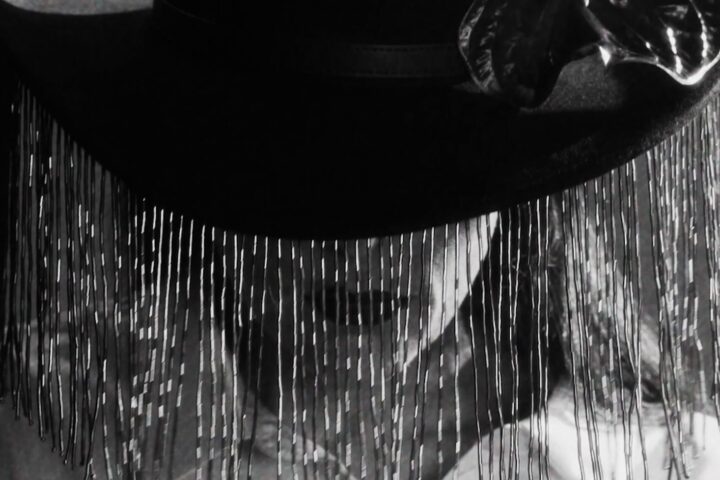
Todd Haynes's Poison

Poison

Poison is a love letter composed like a ransom note,
an unstable compound synthesized in a lab,
a cut-and-paste collage by a gifted schoolboy.

"A milestone in American independent film and the inciting spark for what came to be known as the New Queer Cinema, Todd Haynes's first feature, 'Poison' (1991), has always stood for much more than itself…A triptych of stories about transgression and persecution inspired by Jean Genet, [the] film's three strands are stylistically distinct—a newsmagazine-style account of a suburban boy who killed his abusive father, a black-and-white B-movie about a scientist turned leprous outcast, a rough-trade romance set in a Genet-like prison—and it cuts among them to create a web of unsettling correlations and an echo-chamber effect."Dennis Lim, The New York Times

I was a teenage fanboy for Todd Haynes. Continue Reading »


Tags: , , , , , , , , , ,

1 Comment »

It's Alive!: The Top Film Criticism Sites: An Annotated Blog Roll, Part Two

[Editor's Note: This is the second of two posts cross-published at The House with the kind permission of Film Comment editor Gavin Smith and writer Paul Brunick. The blog roll appends Paul's FC article "The Living and the Dead: Online versus Old School", which deals with the evolution of film criticism in the digital age. We hope this list helps direct readers to sites of note. Full disclosure that The House is included among the selections. Click here to read Part One]

Observations on Film Art
davidbordwell.net/blog

Observations on Film Art

Film scholar David Bordwell is a one-man institution—not only a font of productivity (staple volumes Film Art and Film History, co-written with wife Kristin Thompson, are now in their ninth and third editions, respectively) but a kind of eager, plainspoken ambassador for the field. Moreover, this pillar of the establishment has a blog. And since its launch in September 2006, Observations on Film Art certainly stands as the most robust and active online home of any film-studies academic. Posting individual entries in roughly equal measure, Bordwell and Thompson have taken to the online world's characteristically more relaxed and informal mode of address. What makes their site an essential stop is that both are fine aesthetic observers as well as scholars, and they write the equivalent of full-fledged publishable essays, usually with plentiful and carefully placed frame enlargements. And the writing is anything but ephemeral: Bordwell's post on "new media and old storytelling'' was selected for the paperback edition of the Library of America's American Movie Critics, edited by Phillip Lopate. More recent highlights include a thoughtful appreciation of critic Gilbert Seldes and an analysis of the forgotten possibilities of "the cross" in film blocking. —Paul Fileri Continue Reading »


Tags: , ,

No Comments »

It's Alive!: The Top Film Criticism Sites: An Annotated Blog Roll, Part One

[Editor's Note: This is the first of two posts cross-published at The House with the kind permission of Film Comment editor Gavin Smith and writer Paul Brunick. The blog roll appends Paul's FC article "The Living and the Dead: Online versus Old School", which deals with the evolution of film criticism in the digital age. We hope this list helps direct readers to sites of note. Full disclosure that The House is included among the selections. Click here to read Part Two.]

The American Cinema

There's one word that sums up the World Wide Web: huge. Faced with the Internet's exponentially expansive growth and sprawling heterogeneity, every other generalization comes up short. Though the all-too-familiar "death of film criticism" polemics prefer to frame the current era in terms of (degraded) quality, the truly epochal shift in digital-age criticism is a function of quantity: total media saturation and head-spinning content overload.

Mid-century cinephilia offered its transatlantic disciples something that, for the other fine arts, had reached its breaking point in the Modernist period: a canon that could be mastered in its entirety by an individual consciousness. If you subscribed to a dozen or so of the "right" periodicals and faithfully patronized the art-house premieres and repertory revivals of London, Paris, or New York (or, later, San Francisco and Los Angeles), you could quite literally see everything that was considered worth seeing and read all the critics thought to be worth reading. This culture, of course, was built on a kind of artificial scarcity: the back catalogues of film history were just starting to be excavated and archived, much of world cinema was off the Western radar, and most of the accomplished criticism published in student newspapers, mid-sized metropolitan dailies, and underground film journals went largely unnoticed. The last two decades have yielded so much to cinephilia—from digital archives and movie-review clearinghouses to TCM and Netflix—but the surfeit has taken at least one thing away: the illusion of all-encompassing critical authority. The spirit of encyclopedic completism embodied in, say, Andrew Sarris's The American Cinema seems more anachronistic by the day. There are just too many films to see and (more to the point) too many smart writers to compete with. Continue Reading »


Tags: , ,

32 Comments »

Hating the Player, Losing the Game: The Armond White Meta-Review

Toy Story 3

When New York Press critic Armond White panned the universally admired Toy Story 3, the disapproval he expressed and the backlash it inspired were so "predictable" that they were, well, predicted. Bumping TS3 from its briefly "100% Fresh" standing at the critical aggregator Rotten Tomatoes, White's piece (entitled "Bored Game") channeled a steady stream of pissed off Pixar loyalists to the Press website. "Registered just to say I think you are a massive twat and I feel really sorry for you," user woahreally weighed in. "Whoever ur boss is should be slapped for allowing you to publish this disaster of a review," opined the inventively pseudonymed usuckballs.

The comments-section calls for White to be fired are occasionally hilarious in their venom and vulgarity, all the more so for being so spectacularly self-defeating—could the Press have mounted a more successful campaign to increase their web traffic and user registrations? And there's the rub. White's detractors accuse of him being a "contrarian," someone who bucks the critical establishment and defies popular taste out of little more than cynical self-promotion and antisocial perversity. (This highly circulated chart of Armond's pans and praises has been offered as definitive "proof" that his opinions are reflexively reactionary.) But if this is true, any principled stand against White paradoxically rewards and enables him. "Don't feed the trolls," as the saying goes. Continue Reading »


Tags: , , , , , , , , , , , ,

42 Comments »