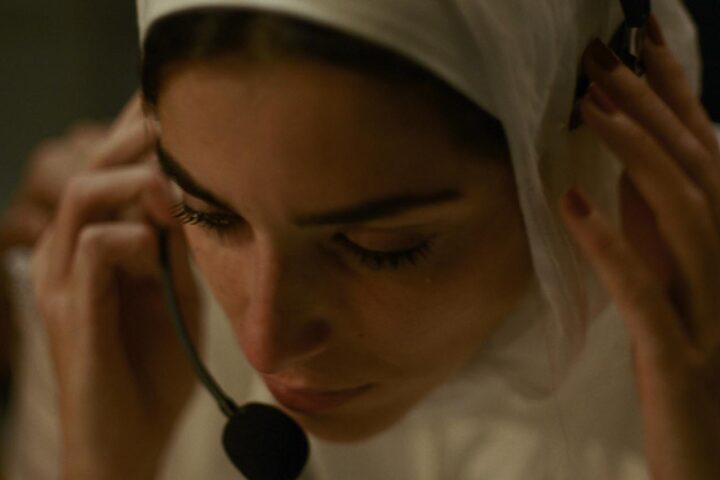
The House


Once Upon a Time in the West

[Editor's Note: In light of Sight & Sound's film poll, which, every decade, queries critics and directors the world over before arriving at a communal Top 10 list, we polled our own writers, who didn't partake in the project, but have bold, discerning, and provocative lists to share.]

I'll sidestep the usual throat-clearing about the thought process behind my all-time 10-best-movies list (the agonizing, the second-guessing, the hair-splitting between "bests" and "favorites," the last-minute changes—yes, it was quite a ride), and cut to the chase. My picks deceptively cover six decades of film history, albeit hopscotching over three of them. Nine of my 10 choices hail from the 1960s and 1970s, making the one remaining look like a token acknowledgment of the silent era when it's anything but. Nevertheless, six of my films were released between 1967 and 1970, which suggests what I've often suspected: that that era of cinema is my favorite. I hasten to add, however, that none of my selections are Easy Riders; and my timeframe stops short of any Raging Bulls. In alphabetical order, my Top 10 movies are:

Army of Shadows

Army of Shadows (Jean-Pierre Melville, 1969). Among the least nostalgic of all World War II films, Jean-Pierre Melville's clear-eyed view of a grim, dark struggle depicts a prison camp devoid of Great Escape shenanigans, rescue missions with slim chances of success, or assassinations of compatriots ordered by self-preserving French resistance leaders doomed to die anyway. Interior monologues are distributed among a handful of characters, but Philippe Gerbier (Lino Ventura) is the man in the middle, carrying himself like he's seen it all, yet occasionally letting fear and uncertainty slip out of his rock-solid center. We see it before a parachute drop, when he's executing a young, terrified traitor ("We haven't [done this before] either, isn't it obvious?"), and while he's running for his life from German soldiers shooting at captives for sport. Melville scoffed at the comparisons of Army of Shadows to his gangster movies from the same period, and while filmmakers are normally among the least reliable interpreters of their own work, the analogy does feel trite. This is the movie that bears the deepest imprint of Melville's life and worldview, one that divulges the defeats en route to victory.

« Previous
1 2 3 4 5 6 7 8 9 10
Next »

Army of Shadows

Army of Shadows (Jean-Pierre Melville, 1969). Among the least nostalgic of all World War II films, Jean-Pierre Melville's clear-eyed view of a grim, dark struggle depicts a prison camp devoid of Great Escape shenanigans, rescue missions with slim chances of success, or assassinations of compatriots ordered by self-preserving French resistance leaders doomed to die anyway. Interior monologues are distributed among a handful of characters, but Philippe Gerbier (Lino Ventura) is the man in the middle, carrying himself like he's seen it all, yet occasionally letting fear and uncertainty slip out of his rock-solid center. We see it before a parachute drop, when he's executing a young, terrified traitor ("We haven't [done this before] either, isn't it obvious?"), and while he's running for his life from German soldiers shooting at captives for sport. Melville scoffed at the comparisons of Army of Shadows to his gangster movies from the same period, and while filmmakers are normally among the least reliable interpreters of their own work, the analogy does feel trite. This is the movie that bears the deepest imprint of Melville's life and worldview, one that divulges the defeats en route to victory.


-->


The HouseCategories


Site by  Docent Solutions