The House Next Door

Archive: April, 2010

Ambitious Shadow Play: Tom Clancy's Splinter Cell: Conviction

Tom Clancy's Splinter Cell: ConvictionAdmittedly, Ubisoft Montreal's series of Splinter Cell games has never enticed me enough to be involved with them more than as a casual curiosity. There is a level of intimidation that is hard for a "gamey" gamer such as myself to get around; that is, the temptation to mess about and not take myself seriously during a game's mimesis outweighs the gravity that my sometimes foolhardy actions will have on the structure of the mechanics themselves. And the Splinter Cell titles are made for the invested, not the curious. The success of main protagonist Sam Fisher, the gruff talking battle-wearied agent of the "Third Echelon," a fictional black-ops branch of the U.S. National Security Agency, rests solely on your ability to engage with the games' earnest shadow play, hiding from direct human contact and utilizing improbable spy tech with the utmost sincerity. Which isn't to say that video games aren't capable of being heavy or dramatic, but giving the player any semblance of freedom while simultaneously dictating a specific attitude they must possess carries with it some obvious challenges in design.

What interested me in Conviction and led me to play through the single-player story mode of this chiaroscuro sneak thriller was the marked stylistic shift from the slick black-suited trifocaled Fisher that dominated the earlier Splinter Cell titles to a more haggard and beaten-up character, preoccupied with the death of his daughter (a continuation of the story arc from the previous game, Double Agent) and forced to improvise more on location—in other words, a tad more flawed and human. Double Agent introduced a darker, grittier tone to Splinter Cell, but Conviction has solidified it, also bringing impressive production values that reinforce higher storytelling over spy-op gameplay catered solely to the hardcore. Continue Reading »


Tags: , , , , ,

No Comments »

Creditors at the BAM Harvey Theater

The Creditors

Actor Alan Rickman's staging of playwright David Greig's adaptation of Creditors is striking for the way that it both softens the edges of and preserves the problematic acidity of August Strindberg's original piece. Creditors is probably one of Strindberg's most complex one-acts, a stinging tragicomedy that is every bit as troubling in its philosophy as it is remarkable for the inventiveness and ferocity of its convictions. This is largely because Strindberg's plays are notoriously never truly sympathetic toward their female protagonists and Creditors is in large part about an individual woman's role in a failed marriage. Exciting and engaging as a drama, yes, but also deeply troubling.

A large part of what makes Strindberg's plays from this period (roughly 1887 to 1889, the short but definitive years when he dabbled with "naturalism") so problematic is that they are not simply concerned with the elusive human condition, but rather in relating and enforcing the moral code that governs it. Inspired by Zola's writing, the "naturalistic" philosophy that Strindberg subscribed to when he wrote Creditors emphasizes a concept of human nature that's almost entirely divorced of a theological imperative. As no one governs his protagonists' actions, men and women (but let's face it, mostly women) that do not uphold their responsibilities to another and are not mindful of how to hold their worst behavior in check are, to use the work's prevailing metaphor, accountable for their transgressions. As such, Tekla, played by a striking Anna Chancellor, is essentially a self-serving vampire and is described as such by both her ailing husband Adolf (Tom Burke) and Gustav (Owen Teale), his friend, along with other choice epithets like "snake" and "cannibal." Continue Reading »


Tags: , , , , , ,

No Comments »

Tribeca Film Festival 2010: The Disappearance of Alice Creed

The Disappearance of Alice Creed

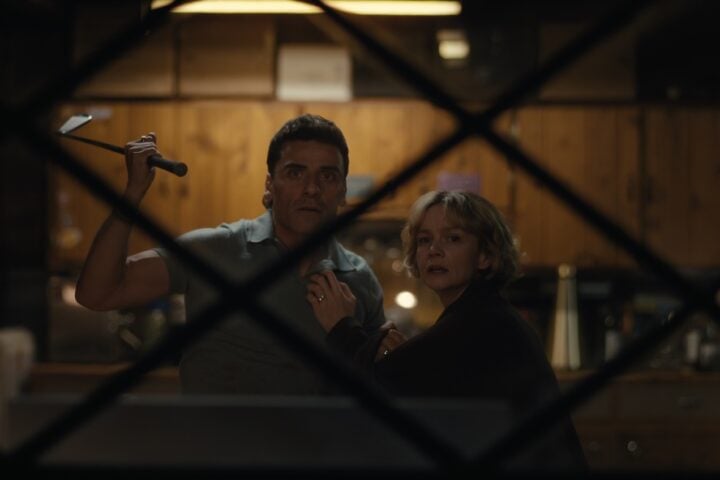
Intermittently compelling, director J Blackson's The Disappearance of Alice Creed initially coasts on its intriguing setup but quickly unravels in the second half. Few words are uttered in the first 15 minutes, allowing the shocking events surrounding the kidnapping of an unsuspecting young English woman by two anonymously masked men to unfold provocatively with an unyielding tautness. The film begins to run into trouble as the story unfolds, and it becomes painstakingly clear that the director would rather play ping pong with ludicrous plot points than actually sustain the initial mood he so captivatingly created. Continue Reading »


Tags: , , , , ,

No Comments »

Understanding Screenwriting #45

Coming up in this column: Tales from the Script, Waking Sleeping Beauty, Alice in Wonderland, How to Train Your Dragon, Ambush, Fort Worth, No Questions Asked, The Las Vegas Story, Some Spring 2010 Television, but first:

Fan Mail

Fan mail: Matt Maul in his comments on US#44 obviously did not like You Only Live Twice (1967) as much as I did, and he is in some good company with several critics of the time and since. He did help me make my case for the Bond films being producers' films, whether he intended to or not. He mentions that one of the Bond films he liked least was Never Say Never Again (1983). It stars Sean Connery of course, but it is not one of the Broccoli family-produced Bond films, which is one reason why it does not work as well as the others. Matt also mentions that he liked On Her Majesty's Secret Service (1969) which does not star Connery, but is produced by the Broccoli family. Aside from George Lazenby as Bond, it is one of the best made of the Bond films, and I think Matt is right to give some credit to the former editor of the series Peter Hunt, who directed it. He obviously understood what the Bond films were all about, even if he could not do anything about Lazenby. But then no other director has been able to either.

I also go along with Matt's admiration of Ken Adam's production designs, and as much as I love the volcano in You Only Live Twice, I would be hard put to say it was better than the war room in Dr. Strangelove (1964). My point about the volcano is that unlike a lot of big sets directors have built, this one is used, as opposed to say the forecourt of Babylon in Intolerance (1916), which Griffith never quite figured out how to use. And when is somebody going to find the footage of the food fight in the war room that originally was the end of Strangelove?

Thanks to "Agor" for saying this column is one reason he comes to the House Next Door. I myself read HND for all the stuff, since as Matt Zoller Seitz once said, you never know what is going to show up. And in answer to his question, I will be dealing with Treme in US#46. Meanwhile… Continue Reading »


Tags: , , , , , , , ,

3 Comments »

Tribeca Film Festival 2010: Open House (Andrew Paquin)

Open House

To watch Open House, Andrew Paquin's limp splatterfest, is to revisit some of the hoarier conceits marking the last half-century of the non-supernatural horror film. While the figure of the maladjusted psychosexual killer who likes to videotape his murders dates back to Michael Powell's 1960 classic Peeping Tom, the image of a woman chained to a wall in an isolated room recalls the contemporary Saw series of gore-a-thons. Similarly, just as Paquin's frequent recourse to the cliché of potential rescuers showing up unexpectedly at the house where the heroine is being imprisoned only to be summarily dispatched by the murderer will be overly familiar to viewers of any number of teenie-kill pictures, the film's lingering shots of gaping wounds and brief interest in corporeal punishment are an all too common fixture in the post Eli Roth horror landscape. Continue Reading »


Tags: , , , , , ,

No Comments »

It's…the Return of the Curse of the White Elephant Blogathon!

White Elephant Blogathon

[Editor's Note: Paul Clark of Silly Hats Only asked that I reprint the below announcement. Deadline's only a few days away. Join up!]

A little over three years ago, Ben Lim and his buds over at Lucid Screening came up with one of the more entertaining blog phenomena I've seen—the White Elephant Blogathon. It was based on the concept of a White Elephant gift exchange, in which participants will each bring one gift, usually something less than desirable, and draw names to see who goes home with which gift. Ben's inspiration was to do the same for movies- you submit one movie, then write about another blogger's submission. Sometimes you'll end up with one that's surprisingly good—in 2008 I drew Seijun Suzuki's Princess Raccoon—and other times, well, not so much.

Sadly, Ben wasn't able to continue the tradition this year. However, he was gracious enough to accept my offer to take over hosting duties. Due to being tied up with the Muriels and other stuff, I wasn't able to get the Blogathon up and running in time for April Fool's Day, the date Ben has hosted it for the past three years. Instead, I'm going to be holding it a little less than two months from now, on June 15.

Why June 15, you ask? Aside from giving everyone enough time to submit their choices then procure the titles that I've selected for them, I thought it just seemed like a normal, boring-sounding day, one that could stand to be livened up a little by something like this. Besides, should it go well this year, I'm hoping to move it back to the original date next year.

Naturally, I'll be sticking to the rules that Ben has laid down in previous years:

1) Submit the title of a movie that you want someone else to review (preferably something available via Netflix).
2) Review the movie that you get assigned and post the review on June 15th.
3) Have fun!

So if you're interested in taking part this year—and you know who you are—send your submission to me at lastwordsquiz@yahoo.com no later than May 1. Please don't submit through the comments section—I'd like to keep this year's selections a secret if possible. And if you'd like to know more about the White Elephant Blogathon, visit your local library. Or, failing that, leave a message in the comments box.

See you on June 15th! And spread the word, will ya? The more the merrier, says I.


Tags: , ,

No Comments »

Tribeca Film Festival 2010: The Woodmans (C. Scott Willis)

The Woodmans

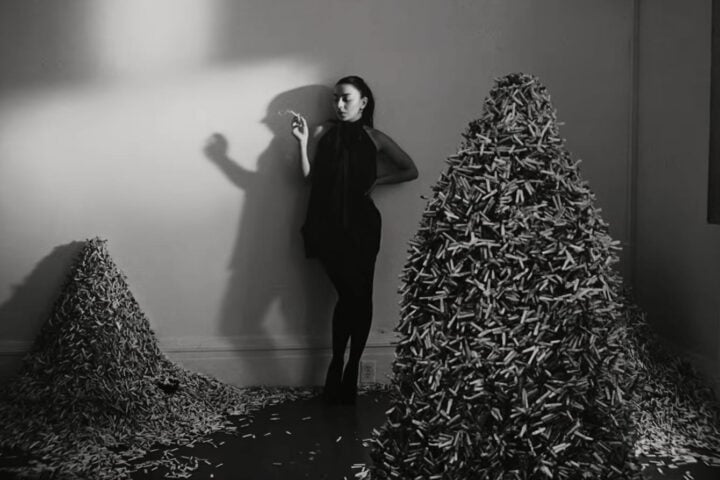
At the heart of C. Scott Willis's The Woodmans is a tragedy that forever changed the lives of its world-renowned subjects Betty and George, a ceramic sculptor and painter and photographer, respectively, and their video artist son Charles. In the press notes, critics are gently nudged to refrain from revealing the exact nature of what happened to the couple's even more famous photographer daughter Francesca at the age of 22 "so that the audience can see her images without that filter." Which gets to the heart of the problem with The Woodmans.

Besides the fact that this unnamed tragedy is easily apparent from the first frame, Francesca—who photographed herself obsessively, often in the nude—has a cultish following that owes much to what happened to her, not unlike other tortured souls such as Sylvia Plath or Kurt Cobain. Sure, she created brilliant pictures so striking as to make the film's images pale in comparison, but so did a lot of other photographers whose fame she eclipsed. In other words, Willis most likely wouldn't have even made this film if it weren't for the sensationalist aspect of Francesca's tragedy so there's something gratingly disingenuous about the documentary's downplaying of the issue. Continue Reading »


Tags: , , , , , , , ,

No Comments »

Doctor Who: Season 5, Episode 2, "The Beast Below"

The Beast Below

"The Beast Below" is an episode which surprised me. It starts out as a futuristic "romp" that seems to have no particular deeper purpose, but at the climax suddenly turns its focus onto the relationship between Amy Pond and the Doctor, and how she proves herself to be a worthy companion. Not as polished and coherent as "The Eleventh Hour", with some unusually exposed plot holes by Steven Moffat's standards, I nevertheless found it to be quite moving by the end.

Doctor Who episodes are nominally forty-five minutes or so long, but given 2009's series of specials, this is actually the first standard-length installment since "The Stolen Earth" nearly two years ago. With it following on closely from the previous episode, and the next one gatecrashing the ending as well, the actual story is told in not much more than half an hour. It feels not so much like a story in its own right as a brief interlude in a continuing journey. Continue Reading »


Tags: , , ,

1 Comment »

The Ties of Zodiac

To view the video essay in its original context at the L Magazine, click here.


Tags: , ,

No Comments »

Tribeca Film Festival 2010: sex & drugs & rock & roll

sex & drugs & rock & roll

I confess that Ian Dury and the Blockheads were one of those early punk bands I never quite understood the appeal of. (But, then, as someone who grew up on the hardcore of Black Flag and the Dead Kennedys, the Ramones always seemed a bit slowpoke to my ears as well.) So perhaps Mat Whitecross, director of the Dury biopic sex & drugs & rock & roll, was driven by that not-unfounded fear that a rocker lacking the name recognition of Johnny or Sid or Ian Curtis would be a hard sell even to punk aficionados. (Sure, Madness for one owes its carnival sound and style to Dury, but he's still relatively unknown at least on these shores.) How else to explain a film so MTV-slick it's practically anti-punk rock? Not only does sex & drugs & rock & roll not have any bollocks, it's like the nerd of the class desperately trying to get the cool kids to like him.

Dury, like that other Ian (who suffered from epilepsy), was a man with a disability, struck with polio at the age of seven. Unlike Curtis, who hanged himself on the eve of Joy Division's American tour, Dury died of cancer in his late 50s, a ripe old age for rockers. In between, he married, had kids, and tried and often failed to balance family life with his unquenchable desire for fame. Sound familiar? The problem with Whitecross's film is that Dury's tale follows a fairly conventional rise-and-fall redemption arc. The only thing that separated the man from his fellow '70s rebels was his leg brace, which is not enough to hang a film on, though writer Paul Viragh certainly tries with a cringe-worthy script chockfull of clichés. Continue Reading »


Tags: , , , , , , , , ,

No Comments »

Track Review: M.I.A.'s "Born Free"

Born Free

Listen, M.I.A. has never been anything but a one-woman riot, but on her recently leaked new track "Born Free," she sounds more like one than usual. It's as though she stripped away every bit of the breezy swagger that made "Paper Planes" her crossover calling card, and instead allowed the gun-toting rebel protagonist of that song to stand fiercely front and center, daring Top 40 radio to co-opt her again. Because when M.I.A breaks through the borders (of your country, your scene), she's not coming to incite some cosmopolitan liberal love-down—she just wants to get up in your face. Continue Reading »


Tags: , , , , , , , , ,

No Comments »

Tribeca Film Festival 2010: Sons of Perdition (Tyler Measom and Jennilyn Merten)

Sons of Perdition

A real-life counterpart to HBO's Big Love, Sons of Perdition details the efforts of three teenagers to craft new lives after leaving the "Crick," a Fundamentalist Latter-Day Saints (FLDS) community lorded over by Warren Jeffs on the Utah-Arizona border. The boys in question, Joe, Bruce, and Sam, choose to leave the Crick to escape tyrannical polygamist fathers and a repressive, isolationist culture that demands blind obedience under threat of physical abuse and eternal damnation in the afterlife. Directors Tyler Measom and Jennilyn Merten follow them for three years after their departure, and in doing so capture a piercing, humanistic portrait of individuality struggling to be born, and to survive, amid not only present-day difficulties but inescapable past traumas. Despite working with subject matter prone to be treated with freak-show melodramatics (as somewhat confirmed by HBO's serialized drama), the documentarians never resort to cheap theatrics and tsk-tsk moralizing, instead allowing the boys to articulate—both verbally and through their actions—the arduousness of the path upon which they've embarked, all while conveying the terrifying ethos of Jeffs's compound existence via voiceover sermons from the "prophet" that position him as an ominous, ever-present brainwashing specter in Crick exiles' lives. Continue Reading »


Tags: , , , , , ,

No Comments »

Tribeca Film Festival 2010: Lucky Life (Lee Isaac Chung)

Lucky Life

Based on the poetry of Gerald Stern, Lucky Life reflects on issues of remembrance, life, and death with a heartfelt lyricism bordering on affectation. Though on the surface a significant departure from his stunning Munyurangabo, Lee Isaac Chung's sophomore effort is in many respects a kindred spirit to that Rwanda-set drama, sharing with it similar aesthetic assuredness (and specific flourishes) as well as an interest in human responses to present and past calamity. Continue Reading »


Tags: , , , , , , ,

No Comments »

Tribeca Film Festival 2010: My Brothers (Paul Fraser)

My Brothers

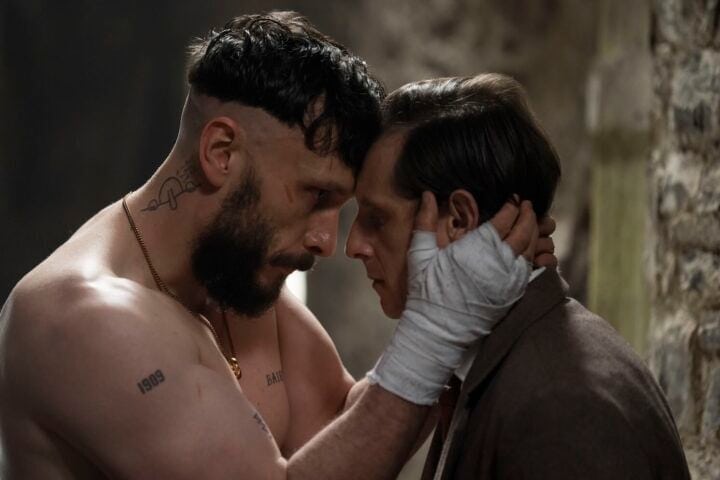
My Brothers, a coming-of-age tale set over Halloween weekend 1987 that follows three young siblings as they make their way to the Irish seaside to find a replacement watch for their dying father, on its surface bears all the hallmarks of a Shane Meadows film. So it's no surprise that the movie marks the directorial debut of Paul Fraser, a frequent writing collaborator of Meadows. Unfortunately, like another Tribeca Film Festival selection, sex & drugs & rock & roll by Mat Whitecross, co-director of Michael Winterbottom's The Road to Guantanamo, it's also in dire need of the auteur half of the partnership at its helm.

Seventeen-year-old Noel, played with lovely nuance by novice actor Timmy Creed, sets Will Collins's over-the-top script in motion when (in a metaphorical effort to stop time?) he takes a cheap watch from his half-conscious father's wrist. He then gets in a fight, which leads to both the watch and his wrist being smashed. But because the sentimental trinket had been won at an arcade in Ballybunnion, Noel is then forced to find a way to get to the tiny town, which leads to his borrowing his employer's bread van without permission. Unfortunately, though conveniently for the story, he can't shift the vehicle's gears with his injured hand, so he enlists the help of his pudgy, 11-year-old brother Paudie (Paul Courtney). Their seven-year-old, Star Wars-obsessed sibling Scwally (TJ Griffin) also comes along for the ride after threatening to tell their mum if they don't take him with them. Continue Reading »


Tags: , , , , , ,

No Comments »

Master Class: Sondheim on Sondheim and The Aliens

Sondheim on Sondheim

Signal the thunderclaps: Stephen Sondheim turned 80 this year, and everyone is partyin' like it's 1999 for the man. As well they should. His work still speaks for itself and is utterly relevant after so many years, and just two weeks ago he still had four shows (including this one) on the boards that he contributed to in some way. Frequent collaborator James Lapine's Sondheim on Sondheim is sort of a blue-chip-cast, high-tech version of the revue Putting It Together, though this time firmly attuned to the iPad age. It seems an odd fit for a man who writes his scores on yellow legal pads, back flat on a sofa, but the treat is hearing him speak for himself on everything from his rocky childhood (with a particularly unloving mother) to his pretty straightforward writing approaches to finally finding love at age 60. The biggest surprise of the evening is that the man doesn't really seem the least bit tortured. Could it be that a musical genius is really just a pretty adjusted, prolific fellow? To be honest, it's a bit of a relief, and removes the portent from an admittedly longish barrage of songs from the Sondheim catalogue. Continue Reading »


Tags: , , , , , ,

No Comments »