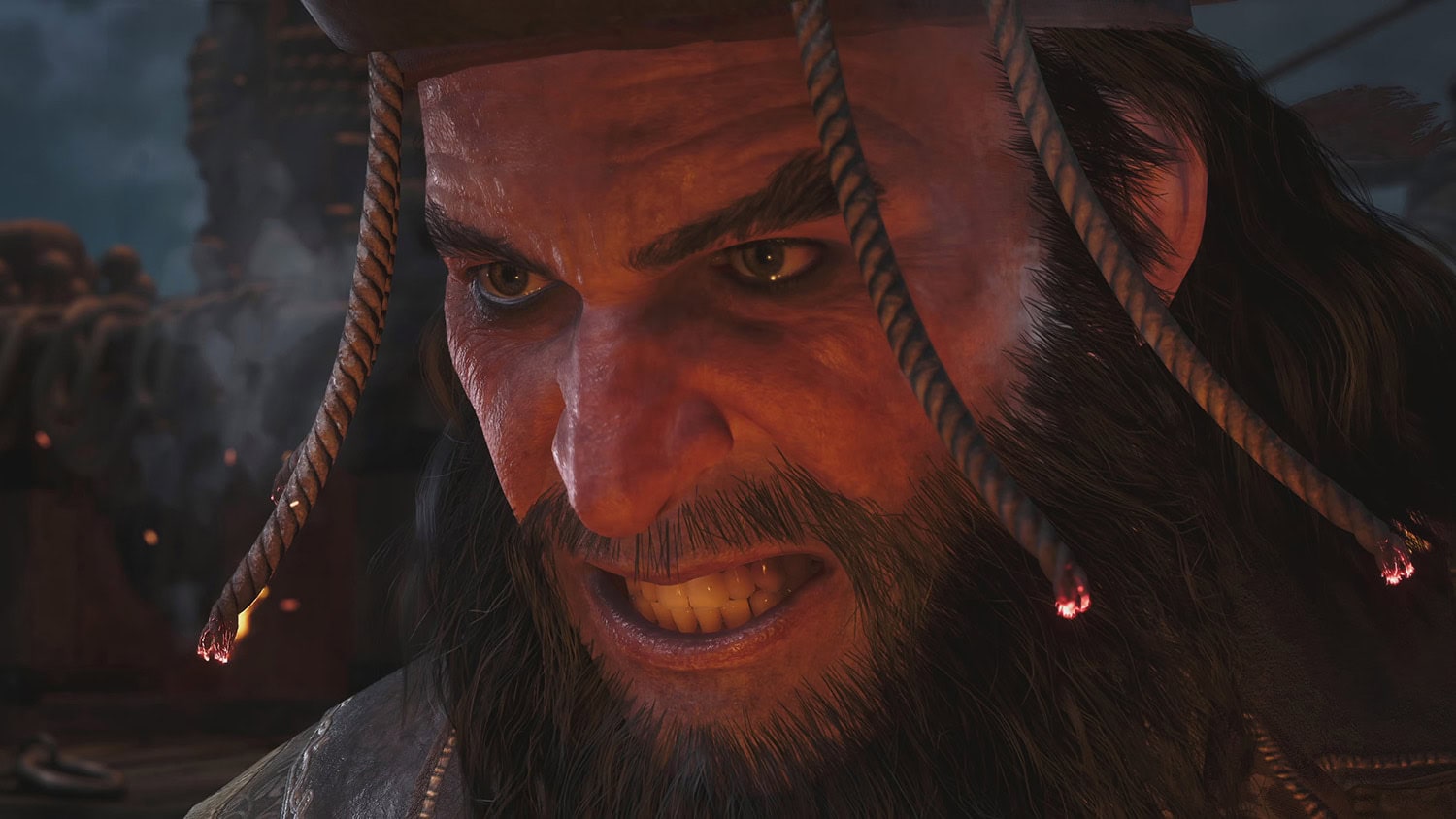
In 2013’s Assassin’s Creed IV: Black Flag, players took on two roles—one as the pirate Edward Kenway, and one as the game tester tasked with reliving Kenway’s genetic memory. You didn’t just play the game, you rated it, essentially giving its makers the data needed on how to better market it. Now, 13 years later, we get Black Flag Resynced, which doesn’t shake up the foundation of the entertainingly swashbuckling but emotion-starved Black Flag. But you can see in the coldly calculated quality-of-life upgrades, additional character arcs, and removal of the modern-day sequences that Ubisoft was listening to player feedback.
The focus is now entirely on Kenway, tracking his somewhat reluctant personal growth. All of the missions and minigames are the same, and some are much improved, like the lurid diving sequences. But some are as tedious as ever, like the harpooning minigame. And while much of Kenway’s crew is still anonymous, Rescynced sees the pirate leader putting up a fight for three new, and notably fleshed-out, recruitable characters. The game doesn’t change the fate of his other allies, but it at least gives better closure to those who abruptly departed in the original.
Resynced also succeeds with its Animus Rift missions by centering them around the player’s experience of Kenway. In each of these missions, the Animus virtual machine within the game tries to convince you that you’re learning the wrong lessons from Kenway’s story, and gives you glimpses of the “better” life that he and his pirate allies could lead if they didn’t make chaotic choices. It’s here that you most directly see the consequences of the Assassin’s Creed (“Nothing is true, everything is permitted”), even if the game itself, ironically, never allows players, as they relive Kenway’s fixed memories, to make any meaningful choices of their own.
Elsewhere, Resynced does little to improve Black Flag’s gameplay. Enemies are laughably predictable, and the removal of almost all the optional objectives and Abstergo Challenges makes every combat-based mission feel identical. This is more than a little disappointing, especially given how gorgeously vibrant the game’s glow-up is. And while you can undertake Assassin Contracts, the extra 500 rials offered for killing your target in a particular way is almost never worth the time it takes to lure your targets into position.
As for the naval combat, the new types of weapons, such as shrapnel mines, don’t seem any more or less effective against the same four classes of ships. Especially in the early game, before you’ve earned enough rials to upgrade your ship, you’ll spend much time slowly sailing around in circles, trying to find the right angle from which to let loose a salvo. This aquatic dance never gets more complicated than that, even when coping with attacks from multiple ships at once. So long as you upgrade your ship’s armor and brace on cue, you can brute force most encounters.
At one point, Kenway says, “It ain’t work if you love it,” but it’s hard to love the work that goes into a lot of the sailing you do. But push through the tedium and you may just be gobsmacked by the game’s beauty, as in the way you weave between lightning blasts and massive waterspouts during a storm, until the Caribbean returns to its natural state. Discovering Mayan ruins amid creeping foliage or treasure deep within an underwater tunnel filled with coral and shark is also rewarding. In such moments, it’s easy enough to believe Kenway’s words.
This game was reviewed with a code provided by Ubisoft.
Since 2001, we've brought you uncompromising, candid takes on the world of film, music, television, video games, theater, and more. Independently owned and operated publications like Slant have been hit hard in recent years, but we’re committed to keeping our content free and accessible—meaning no paywalls or fees.
If you like what we do, please consider subscribing to our Patreon or making a donation.