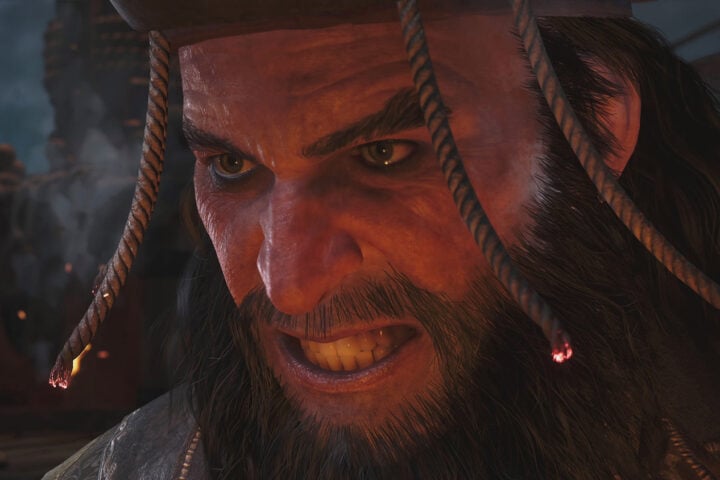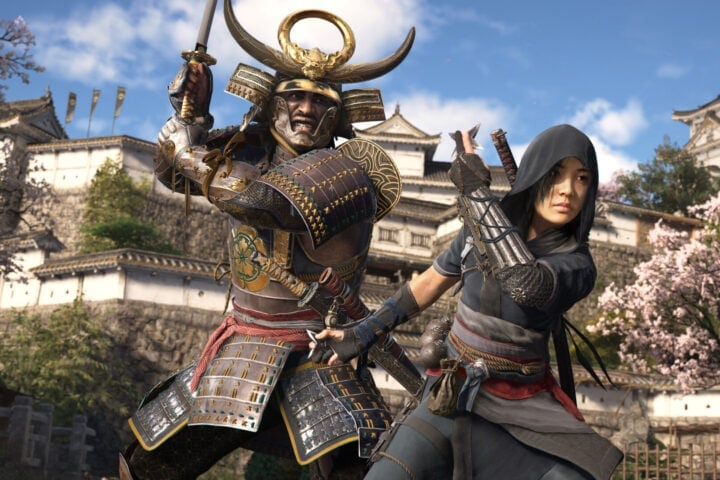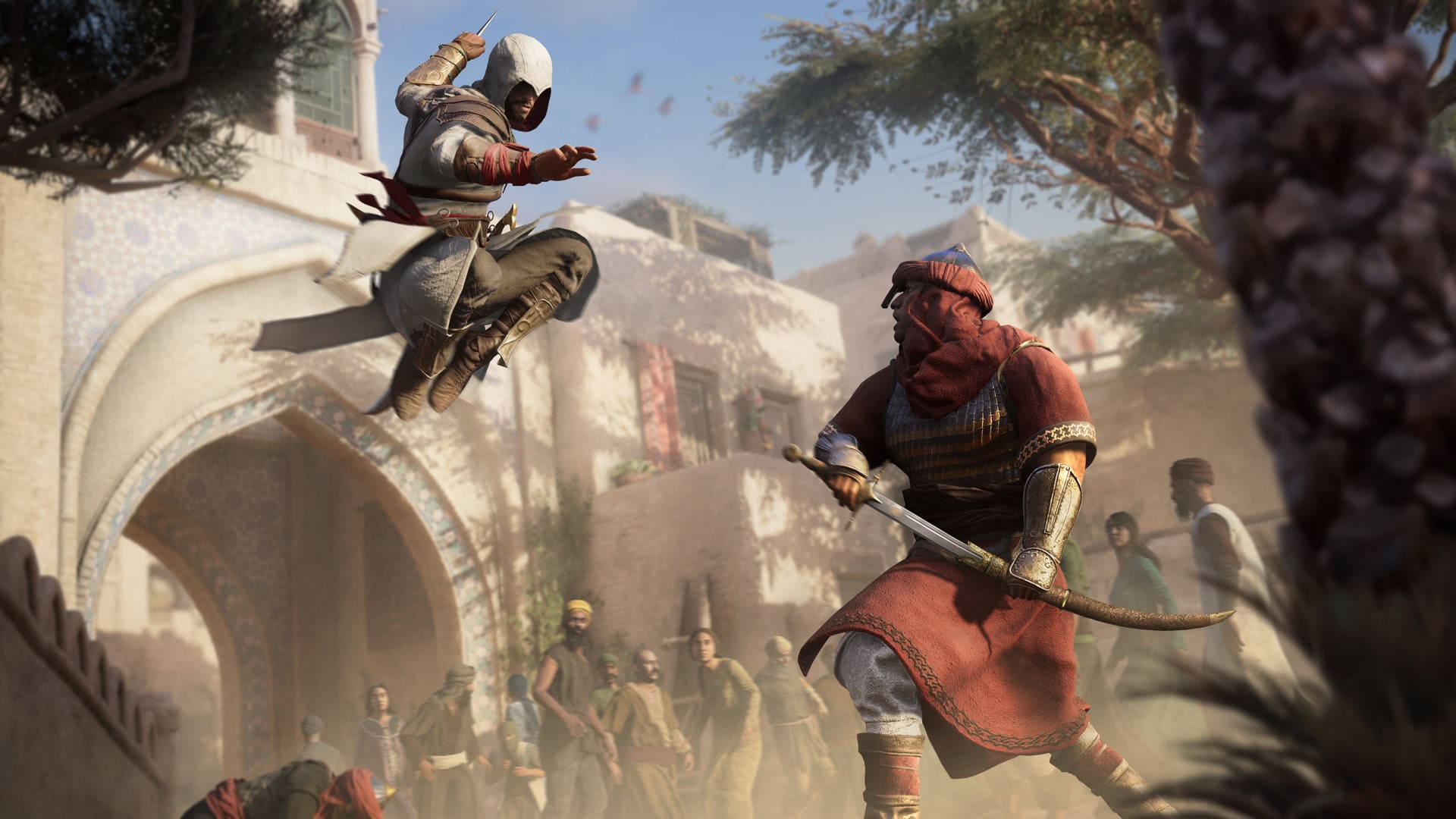
The latest Assassin’s Creed game, Mirage, will satisfy those who like annualized content from a 15-year-old franchise. More specifically, the game, which has been billed as “a love letter to the first titles in this series,” is for fans who disliked the series’s RPG-ish evolution in Assassin’s Creed Origins. The gameplay essentially resets to how it was in Syndicate, and Mirage, which is set against the backdrop of 9th-century Baghdad, is a throwback to the original Assassin’s Creed, which took us to various regions of the Holy Land during the Third Crusade. The game even leans into the original’s bluish filter as a nostalgic visual option.
Mirage begins and ends in search of a proper story. It’s a prequel to Assassin’s Creed Valhalla, and those who played that game already know more about protagonist Basim Ibn Ishaq than Mirage tells you. But even if you haven’t, there aren’t really any surprises here. In 861 CE, after a heist gone wrong in a town outside of Baghdad, Basim joins the Hidden Ones and, in the process of getting vengeance on the Order of the Ancients, becomes a master assassin.
There are a handful of optional contracts you can pick up that focus on the gameplay’s bread and butter of killing, tailing, protecting, or infiltrating, but the game lacks for the playful revisionism that marked previous entries in the series. The historically real residents of Mirage—like the poet Arib or the governor Muhammad—appear so infrequently that they leave only the most superficial (and sometimes stereotypical) of impressions. You also learn nothing about the four elder members of your order who run Baghdad’s various bureaus, nor anything of your order’s secret fortress at Alamut beyond what’s offered in a brief semi-playable montage.
The Assassin’s Creed series has had an indelible impression on fans, but Mirage operates as if it’s only interested in catering to a certain stripe of fan. What about those who enjoyed the modern-day animus framework that’s appeared or been referenced in every other entry in the series? In jettisoning the present-day (and occasionally meta) plotting or the imaginative way in which glitches in the animus sometimes appeared in games like Unity, the series is giving up that part of its DNA that’s made it relatively unique among other games of its ilk.
Worse, the A.I. remains frustratingly broken to the point of missions having no consequences or stakes. No matter how many guards you kill, once you’ve hidden long enough to get off alert, soldiers resume their routines, obliviously walking past the corpses of their comrades as you whistle them into an obvious trap. It says a lot about the mechanical principles between this game and, say, Metal Gear Solid and Dishonored that while some missions require you to eradicate all foes, there’s only a handful of optional sub-objectives that require you to go unseen, or to use non-lethal tools to avoid killing anyone. This is even more pronounced for purchasers of the Deluxe Edition, as you’ll unlock Prince of Persia-themed gear that isn’t just cosmetic.
On the positive side, Mirage’s main Baghdad setting is certainly fun to explore, and is conveniently separated into districts that gradually give players more of a challenge, whether that’s in scaling and navigating taller buildings or scouting more extravagant locations. Though players are free to explore the city as they please, missions begin to the north in industrial, low-lying Harbiyah, before delving into the machinations of scholars in Abbasiyah, the intrigue of merchants in Karkh, and the brutality of the Sharqiyah military garrisons. And it all concludes in the heart of the elaborate, opulent upper-class Round City’s court, harem, and palace.
But while locations like an academic symposium and a grand auction set the stage for compelling assassination missions, and you’re given several ways to get the job done, there’s little freedom or discovery to them. And without the insta-fail mechanics of some earlier titles in the series, there’s no penalty for resorting to brute force and just killing everyone in your way.
“Put yesterday out of your mind,” advises a fellow assassin at one point. “It has no bearing on today.” That’s an ironic statement given how pleased Mirage is by homage. No games celebrate the past as much as this series does with its rich lore and meticulous cities. But Mirage ought to have been more than the dim illusion of where Assassin’s Creed has already traveled.
This game was reviewed with code provided by Ubisoft.
Since 2001, we've brought you uncompromising, candid takes on the world of film, music, television, video games, theater, and more. Independently owned and operated publications like Slant have been hit hard in recent years, but we’re committed to keeping our content free and accessible—meaning no paywalls or fees.
If you like what we do, please consider subscribing to our Patreon or making a donation.