Slant Magazine
advertisement
Search Site

Poll
Newsletter

"American" Excess

By: Sal Cinquemani On: 05/21/2009 13:03:29 In: Television Comments: 2

American Idol

Last night's American Idol finale was an exercise in excess, with award-show posturing complete with faux awards presented by host Ryan Seacrest and superstar guest performances, including Fergie—who awkwardly warbled through her hit "Big Girls Don't Cry" before being joined by her fellow Black Eyed Peas for a performance of their latest single, "Boom Boom Pow," a song that does the exact opposite of epitomizing a singing competition—and a seemingly dazed and confused Rod Stewart. The only thing missing was a dry-ice-and-fire-filled group performance of Queen's "We Are the Champions." Oh, wait, there it is.

I stopped paying attention to the conveyor belt of alternately mediocre-but-smartly-packaged and quirky-but-completely-unmarketable talent that is Idol around the time that viewers gifted themselves with Taylor Hicks, but it's clear the show is close to buckling under the weight of its over-bloated surfeit. In many ways, the finale was perfectly married to the season's purported frontrunner, 27-year-old neo-glam rocker Adam Lambert—he of the man-polish, eyeliner, jet-black emo hairdo, and heavy-metal shriek. Lambert was joined on stage at one point by Kiss for an over-the-top spectacle of a duet that involved, yes, more dry ice and fire.

So it was poetic, perhaps even cosmically auto-corrective, when "dark horse" Kris Allen—he of the unthreatening, boy-next-door good looks and multi-instrumental skills—upset Lambert for the win. Allen's Idol journey ended just as it began, with an endearing modesty and accessibility (even his reaction to winning was restrained, a striking contrast to Lambert's theatrical bombast) and an understated performance style that's focused on the music itself. And yet he held his own alongside country superstar Keith Urban during the finale, displaying a down-home authenticity that will likely be a hell of a lot more bankable in the real world than Lambert's melodramatic, sexually ambiguous (at least to the tween girls who voted for him) glam show.

While there are some who are quick to point to the media's apparently "coded" characterizations of Lambert to explain Allen's "surprise" win (am I not allowed to use the word "theatrical" without fear of being labeled a homophobe?), 12-year-old girls are unlikely to be swayed by a bunch of bloggers…or Simon Cowell. If last night's finale is any indication, the producers of Idol had been grooming the admittedly talented Lambert for the win, but America clearly had other ideas. Maybe now the show will take a cue and tone down the, uh, theatrics and get back to basics.

Fear Itself: "Skin and Bones"

By: Brian Holcomb On: 08/02/2008 18:41:39 In: Television Comments: 0

Skin and Bones

Leave it to Larry Fessenden to finally overcome the restrictions of form and content that have shackled virtually every other director who's contributed to Fear Itself. Is there any other filmmaker working today with more experience and skill in good old-fashioned backyard filmmaking? Just a quick glance at the DVD extras on his excellent film Wendigo demonstrates his hands-on approach to filmmaking: The construction of homemade camera rigs and improvised FX are proof of his DIY approach. Like David Lynch, he's one of the few proud "amateurs" in an industry of jaded professionals. It's his personal touch that allows him to color outside the lines, to light and frame scenes through artistic intuition rather than industry trend. This is what distinguishes "Skin and Bones" from the previous seven episodes of Fear Itself. All of the previous installments, including Stuart Gordon's very effective "Eater," have a similar flat look to them, much like any quickly shot TV show. Fessenden's, however, looks like a real movie, with careful attention to light and sound and a creative use of the frame.

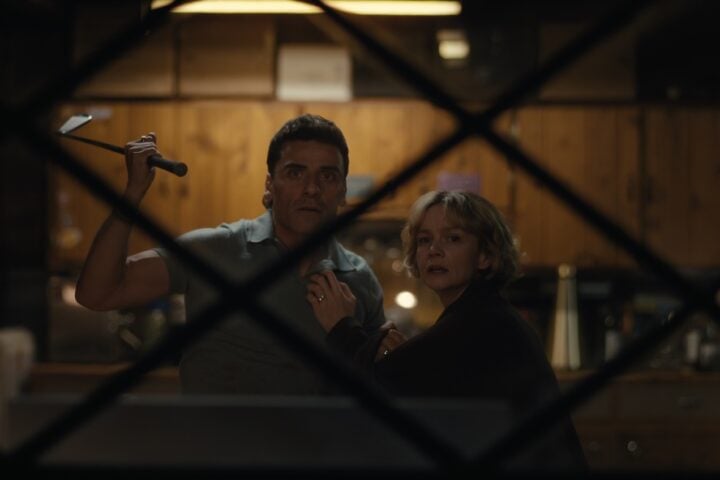
Sort of a horror version of Legends of the Fall, "Skin and Bones" tells the story of a rancher, Grady (Doug Jones), who disappears with his hunting party in the mountains for 10 days. When he returns, he is alone and appears quite cadaverous—perhaps even demonic—and with an intense hunger for flesh and blood. Fessenden revisits the legend of the wendigo here again, but within a narrative more akin to the stories of Algernon Blackwood and Arthur Machen. It's clear that though Grady has returned in body, his spirit has been replaced by something else, something that made him eat all of the other men in his party. His wife (Molly Hagen) and his brother (John Pyper-Ferguson) both find him terrifying. But it's not just his appearance and demeanor that frighten them—it's his direct accusations of infidelity, jealousy and greed that stirs up the tension.

Fessenden normally writes the scripts for his own films but Skin and Bones is actually the work of AintItCoolNews writer Moriarty under his real name Drew McWeeney along with his partner Scott Swan. The pair wrote two of the best episodes of Masters of Horror for John Carpenter, "Cigarette Burns" and "Pro-Life," and with "Skin and Bones" they provide Fessenden with a somewhat stronger narrative structure than the director's own scripts. The solid structure allows Fessenden to focus on the actors (who are all fantastic, especially Guillermo Del Toro veteran Doug Jones) and the creation of a powerfully minimalist atmosphere. It's a real pleasure to watch the slow, creeping camera movements amid the intricate lighting, which features shadows dancing all over the ranch from the trees blowing around outside. The approach is quite theatrical and perfect for what is really a family tragedy that happens to involve a possessed patriarch. Val Lewton would've been impressed with the literary ambitions within the b-horror framework.

There is one sequence in particular that sums up just how accomplished Fessenden is as a filmmaker. When his brother Rowdy bursts into his bedroom armed with a shotgun, the skin-and-bones Grady unleashes a furious explosion of repressed rage. He accuses Rowdy of betraying him his entire life, of being jealous of him and all that he possessed, including his wife, whom his brother more than coveted. The scene is well played by the actors but it's what Fessenden does with the editing, lighting and framing that makes the scene special. As Rowdy bursts in, we are shown his point of view as it scans the room's wreckage. The camera glides past scattered pictures on the floor of he and Grady as kids and of Grady when he was alive and well—just flashes that go by which make us feel the history behind the dialogue that will follow. But it's the swiftness of the shot and the way the shadows dance on the photos, giving their stillness a kind of frozen life, which makes the shot resonate—mere seconds on screen that speak volumes. Hold on the shot any longer and the effect would become heavy handed and laughable; too short and it would be unintelligible and pointless. Fessenden has become so skilled at his craft that this kind of effect seems like nothing upon first glance. But in the end, everything in the episode is affected by it. "Skin and Bones" is justification for the entire Fear Itself series.

Fear Itself: "Community"

By: Brian Holcomb On: 07/26/2008 22:20:23 In: Television Comments: 0

Community

Unemployed Superman Brandon Routh stars in the sixth episode of Fear Itself as a young husband and potential father who allows his wife's (Shiri Appleby) enthusiasm for a home in an odd private community to blind him to the fine print on the sales contract. You see, though The Commons seems like a great place to live and raise your kids, it's really a lot like Stepford, Connecticut or Kings Row where everyone hides behind painted smiles.

If you ever read any Ira Levin, Thomas Tryon, Shirley Jackson or Jack Finney, you'll be able to predict every beat of this episode scripted by Kelly Kennemer and directed by American Psycho's Mary Harron. This would not be a big deal were it ever really suspenseful, witty or scary but since it fails on all counts, we're left looking at the bland story and just waiting for the obvious "shock" ending to drop, right out of Tryon's Harvest Home but without the power of that novel's symbolic castration.

The storytelling desperation can be found right in the opening minutes: We're plunged into an inexplicable chase through the night woods with Clark Kent running from a mob armed with torches and a pack of barking dogs like the angry villagers from Frankenstein. We see that this is just a flash-forward, placed here so that we might stick out the utter boredom of the next hour in the hope that we'll understand just why he's being chased. But that becomes completely obvious when it's quickly revealed that everyone is being watched by security cameras and that community transgressions are punished through methods slightly medieval.

Harron brings nothing distinctive to the episode, which looks like the rough cut of a Lifetime Network Christmas special. The only thing that's missing is Gail O' Grady. Hopefully the next episode in the series will bring back some of the bite that Stuart Gordon put into Eater, still the best of the bunch.

Wiiging Out: Emmy Awards Edition

By: Sal Cinquemani On: 07/17/2008 15:47:49 In: Television Comments: 2

Saturday Night Live's Amy Poehler earned her first Emmy nomination today. Oddly, she was cited in the Supporting Actress in a Comedy Series category and not Outstanding Individual Performance in a Variety or Music Program, the category in which past SNL winners include Chevy Chase, Gilda Radner and Dana Carvey (coincidentally, SNL alum and Poehler's pal Tina Fey is nominated here for her hosting appearance on the show). We love Poehler but can't help but think the top-tier nomination is a little overzealous, what with the existence of Kristen Wiig and all. It'll be another two months before we get a new episode of SNL, so you'll have to settle for repeat viewings of Knocked Up or scouring NBC's website to get your Wiig fix. Here's the second of the actress's two creepily spot-on parodies of CNBC's Suze Orman to tide you over:


Fear Itself: "Eater"

By: Brian Holcomb On: 07/05/2008 21:03:48 In: Television Comments: 0

Eater

That the fifth episode of Fear Itself pushes the envelope of network "standards and practices" should be no surprise once it's revealed that none other than Re-Animator auteur Stuart Gordon is in the director's chair. Gordon has spent his career—from his days as the co-founder of Chicago's innovative Organic Theater Company to his current work as director of such genre classics as From Beyond, The Pit and the Pendulum and Dolls—playing with the audience's comfort zone. Whether it's about crossing the line with shocking violence and gore or pushing the boundaries of human behavior and narrative expectation, the director has never failed to provoke.

Eater is no different. Elisabeth Moss from AMC's Mad Men plays Bannerman, a rookie cop assigned with some stereotypically male colleagues to watch over a ginormous serial killer (Stephen R. Hart) cooling his heels in one of their precinct's cells. This guy with a J-horror hairdo is called an "eater" since his modus operandi involves cannibalism. With a cannibal killer and a female rookie cop protagonist, the episode starts off very much like a certain Jodie Foster flick, but before you can say "Hannibal Lector," the writers have Stephen Lee doing his best Lector impression in the interest of full disclosure. While Silence of the Lambs provides the opening setup, it's the workhouse plot of The Thing that kicks in during the second half. It seems that the eater practices some Louisiana voodoo which allows him to consume more than just a victim's flesh when he dines so he can shape-shift into their physical forms as well. Bannerman soon has a hard time telling which of her fellow police officers is really the "eater" in disguise.

If it all sounds like cliché upon cliché, well that's what it is. But if you are a fan of the horror genre you know that this is par for the course and that it has nothing to do with the actual experience of watching the film. Orson Welles once said that you could write all of the ideas for movies on the head of a pin. He might have also said that you could write all of the ideas for horror movies on half the head of a pin. The genre is so small that it's nearly impossible for one vampire to not step on the tail of a werewolf. As Welles was trying to point out, the "what" is not as vital as the "how," and five episodes into Fear Itself we not only get an authentic horror story but one that is properly executed.

Working from a script by Richard Chizmar and Jonathan Schaech, Gordon stages hangings, hearts torn out of chests, hands being chewed on, fingers cooked up in frying pans like breakfast sausage, an ear that's swallowed up and rat poison being ingested. This may seem less like the work of a talented director than a busy FX team, but unlike Lucio Fulci, whose films often seem to be objective recordings of random fx gore, Gordon has a knack for building tension and knowing just when to drop the hammer of violence for maximum impact.

Chizmar and Schaech provide Gordon with the right kind of script to offer this kind of experience. The quality of writing has nothing to do with which clichés are collected together but in how they are arranged to create tension. Gordon executes this expertly in the first half of the episode, carefully setting up the situation, the specific people involved, and the slow dread that comes over Bannerman as she realizes that something is very, very wrong. His use of a roving, floating Steadicam is both economical for the tight shooting schedule and as a device to present the audience with the maze-like space. Gordon is nothing if not practical. If it was good enough for Stanley Kubrick, it's good enough for him.

Fear Itself: "In Sickness and in Health"

By: Brian Holcomb On: 06/27/2008 13:05:41 In: Television Comments: 0

In Sickness and in Health

Episode four of NBC's Fear Itself brings together several "masters of horror" with director John Landis at the helm and Jeepers Creepers creator Victor Salva penning the script. Salva's story plays like an old-fashioned radio play—a woman-in-peril melodrama filled with phony red herrings and a plot hook that immediately telegraphs its twist ending. Still, there's a definite tongue-in-cheek tone to the script that suggests that Salva is knowingly playing with old formula while Landis brings his usual charm and energy to the telling of the tale.

As the title In Sickness and in Health suggests, the episode takes place during a wedding. Maggie Lawson and James Roday from the USA Network series Psych play the bride and groom, Samantha and Carlos. Samantha's bridesmaids and childhood friends Ruthie (Sonja Bennett) and Kelly (Christie Laing) are supportive but concerned that their friend is rushing into marriage without knowing Carlos really well, and a mysterious note Samantha receives minutes before walking down the aisle causes particular alarm. It reads: "The person you are marrying is a serial killer."

Now that's a pretty good hook for a Hitchcockian melodrama along the lines of Suspicion were Salva actually interested in telling that particular story. Initially, the episode does seem to be going there but it quickly becomes obvious that the whole thing is just a setup for a lame and illogical twist ending. An ending that requires the audience to lose their short-term memory and forget about the fact that Samantha has spent the better part of the story running around like a damsel in distress. It all feels very William Castle only without electro butt-o-meters or flying plastic skeletons.

Landis directs the whole thing as though it were a pleasant distraction. He spends his time creating a classic gothic horror ambience in the empty church with lots (and I mean lots) of inserts featuring Catholic icons in various states of torture and sacrifice. There are the characteristic cutaways to non-sequitur action and many reaction shots will be familiar to Landis fans for their deadpan commentary on the story's shenanigans. Even though it's been years since Landis has directed a feature film (his last work, the vastly underrated Susan's Plan having been condemned to the hell of the Wal-Mart DVD bin), the director is still sharp as a tack and his sense of comic timing hasn't lost a beat. But while In Sickness and in Health is very professionally done and features fun performances by the Psych stars against type, it seems to be nothing more than a gig for Landis quite unlike his much stronger and more personal efforts for the Masters of Horror series, Deer Woman and Family. Four episodes in, the biggest gripe about Fear Itself is that none of the episodes has been even remotely scary yet. Maybe Stuart Gordon will change that next week.

Fear Itself: "Family Man"

By: Brian Holcomb On: 06/20/2008 15:14:47 In: Television Comments: 0

Family Man

Family Man is the third episode of Fear Itself but should have been the first: It's the best of the three so far and the only one which actually delivers on a narrative level. Directed by Ronny Yu (Freddy vs. Jason, Bride of Chucky) and written by Dan Knauf (creator of HBO's short-lived Carnivale), the episode takes a familiar premise and then plays subtle games with it to keep the viewer off balance. What looks to be a horror movie variation on John Woo's Face-Off slowly drifts into something much more sly and Kafkaesque.

The story is sketched quickly in broad strokes, establishing Dennis (Colin Ferguson) as the very image of a "family man": a decent, hard working husband and father whose life is changed forever following a terrible car accident. Dennis wakes up to find himself lucky to be alive, only very unlucky to have somehow switched bodies with another, very different patient in the ER. This man is Richard (Clifton Collins Jr.), who happens to be a serial killer known as the Family Man for his habit of slaughtering entire families. Dennis is placed in jail awaiting trial for his terrible crimes while Richard goes home with Dennis's loving wife and children, who are all unaware of the monster they are living with.

What Knauf and Yu do effectively here is to show how Richard and Dennis become one another after walking in the other's shoes. Richard seems to take very well to playing the role of loving husband and father and appears to be on the path of some divine redemption while Dennis becomes more violent and angry as he's accused of Richard's terrible acts and treated like a monster by the prison guards. There's actual suspense to their psychological switcheroo, and that the ending is a surprise at all becomes the biggest shock: It seems obvious where this story is going, but when it gets there, Knauf delivers a much crueler capper than you might have expected.

At around 45 minutes, sans commercial breaks, "Family Man" is more developed than your standard 23-minute Twilight Zone episode but it's not nearly long enough to feel as dramatically satisfying as a feature film. By the time the main conceit is established, there isn't a lot of time left to really build the story with a real second act, especially with Yu building up to that ironic end. Both the original Twilight Zone and Alfred Hitchcock Presents experimented with the one-hour time slot, but those experiments failed and the shows quickly returned to their half-hour formats. Rod Serling complained publicly that the stories were not suited to the one-hour format, forcing writers to fill up the time with "soap opera." The problem with Family Man isn't that the extra time is filled with soap opera but rather by a plethora of provocative ideas that are set up without much payoff. The episode suggests, for example, that Dennis has developed some kind of supernatural immunity to pain from Richard's body, but this idea is immediately forgotten about. Of course, it seems pointless to criticize an overabundance of imagination in a genre where ideas are often stale long before they are harvested.

Fear Itself: "Spooked"

By: Brian Holcomb On: 06/13/2008 10:45:03 In: Television Comments: 0

Spooked

There's very few surprises in this second episode of Fear Itself, which digs up the old tale of a man who finds himself literally haunted by the ghosts of his past. Eric Roberts plays the man—a former cop who uses brutal, homicidal methods to get the job done, kicked off the force and needing to make ends meet as a private dick spying on cheating spouses and extorting money from whomever he can. His latest case has him staked out in an abandoned house with a knack for playing tricks on the mind, and what follows is a journey into the cop's violent history—in essence, a bloody version of A Christmas Carol.

Director Brad Anderson brings some of the atmosphere from his Session 9 to the old-dark-house setting and the mindfuck storytelling of The Machinist to the rubber-reality situation, and like Session 9, much of the horror is presented as a kind of enigmatic radio play, with Roberts's private investigator listening in on the scary voices from his past. It's not nearly as disturbing as the recorded sessions in that film but reasonably more effective than the attempts at shocking imagery, most of which fall flat. A colorful mural of dead children inside the house seems like an offhand reference to Argento's masterful Deep Red but has no heat without a context. Anderson tries hard to hold the atmosphere but he's constantly undermined by the act breaks of network television. (It's hard to build a spooky mood when the story is interrupted every 10 minutes by loud ads for KFC's spicy chicken.)

Roberts does the best he can with a script that forces him into a series of contrived emotional states that play like a nervous breakdown in fast forward. This rushed character arc is odd given that the script is about as padded as the weakest episodes of Tales from the Darkside. The story is stretched so thin that we've crossed the finish line long before the show is over, and the ending, when it finally arrives, is extremely abrupt and strives for much too much irony. But, hey, like the Crypt Keeper once said, "Irony is good for your blood."

Fear Itself: "Sacrifice"

By: Brian Holcomb On: 06/06/2008 11:48:55 In: Television Comments: 0

Fear Itself

Masters of Horror creator Mick Garris tailors his Showtime cable series for network TV, keeping the all-star roster of directors but (presumably) losing the sex and violence. NBC has committed to a 13-episode run of the series with the Rooseveltian title Fear Itself. We'll keep score here for the next 12 weeks or so, to see if any fear can really be found. Like its pay-TV predecessor, each episode will be directed by a noted "master" of horror including Stuart Gordon (The Re-Animator), John Carpenter (Halloween), Darren Bousman (the Saw sequels), John Landis (An American Werewolf in London) and, of course, Breck Eisner, director of the Matthew McConaughey flop Sahara. Breck Eisner: master of horror?

Eisner's episode, titled "Sacrifice," opens the series on a competent note. The flaws were mostly in Mick Garris's script, based on a story by Del Howison that suggests a variation on Don Siegel's Southern gothic melodrama The Beguiled crossed with Monte Hellman's Beast from the Haunted Cave. Four criminals are forced to hide out at an old snowbound fort that seems trapped in the past. A trio of weird sisters watch over the place…and the strange snaggle-toothed thing that lives in the barn. One by one the criminals are led into the barn by the attractive young ladies and discover something more shocking than the virginal ladies' sexual appetite.

For network TV, the shows of violence and sexuality are striking, and the production values are above average, with the snowbound fort doing most of the work in creating a mysterious atmosphere. But in spite of the efficient staging, there's nothing shocking about the story. As Stephen King wrote about in Danse Macabre, the monster behind the door is always scarier before the door is opened. Howison's story sets up a mystery as to what that snaggle-toothed thing is and exactly what relationship the sisters have with it, but once the barn door is flung open all of the tension evaporates. There's nothing less scary than a monster we've seen hundreds of times before; it seems more like having an old friend over for a predictable dinner than something to be feared. Hopefully, the remaining episodes will focus more on the very notion that the supernatural hocus pocus will be scarier if filtered through the psychology of the characters who face it. After all, there is nothing to fear but fear itself.

Perverted Journalism

By: Sal Cinquemani On: 01/10/2008 18:08:46 In: Television Comments: 4

Chris Hansen

Thanks to our friends over at The House Next Door for calling our attention to Luke Dittrich's detailed Esquire piece on the death of Murphy, Texas prosecutor Bill Conradt at the hands (and cameras) of NBC's To Catch a Predator. In it, Dittrich describes one member of the Perverted Justice team who hunts down and lures would-be child predators as "a middle-aged man who lives in Milford, Michigan, and spends upwards of forty hours a week sitting at a computer pretending to be a sexually available boy." Creepy. What kind of latent perversion lies within these wannabe sleuths, and how long will it be before Predator goes totally meta and nabs one of its own? The vigilante group's founder (who uses a fake name and, according to a recent New York Times article, eats only ramen noodles, never makes his bed, and hates men), told Esquire that "his only regret is that Bill Conradt died before he could face justice." Perverted justice, indeed.

Last summer I reviewed the Dateline series and the heaps of hate-mail I expected to receive never materialized. Maybe I wasn't alone in thinking the show is the most irresponsible, exploitive, and reprehensible program on television, or perhaps people just don't read our TV section. I would prefer the former explanation but I suspect the latter, so if you'd like to read my review, you can do so here.

Gimme A Jingle!

By: Sal Cinquemani On: 04/10/2005 01:29:08 In: Television Comments: 222

Gimme A Jingle!

Each Thursday, NBC declares, "Next week on The Apprentice, the Donald will do/say/think/gesture/insinuate something that he's never done/said/thought/gestured/insinuated before!" And each week we're disappointed. (The producers at UPN, however, apparently don't cry wolf, as last week's coming attractions for America's Next Top Model showed Tyra "Humble Pie" Banks screaming, "Shut the fuck up you insolent, piece of shit coat hanger!"—okay, well that's not an exact quote, but, as Alynda Wheat points out in this week's issue of Entertainment Weekly, "Tyra neglects to use her ‘inside voice' when one of the Barbies acts a fool.") The one thing this season of The Apprentice does have is Tana Goertz, a 37-year-old mother of two from Des Moines, IA. With Erin and Angie out of the running (and the 26-year-old Kendra a non-threat), Tana could be Trump's next Carolyn—who, by the way, deserves her own show. Tana has yet to find herself on the chopping block and the bottom-line-oriented Trump isn't stupid: Choosing three white men in a row is unlikely to help his sagging ratings. Here are some reasons we love Tana:

· While Kristen and Angie were screaming obscenities, John and Brian were beating their chests, and Tara was checking out during Episode 2's motel remodeling challenge, Tana was at the front desk telling guests to give her a "jingle" (complete with wiggling, hand-to-the-ear telephone signal). The move was cloying and over-patronizing, but now that we've gotten to know Tana better, we love it.

· While boasting about the credentials of the casting director her team hired in Episode 5, in which the teams had to create a mobile, service-oriented business, Tana name-dropped "Uma Thurma" with so much conviction I almost logged onto Internet Movie Database to find out who this new up-and-coming starlet was.

· After being booted from Net Worth in a corporate shuffle during Episode 8, Tana helped lead Magna to victory by speaking the language of the street with Lil' Jon ("Give me a little bling bling! That is nice. Now we be talking!") and Lil' Kim ("I just wanted you to know that, straight up. I know somebody would really diggity that"). Mooooooom! You're embarrassing us!

· During her on-screen interview after disputes over what kind of pizza to make in Episode 10's Domino's challenge, Tana boldly declares, "It's not rocket scientist." She pauses briefly as if she knows something's not quite right (you could almost hear crickets), but continues talking anyway.

Top 5 Questionable Ad Campaigns

By: Ed Gonzalez On: 02/15/2005 01:30:57 In: Television Comments: 211

1. Note to Welch's: I realize grape juice is a tough sell, but when the spokeskid hawking your product sounds like he vacations in Martha's Vineyard, I don't want what you have to offer. If Full House taught us anything, it's that toddlers should not enunciate better than the average American TV viewer.

2. The announcer in ads for the DVD release of New Line's The Notebook declares that words can't begin to describe just how great this film is, at which point one-word pull quotes like "wonderful," "beautiful," "terrific," and "astonishing" (courtesy of America's Earl Dittmans) begin to flash on the screen.

3. In a new commercial for Huggies Pull Ups, the doo-doo feces that comes out of your child's butt is cause for celebration. If your little boy or girl is feeling adventurous, he or she can drop their Pull Ups and "go potty" with great ease. If the kids make it into the pool, the diapers apparently play Snap's "I've Got The Power." I understand successful potty training is a joyous occasion for most parents, but I can think of at least 100 songs that are more appropriate here—ones that won't liken shitting to an empowerment ritual and encourage your child to become one of those pricks that work at big corporations and like to talk to people while going to the bathroom (loudly!) at the same time. Shitting is disgusting, but if your child must have a relationship with their poop, that relationship should be ironic, not respectable. To the suits at Huggies, I therefore suggest the following alternative soundtracks: PJ Harvey's "Ride Of Me," Alanis Morissette's "Uninvited," and Patti Smith's "Horses."

4. A commercial for Britney Spears's fragrance Curious implies that that one squirt of the perfume will provoke a postmodern psychotropic episode. It ends with Britney asking, in that obnoxious Michael-Jackson-by-way-of-The-Neptunes hushed whisper she and her ex Justin Timberlake have perfected these last few years, "Do you dare?" I told you already: No!!!

5. I haven't had the (dis)pleasure of seeing Because of Winn-Dixie yet, nor am I familiar with the perennial bestseller from which it's adapted. In the film, a girl befriends a dog and their friendship makes the people come together (at least that's what Yahoo! Movies tells me). Question, though: Is the dog really a dog or is the girl's father turned into the dog after falling under the spell of some ancient curse? Because I'm having a difficult time figuring out why the dog looks so much like Jeff Daniels in print ads for the film. Is this supposed to make me want to see the film?

Top 5 Questionable Ad Campaigns

Annie, Are You Okay?

By: Sal Cinquemani On: 12/23/2004 01:32:15 In: Television Comments: 220

According to last week's issue of Entertainment Weekly, reality television honcho Mark Burnett opted to cut away from two lesbian kisses during the Thanksgiving Day episode of Survivor where the cast was briefly reunited with their loved ones. His response:
"I'd be an idiot not to notice both the way the country voted and the backlash from the FCC that came off of Janet Jackson's [big black tittie]. I wanted to protect my franchise and didn't think it was right to show both lesbian kisses at 8 o'clock."
Apparently a non-sexual kiss between the sixty-year-old Scout and Annie, her partner of twenty-six years, and a benign smooch between survivor Ami and her girlfriend of three years are just as offensive as Janet flashing her tit in front of ninety million viewers on live TV. Burnett claims CBS had no involvement in the decision, but evidently it's okay to show first season winner Richard, who happens to be a raging homo, rubbing his naked cock up against two-time loser Sue on last season's All Stars edition, or Ted dry-humping Ghandia while she slept innocently in Thailand (they're both black—shouldn't that have gotten the red states' panties in a twitch too?). Hey, Burnett, it's reality television—if you're not going to show us the reality of gay relationships, then don't cast gay people on your shows. I expect more from a Brit.

Annie, Are You Okay?
Scout tears up as she reads a letter from Annie,
her partner of twenty-six years, lamenting the
fact that their steamy lesbian kiss will be cut
from the Nov. 25th episode.

Search Blog

RSS


Advertisement
Advertisement

Staff    Slant on Facebook    Slant on Twitter    Contact    Media Kit    Privacy Policy    Terms of Service    RSS

Copyright © 2001 - 2009 Slant Magazine