Archive: February, 2010
by Dan Callahan on February 24th, 2010 at 12:30 pm in Film

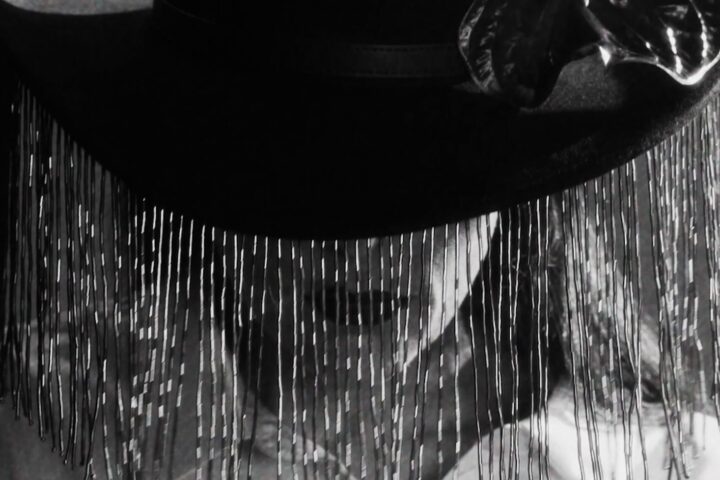
I'd only ever seen the downtown theatrical maestro Charles Ludlam in Mark Rappaport's interesting but rather obscure Imposters (1980), and he's hemmed in by that film's repressed tone, so that the extravagant Ludlam of legend had only been available to me in tales from his theater career, lovingly documented in David Kaufman's book Ridiculous!: The Theatrical Life and Times of Charles Ludlam. This past Monday night, Adam Baran and Ira Sachs continued their Queer/Art/Film series at the IFC Center with two little-shown 16mm silent films by Ludlam, Museum of Wax and The Sorrows of Dolores, which were given a sensitive introduction by Antony Hegarty of the band Antony & the Johnsons. Seen together, these films, treated to ideal musical scores by Peter Golub, have radically enlarged my perspective on Ludlam, just as they have instantly joined, in my mind, the best underground films of Jack Smith while retaining an unusual character of their own. Continue Reading »
Tags: Adam Baran, Charles Ludlam, Everett Quinton, IFC Center, Ira Sachs, Museum of Wax, Queer/Art/Film, The Sorrows of Dolores
No Comments »

Patrice Chéreau may be among the working filmmakers the most attuned to the human body, but on the evidence of his recent work, he has to be ranked among the headiest as well. As in his 2005 film Gabrielle, Persecution largely sets aside the intense physicality of Intimacy and Son Frère in favor of an exhaustive rendering of the intricacies of human relationships as they manifest themselves through densely packed dialogues. Excepting a central sex scene that registers among the film's few joyous moments and a few erotically charged scuffles involving an unwanted admirer, Chéreau's latest is more concerned with the way its characters interact, and particularly how they inflict psychic damage on each other, via the word rather than the flesh. Continue Reading »
Tags: Charlotte Gainsbourg, Film Comment Selects, Gabrielle, Intimacy, Patrice Chéreau, Persecution, Romain Duris, Son Frère
No Comments »
by Ed Gonzalez on February 24th, 2010 at 9:00 am in Awards, Film

We don't have to wait for the Costume Designers Guild to pass judgment, as we're sticking to our frilliest-always-wins guns, a lesson that was confirmed for us when we stupidly opted for Atonement over Elizabeth: The Golden Age two years ago, feeling that the Best Picture nominee—and its presumably iconic green dress—had an edge over the film even its lead star seemed embarrassed to be a part of. In terms of story-serving excellence, Bright Star reigns supreme here, but AMPAS members only vote with their eyes in this category, so the Jane Campion film's garbs will likely to be seen as drab and depressing. Coco Before Chanel, though it's about a pioneering fashion designer, will be viewed the same, at least by those who couldn't—and understandably so—get past the early part of this blasé film's chronicling of Coco Chanel's youth as a peasant. And with no amount of still-lingering sympathy over Heath Ledger's death bound to translate into votes for The Imaginarium of Doctor Parnassus's wild fashions, this remains a showdown between two giants of the costume-designing field: Colleen Atwood and Sandy Powell. Atwood's two Oscars were for Rob Marshall films, so a win for Nine seems almost fitting, but Nine enters the Oscar horse race with less traction than the infinitely more execrable Memoirs of a Geisha. That leaves The Young Victoria, an epic banality no one should be subjected to even once, but after giving my screener copy another whirl, it was difficult not be wowed by Powell's work, which rivals Monique Prudhomme's costumes for Imaginarium in opulence and verve. That a vote for Young Victoria also represents a vote for Emily Blunt, who probably lost her spot in the Best Actress race to Helen Mirren by a hair, makes a win for the film all the more likely.
Will Win: The Young Victoria
Should Win: Bright Star
Tags: Academy Awards, Bright Star, Coco Before Chanel, Colleen Atwood, Nine, Sandy Powell, The Imaginarium of Doctor Parnassus, The Young Victoria
No Comments »
Ben Begins:
Just this week I watched and reviewed Michael Haneke's The White Ribbon (2009) and in my review I referred to Shirley Jackson's short story, The Lottery (1948). Now I am commenting on Henri-Georges Clouzot's film, Le Corbeau (1943)—which another reviewer has called a "distant cousin" to The White Ribbon—and which makes me think of Shirley Jackson yet again; this time, her short story, The Possibility of Evil (1965). I categorized The White Ribbon as a "poison-in-the-well" piece. Others may or may not find this categorization convincing, but there can be no debate that Le Corbeau is a poison-in-the-pen piece.
As with Jackson's story, the plot has to do with an individual anonymously sending hateful gossip to all and sundry in town in order to satisfy what can only be a nefarious purpose. The crucial difference between the story and the film, however, is that the audience knows from the outset who the culprit is in the former but only finds out at the very end of the latter. Jackson's is a critical character study that lays bare a sociopath who perversely sees herself as a righteous pillar of the community. Clouzot's is a whodunit mystery that would be trite if not for its penetrating investigation of parochial hypocrisy and the dark underbelly of those next door neighbors we thought were nice...but little did we know. Continue Reading »
Tags: Elia Kazan, Henri-Georges Clouzot, Le Corbeau, On the Waterfront, Shirley Jackson, The Possibility of Evil, The White Ribbon
No Comments »

Perfect Life is a panoply of perfect, perfectly repulsive moments. The film saves one of its best for late: a crowd of Chinese women gather outside a carnival. An English-language song comprised of prepubescent male whistlers and an upbeat synthesizer plays. The women gather in rows, clapping their hands, dancing as if they were in an aerobics class, flesh sagging and bouncing. At the end, one middle-aged woman looks around, proud, smiling, happy, as people stare at her. For an instant—in her mind, at least—she's a star. Then the sound mutes, and the screen cuts to black. The movie's prepared us for this moment with many scenes of fantasy and escape. In the first scene a younger woman, perhaps the older woman's daughter, perhaps her double—shows up to an audition. She plays "Auld Lang Syne" on a harmonica, badly. An auditioner asks, "What strange melody is that?" Continue Reading »
Tags: 24 City, Emily Tang, Film Comment Selects, In the Mood for Love, Jia Zhang-ke, Perfect Life, Platform, The World
No Comments »

Though, thanks to category inflation, both screenplay categories now boast showdowns between no less than four best picture nominees, this is by far the easier contest of the two. Solid cases could be made for Nick Hornby's name recognition, the viciously funny tirades spewing forth from the BBC's The Thick of It: The Movie, and the even funnier parade of miseries inflicted on Poor Little Precious Jones, Put Upon Pie. But each comes with its own obstacle: An Education's latent strains of anti-Semitism, In the Loop's gleeful deployment of the c-word, and Academy members' confusion that anyone could eat an entire bucket of chicken. Wipe them all from the slate. The WGA, BAFTA, and Globe-winning Up in the Air seems to be coasting to a fairly turbulence-free win, especially since writers Jason Reitman and Sheldon Turner have managed to keep their own personal beefs with each other simmering quietly, privately away from the scrutiny of increasingly nosy Oscar bloggers. You see, Air's screenwriting credits went into arbitration with the Writers Guild, and the result is a shared credit between two people who never even met until after filming was finished. The story, should you choose to believe it, is that Reitman threw together a script of his own after being taken by Walter Kirn's novel, unaware the whole project was already in development with a screenplay having been written up by Turner. In the warped world of Oscar prognostication, Reitman hitching his name up to what is now perceived to have been a double-published script smacks of Oscar Consolation Prize Game strategizing. It stands to reason, given the Academy's now clear affinity for the middlebrow wunderkind. But compare the filmographies of the two, and tell us it's not clear that only one of them has another script under his belt to rival Air's smug self-satisfaction.
Will Win: Thank You for Smoking, Part Deux
Should Win: In the Loop
Tags: Academy Awards, An Education, District 9, In the Loop, Jason Reitman, Precious: Based on the Novel Push by Sapphire, Sheldon Turner, Up in the Air, Walter Kim
1 Comment »

What does it mean to connect with another human being? How fragile is one's grasp on sanity, and self? Is it our families who give us our core identity, or do we find that elsewhere? What is the price that must be paid in even looking for answers to these questions? Director Jeremiah Kipp's latest film, the 10-minute long Contact (viewable in its entirety here) lives in the disturbing (nightmarish) atmosphere of these realities, the space between knowledge and wisdom, the abyss between making a youthful mistake and tragedy. Produced by Alan Rowe Kelly and Bart Mastronardi, and shot by Dominick Sivilli in beautiful black and white, Contact is a compressed journey of horror and revelation, with a core of emptiness, the echoing aloneness of Self, that jolts the audience at the finish, reverberating.
A pair of young lovers, high on each other and their love, decide to take a mysterious drug they procure somewhere in the underbelly of New York City. The drug trip goes bad, and the horror here is actual and gory (what is real, what is hallucination? and who can even know when you are tripping?), as well as psychological. The goal of the drug trip, for the lovers, was to connect in a new and intense way. They get more than they bargained for, although in a way they get exactly what they were seeking, and that is more horrifying than anything else. Be careful what you wish for. They wanted to connect, right? In a terrifying scene, they do. Literally. Contact depicts a loss of identity, the rupturing of trust, and the shattering of youthful hopes. Kipp's gift is in the depths to which he is willing to go, and the specificity in which he films his story. It is clear, yet mysterious at the same time. There is very little dialogue. The story is told in images, one flowing to the other, and through the cuts, evocative and simple, an entire world opens. Continue Reading »
Tags: Alan Rowe Kelly, Bart Mastronardi, Contact, Daniel Mazikowski, Dominick Sivilli, Jeremiah Kipp, Katherine O'Sullivan, Robb Leigh Davis, Tom Reid, Zoë Daelman Chlanda
1 Comment »
by Jason Clark on February 22nd, 2010 at 2:21 pm in Theater

"What in the world is wrong with a little civility?," asks the sweetly naïve housewife Bev (Christina Kirk) in the first act of Bruce Norris's scathing, often tremendously exciting new play Clybourne Park, and after witnessing how superbly he mines ill behavior among the seemingly polite, civility thankfully goes right out the window. Taking its cue from the oily real estate man who gleefully tries to talk the Younger family out of buying their dream home in the classic play A Raisin in the Sun (he's even a character here, with a fleshed out life we were never privy to in Raisin), Norris's delicately structured two-acter begins with a couple (Kirk and Frank Wood, both superbly cast) in 1959 grieving their dead son, a former army man, and packing up to move with the help of their black domestic (Crystal A. Dickinson), whose husband (Damon Gupton) arrives to pick her up and ends up smack in the middle of a discussion about depreciating realty and community standards, led by Karl Lindner (Jeremy Shamos, as always, a total wow), the aforementioned Raisin holdover, in tow with his deaf and pregnant wife (Annie Parisse) and an unctuous clergyman (Brendan Griffin) who always seems to be more of a distraction than an assist. A simple musing on the word "Neapolitan" in the top of the act becomes a fraught release of hypocrisy among '50s types by the end. Continue Reading »
Tags: A Raisin in the Run, Annie Parisse, Brendan Griffin, Bruce Norris, Christina Kirk, Clybourne Park, Crystal A. Dickinson, Damon Gupton, Frank Wood, Jeremy Shamos, Kirk Wood
No Comments »

Someone recently told me that film and video artists produced 2.5 billion hours of viewing material last year. I sometimes think that Jean-Luc Godard has made that much by himself. Godard is not just one of the greatest directors, but also one of the most prolific: IMDB lists him as having directed 92 films, many of which can't usually be seen in the States. This includes several of his best later films, after he gave up working with French stars like Jean-Paul Belmondo and Jean-Pierre Léaud. For every Breathless there's a Número Deux, Contempt can't compare with Nouvelle Vague, and to the proclamation title "End of Cinema" that closes 1967's Weekend, one need only look to 1998's exhaustive Histoire(s) du Cinéma as a response. The major works of this period are not even available on video, nor are all the works of his most famous period, the 15 feature-length cannon shots (and six shorts) made between 1959 and 1967. My Life to Live and Band of Outsiders, sure, but how many readers have seen Le Petit Soldat or Les Carabiniers? Godard's been making films for 55 years, and we're still in the process of discovering him (cf. Film Forum's run of 1966's Made in U.S.A last year, the film's American theatrical debut). One reason Godard's work thrills to this day is that finding it is such a treasure hunt (and the critical writing reflects this; a recent example is Richard Locke's wonderful feature in the latest Threepenny Review). What, might we wonder, is the really rare stuff? Continue Reading »
Tags: Breathless, Film Comment Selects, Hélas Pour Moi, Il Nuovo Mundo, Jean-Luc Godard, Le Petit Soldat, Les Carabiniers, Número Deux, Pierrot le Fou, The Battleship Potemkin
1 Comment »
by Ed Gonzalez on February 22nd, 2010 at 9:00 am in Awards, Film

In a recent article for the The New York Times, Dennis Lim wrote: "There was a time when the Academy Award for best foreign-language film reflected the state of world cinema: Fellini films won back-to-back Oscars in the mid 1950s, as did Bergman films in the early '60s. But the category has come to suggest a peculiar gulf between Academy opinion and the tastes of critics and audiences alike." Ever since AMPAS put this category's oddball selection committee in lockdown as punishment for their dire string of nominees throughout much of the 90s and early aughts, the quality of the nominees since then has arguably improved, even if the spoils continue to go to the namby-pambiest of films. We know this (it's why we predicted a win for The Lives of Others over Pan's Labyrinth in 2006), but try telling that to those who are knee-jerkingly pegging The White Ribbon for this award now that Michael Haneke's film has a Golden Globe to bookend its Palm d'Or. Continue Reading »
Tags: A Prophet, Academy Awards, Ajami, The Milk of Sorrow, The Secret in Their Eyes, The White Ribbon
1 Comment »
by Aaron Cutler on February 22nd, 2010 at 12:30 am in Film

"It doesn't worry me if it is said that I'm not making any progress. I agree, whatever progress one makes is always very small indeed."—François Truffaut, in an interview with Don Allen, 1979
When François Truffaut was young he disagreed with a teacher over Robert Bresson's film, Women of the Bois du Bologne. The teacher couldn't understand why a man would drive 80-miles-an-hour to solve romantic problems; Truffaut couldn't understand why the teacher couldn't understand. Bravura mockeries of common sense peppered the films the French New Wave kick-starter made in the 1960s, his first full decade of work as a director, lyrical speedboats like The 400 Blows and Shoot the Piano Player. Whether it's a woman trying to kill a man on an idle whim or a man giving his bank accounts to a woman he's just met, one sees the spectacle over and over again of love reducing adults to kids.
This is clearest in 1977's The Man Who Loved Women, one of a series of '70s films Truffaut made that turned inward, looking back on earlier work; other examples include 1970's The Wild Child, a film about a young Mowgli domesticated and taught language by a kindly doctor (a relationship perhaps based on Truffaut's with the great critic André Bazin), shot in black-and-white with silent film techniques like the iris shot, and 1971's Two English Girls, which based its male-female-female love triangle on a book by the author of the source novel for perhaps Truffaut's most celebrated film, 1961's Jules and Jim, and starred Jean-Pierre Léaud, who'd played Truffaut's alter ego Antoine Doinel as a schoolboy in 400 Blows. The Man Who Loved Women isn't anywhere as good as either The Wild Child or Two English Girls (itself far superior to the overrated Jules and Jim), but Man's smugness, its desperation, and the sheer seemingly unintentional discomfort that one feels watching it are all quite revealing of Truffaut's work as a whole. Continue Reading »
Tags: Francois Truffaut, Jean-Pierre Léaud, Manny Farber, The Barefoot Contessa, The Man Who Loved Women, Two English Girls
No Comments »

Over the Edge suffered from timing. Jonathan Kaplan's 1979 film finished production around the time teenage gangs were fighting in theaters over The Warriors; the studio, worried that this new teen movie would cause more violence, shelved it. But like White Dog, another studio film deemed too dangerous to be seen, its reputation grew. A 1981 HBO screening led to bookings at New York's Public Theater, which in turn led to showings in small art houses across the city. Edge recently came out on DVD and last night it opened Film Comment Selects. Film Comment editor Gavin Smith talked before the screening about how delighted he was "to give this film the premiere it never got but deserved," and the eager sold-out Walter Reade crowd clapped throughout. I couldn't help but think of John Frankenheimer talking about his 1966 flop Seconds: "It went from failure to classic without ever being a hit." Continue Reading »
Tags: Adventureland, Film Comment Selects, Jonathan Kaplan, Over the Edge, Paranoid Park, Rebel Without a Cause, Superbad, The Warriors, Velvet Goldmine, White Dog
No Comments »

"Gravedancing" squanders the dramatic potential set up by last episode's conclusion where Joseph Adama asks his brother Sam to avenge his wife and daughter's death by killing Amanda Graystone. In defusing (and diffusing) the threat over the course of an hour, with side trips into the customs and practices of the Capricans, the Taurons, the Global Defense Department (GDD), and the Soldiers of the One (STO), this week's entry of Caprica becomes little more than a lukewarm table-setter for future episodes of the series.
The problem is viewer patience is wearing thin. Newbies (like my wife) are wondering what the big deal is, unwilling to give Caprica a pass strictly based on its progenitor's reputation. Even veteran fans of Battlestar Galactica are wondering if Caprica will ever strike a chord of resonance the way the former seemed to do so deftly. For a moment, last episode's stunning conclusion (Joseph Adama whispering "Balance it out," implying Sam murder his nemesis' wife) seemed to complicate the emotional melodrama beyond its soapy roots. But "Gravedancing" and its awful dialogue, rooted in some filmic and racial stereotypes, is a setback for the fledgling series. The Taurons behave like cliched Mafia stand-ins, with even Joseph's mother-in-law, Ruth (Karen Austin), uttering such trite Godfather-lite bromides as, "You get the best things from enemies, because they're scared of you." Even the wonderfully complex Sam is reduced to a two-dimensional thug in this one, talking about "getting even" and so forth. Continue Reading »
Tags: Caprica, Gravedancing, TV Recap
1 Comment »

By the grace of five extra Best Picture nominations, Pixar finally managed to land itself a slot in the main drag. By a horrible stroke of irony, we are now forced to treat this category like we would any niche Grammy category, predicting an almost ignobly easy win for the nominee contending in the Oscar equivalent of the "general fields," even though this is maybe the broadest, most impressive set of nominations in the category's nine-year, Treasure Planet/Shark Tale/Bolt littered history. (The 2005 slate may still win on overall balance, but it had to limit the scope down to only three nominations to do so.) Granted, we are as fine with an Up triumph as anyone. The movie's sanguine warmth and eye-popping visual clarity would make it an easy win even if it had still suffered an embarrassing snub in the training wheels-festooned Best Picture lineup. Continue Reading »
Tags: Academy Awards, Cloudy with a Chance of Meatballs, Coraline, Fantastic Mr. Fox, Monsters vs. Aliens, Pixar, The Princess and the Frog, The Secret of Kells, Up
No Comments »
Here's a roundup of some work being done/appearances being made by House contributors around the web.
First off, have you been reading Odienator's daily February series Black History Mumf, inaugurated in 2008, now in the middle of its third go-round at Big Media Vandalism? You no longer have an excuse. Go here for a breakdown of all the entries, past and present. From his introduction to the 2010 Mumf:
"I am proud to be American, but you know what else? I like being Black too. And even if I didn't, Blackness, like prostitution, advertises itself. All you have to do is look to see it. It's going to be a long time before Bulworth's suggestion comes true, and I guarantee you the end result's going to look more like me than David Duke.
"I hope this is enough to justify having a Black History Mumf this year, and if it isn't, too fucking bad. I'm here and I'll be here the next 28 days, reflecting on life through the movies and TV that gave us images of African-Americans, Negroes, Colored People and Blacks. As I've said the past two years, this is not a scholarly discussion. I am not politically correct. I use profanity. I don't care if I offend you, and I probably will. The N-word will appear here, and I don't mean Negro (whose appearance is a given), but always in the negative context it deserves. And the person I am meanest to in these pieces is Black. No, not Diana Ross. I'm talking about me. Continue Reading »
Tags: Black History Mumf, Good Day Street Talk, Nick Schager, Odienator, Philadelphia Weekly, Sean Burns, Shutter Island, The Oscars, The Wolfman, Time Out New York
2 Comments »
Film Comment Selects 2010: Persecution
by Andrew Schenker on February 24th, 2010 at 12:00 pm in Festivals, Film
Patrice Chéreau may be among the working filmmakers the most attuned to the human body, but on the evidence of his recent work, he has to be ranked among the headiest as well. As in his 2005 film Gabrielle, Persecution largely sets aside the intense physicality of Intimacy and Son Frère in favor of an exhaustive rendering of the intricacies of human relationships as they manifest themselves through densely packed dialogues. Excepting a central sex scene that registers among the film's few joyous moments and a few erotically charged scuffles involving an unwanted admirer, Chéreau's latest is more concerned with the way its characters interact, and particularly how they inflict psychic damage on each other, via the word rather than the flesh. Continue Reading »
Tags: Charlotte Gainsbourg, Film Comment Selects, Gabrielle, Intimacy, Patrice Chéreau, Persecution, Romain Duris, Son Frère
No Comments »