The Aussie import Leviticus could scarcely pick a better time to wash up on American shores. Writer-director Adrian Chiarella’s feature debut, which turns the conversion therapy inflicted upon two queer teens into a real monster, arrives hot on the heels of two breakout horror films, Backrooms and Obsession. When asked if he hopes to ride the wave of their box office triumphs, Chiarella professes his ambitions are more modest: “I just hope it speaks to people who are going through these sorts of experiences.”
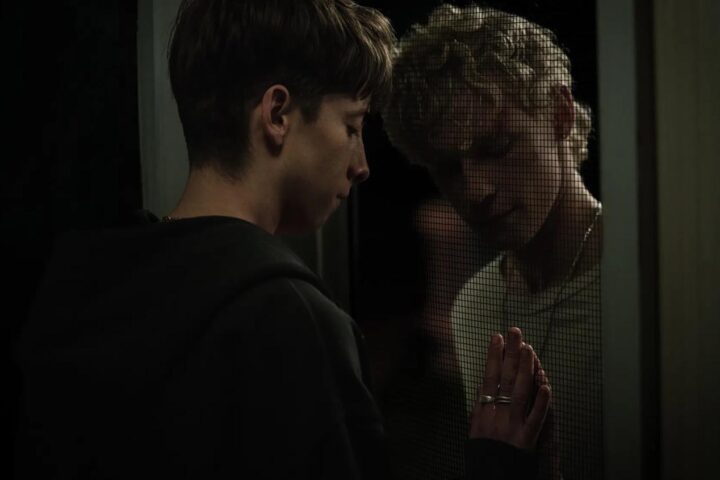
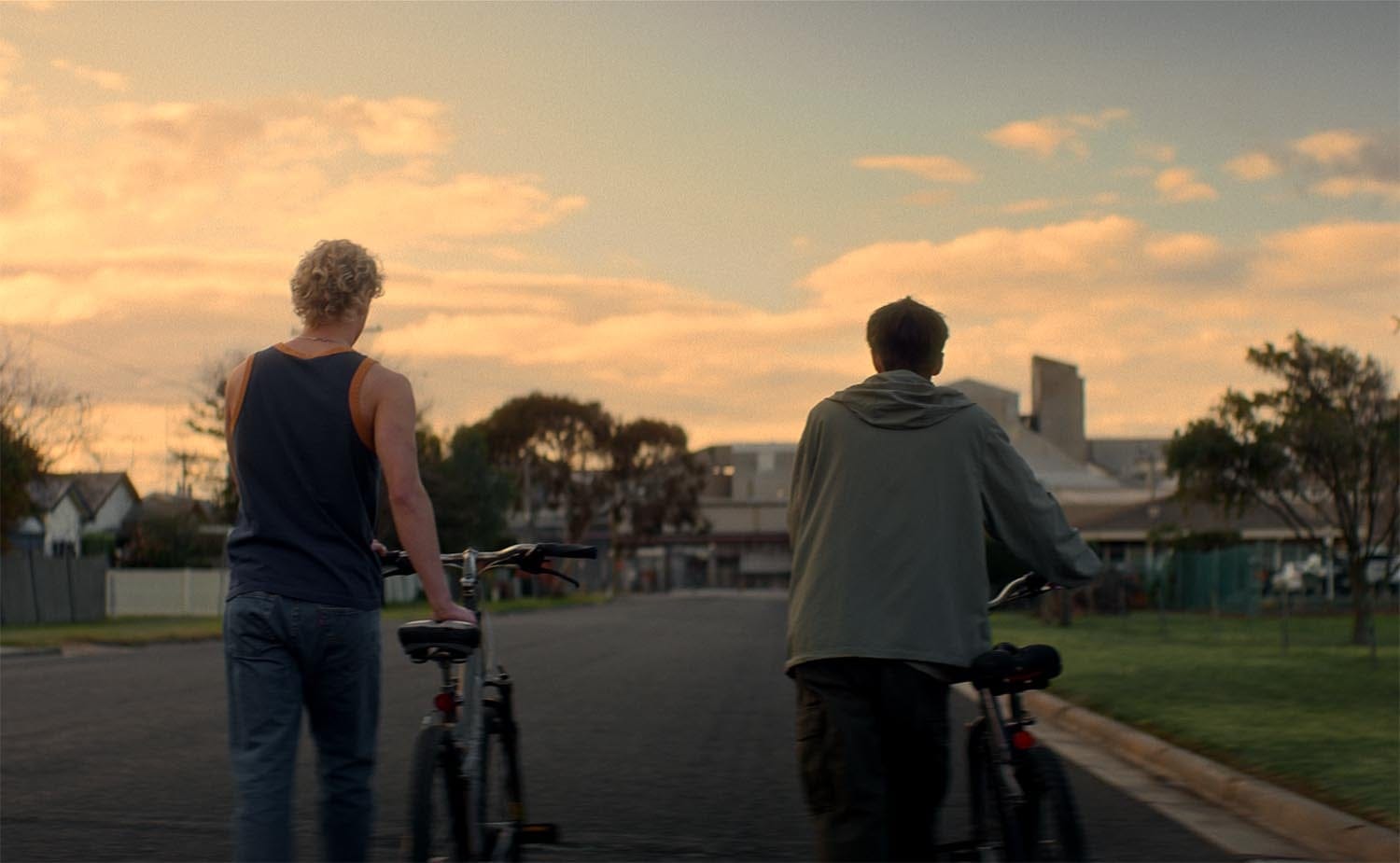
Leviticus, which premiered at the 2026 Sundance Film Festival, offers multiple points of entry for anyone struggling to untangle their desire from imposed societal shame. Depending on how one wants to look at it, Chiarellla has made one of the sweetest horror films ever made, or one of the scariest teen romances. A tentative but tender bond forms between two male classmates, Joe Bird’s shy newcomer Naim and Stacy Clausen’s swaggeringly confident Ryan. But when the strict religious community in their provincial Australian town discovers the true nature of their relationship, a so-called deliverance healer arrives to “make new what was defiled.”
Chiarella visualizes the curse placed on Naim and Ryan as projections of their desires. The demon that preys on them throughout Leviticus takes the physical form of the crush against which their defense would be weakest, and it only grows stronger the more it understands their connection. This coming-of-age tale acknowledges that the process of self-discovery takes a different shape for those who must battle external and internalized homophobia. Gaining knowledge of oneself is often quite scary before it can be sustaining for the soul.
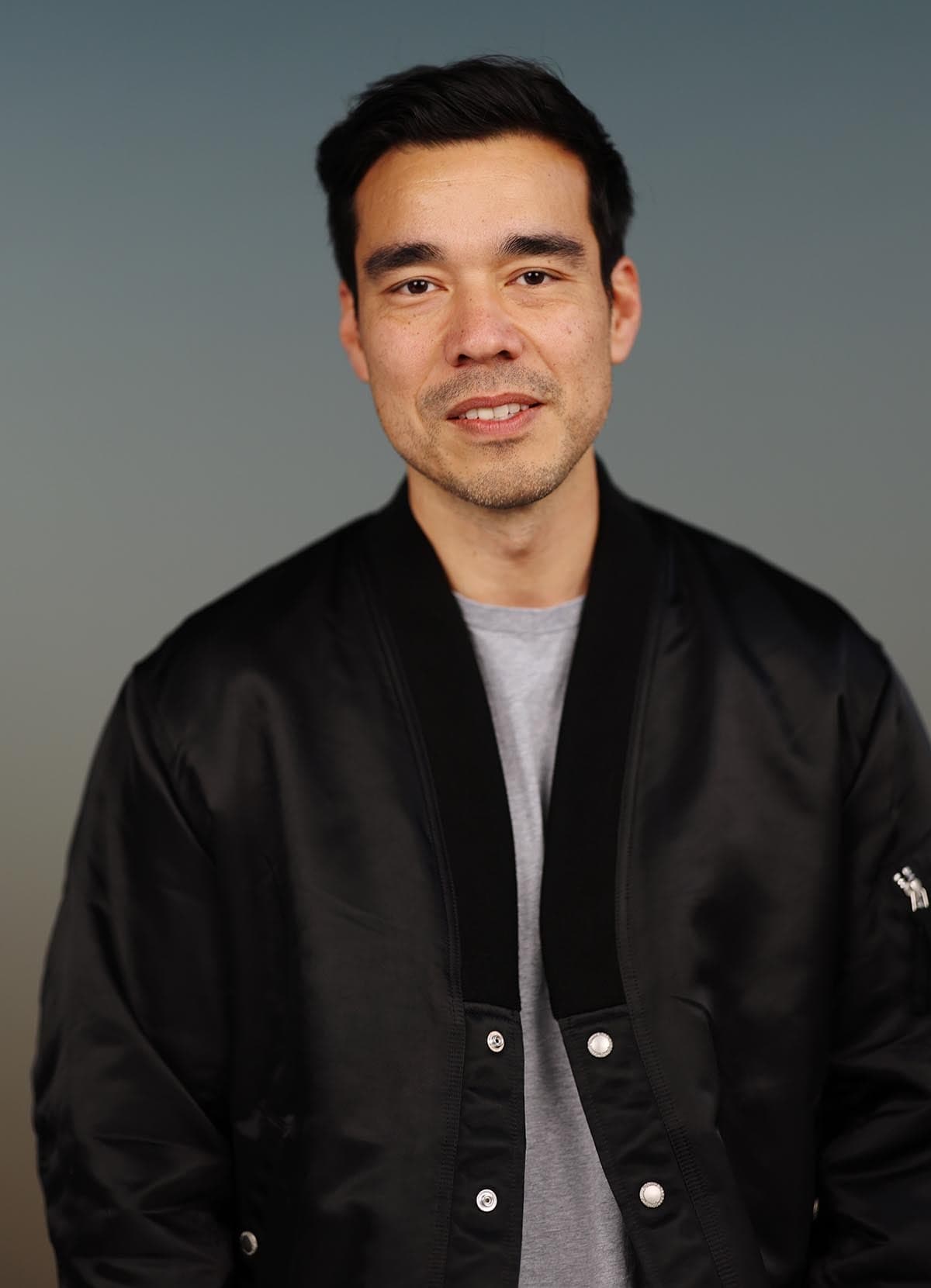
I spoke with Chiarella ahead of Leviticus’s opening week. Our conversation covered why horror was the right vessel for his commentary, how his cast transformed their characters, and what his experience as an editor brought to shaping the final film.
You made a point of casting actual teenagers for Leviticus. How do you go about harnessing the rawness of people still going through a lot of the processes of self-discovery that the characters are?
There was already a very organic connection between Joe and Stacy that was very apparent at the casting sessions, but if we were going to build this natural chemistry between the two of them, I just needed to know that they were comfortable around each other to go through the grind of actually shooting this film every single day. They’d stayed in touch ever since they first got cast in the roles, even though they were in different states.
And then, when we got into rehearsal two weeks out from the shoot, I sent them out to do a lot of exercises in situations. I drove them out to locations where we were going to shoot, and I got them to wander around those spaces, get lost, and then find each other. I sent them into a crowded shopping mall and told them to stay in character the whole time so they could feel what it would be like to have this connection between each other in public. And then, they just went out on their own and did things like escape rooms. They went and held a snake, because there’s going to be a scene with one. They started to understand what it would be like to be scared around each other, and to try to scare each other. That stuff was important too.
Joe and Stacy have talked about how the intimacy coordinator on the film helped teach them to play levels of desire. Did that approach correspond with your own understanding of their relationship in the writing?
When I was writing the film, I knew that the intimacy had to manifest in different ways throughout the story. I knew that scene on the bus, for example, was the point in the story where their intimacy had to reach the highest level. They had to really come together in terms of their physicality, but I never really knew how it was going to happen. I knew after they went to see the girl at the hospital, I felt like they were about to have a big breakup, so we needed to know that they really explored their feelings for each other. But how are they going to do that? Is it going to be at one of their houses? What do they do? And I remember a filmmaker friend of mine said, “Well, it should just be on the bus. If you’ve got on the bus there, why not [on the way back]?” I knew that that was going to be the high point of that exploration of intimacy.
You’ve said you struggled with that scene on the bus in the edit, and I’ve also heard you cut some scenes, including one near the end where the title was more clearly outlined. What guided you in the editing room in making these choices?
I started as an editor, so I knew the possibilities of what you could do. I was able to navigate the edit with some level of confidence. I also had an amazing editor, Nick Fenton, who’s worked with some extraordinary directors. I was very lucky that he chose to work on this film. Ultimately, one thing I’ve always believed as an editor, and now as a director, is that you have to tell just enough so that the audience can draw the connection themselves.
Sometimes, the moments that you don’t show, or the moments that you let the audience imagine in their head, are going to be so much more powerful than anything that the best director in the world could ever shoot. You’ve always got to think of your film as not only this beautiful thing that looks and sounds incredible. You’re also making something that’s a prompt to fire up the imagination of the audience. I’ve always had that mentality when I approach it.

Did that play into the “show, don’t tell” approach around the mechanics of the deliverance healer or the monster he unleashes?
It’s funny, people always say “show, don’t tell.” I think sometimes with filmmakers, showing becomes telling. They’ll show you a flashback to explain someone’s backstory and think they’re really clever. No one spoke, so they didn’t tell. They showed you. No, you told us! Like I said, it’s also about what you don’t show as much as what you don’t tell.
The first time I watched the film, I clocked that there’s a porous boundary between horseplay and foreplay among Naim and Ryan. But watching it again, it also struck me that this raw physicality and emotional inarticulacy among queer boys would make them uniquely vulnerable to how the monster would prey on them. Was that a connection you were drawing as well?
Definitely. And that’s why the character who ultimately dies is the one who struggled the most with that, and who expressed his desire through violence because of his own internalized homophobia. That’s what makes that character the most susceptible to this monster, so that was very much at the heart of the thinking behind the whole mechanism of this story.
Another thing that really grabbed me on rewatching the film was how present power lines were in the setting. Was this just a natural feature of a Australian town that might have seen better days, or did these structures mean something more?
They just looked really spooky when we were making it, like weird figures on the landscape. I also had this obsession with parallel lines when I was [developing Leviticus]. I always come up with visual ideas and motifs that we can look to, and I had said to the team, “I think there’s something about parallel lines with these two things that can never really meet.” You can see moments where there are little bits of parallel lines, so I think our DP and our camera operator were just constantly pointing the camera at things like power lines.
How were you finding the balance of explaining but not excusing the actions and ideas of Naim’s mother, Arlene? She’s so much more complicated because you don’t just flatten her into a unidimensional villain.
A lot of that is Mia [Wasikowska]. In the early days of the script, I thought maybe we were gonna have this horror movie mom like Piper Laurie in Carrie. But the more I thought about it, we were making a much more grounded film, so I steered away from that in the script. Then, when Mia came on, she knew that the real terror in this character would be a much more muted approach to how she was going to express her own feelings about her son and her choices.
I also thought that we sometimes see these sorts of stories about parents of queer teenagers, or parents of any teenagers, where they just get redeemed at the end. I think the truth is that it takes a long time to mend relationships between parents and children when something traumatic has happened. If we had made a film that was set over 10 or 15 years, maybe we would have been able to reach that moment with Arlene. I think we ended her story in the way that we did because it’s a story that takes place over such a short space of time.
How did you approach writing her final self-justification when she puts a bow on all that’s happened? She’s not entirely wrong that fear does have value; that’s how our species, to some extent, has survived. But I also think that’s only one part of the puzzle because we also need community, support, and love, which is what Naim is trying to tell her.
Yeah, I think what makes horror as a genre so universal is that fear is experienced by everyone. It’s a biological mechanism and a survival tool that we’ve had ever since we were animals. It doesn’t matter what culture you’re from, you can always understand fear, which is why horror movies travel so well. But I think the thing about fear is that it is often used to coerce and control people, and that was the thing that I wanted to explore with her as a character.
Did Mia’s approach to making Arlene’s emotions more muted inform how you shot the moment of her surrendering Naim over to the deliverance healer? To me, that was the scariest shot in the film: panning over to the negative space in the car as Naim screams for help while she betrays no emotion.
I think in the script, I had her smacking the steering wheel and getting all tense and trying to deal with the emotions of it on her own. Mia was like, “I’m gonna try something else,” and then she just sat there. I hadn’t shot-listed that. We had the short-sighted shot of her in the car, and that felt right because she was in this quite disconnected space. But when Mia performed the scene, in the moment, I said to the DP and the operator, “When she’s sitting there, just rebalance the shot.” It was really just inspired by what she was doing, and that, to me, is filmmaking: when you can really respond to what the people in front of the camera are doing, and then you actually rework the camera around that.
There are several shots in the film, like that really impressive oner in the school hallway when Ryan gets attacked by his monster in the bathroom, that probably could have just been done with some conventional coverage. How do you make the case that something harder is worth the effort?
I think that comes down to my background in editing. One of the things I noticed when I was cutting low-budget features and short films is that sometimes, when people are under this pressure to move so quickly, they just get standard coverage. You feel like, “Okay, I’m seeing the actors do it for the first time in this space. What am I gonna do?! Get the master and the two singles, okay? Great.” Then, when you get in the edit, and you’re assembling, you’re like, “Okay, here’s another scene that looks exactly like the last one.”
I knew that the best directors don’t get too showy, but find a way to convey the core emotion of the scene through the camera work, and there’s not really a science to it. It’s just about watching a lot of films, trying things out, and spending a bit of time in preparation thinking about what this thing is going to be. There are scenes that we had very specific, elaborate shots for, but they changed on the fly once I saw the actors in the space. It’s a tricky thing between preparation and [being] in the moment, but I think that’s the wonderful thing about filmmaking.
There are striking moments in the film where you aren’t just presenting the sonic landscape as it would be, so does the same approach apply to the sound design?
Yeah, that was something we worked on with Emma Bortignon, our sound designer. She used every minute of her time in post doing effects, all the way through to the final mix. It was about giving a sense of real life. We didn’t want to drown the film in music, although we had an incredible composer, Jed Kurzel. And we also didn’t want to go too heavy-handed with the sound design. We wanted moments where you’re just observing life, and then organically find the ways in which the sound design might get a little heightened, or just find the right moment for that cue to come through for Jed’s score. It was just a very delicate process of calibrating all of that [sound] around what was happening between the actors.
I love that you’ve embraced this new phenomenon of “clipping” and released a lot of footage from Leviticus for people to make their own fan edits. Has seeing how people so directly make your work their own changed the way you understand it?
I had noticed that it was something particularly prevalent in queer movies and TV shows where there’s a love story. So when the fans started doing it with the trailers, it came up in a conversation with the team at Neon. They were like, “Should we release some clips? Maybe that’ll just encourage people to do it more.” And I said, “Sure, why not? Let’s see what people do and encourage that creativity.” It’s not something I ever expected. When you make a film, you don’t even expect anyone to watch it. But when people start responding with their own creativity, doing fan edits, fan art, and fan fiction, you think, “Oh, this has got a life that’s like bigger than anything I could have imagined.” I think that’s because Joe and Stacy have this undeniable chemistry, and it’s there in the trailers and the few little scenes that we’ve released. I mean, the film’s not even out yet, but people are already latching onto that, which is really great.
Since 2001, we've brought you uncompromising, candid takes on the world of film, music, television, video games, theater, and more. Independently owned and operated publications like Slant have been hit hard in recent years, but we’re committed to keeping our content free and accessible—meaning no paywalls or fees.
If you like what we do, please consider subscribing to our Patreon or making a donation.