La Belle Personne (Christophe Honor) and Frontier of Dawn (Philippe Garrel)
By: Aaron Cutler On: 03/16/2009 02:21:46 In: Short Cuts Comments: 1

I was over Louis Garrel before I was ever into him. The floppy-haired French heartthrob and star of films like The Dreamers and Regular Lovers is a master of standing with his hands in his pockets, staring down at the ground and mumbling; it's when he has to connect with other actors that he gets into trouble. In Christophe Honoré's new film, La Belle Personne, the 25-year-old Garrel plays a high school teacher who looks younger than some of his students. His physical immaturity suggests the emotional immaturity that prevents him from helping them as they struggle through sexual strife. The film is a modern-day adaptation of the classic French novel La Princesse de Cléves, but anyone who's ever seen a high school movie before will recognize familiar tropes. The closet homosexuals, the suicidal young man, and the girl who attracts the teacher all come and go wistfully to the tune of Nick Drake songs, and Garrel walks moodily and broodingly down a windswept city street. Being French, Personne is more ironic and sophisticated than most American high school films, but for long stretches it's still just as silly.
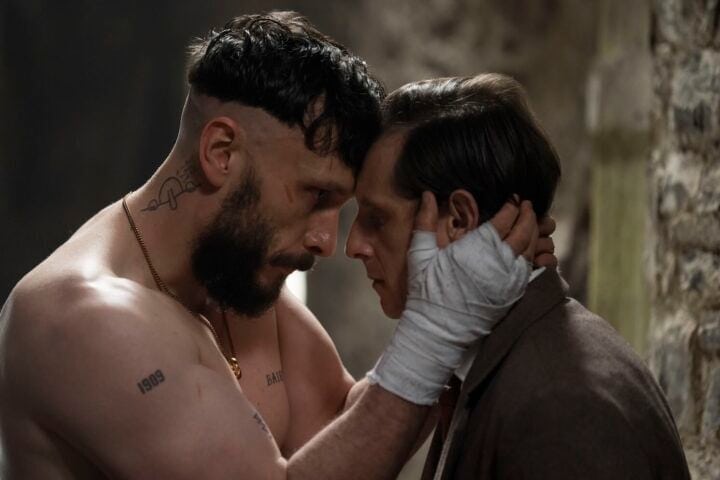
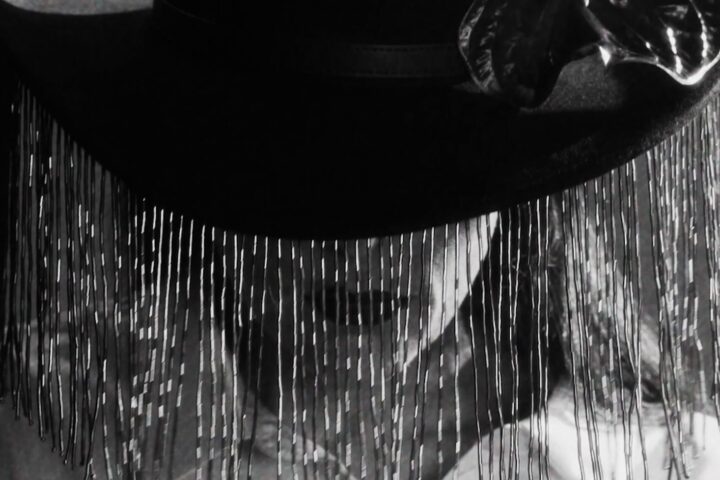
In Froster of Dawn, Louis Garrel plays François, a dreamy, beatific young man who dates Carole (Laura Smet), a young woman undergoing a mental breakdown; she kills herself, and her ghost haunts him as he tries to move on to further relationships. Like director and Louis's father Philippe Garrel's earlier films, The Birth of Love and Regular Lovers, Frontier of Dawn is photographed in gorgeous black and white (the play of light and shadow is particularly spectacular). This time around, though, I'm not sure why. The style may be meant to create a dreamlike, ephemeral quality, but it also had the effect of distracting me from a rice paper-thin story. The film's frequent iris shots recall Truffaut, the cut-up editing of lovers' bedtime talk feels taken from Breathless, and the second half's ghostly shadows resurrect Cocteau. Even Louis Garrel's shambling slimness seemed to me a sleepy spin-off of frequent Truffaut and Godard star and New Wave icon Jean-Pierre Léaud. At times Frontier feels more like homage than like a film in its own right, but if its goal is to pay tribute to the dead, lost, and forgotten, then a reheated quality may be precisely the point.

I was over Louis Garrel before I was ever into him. The floppy-haired French heartthrob and star of films like The Dreamers and Regular Lovers is a master of standing with his hands in his pockets, staring down at the ground and mumbling; it's when he has to connect with other actors that he gets into trouble. In Christophe Honoré's new film, La Belle Personne, the 25-year-old Garrel plays a high school teacher who looks younger than some of his students. His physical immaturity suggests the emotional immaturity that prevents him from helping them as they struggle through sexual strife. The film is a modern-day adaptation of the classic French novel La Princesse de Cléves, but anyone who's ever seen a high school movie before will recognize familiar tropes. The closet homosexuals, the suicidal young man, and the girl who attracts the teacher all come and go wistfully to the tune of Nick Drake songs, and Garrel walks moodily and broodingly down a windswept city street. Being French, Personne is more ironic and sophisticated than most American high school films, but for long stretches it's still just as silly.
In Froster of Dawn, Louis Garrel plays François, a dreamy, beatific young man who dates Carole (Laura Smet), a young woman undergoing a mental breakdown; she kills herself, and her ghost haunts him as he tries to move on to further relationships. Like director and Louis's father Philippe Garrel's earlier films, The Birth of Love and Regular Lovers, Frontier of Dawn is photographed in gorgeous black and white (the play of light and shadow is particularly spectacular). This time around, though, I'm not sure why. The style may be meant to create a dreamlike, ephemeral quality, but it also had the effect of distracting me from a rice paper-thin story. The film's frequent iris shots recall Truffaut, the cut-up editing of lovers' bedtime talk feels taken from Breathless, and the second half's ghostly shadows resurrect Cocteau. Even Louis Garrel's shambling slimness seemed to me a sleepy spin-off of frequent Truffaut and Godard star and New Wave icon Jean-Pierre Léaud. At times Frontier feels more like homage than like a film in its own right, but if its goal is to pay tribute to the dead, lost, and forgotten, then a reheated quality may be precisely the point.
Australia, Frost/Nixon, The Reader, Doubt, & More!
By: Ed Gonzalez On: 12/09/2008 15:37:53 In: Short Cuts Comments: 11

Australia (Baz Luhrmann). For about a minute or so, Australia promises to be some psychedelic version of The New World, but emotion is quickly subsumed by Baz Luhrmann's effusive style. The Wizard of Oz is referenced throughout, sometimes charmingly, but it's Gone with the Wind that Luhrmann's most interested in, grossly amplifying the 1939 classic's worst tendencies (and little of what makes it special): Luhrmann desperately announces his conviction to the displacement of half-white, half-aboriginal children, but his way of celebrating the spirituality of Australia's aboriginal people is by depicting them as, you know, magical negroes. And the horseshit doesn't end there. Maybe Luhrmann was pooped by the time he filmed Hugh Jackman and Nicole Kidman's reunion, but the way he botches their sightlines is just one example of how uncommitted he is to making their stone-cold romance seem credible. Are we supposed to think their affections for one another is rooted in anything deeper than that really gross harlequin-romance shot of Jackman flashing Kidman his pubes?
The Curious Case of Benjamin Button (David Fincher). Last year it felt as if I was the only person in the world that disliked Zodiac, and now I feel like the only person in the world—at least in my critical circle—willing to rally behind the flawed but enthralling The Curious Case of Benjamin Button. I will never be a fan of Cate Blanchett's obnoxiously fussy, vacuous acting style, which Tilda Swinton immaculately shows up in five minute's worth of screen time (even in silhouette, inside a sexily claustrophobic elevator, you marvel at the way this great actress sends her character's every doubt and desire rippling across her entire bodacious bod), so the film's framing device—Blanchett coughing up a storm in old-age makeup while dying in a New Orleans hospital—is quite the endurance test. Bad habits abound, not least of which are the much-noted Gumpian ones, from the New Orleans setting that exists for no reason than to permit a shameless Katrina reference, to the trite lumping of Benjamin Button in with the city's old, crippled, and non-white citizens (they're all outsiders, get it?), but I was dazzled by Fincher's prismatic images, each and every one a profound (at least in terms of deep focus) consideration of how time is of the essence to his characters. Brad Pitt and Blanchett aren't playing humans so much as gears in a timeline slowly inching toward each other, poised to meet once and never again, so praise for their work is perplexing. Is it poignant? Not exactly, but does it have to be? Fincher understands the way the old are taken for granted, seeing Benjamin's long, more curious trajectory from life to death as no more, no less of an American reality or tragedy.
Doubt (John Patrick Shanley). People tell me this material worked on stage, but if John Patrick Shanley's metaphors and themes were flung at Broadway audiences as hard and fatuously as they are here, I ain't buying it. For about 30 minutes, we're subjected to bippity-boppity-booing images of people just getting ready to do shit (like eating and writing and kneeling) before the stage begins to be set for Meryl Streep and Philip Seymour Hoffman's epic screaming match. I like how Streep localizes her character's rage (and possibly her resentment for having lived a life beneath a nun's habit) entirely in the face and eyes, but the whole time I felt as if I were trapped inside an elevator (even when Shanley hilariously opens out the material to the projects near the school where the story takes place) with every member of the National Board of Review.
Frost/Nixon (Ron Howard). Yes, this is Ron Howard's best film since Parenthood, but it still blows. It smugly rewrites history to flatter its liberal audience, who can project their disdain for George W. Bush onto the pugilistic back-and-forth between Michael Sheen's David Frost and Frank Langella's Richard Nixon. You never feel as if you're watching a thoughtful consideration of political comeuppance because Frost's desire to hang Nixon out to dry isn't informed by any sense of moral duty, only a selfish interest to be seen as something more than just a bobble-headed celebrity interviewer. Essentially, Cinderella Man II.
Gran Torino (Clint Eastwood). Fifty years from now, when Eastwood's talents will be respected as highly as John Ford's, we may recognize Gran Torino as the Man with No Name's version of The Searchers (please, try to tune out those easy comparisons everyone's making to True Grit). In short, Eastwood applies some interesting formalist strategies (he uses light to perpetually convey the feeling that his character has absolutely nowhere to go but up) to material that's pitched at the broad level of an '80s culture-clash comedy, and if the result isn't a masterpiece, the artistic friction on display here is delirious to behold. This is a less funereal, more self-conscious vision than the schizophrenic style Eastwood brought to Changeling, and it's one that pushes a poignant message about redemption and living for someone other than oneself.
The Reader (Stephen Daldry). Obviously made with Oscar—and only Oscar—in mind, The Reader is chockablock with some of the most absurd "prestige" moments I've ever seen in a motion picture. (I still don't know what to make of the dubious way Daldry's camera lingers on the wealth accrued by the Holocaust survivor played by Lena Olin, almost as if her passing judgment on the woman's attainment, only moments after pondering the impoverished death of one of her betrayers.) In reality—which is to say, something the film doesn't care to convey—the extraneous noises of the world dissipate when a person in love ponders their object of affection; here, though, a young German boy sits down to dinner with his family shortly after fucking the former Nazi guard played by Kate Winslet and the clatter of the silverware around him is grossly exaggerated in homage to the boy's pelvic thrust, making me wonder if Winslet really popped his cherry or turned him into a vampire.
Revolutionary Road (Sam Mendes). Poor Kate Winslet, wasted in another trite evocation of suburban soul-suck. She's good in this, especially during her many smackdowns with an uneven Leonardo DiCaprio, but it's sad watching her earthy acting mode rub up against Sam Mendes's high-falutin' style, which consists almost entirely of slowly zooming into and out of people and their Eames furniture. Oscar soothsayers have decided Winslet is overdue for an Oscar, and they're so insistent on justice that you have to wonder if anyone is going to call out the shamelessness with which the movie works to obscure the actress's gifts, especially during its histrionically framed climax. I know the always-good Michael Shannon is getting mad props from the film's many naysayers, but I'm not seeing a whole lot of variance between his smugly characterized role—a former math whiz who seems to have traveled from the present into the past just to show how superior he is to everyone around him—and the last five or six loony tunes he's played on screen.
Slumdog Millionaire (Danny Boyle). This is no masterpiece, but I feel no shame in saying it may end up being my favorite Best Picture nominee. Anil Kapoor's performance is the pits, and the ending is a slog because it doesn't feel inspired by the type of melodrama I've ever seen in a Bollywood film, but you watch Danny Boyle's tricked-up version of Los Olvidados knowing that it wasn't made to win awards, only to elate. He soulfully expresses the significance of pop to an underprivileged people, most memorably in that early scene of young Jamal not wanting to get any of the shit coating his body on the picture of the movie star he wishes to have autographed, and dares to recognize a certain nobility in poverty people with money (or fans of Frozen River and The Visitor) don't seem to think exists.
The Wrestler (Darren Aronofsky). Agreeably small and scummy, just like Mickey Rourke's performance, and an obvious step up for Darren Aronofsky after The Fountain, but awfully conventional in a very calculatingly retro way. (Wendy and Lucy's vision of destitution feels more genuine to me, even if Kelly Reichardt has an annoying habit of downplaying emotion.) The problem here in a nutshell: Aronofsky wanted to make a '70s movie, but instead of looking back to Hal Ashby, Bob Rafelson, or Martin Ritt for inspiration, he takes a page from the John G. Avildsen more schematic playbook. Completely unrelated: Is it just me or are the same gay-rights activists giving Milk a free pass in the wake of Proposition 8 strangely mum on Rourke's recent "fag" comment, or are all bets off because the target of his disdain was Perez Hilton? Just saying.

Australia (Baz Luhrmann). For about a minute or so, Australia promises to be some psychedelic version of The New World, but emotion is quickly subsumed by Baz Luhrmann's effusive style. The Wizard of Oz is referenced throughout, sometimes charmingly, but it's Gone with the Wind that Luhrmann's most interested in, grossly amplifying the 1939 classic's worst tendencies (and little of what makes it special): Luhrmann desperately announces his conviction to the displacement of half-white, half-aboriginal children, but his way of celebrating the spirituality of Australia's aboriginal people is by depicting them as, you know, magical negroes. And the horseshit doesn't end there. Maybe Luhrmann was pooped by the time he filmed Hugh Jackman and Nicole Kidman's reunion, but the way he botches their sightlines is just one example of how uncommitted he is to making their stone-cold romance seem credible. Are we supposed to think their affections for one another is rooted in anything deeper than that really gross harlequin-romance shot of Jackman flashing Kidman his pubes?
The Curious Case of Benjamin Button (David Fincher). Last year it felt as if I was the only person in the world that disliked Zodiac, and now I feel like the only person in the world—at least in my critical circle—willing to rally behind the flawed but enthralling The Curious Case of Benjamin Button. I will never be a fan of Cate Blanchett's obnoxiously fussy, vacuous acting style, which Tilda Swinton immaculately shows up in five minute's worth of screen time (even in silhouette, inside a sexily claustrophobic elevator, you marvel at the way this great actress sends her character's every doubt and desire rippling across her entire bodacious bod), so the film's framing device—Blanchett coughing up a storm in old-age makeup while dying in a New Orleans hospital—is quite the endurance test. Bad habits abound, not least of which are the much-noted Gumpian ones, from the New Orleans setting that exists for no reason than to permit a shameless Katrina reference, to the trite lumping of Benjamin Button in with the city's old, crippled, and non-white citizens (they're all outsiders, get it?), but I was dazzled by Fincher's prismatic images, each and every one a profound (at least in terms of deep focus) consideration of how time is of the essence to his characters. Brad Pitt and Blanchett aren't playing humans so much as gears in a timeline slowly inching toward each other, poised to meet once and never again, so praise for their work is perplexing. Is it poignant? Not exactly, but does it have to be? Fincher understands the way the old are taken for granted, seeing Benjamin's long, more curious trajectory from life to death as no more, no less of an American reality or tragedy.
Doubt (John Patrick Shanley). People tell me this material worked on stage, but if John Patrick Shanley's metaphors and themes were flung at Broadway audiences as hard and fatuously as they are here, I ain't buying it. For about 30 minutes, we're subjected to bippity-boppity-booing images of people just getting ready to do shit (like eating and writing and kneeling) before the stage begins to be set for Meryl Streep and Philip Seymour Hoffman's epic screaming match. I like how Streep localizes her character's rage (and possibly her resentment for having lived a life beneath a nun's habit) entirely in the face and eyes, but the whole time I felt as if I were trapped inside an elevator (even when Shanley hilariously opens out the material to the projects near the school where the story takes place) with every member of the National Board of Review.
Frost/Nixon (Ron Howard). Yes, this is Ron Howard's best film since Parenthood, but it still blows. It smugly rewrites history to flatter its liberal audience, who can project their disdain for George W. Bush onto the pugilistic back-and-forth between Michael Sheen's David Frost and Frank Langella's Richard Nixon. You never feel as if you're watching a thoughtful consideration of political comeuppance because Frost's desire to hang Nixon out to dry isn't informed by any sense of moral duty, only a selfish interest to be seen as something more than just a bobble-headed celebrity interviewer. Essentially, Cinderella Man II.
Gran Torino (Clint Eastwood). Fifty years from now, when Eastwood's talents will be respected as highly as John Ford's, we may recognize Gran Torino as the Man with No Name's version of The Searchers (please, try to tune out those easy comparisons everyone's making to True Grit). In short, Eastwood applies some interesting formalist strategies (he uses light to perpetually convey the feeling that his character has absolutely nowhere to go but up) to material that's pitched at the broad level of an '80s culture-clash comedy, and if the result isn't a masterpiece, the artistic friction on display here is delirious to behold. This is a less funereal, more self-conscious vision than the schizophrenic style Eastwood brought to Changeling, and it's one that pushes a poignant message about redemption and living for someone other than oneself.
The Reader (Stephen Daldry). Obviously made with Oscar—and only Oscar—in mind, The Reader is chockablock with some of the most absurd "prestige" moments I've ever seen in a motion picture. (I still don't know what to make of the dubious way Daldry's camera lingers on the wealth accrued by the Holocaust survivor played by Lena Olin, almost as if her passing judgment on the woman's attainment, only moments after pondering the impoverished death of one of her betrayers.) In reality—which is to say, something the film doesn't care to convey—the extraneous noises of the world dissipate when a person in love ponders their object of affection; here, though, a young German boy sits down to dinner with his family shortly after fucking the former Nazi guard played by Kate Winslet and the clatter of the silverware around him is grossly exaggerated in homage to the boy's pelvic thrust, making me wonder if Winslet really popped his cherry or turned him into a vampire.
Revolutionary Road (Sam Mendes). Poor Kate Winslet, wasted in another trite evocation of suburban soul-suck. She's good in this, especially during her many smackdowns with an uneven Leonardo DiCaprio, but it's sad watching her earthy acting mode rub up against Sam Mendes's high-falutin' style, which consists almost entirely of slowly zooming into and out of people and their Eames furniture. Oscar soothsayers have decided Winslet is overdue for an Oscar, and they're so insistent on justice that you have to wonder if anyone is going to call out the shamelessness with which the movie works to obscure the actress's gifts, especially during its histrionically framed climax. I know the always-good Michael Shannon is getting mad props from the film's many naysayers, but I'm not seeing a whole lot of variance between his smugly characterized role—a former math whiz who seems to have traveled from the present into the past just to show how superior he is to everyone around him—and the last five or six loony tunes he's played on screen.
Slumdog Millionaire (Danny Boyle). This is no masterpiece, but I feel no shame in saying it may end up being my favorite Best Picture nominee. Anil Kapoor's performance is the pits, and the ending is a slog because it doesn't feel inspired by the type of melodrama I've ever seen in a Bollywood film, but you watch Danny Boyle's tricked-up version of Los Olvidados knowing that it wasn't made to win awards, only to elate. He soulfully expresses the significance of pop to an underprivileged people, most memorably in that early scene of young Jamal not wanting to get any of the shit coating his body on the picture of the movie star he wishes to have autographed, and dares to recognize a certain nobility in poverty people with money (or fans of Frozen River and The Visitor) don't seem to think exists.
The Wrestler (Darren Aronofsky). Agreeably small and scummy, just like Mickey Rourke's performance, and an obvious step up for Darren Aronofsky after The Fountain, but awfully conventional in a very calculatingly retro way. (Wendy and Lucy's vision of destitution feels more genuine to me, even if Kelly Reichardt has an annoying habit of downplaying emotion.) The problem here in a nutshell: Aronofsky wanted to make a '70s movie, but instead of looking back to Hal Ashby, Bob Rafelson, or Martin Ritt for inspiration, he takes a page from the John G. Avildsen more schematic playbook. Completely unrelated: Is it just me or are the same gay-rights activists giving Milk a free pass in the wake of Proposition 8 strangely mum on Rourke's recent "fag" comment, or are all bets off because the target of his disdain was Perez Hilton? Just saying.
Foster Child (Brillante Mendoza, 2007)
By: Ed Gonzalez On: 03/26/2008 08:51:23 In: Short Cuts Comments: 0

An issue film that doesn't play like one, Foster Child hangs compellingly from the shoulders of its characters, and though the influence of the Dardennes is felt, director Brillante Mendoza doesn't aim for claustrophobic effect. Like Jeffrey Jeturian's The Bet Collector, part of this year's Global Lens series, the filmmaker's docu-realist gaze absorbs a Philippine community's way of life without prejudice or judgment, roving narrow streets and capturing seemingly unrehearsed episodes of joy and panic with equal fixation. Much of the movie consists of Thelma (Cherry Pie Picache) simply getting around town and doing the only thing she knows how: being a mother. Under her foster care is a strangely silent little boy named John-John (Kier Segundo), whom she tends to just as she would her own blood, feeding him, clothing him, and in one particularly expressive scene, bathing him until she makes the mistake of going to get a towel, thus allowing him to piss on the street and run off to get dirty again. The boy's seemingly uncontrollable need to urinate is a running gag as amusing as it is touching, and as in a scene where Thelma's son helps the boy aim his dingaling into a toilet bowl, the film attests to the role of motherhood in society and the way in which behavior is ingrained at an early age. The film's goodwill is only squandered once, when Mendoza condescends to Thelma's know-how when she walks into a pimped-out shower inside a luxe hotel room, all in the interest of expressing the differences between the haves and have-nots and point out the absurdity of a shower with too many knobs accomplishing just as much—if not less—than a bucket filled with water, but the focus he places on the bounty of family ritual is not easily forgotten, not unlike the final shot in the film, which literally and figuratively looks up to Thelma and the role she fulfills in her society. (The 2008 New Directors/New Films program begins today and runs to April 8.)

An issue film that doesn't play like one, Foster Child hangs compellingly from the shoulders of its characters, and though the influence of the Dardennes is felt, director Brillante Mendoza doesn't aim for claustrophobic effect. Like Jeffrey Jeturian's The Bet Collector, part of this year's Global Lens series, the filmmaker's docu-realist gaze absorbs a Philippine community's way of life without prejudice or judgment, roving narrow streets and capturing seemingly unrehearsed episodes of joy and panic with equal fixation. Much of the movie consists of Thelma (Cherry Pie Picache) simply getting around town and doing the only thing she knows how: being a mother. Under her foster care is a strangely silent little boy named John-John (Kier Segundo), whom she tends to just as she would her own blood, feeding him, clothing him, and in one particularly expressive scene, bathing him until she makes the mistake of going to get a towel, thus allowing him to piss on the street and run off to get dirty again. The boy's seemingly uncontrollable need to urinate is a running gag as amusing as it is touching, and as in a scene where Thelma's son helps the boy aim his dingaling into a toilet bowl, the film attests to the role of motherhood in society and the way in which behavior is ingrained at an early age. The film's goodwill is only squandered once, when Mendoza condescends to Thelma's know-how when she walks into a pimped-out shower inside a luxe hotel room, all in the interest of expressing the differences between the haves and have-nots and point out the absurdity of a shower with too many knobs accomplishing just as much—if not less—than a bucket filled with water, but the focus he places on the bounty of family ritual is not easily forgotten, not unlike the final shot in the film, which literally and figuratively looks up to Thelma and the role she fulfills in her society. (The 2008 New Directors/New Films program begins today and runs to April 8.)
Standard Operating Procedure (Errol Morris, 2008)
By: Ed Gonzalez On: 03/19/2008 19:47:51 In: Short Cuts Comments: 2

Errol Morris's Standard Operating Procedure is proof that a documentary can illuminate, like No End in Sight, while still feeling like an actual film, unlike No End in Sight. The first thing that strikes you is Lynndie England's face, older and more filled out than we remember, weathered by motherhood, possibly guilt, and as this chilling account of how torture and humiliation at Abu Ghraib was conducted attests to, the nature of scapegoatism. Some critics are mistakenly going into this film expecting a diagrammatic exposé of what led to the Abu Ghraib scandal, one that casts a finger-pointing net at George W. Bush and his administration, when really it's a study of images and the way they reveal culpability, and how snakes like Donald Rumsfeld have craftily, perhaps unconsciously, exploited their understanding of this relationship to absolve themselves of guilt. The film ponders: How do we blame higher-ups like Rumsfeld for what happened at Abu Ghraib if they weren't psychically in the picture? Morris's recreations are his signatures, and they're sometimes sore spots in his work, but here they feel as purposeful as they were in The Thin Blue Line, cannily dialoguing with his thesis about the veracity of image-making and reaching some sort of apotheosis of mindfuckery when Morris reveals the process by which certain images taken within the blood-splattered walls of Abu Ghraib were deemed to depict "criminal activity" while others were stamped as representing "standard operating procedure." One moment you're disgusted by Morris's subjects, the next they inspire your sympathy—when the subtext those images are unable to reveal are brought to the fore via startling confessions: like Sabrina Harman smiling and holding her thumb up for the camera, an action she claims to default to whenever she poses for a picture (no matter the context), and then you wonder if this revelation makes her actions any more or less reprehensible; or in the case of the famous image of England holding a prisoner by a leash, how the media misrepresented the action in the image and how actual physical information was cropped out of the image (maybe to absolve someone else of wrongdoing, as England speculates, but more likely to make the horror of the picture appear more aesthetically pleasing to the eye). A semiotic essay that doesn't feel like one or announce itself as one, which is to say it doesn't play like some Haynesian PhD thesis, Standard Operating Procedure leaves the mind reeling—art, philosophical discourse, and human rights activism in one.

Errol Morris's Standard Operating Procedure is proof that a documentary can illuminate, like No End in Sight, while still feeling like an actual film, unlike No End in Sight. The first thing that strikes you is Lynndie England's face, older and more filled out than we remember, weathered by motherhood, possibly guilt, and as this chilling account of how torture and humiliation at Abu Ghraib was conducted attests to, the nature of scapegoatism. Some critics are mistakenly going into this film expecting a diagrammatic exposé of what led to the Abu Ghraib scandal, one that casts a finger-pointing net at George W. Bush and his administration, when really it's a study of images and the way they reveal culpability, and how snakes like Donald Rumsfeld have craftily, perhaps unconsciously, exploited their understanding of this relationship to absolve themselves of guilt. The film ponders: How do we blame higher-ups like Rumsfeld for what happened at Abu Ghraib if they weren't psychically in the picture? Morris's recreations are his signatures, and they're sometimes sore spots in his work, but here they feel as purposeful as they were in The Thin Blue Line, cannily dialoguing with his thesis about the veracity of image-making and reaching some sort of apotheosis of mindfuckery when Morris reveals the process by which certain images taken within the blood-splattered walls of Abu Ghraib were deemed to depict "criminal activity" while others were stamped as representing "standard operating procedure." One moment you're disgusted by Morris's subjects, the next they inspire your sympathy—when the subtext those images are unable to reveal are brought to the fore via startling confessions: like Sabrina Harman smiling and holding her thumb up for the camera, an action she claims to default to whenever she poses for a picture (no matter the context), and then you wonder if this revelation makes her actions any more or less reprehensible; or in the case of the famous image of England holding a prisoner by a leash, how the media misrepresented the action in the image and how actual physical information was cropped out of the image (maybe to absolve someone else of wrongdoing, as England speculates, but more likely to make the horror of the picture appear more aesthetically pleasing to the eye). A semiotic essay that doesn't feel like one or announce itself as one, which is to say it doesn't play like some Haynesian PhD thesis, Standard Operating Procedure leaves the mind reeling—art, philosophical discourse, and human rights activism in one.
Broken English, Charlie Wilson's War, & More
By: Ed Gonzalez On: 12/07/2007 19:39:43 In: Short Cuts Comments: 4

I must be a glutton for punishment for writing one of these columns so soon after the near-debacle of the last one, but I've caught up with a few things in the last week worth praising. Twenty-four hours before I hand in one of my critics ballots, and one week before two others are due, I'm finding there are still pleasures out there worth discovering. I can only wonder what else is left.
Broken English (Zoe R. Cassavetes). Warts and all, this is the best American independent film I've seen all year. After Juno, it's refreshing to see something so intelligently keyed to the way people in the real world dress, talk, and feel. Parker Posey is prone to all sorts of bad habits: Her quirkiness often seems to be fighting against the films she's in, an approach that almost never works (her avant-garde disconnect in Blade: Trinity being a notable exception). Here, though, that uniquely Poseyian energy very much belongs to her character Nora: a thirtysomething woman sadly content with her dead-end job, burned by men who have made mincemeat of her confidence, thus resistant to the affections others seem to promise. Unpretentiously filmed, Broken English is decorous only in the attention it pays to its main character's needs and fears, and the anxiety Nora suffers when trying to figure out whether or not an adorable Frenchie is just using her feels very real. Their alternately indignant and rapturous romantic tango is sweet, painful, and dangerous—as if one misstep could change their lives forever. This may be spoilerish for those who haven't seen it, but I love how the movie accommodates a happy romantic ending while still getting to the point that Nora can feel fulfilled without a man in her life. Finally, a Cassavetes offspring daring to carry their father's torch.
Charlie Wilson's War (Mike Nichols). The good: The best Hollywood movie of the year to address the War on Terror, directly or indirectly. The bad: It's no great shakes. The graphic match between an alleyway in an Afghani village and a hallway in the Senate may be the ballsiest directorial move of Nichols's career, a sly illustration of how chaos and order in the world is inextricably tied to the legislative arm of our government. And yet, it all feels awfully glib—a tacky, live-action political cartoon, not unlike Primary Colors, that ends on an easy, finger-wagging note. But is Nichols telling us that we could have prevented 9/11 or that we deserved it? It seems to me that the film will be reviewed according to how critics chose to interpret that final scene.
The Namesake (Mira Nair). To Mira Nair's credit, she makes better movies about her people's cross-cultural issues than she did about mine (The Perez Family), but they're still bad. Nair piles through events in a Bengali beauty's life until one of the woman's children grows up to become Kal Penn, whose issues with his given name, Gogol, commands the director's bathetic attention for the rest of the film's running time. Penn acts his heart out, but his character's identity crisis has too much to do with his problems with his name (it seems unlikely that his father would wait so long to tell him where "Gogol" came from, only to then let the post-mortem box-in-the-attic do the rest). Just as easy are the broadly conceived cross-cultural skirmishes, though it was something of a relief that Gogol's relationship to a foxy Indian girl isn't presented as a preferable alternative to the one he had with a blonde from, you know, a different caste system. As usual, points for heart, but none for presentation.
Sweeney Todd: The Demon Barber of Fleet Street (Tim Burton). Due to Paramount's review embargo, I must speak "in general terms." After seeing the film, I can't imagine a better marriage than Sondheim and Burton, nor can I imagine anyone thinking it isn't superior to tripe like Dreamgirls. Is Sacha Baron Cohen acting in a completely different movie? Should Timothy Spall's face heretofore appear in the dictionary next to the word "slimy"? Does Depp successfully convey Sweeney Todd's moral decay, or is the makeup around his eyes doing most of the heavy lifting? If pleased with it, Simon Cowell might say, "Not a single oversung note or cruise-ship performance." The bloodletting, like Helena Bonham Carter's breasts, is relentless and voluptuous, and Burton knows how to frame the hell out of a shot.

I must be a glutton for punishment for writing one of these columns so soon after the near-debacle of the last one, but I've caught up with a few things in the last week worth praising. Twenty-four hours before I hand in one of my critics ballots, and one week before two others are due, I'm finding there are still pleasures out there worth discovering. I can only wonder what else is left.
Broken English (Zoe R. Cassavetes). Warts and all, this is the best American independent film I've seen all year. After Juno, it's refreshing to see something so intelligently keyed to the way people in the real world dress, talk, and feel. Parker Posey is prone to all sorts of bad habits: Her quirkiness often seems to be fighting against the films she's in, an approach that almost never works (her avant-garde disconnect in Blade: Trinity being a notable exception). Here, though, that uniquely Poseyian energy very much belongs to her character Nora: a thirtysomething woman sadly content with her dead-end job, burned by men who have made mincemeat of her confidence, thus resistant to the affections others seem to promise. Unpretentiously filmed, Broken English is decorous only in the attention it pays to its main character's needs and fears, and the anxiety Nora suffers when trying to figure out whether or not an adorable Frenchie is just using her feels very real. Their alternately indignant and rapturous romantic tango is sweet, painful, and dangerous—as if one misstep could change their lives forever. This may be spoilerish for those who haven't seen it, but I love how the movie accommodates a happy romantic ending while still getting to the point that Nora can feel fulfilled without a man in her life. Finally, a Cassavetes offspring daring to carry their father's torch.
Charlie Wilson's War (Mike Nichols). The good: The best Hollywood movie of the year to address the War on Terror, directly or indirectly. The bad: It's no great shakes. The graphic match between an alleyway in an Afghani village and a hallway in the Senate may be the ballsiest directorial move of Nichols's career, a sly illustration of how chaos and order in the world is inextricably tied to the legislative arm of our government. And yet, it all feels awfully glib—a tacky, live-action political cartoon, not unlike Primary Colors, that ends on an easy, finger-wagging note. But is Nichols telling us that we could have prevented 9/11 or that we deserved it? It seems to me that the film will be reviewed according to how critics chose to interpret that final scene.
The Namesake (Mira Nair). To Mira Nair's credit, she makes better movies about her people's cross-cultural issues than she did about mine (The Perez Family), but they're still bad. Nair piles through events in a Bengali beauty's life until one of the woman's children grows up to become Kal Penn, whose issues with his given name, Gogol, commands the director's bathetic attention for the rest of the film's running time. Penn acts his heart out, but his character's identity crisis has too much to do with his problems with his name (it seems unlikely that his father would wait so long to tell him where "Gogol" came from, only to then let the post-mortem box-in-the-attic do the rest). Just as easy are the broadly conceived cross-cultural skirmishes, though it was something of a relief that Gogol's relationship to a foxy Indian girl isn't presented as a preferable alternative to the one he had with a blonde from, you know, a different caste system. As usual, points for heart, but none for presentation.
Sweeney Todd: The Demon Barber of Fleet Street (Tim Burton). Due to Paramount's review embargo, I must speak "in general terms." After seeing the film, I can't imagine a better marriage than Sondheim and Burton, nor can I imagine anyone thinking it isn't superior to tripe like Dreamgirls. Is Sacha Baron Cohen acting in a completely different movie? Should Timothy Spall's face heretofore appear in the dictionary next to the word "slimy"? Does Depp successfully convey Sweeney Todd's moral decay, or is the makeup around his eyes doing most of the heavy lifting? If pleased with it, Simon Cowell might say, "Not a single oversung note or cruise-ship performance." The bloodletting, like Helena Bonham Carter's breasts, is relentless and voluptuous, and Burton knows how to frame the hell out of a shot.
Juno, Redacted, The Savages, Beowulf, & More
By: Ed Gonzalez On: 12/01/2007 18:02:42 In: Short Cuts Comments: 48

Theatrical releases seen this year: 282 and counting, with only a handful of major ones left to catch up with (among them Sweeney Todd, Charlie Wilson's War, and A Band's Visit), all this week, before we publish our year-end lists. Below are short takes on a few, some older than others, that I've recently caught up with but have been reviewed by others on the site.
Juno (Jason Reitman). Almost as tough to swallow as Hard Candy, that faux-feminist bile that set a precedent for the precociousness Ellen Page belligerently spews here, though less sketchy than Little Miss Sunshine, last year's pageant of Indiewood quirkitude. I get why Comic Book Guys dig Page—she can outwit them, but she would also let them bone her (at least she tells them she would)—but I would rather be trapped in a room with a hungry, face-munching rat than watch the egomaniacal Juno weave one of her ungodly snark quilts. Also, by the time that song about the dog wanting to be the cat and the cat wanting to be the mouse came on the soundtrack, my survival instinct kicked in and I was ready to chew my arm off, but I settled for making Arrested Development cracks until the last act, which was lovely, yes, because of the moral clarity and consistency Juno shows, but also because the film had finally run out of seasons to animate on the screen.
Gone Baby Gone (Ben Affleck). Ben Affeck's directorial debut plays like Mystic River for Lifetime, from its bland bid for moral engagement from its audience to a look at working-class life in Boston that never transcends kitsch. Given the film's pedigree, it seemed wrong that I was able to call the preposterous ending a mile away, but there it was—every bit as absurd as the last film Ashley Judd and Morgan Freeman or Bruce Beresford made together. The casting of Trudi Goodman as a coke-snorting pedophile felt particularly inhumane, though not as mind-boggling as the beeline Michelle Monaghan made for the exit at the end of the film (those who've read the book tell me her character has been considerably dumbed down), leaving Casey Affleck sitting on a couch wondering if kindergarten-cop duty is just punishment for the ethical exactitude he showed earlier.
Before the Devil Knows You're Dead (Sydney Lumet). Run Lola Run for the Lincoln Plaza sect, but with less pop and significance. Mostly an overactor's showcase, this nihilistic cheapie allows the one and only Philip Seymour Hoffman to make frequent and dubious use of the word faggot. The script is obviously responsible for the architectural design of the thing, but Lumet, who revealed during the film's NYFF press conference that he didn't know whether Kelly Masterson is a man or a woman, has gotten all the credit.
Starting Out in the Evening (Andrew Wagner). Treks familiar ground—call it NYC lit porn, with half the incisiveness of Husbands and Wives, but also none of its misanthropy—though you wouldn't know it from Frank Langella's conviction. Like Benicio del Toro in How Our Pupils Dilated When the Things in Our Garage Caught Fire, he trusts, inhabits, and redefines a stock type—here a has-been author sheltered from the world and struggling to push out a new creation—making an ordinary film seem less so.
Redacted (Brian De Palma). Ugly. Naïve. Shrill. Hateful. What's more tragic: That this marks the lowpoint of De Palma's career or that Bill O'Reilly, the worst person in the world, more or less nailed it without even seeing it?
Beowulf (Robert Zemeckis). More so than George Lucas, Robert Zemeckis hides behind technology to cheat us of human experience and feeling. Like 300, Beowulf is at once luridly sexed up and homo-wary, a Shrek film for Playboy subscribers, but put me in the chorus that's praising the epic dragon showdown in the second half. Also, until I saw There Will Be Blood last week, the year's best score belonged to Alan Silvestri, if only for the sinister crescendo that signals all of Angelina Jolie's comings and goings.
The Savages (Tamara Jenkins). When Laura Linney finally wins an Oscar, will it be for having made a career out of playing the same character over and over again with the staunch, actorly conviction that she wasn't? Because Tamara Jenkins contrives lame, shopworn scenarios to force two estranged siblings to give a little heart and soul, I imagine the story's snooty lit-circle aura is accountable for the film's histrionic plaudits. We like what we know, and the Sideways Fan Club is naturally fawning over this one, but you'd think more people would be shooing Jenkins's Solondzian self-referentiality. "You didn't think it was some middle-class whining?" Umm, yeah. "You didn't think it's self-important and bourgeois?" Completely. Been there, never want to again. One caveat: Philip Seymour Hoffman may be a more arrogant performer than Linney, but you wouldn't know it from the way he deflects, almost humanely, the Wendy character's cruel and presumptuous behavior.
Michael Clayton (Tony Gilroy). Scarcely nuanced moral quandaries, a typically hammy performance from Tom Wilkinson, preposterously symbolic use of fillies, and a middlebrow aesthetic no doubt intended as a gesture of good will toward producers Steven Soderbergh, Anthony Minghella, and Syndney Pollock, the film has the energy of a particularly weak AM transmission and is capped with a shot more vainglorious than the whole of 300.
3:10 to Yuma (James Mangold). After all the annoying postmodern dithering of The Assassination of Jesse James by the Coward Robert Ford, it was a relief to see a western uninterested in condescending to the genre. I've stepped in deeper puddles of water, but the filmmaking is agreeably old-fashioned and the performances—except for Ben Foster, who appears to have already reached his expiration date—are equally sturdy, with Russell Crowe redeeming himself, retroactively in my case, after the abomination that is Ridley Scott's witless American Gangster.

Theatrical releases seen this year: 282 and counting, with only a handful of major ones left to catch up with (among them Sweeney Todd, Charlie Wilson's War, and A Band's Visit), all this week, before we publish our year-end lists. Below are short takes on a few, some older than others, that I've recently caught up with but have been reviewed by others on the site.
Juno (Jason Reitman). Almost as tough to swallow as Hard Candy, that faux-feminist bile that set a precedent for the precociousness Ellen Page belligerently spews here, though less sketchy than Little Miss Sunshine, last year's pageant of Indiewood quirkitude. I get why Comic Book Guys dig Page—she can outwit them, but she would also let them bone her (at least she tells them she would)—but I would rather be trapped in a room with a hungry, face-munching rat than watch the egomaniacal Juno weave one of her ungodly snark quilts. Also, by the time that song about the dog wanting to be the cat and the cat wanting to be the mouse came on the soundtrack, my survival instinct kicked in and I was ready to chew my arm off, but I settled for making Arrested Development cracks until the last act, which was lovely, yes, because of the moral clarity and consistency Juno shows, but also because the film had finally run out of seasons to animate on the screen.
Gone Baby Gone (Ben Affleck). Ben Affeck's directorial debut plays like Mystic River for Lifetime, from its bland bid for moral engagement from its audience to a look at working-class life in Boston that never transcends kitsch. Given the film's pedigree, it seemed wrong that I was able to call the preposterous ending a mile away, but there it was—every bit as absurd as the last film Ashley Judd and Morgan Freeman or Bruce Beresford made together. The casting of Trudi Goodman as a coke-snorting pedophile felt particularly inhumane, though not as mind-boggling as the beeline Michelle Monaghan made for the exit at the end of the film (those who've read the book tell me her character has been considerably dumbed down), leaving Casey Affleck sitting on a couch wondering if kindergarten-cop duty is just punishment for the ethical exactitude he showed earlier.
Before the Devil Knows You're Dead (Sydney Lumet). Run Lola Run for the Lincoln Plaza sect, but with less pop and significance. Mostly an overactor's showcase, this nihilistic cheapie allows the one and only Philip Seymour Hoffman to make frequent and dubious use of the word faggot. The script is obviously responsible for the architectural design of the thing, but Lumet, who revealed during the film's NYFF press conference that he didn't know whether Kelly Masterson is a man or a woman, has gotten all the credit.
Starting Out in the Evening (Andrew Wagner). Treks familiar ground—call it NYC lit porn, with half the incisiveness of Husbands and Wives, but also none of its misanthropy—though you wouldn't know it from Frank Langella's conviction. Like Benicio del Toro in How Our Pupils Dilated When the Things in Our Garage Caught Fire, he trusts, inhabits, and redefines a stock type—here a has-been author sheltered from the world and struggling to push out a new creation—making an ordinary film seem less so.
Redacted (Brian De Palma). Ugly. Naïve. Shrill. Hateful. What's more tragic: That this marks the lowpoint of De Palma's career or that Bill O'Reilly, the worst person in the world, more or less nailed it without even seeing it?
Beowulf (Robert Zemeckis). More so than George Lucas, Robert Zemeckis hides behind technology to cheat us of human experience and feeling. Like 300, Beowulf is at once luridly sexed up and homo-wary, a Shrek film for Playboy subscribers, but put me in the chorus that's praising the epic dragon showdown in the second half. Also, until I saw There Will Be Blood last week, the year's best score belonged to Alan Silvestri, if only for the sinister crescendo that signals all of Angelina Jolie's comings and goings.
The Savages (Tamara Jenkins). When Laura Linney finally wins an Oscar, will it be for having made a career out of playing the same character over and over again with the staunch, actorly conviction that she wasn't? Because Tamara Jenkins contrives lame, shopworn scenarios to force two estranged siblings to give a little heart and soul, I imagine the story's snooty lit-circle aura is accountable for the film's histrionic plaudits. We like what we know, and the Sideways Fan Club is naturally fawning over this one, but you'd think more people would be shooing Jenkins's Solondzian self-referentiality. "You didn't think it was some middle-class whining?" Umm, yeah. "You didn't think it's self-important and bourgeois?" Completely. Been there, never want to again. One caveat: Philip Seymour Hoffman may be a more arrogant performer than Linney, but you wouldn't know it from the way he deflects, almost humanely, the Wendy character's cruel and presumptuous behavior.
Michael Clayton (Tony Gilroy). Scarcely nuanced moral quandaries, a typically hammy performance from Tom Wilkinson, preposterously symbolic use of fillies, and a middlebrow aesthetic no doubt intended as a gesture of good will toward producers Steven Soderbergh, Anthony Minghella, and Syndney Pollock, the film has the energy of a particularly weak AM transmission and is capped with a shot more vainglorious than the whole of 300.
3:10 to Yuma (James Mangold). After all the annoying postmodern dithering of The Assassination of Jesse James by the Coward Robert Ford, it was a relief to see a western uninterested in condescending to the genre. I've stepped in deeper puddles of water, but the filmmaking is agreeably old-fashioned and the performances—except for Ben Foster, who appears to have already reached his expiration date—are equally sturdy, with Russell Crowe redeeming himself, retroactively in my case, after the abomination that is Ridley Scott's witless American Gangster.
Cruising (William Friedkin)
By: Ed Gonzalez On: 08/29/2007 20:15:16 In: Short Cuts Comments: 22

Both on a conceptual level and in practice, Cruising buys into and advances some of the most dangerous myths about homosexuality and the homosexual lifestyle—and you don't need Vito Russo's The Celluloid Closet to tell you that. Before today, I only knew William Friedkin's film, an adaptation of New York Times editor Gerald Walker's 1970 novel of the same name, as That Film We Don't Speak Of, and my first exposure to its skuzzy, admittedly transfixing audio-visual atmosphere was through the two featurettes (from the upcoming Warner Home Video DVD release) we were told we should preview prior to press screenings for the film here in New York City. Walking out at the end of yesterday's screening, still suffering from a rather nasty cold, I felt as if I had been fisted—without the Crisco!
J. Hoberman, in his review of The French Connection in this week's Village Voice, notes that Friedkin "once had documentary aspirations," and throughout one of the two featurettes ("Exorcising Cruising") on the upcoming DVD release of Cruising the director states that the film was not meant to be emblematic of the gay community and that he went into underground leather bars and simply captured what he saw. Except Friedkin doesn't resist editorializing, saying how the music in the movie is "very edgy and dark"—unlike the music that was actually playing in gay bars at the time. Though he claims to have observed the leather scene "without comment" (which is to say, without passing judgment), he misrepresents it by essentially replacing Donna Summer with The Germs on the soundtrack, recasting truth in a more menacing light.
It doesn't matter if Friedkin used "documentary-style equipment" during the shooting of the film because every camera angle in Cruising suggests something painstakingly belabored—certainly not something recorded on-the-fly. This is to say nothing about the men the director featured in the film's club scenes; they may have been recruited from the actual S&M subculture, but that doesn't mean what they're doing is an authentic representation of what they would be doing if some asshole director from Hollywood wasn't yelling "action!" behind a camera propped next to a cum-stained pool table. And it's action that these guys give Friedkin—sucking face, rubbing each other's asses, and fellating cop sticks, progressing the notion that gays are all sex maniacs—or, at the very least, don't believe in foreplay.
Cruising is completely ridiculous, but Friedkin's homophobia gives the film a strange chill. The director is fascinated with the subliminal, but the way he imbeds sounds and images into the film is frightening only in the sense that it exposes his own warped views of gay sexual behavior. During the first murder in the movie, some chicken-shit Columbia professor pretty much allows himself to be stabbed by Cruising's mystery killer, and Friedkin intercuts the murder with a shot from a bareback porn. On one level, Friedkin is trivially getting off on correlating two different types of penetration (the stabby kind and the sexy kind); on another, he's equating violence with the act of gay sex, which is essentially in line with right-wingers linking homosexuality to rape, pedophilia, and 9/11.
Friedkin thinks he's suave for leaving the identity of the film's killer up for grabs. The actor who plays the killer in the first murder scene plays the victim in the second one, and the actor who plays the victim in the first one plays the killer in the third, with the actor who played the killer in the second as the victim. Friedkin wants faces to blend into each other, and he creepily sneaks snippets from the killer's husky-voiced taunts into the soundtrack throughout. The goal is to convey this idea that the murderer is everywhere, and that he can be anyone, but the more unintentional effect this puts across—just as eerily and successfully—is the thought that homosexuality is something contagious. It's an AIDS metaphor ahead of its time, except in this heterosexual fantasy of the gay world, every gay man gets it.
Cruising is not nearly as ambiguous as Friedkin thinks. In the interest of this discourse, push aside the idiotic metaphoric games the director tries to play with his audience and accept that there are only two killers in the film: Stuart Richards (Richard Cox), music student and bewildering jogger, and Steve Burns (Al Pacino), the undercover officer who catches him and essentially takes over his murdering spree. Stupidly, Friedkin attempts to rationalize the killer's motives when Steve breaks into Stuart's apartment and finds letters the young man never sent to his father. Before Stuart is caught, he meets with his father on a park bench, and from their conversation we're supposed to glean that Stuart kills out of some preposterous need to please his father, which treads way too closely to that prehistoric psychological line that theorized that Oscar Wilde liked to smoke pole because he had a distant father. (By the time we find out that Stuart's father is actually dead, you've no doubt already told Friedkin to go to hell.)
As for Pacino's character, Friedkin would be nuts if he says he tried to downplay the part of the novel where the police officer becomes hooked on the lifestyle, because it's right there in Pacino's performance. Even though the lexicon of S&M scares him, and even though his fat ass makes absolutely no attempt to fit into a pair of blue jeans, Steve takes to the culture just fine—at least the part that involves poppers and Night at the Roxbury-style dancing. Out loud, he says the investigation is getting to him, and though he is curiously comfortable around the gays, his relationship to them is never sexual. (Pulling down his pants for Stuart in order to arrest him doesn't seem to count—though it probably marks the turning point between "latent gay" and "gay psychopath.") It may or may not be Steve entering the leather bar in the Meat Packing District at the end of the film, but that look he gives to the camera is clear: I'm here, I'm queer, and I'm going to fucking kill that fag son of yours that you threw out of the house when you found out he was into musical theater.

Both on a conceptual level and in practice, Cruising buys into and advances some of the most dangerous myths about homosexuality and the homosexual lifestyle—and you don't need Vito Russo's The Celluloid Closet to tell you that. Before today, I only knew William Friedkin's film, an adaptation of New York Times editor Gerald Walker's 1970 novel of the same name, as That Film We Don't Speak Of, and my first exposure to its skuzzy, admittedly transfixing audio-visual atmosphere was through the two featurettes (from the upcoming Warner Home Video DVD release) we were told we should preview prior to press screenings for the film here in New York City. Walking out at the end of yesterday's screening, still suffering from a rather nasty cold, I felt as if I had been fisted—without the Crisco!
J. Hoberman, in his review of The French Connection in this week's Village Voice, notes that Friedkin "once had documentary aspirations," and throughout one of the two featurettes ("Exorcising Cruising") on the upcoming DVD release of Cruising the director states that the film was not meant to be emblematic of the gay community and that he went into underground leather bars and simply captured what he saw. Except Friedkin doesn't resist editorializing, saying how the music in the movie is "very edgy and dark"—unlike the music that was actually playing in gay bars at the time. Though he claims to have observed the leather scene "without comment" (which is to say, without passing judgment), he misrepresents it by essentially replacing Donna Summer with The Germs on the soundtrack, recasting truth in a more menacing light.
Cruising is completely ridiculous, but Friedkin's homophobia gives the film a strange chill. The director is fascinated with the subliminal, but the way he imbeds sounds and images into the film is frightening only in the sense that it exposes his own warped views of gay sexual behavior. During the first murder in the movie, some chicken-shit Columbia professor pretty much allows himself to be stabbed by Cruising's mystery killer, and Friedkin intercuts the murder with a shot from a bareback porn. On one level, Friedkin is trivially getting off on correlating two different types of penetration (the stabby kind and the sexy kind); on another, he's equating violence with the act of gay sex, which is essentially in line with right-wingers linking homosexuality to rape, pedophilia, and 9/11.
Cruising is not nearly as ambiguous as Friedkin thinks. In the interest of this discourse, push aside the idiotic metaphoric games the director tries to play with his audience and accept that there are only two killers in the film: Stuart Richards (Richard Cox), music student and bewildering jogger, and Steve Burns (Al Pacino), the undercover officer who catches him and essentially takes over his murdering spree. Stupidly, Friedkin attempts to rationalize the killer's motives when Steve breaks into Stuart's apartment and finds letters the young man never sent to his father. Before Stuart is caught, he meets with his father on a park bench, and from their conversation we're supposed to glean that Stuart kills out of some preposterous need to please his father, which treads way too closely to that prehistoric psychological line that theorized that Oscar Wilde liked to smoke pole because he had a distant father. (By the time we find out that Stuart's father is actually dead, you've no doubt already told Friedkin to go to hell.)
David and Lisa, Ladies They Talk About & More
By: Ed Gonzalez On: 08/08/2007 11:22:13 In: Short Cuts Comments: 0

David and Lisa (Frank Perry, 1962). I had the asinine lyrics of Paula Abdul's "Opposites Attract" running through my head for much of Frank Perry's 1962 career-jumper: Lisa's speech patterns are Dr. Seussed, David doesn't like getting goosed, but when they get together it just all works out. Art houses loved the film when it was released, but if it had come out a few years later maybe more people would have recognized it for what it essentially is: an unconscious parody of Bergman's fashionable miserabalism (of course, what does it say that its original poster art—a composite of Keir Dullea and Janet Margolin's faces—anticipates Persona's own?). A few great angles here and there, none more striking than Dullea's face. The actor's visage was the subject of a 1999 Salon article titled "The Face That Launched a Thousand Trips" by Amy Reiter, who credited Dullea's all-American blandness with giving 2001: A Space Odyssey its humanity. I don't disagree, but not since Joan Crawford have I been so conscious of an actor's mug undergoing such a dramatic transformation in so short a time span. (Noel Coward was certainly on to something when he quipped on the set of Bunny Lake is Missing, "Keir Dullea, gone tomorrow.") Perry's only real stroke of genius is understanding the implications of Dullea's gorgeous Aryan-ness, allowing it to cast a fascistic, psycho-sexual pall over David and Lisa's more or less ludicrous proceedings. The Fuhrer would have loved this one.
The Emperor's Naked Army Marches On (Kazuo Hara, 1987). Kazuo Hara's famous "kamikaze documentary" is a two-hour slap to the face. A ferocious study of obsession, the film locks on to Kenzo Okuzai, a survivor of the battlefields in New Guinea during WWII, and never lets go—watching as he pokes, prods, manipulates, and ass-kicks retired military men into revealing their complicity in the deaths of two men possibly cannibalized during the war. Okuzai, a fierce anti-authoritarian, would probably have eaten his own arm if it meant getting to the truth. It's no surprise that Michael Moore reveres this film, but his snarky attacks on his subjects are not the same as Okuzai's scare tactics. Though self-serving like Moore, Okuzai risks considerably more, and Kazuo Hara uses his subject's lunacy to shape an intriguing commentary on the dependability of memory and the role of the filmmaker as a character in the drama he or she documents.
Ladies They Talk About (Howard Bretherton and William Keighley, 1933). When they talk about Barbara Stanwyck, it's her saucy pre-Code escapades that usually come up. This one is essentially a dry run for Baby Face, with Stanwyck as some tramp who goes to jail for assisting in a bank robbery. Predictable stuff, right down to the requisite redemption scene, though it is good for a number of risqué lines and one or two cat fights that last all of one second thanks to Stanwyck's fierce soccer punches. More depressing is the rather frequent sight of blacks shivering in terror and grinning for the camera whenever whitey causes a ruckus or walks into the room, a minstrelsy that lives on in the work of Cuba Gooding Jr. and Raven Simone.
Forsaking All Others (W.S. Van Dyke, 1934). F. Scott Fitzgerald once said that Joan Crawford was the epitome of the flapper, though you wouldn't know it from this uninteresting W.S. Van Dyke comedy. Even the typically irrepressible Billie Burke feels suffocated by the flailing machinations of a banal swapping-lovers storyline. This is one of those early Hollywood films where the action slips into inexplicable fast-motion whenever a car is going to hit a tree or someone is about to be thrown from a bicycle into a muddy ditch. The film's desperate excitement seems to have been concocted entirely in the editing room. Call it This Side of Inferno.

David and Lisa (Frank Perry, 1962). I had the asinine lyrics of Paula Abdul's "Opposites Attract" running through my head for much of Frank Perry's 1962 career-jumper: Lisa's speech patterns are Dr. Seussed, David doesn't like getting goosed, but when they get together it just all works out. Art houses loved the film when it was released, but if it had come out a few years later maybe more people would have recognized it for what it essentially is: an unconscious parody of Bergman's fashionable miserabalism (of course, what does it say that its original poster art—a composite of Keir Dullea and Janet Margolin's faces—anticipates Persona's own?). A few great angles here and there, none more striking than Dullea's face. The actor's visage was the subject of a 1999 Salon article titled "The Face That Launched a Thousand Trips" by Amy Reiter, who credited Dullea's all-American blandness with giving 2001: A Space Odyssey its humanity. I don't disagree, but not since Joan Crawford have I been so conscious of an actor's mug undergoing such a dramatic transformation in so short a time span. (Noel Coward was certainly on to something when he quipped on the set of Bunny Lake is Missing, "Keir Dullea, gone tomorrow.") Perry's only real stroke of genius is understanding the implications of Dullea's gorgeous Aryan-ness, allowing it to cast a fascistic, psycho-sexual pall over David and Lisa's more or less ludicrous proceedings. The Fuhrer would have loved this one.
The Emperor's Naked Army Marches On (Kazuo Hara, 1987). Kazuo Hara's famous "kamikaze documentary" is a two-hour slap to the face. A ferocious study of obsession, the film locks on to Kenzo Okuzai, a survivor of the battlefields in New Guinea during WWII, and never lets go—watching as he pokes, prods, manipulates, and ass-kicks retired military men into revealing their complicity in the deaths of two men possibly cannibalized during the war. Okuzai, a fierce anti-authoritarian, would probably have eaten his own arm if it meant getting to the truth. It's no surprise that Michael Moore reveres this film, but his snarky attacks on his subjects are not the same as Okuzai's scare tactics. Though self-serving like Moore, Okuzai risks considerably more, and Kazuo Hara uses his subject's lunacy to shape an intriguing commentary on the dependability of memory and the role of the filmmaker as a character in the drama he or she documents.
Ladies They Talk About (Howard Bretherton and William Keighley, 1933). When they talk about Barbara Stanwyck, it's her saucy pre-Code escapades that usually come up. This one is essentially a dry run for Baby Face, with Stanwyck as some tramp who goes to jail for assisting in a bank robbery. Predictable stuff, right down to the requisite redemption scene, though it is good for a number of risqué lines and one or two cat fights that last all of one second thanks to Stanwyck's fierce soccer punches. More depressing is the rather frequent sight of blacks shivering in terror and grinning for the camera whenever whitey causes a ruckus or walks into the room, a minstrelsy that lives on in the work of Cuba Gooding Jr. and Raven Simone.
Forsaking All Others (W.S. Van Dyke, 1934). F. Scott Fitzgerald once said that Joan Crawford was the epitome of the flapper, though you wouldn't know it from this uninteresting W.S. Van Dyke comedy. Even the typically irrepressible Billie Burke feels suffocated by the flailing machinations of a banal swapping-lovers storyline. This is one of those early Hollywood films where the action slips into inexplicable fast-motion whenever a car is going to hit a tree or someone is about to be thrown from a bicycle into a muddy ditch. The film's desperate excitement seems to have been concocted entirely in the editing room. Call it This Side of Inferno.
Two Wrenching Departures & The GoodTimesKid
By: Ed Gonzalez On: 01/10/2007 15:48:43 In: Short Cuts Comments: 27

Like father, like son? In the case of avant-garde luminary Ken Jacobs and his son Azazel, this is only true up to a point. As evidenced by the elder Jacobs's Two Wrenching Departures and the younger one's The GoodTimesKid, both playing at Anthology Film Archives for one week beginning January 17, father and son do not share a common aesthetic so much as an affinity for special forms of silence. Two Wrenching Departures, a video version of a "Nervous System" projector performance piece, is the superior of the two films. Made in response to the week-apart deaths of his friends Bob Fleischer and Jack Smith, Jacobs Sr. presents moments from their lives as something resembling a cinematic conniption. The black-and-white footage, some culled from the director's unfinished Star Spangled to Death, appears to predate Taxi Driver, though it's obviously newer than Sam Wood's The Barbarian, from which Jacobs Sr. samples images and sounds throughout. The film lurches forward before abruptly pausing to joggle back and forth between frames, suggesting a psychotic episode. Set to the sounds of the city, dialogue from the lives of its subjects, and a Carmina Buranaish composition during one particularly impressive sketch, Jacobs Sr. illuminates the idiosyncrasies of New York City through the antics of Fleischer and Smith.
The younger Jacobs is equally sweet on Echo Park, where he shot his doodle The GoodTimesKid. A day in the lives of an Olive Oyl Latina, her punk boyfriend Rodolfo, and a second Rodolfo who lives inside a boat, the film claims to be "a story about stolen love and stolen identities shot on stolen film," though we could also apply to it Inland Empire's own promotional description of itself: "a story of a mystery...a mystery inside worlds within worlds...unfolding around a woman...a woman in love and in trouble." But that's not a recommendation, really. Jacobs Jr. gives us a film perched somewhere between the realistic solipsism of Mutual Appreciation and the insufferable quirk of Garden State. The film is such that characters ask stupid questions that no one answers (possibly because they go unheard) and a brawl between two people is implied using only one actor. My screener went kaput about five minutes before the film ends, shortly after the second Rodolfo boards a bus toward a future in the army. This is meant as a sign of sacrifice on his part, but the film, in spite of some lovely visual textures and transitions, does not give us reason to care for Diaz or either of the two Rodolfos, all of whom are cardboard signs of disaffection. Props, though, for giving us the first great line of the new year: Take it easy (pronounced, lovingly, "Tayket eecie").

Like father, like son? In the case of avant-garde luminary Ken Jacobs and his son Azazel, this is only true up to a point. As evidenced by the elder Jacobs's Two Wrenching Departures and the younger one's The GoodTimesKid, both playing at Anthology Film Archives for one week beginning January 17, father and son do not share a common aesthetic so much as an affinity for special forms of silence. Two Wrenching Departures, a video version of a "Nervous System" projector performance piece, is the superior of the two films. Made in response to the week-apart deaths of his friends Bob Fleischer and Jack Smith, Jacobs Sr. presents moments from their lives as something resembling a cinematic conniption. The black-and-white footage, some culled from the director's unfinished Star Spangled to Death, appears to predate Taxi Driver, though it's obviously newer than Sam Wood's The Barbarian, from which Jacobs Sr. samples images and sounds throughout. The film lurches forward before abruptly pausing to joggle back and forth between frames, suggesting a psychotic episode. Set to the sounds of the city, dialogue from the lives of its subjects, and a Carmina Buranaish composition during one particularly impressive sketch, Jacobs Sr. illuminates the idiosyncrasies of New York City through the antics of Fleischer and Smith.
The younger Jacobs is equally sweet on Echo Park, where he shot his doodle The GoodTimesKid. A day in the lives of an Olive Oyl Latina, her punk boyfriend Rodolfo, and a second Rodolfo who lives inside a boat, the film claims to be "a story about stolen love and stolen identities shot on stolen film," though we could also apply to it Inland Empire's own promotional description of itself: "a story of a mystery...a mystery inside worlds within worlds...unfolding around a woman...a woman in love and in trouble." But that's not a recommendation, really. Jacobs Jr. gives us a film perched somewhere between the realistic solipsism of Mutual Appreciation and the insufferable quirk of Garden State. The film is such that characters ask stupid questions that no one answers (possibly because they go unheard) and a brawl between two people is implied using only one actor. My screener went kaput about five minutes before the film ends, shortly after the second Rodolfo boards a bus toward a future in the army. This is meant as a sign of sacrifice on his part, but the film, in spite of some lovely visual textures and transitions, does not give us reason to care for Diaz or either of the two Rodolfos, all of whom are cardboard signs of disaffection. Props, though, for giving us the first great line of the new year: Take it easy (pronounced, lovingly, "Tayket eecie").
Children of Men (Alfonso Cuarón, 2006)
By: Ed Gonzalez On: 11/10/2006 09:46:52 In: Short Cuts Comments: 373

Children of Men's appalling trailer should give everyone pause, but Alfonso Cuarón doesn't push any Mother Africa theme throughout this account of a man's activist awakening in apocalyptic London. The problem with this film, an adaptation of the P.D. James novel, is that it doesn't push a whole lot. Cuarón and his small army of screenwriters drop us in London with no interest in rationalizing a society's downfall: why illegal immigrants are so callously hoarded into cages, a pig-shaped blimp hovers in the sky (is it just because it looks cool?), Julianne Moore runs a terrorist group that protects the first woman in almost two decades to have conceived a child, and a stringy-haired Michael Caine lives in the country (with a catatonic wife) growing jealousy-inducing batches of marijuana. But Children of Men is still worth seeing, mainly for the way Cuarón directs the mother-fucking shit out of a flimsy script. Soon after agreeing to secure a young immigrant black woman, Kee (Claire-Hope Ashitey), with the necessary papers for her to leave the country, Theodore Faron (Clive Owen) will learn that she's pregnant and that the birth of her child may change the face of a world whose youngest person is, after the assassination of a Brazilian teen, an 18-year-old girl. Beginning with the very unexpected death of one of the film's main characters, in a scene that exudes the we-can-make-it panic of a Zack Snyder zombie attack, Children of Men builds and builds, like a rollercoaster rising uncertainly to the heavens, to a visionary battle sequence. I have to agree with Slant writer Keith Uhlich's assertion that Cuarón's images lack for the emotion of Come and See and Underground, but the film's final leg, during which the sounds of war defy the screams of a newborn child and Cuarón's camera takes on the point-of-view of a dog of war, chasing Theodore, Kee, and a spastic gypsy woman who looks as if she might be Gina Gershon in disguise through the streets and buildings of a crumbling immigrant ghetto, exudes a voluptuous energy rarely seen in the movies. Cuarón's virtuostic vision is laced with magical realist touches (look for Kee in the playground of one scene, glimpsed through teardrop-shaped glass) and reflective of the constant flux that is the bane of so many refugee and immigrant lives.

Children of Men's appalling trailer should give everyone pause, but Alfonso Cuarón doesn't push any Mother Africa theme throughout this account of a man's activist awakening in apocalyptic London. The problem with this film, an adaptation of the P.D. James novel, is that it doesn't push a whole lot. Cuarón and his small army of screenwriters drop us in London with no interest in rationalizing a society's downfall: why illegal immigrants are so callously hoarded into cages, a pig-shaped blimp hovers in the sky (is it just because it looks cool?), Julianne Moore runs a terrorist group that protects the first woman in almost two decades to have conceived a child, and a stringy-haired Michael Caine lives in the country (with a catatonic wife) growing jealousy-inducing batches of marijuana. But Children of Men is still worth seeing, mainly for the way Cuarón directs the mother-fucking shit out of a flimsy script. Soon after agreeing to secure a young immigrant black woman, Kee (Claire-Hope Ashitey), with the necessary papers for her to leave the country, Theodore Faron (Clive Owen) will learn that she's pregnant and that the birth of her child may change the face of a world whose youngest person is, after the assassination of a Brazilian teen, an 18-year-old girl. Beginning with the very unexpected death of one of the film's main characters, in a scene that exudes the we-can-make-it panic of a Zack Snyder zombie attack, Children of Men builds and builds, like a rollercoaster rising uncertainly to the heavens, to a visionary battle sequence. I have to agree with Slant writer Keith Uhlich's assertion that Cuarón's images lack for the emotion of Come and See and Underground, but the film's final leg, during which the sounds of war defy the screams of a newborn child and Cuarón's camera takes on the point-of-view of a dog of war, chasing Theodore, Kee, and a spastic gypsy woman who looks as if she might be Gina Gershon in disguise through the streets and buildings of a crumbling immigrant ghetto, exudes a voluptuous energy rarely seen in the movies. Cuarón's virtuostic vision is laced with magical realist touches (look for Kee in the playground of one scene, glimpsed through teardrop-shaped glass) and reflective of the constant flux that is the bane of so many refugee and immigrant lives.
What Is It? (Crispin Hellion Glover)
By: Ed Gonzalez On: 10/25/2006 08:47:37 In: Short Cuts Comments: 183

Walking to Anthology Film Archives, down a street that stank strongly and strangely of Lipton soup, I was struck with a craving for a caramel macchiato, but I never thought a Starbucks would be so hard to find in that part of New York City. It makes sense when you think about it, and as the cold nipped my hands, I thought of CBGB—now gone but its doors still open when I passed it—having kept Starbucks away all these years. (With Mars Bar still kicking, if not necessarily screaming, does that mean the area is safe for a little while longer from the coffee chain's intoxicating pull?) After backtracking and finally finding a Starbucks, I ran back down to Anthology Film Archives past trailers for a motion picture shooting in the area and thought that at least Hollywood was unafraid of slumming this far downtown. I pulled on the door and, finding it locked, peered inside for a publicist. A man approached and, after opening the door, I could see that it was Crispin Glover. "Hello," he said, kindly but without introduction. Already I could tell this was going to be a surreal morning.
Glover's appearance took me by surprise, but that was only because I hadn't read the press release for the film thoroughly. Glover was there not only to introduce his first film, 72 minutes of avant garde madness that recalls everything from Un Chien Andalou and The Holy Mountain to Even Dwarfs Started Small and the collected works of David Lynch, but to narrate "The Big Slide Show," a collection of text and illustrations from the man's books, which include Concrete Inspections, Rat Catching, The Backward Swing, and Round My House. Standing on the stage, his body obscured by darkness except for the part of his face that caught the light from the projector, Glover looked like Hannibal Lecter reading from pages of novels styled in the tradition of Southern fictions and early-20th-century medical journals. My eyes darting back and forth between the screen and Glover's face, I would sometimes catch the actor's gaze in this small room of maybe two dozen people. Damn if there's any through line to follow here—all I can remember is something about rats, a dog named Sal, a "negroid" slave, a trial, and a backstabbing friend by the name of Tom Wiswell—but the actor's "performance" is so convincing it invites surrender.
I thought I could never write a review about this film (assuming, that is, we ever got to it), but a blog entry might suffice: one that would detail how the film began backward and had to be stopped and started again before coming to another less screeching halt, the soundtrack of warped voices over the opening credits suggesting that celluloid might just catch fire at any second and explode before our eyes. Glover came up to apologize for the delay and I wondered if the public showings of the film would be as full of surprises, or if Glover would collect his laptop and other slide-show accessories during the screening as he did here, or if other audiences would entertain the idea of the actor working full-time as an usher at the theater. If so, how much do you think Jonas Mekas would pay him per hour?
What Is It? could be a mash-up of shout-outs to the films of Buñuel, Lynch, Jodorowsky, Herzog, and Kuchar. This came to my mind before Glover, during an effusive speech after the film, indicated that Lynch was once attached to produce the project. (The credits also revealed a thank you to Herzog.) The film, for all of its very explicit connections to other works, is still a thing of unique madness. It is the story of a community of people with Down Syndromes whose bipolar relationship to snails is linked to an underworld where Glover reigns supreme as a Caligula-esque "auteur" with castration anxiety and one of many naked monkey women (!) sits on a watermelon (!!) while slowly stroking the cock (!!!) of a man with cerebral palsy (!!!!) who lies in the fetal position inside a big oyster (!!!!!). This all happens before a Nazi Shirley Temple doll begins to communicate telepathically with the mental handicaps above ground, commanding them to do away with a black-faced Mr. Bojangles-type who claims to be Michael-fucking-Jackson. My mind is, by now, exploding, wondering if Glover even knows that Jackson, at the height of the public's scrutiny over his diminishing blackness, wrote a great song called "Who Is It."
Like Inland Empire, which features toward the end of its three-hour freak-out a ridiculously funny exchange between a trio of homeless people as Laura Dern bleeds all over a star on the Hollywood Walk of Fame, What Is It? is perfectly content peering at us from the fringes of our moviemaking universe. Lynch's empathy for his characters is more apparent, and in spite of its crummy (but appropriate) appearance, Inland Empire is more elegant, but Glover shares with his former director an interest in reacting against the Hollywood status quo and an obvious disaffection for the way the system operates, from its relationship to actors and the media to the way it panders to audiences. What Is It is not exactly enjoyable, but its caustic ridiculousness is, if not visionary, at least liberating; its fearlessness feels like an antidote to the claptrap Paramount Pictures was no doubt making two blocks away. Walking out of the theater, Glover still rambling for the press, I thought about how wonderful it is that anyone can still walk off the street and into Anthology Film Archives and absorb such strange visions, just as they can walk into Mars Bar and ask for a three-dollar screwdriver.

Walking to Anthology Film Archives, down a street that stank strongly and strangely of Lipton soup, I was struck with a craving for a caramel macchiato, but I never thought a Starbucks would be so hard to find in that part of New York City. It makes sense when you think about it, and as the cold nipped my hands, I thought of CBGB—now gone but its doors still open when I passed it—having kept Starbucks away all these years. (With Mars Bar still kicking, if not necessarily screaming, does that mean the area is safe for a little while longer from the coffee chain's intoxicating pull?) After backtracking and finally finding a Starbucks, I ran back down to Anthology Film Archives past trailers for a motion picture shooting in the area and thought that at least Hollywood was unafraid of slumming this far downtown. I pulled on the door and, finding it locked, peered inside for a publicist. A man approached and, after opening the door, I could see that it was Crispin Glover. "Hello," he said, kindly but without introduction. Already I could tell this was going to be a surreal morning.
Glover's appearance took me by surprise, but that was only because I hadn't read the press release for the film thoroughly. Glover was there not only to introduce his first film, 72 minutes of avant garde madness that recalls everything from Un Chien Andalou and The Holy Mountain to Even Dwarfs Started Small and the collected works of David Lynch, but to narrate "The Big Slide Show," a collection of text and illustrations from the man's books, which include Concrete Inspections, Rat Catching, The Backward Swing, and Round My House. Standing on the stage, his body obscured by darkness except for the part of his face that caught the light from the projector, Glover looked like Hannibal Lecter reading from pages of novels styled in the tradition of Southern fictions and early-20th-century medical journals. My eyes darting back and forth between the screen and Glover's face, I would sometimes catch the actor's gaze in this small room of maybe two dozen people. Damn if there's any through line to follow here—all I can remember is something about rats, a dog named Sal, a "negroid" slave, a trial, and a backstabbing friend by the name of Tom Wiswell—but the actor's "performance" is so convincing it invites surrender.
I thought I could never write a review about this film (assuming, that is, we ever got to it), but a blog entry might suffice: one that would detail how the film began backward and had to be stopped and started again before coming to another less screeching halt, the soundtrack of warped voices over the opening credits suggesting that celluloid might just catch fire at any second and explode before our eyes. Glover came up to apologize for the delay and I wondered if the public showings of the film would be as full of surprises, or if Glover would collect his laptop and other slide-show accessories during the screening as he did here, or if other audiences would entertain the idea of the actor working full-time as an usher at the theater. If so, how much do you think Jonas Mekas would pay him per hour?
What Is It? could be a mash-up of shout-outs to the films of Buñuel, Lynch, Jodorowsky, Herzog, and Kuchar. This came to my mind before Glover, during an effusive speech after the film, indicated that Lynch was once attached to produce the project. (The credits also revealed a thank you to Herzog.) The film, for all of its very explicit connections to other works, is still a thing of unique madness. It is the story of a community of people with Down Syndromes whose bipolar relationship to snails is linked to an underworld where Glover reigns supreme as a Caligula-esque "auteur" with castration anxiety and one of many naked monkey women (!) sits on a watermelon (!!) while slowly stroking the cock (!!!) of a man with cerebral palsy (!!!!) who lies in the fetal position inside a big oyster (!!!!!). This all happens before a Nazi Shirley Temple doll begins to communicate telepathically with the mental handicaps above ground, commanding them to do away with a black-faced Mr. Bojangles-type who claims to be Michael-fucking-Jackson. My mind is, by now, exploding, wondering if Glover even knows that Jackson, at the height of the public's scrutiny over his diminishing blackness, wrote a great song called "Who Is It."
Like Inland Empire, which features toward the end of its three-hour freak-out a ridiculously funny exchange between a trio of homeless people as Laura Dern bleeds all over a star on the Hollywood Walk of Fame, What Is It? is perfectly content peering at us from the fringes of our moviemaking universe. Lynch's empathy for his characters is more apparent, and in spite of its crummy (but appropriate) appearance, Inland Empire is more elegant, but Glover shares with his former director an interest in reacting against the Hollywood status quo and an obvious disaffection for the way the system operates, from its relationship to actors and the media to the way it panders to audiences. What Is It is not exactly enjoyable, but its caustic ridiculousness is, if not visionary, at least liberating; its fearlessness feels like an antidote to the claptrap Paramount Pictures was no doubt making two blocks away. Walking out of the theater, Glover still rambling for the press, I thought about how wonderful it is that anyone can still walk off the street and into Anthology Film Archives and absorb such strange visions, just as they can walk into Mars Bar and ask for a three-dollar screwdriver.
Imprint (Takashi Miike)
By: Ed Gonzalez On: 10/17/2006 07:38:52 In: Short Cuts Comments: 250

In writing about Takashi Miike's Imprint on the Bright Lights Film Journal blog, contributor C. Jerry Kutner wonders: "So, once again, we have to ask, are we looking at a sadistic exploitation of women? An empathetic critique of that exploitation? (As it was apparently meant to be.) Or both?" I'm tempted to say neither except proof for the latter emerges by film's end. Imprint exudes a strange ambivalence for much of its running time, which is odd given Miike's typically uncanny ability to spike his elaborate spectacles of violence with very upfront social insight. The man does not mess around, but here he beats around the bush. Everything you've heard about this Masters of Horror episode, which was too violent for Showtime to air on cable television, is true, though I imagine some of its carnivalesque gore may even come as a shock to Miike cultists. This one-hour freak-out is not without precedent: Kutner points out that the relationship between a journalist (an embarrassing Billy Drago) and the former flame he looks to find in Meiji-era Japan brings to mind Madame Bovary, and that the cut on the face of Youki Kudoh's prostitute is a possible homage to The Man Who Laughs, but the striking visual palette and duplicity of many scenes complements Miike's contribution to the omnibus film Three…Extremes. Body horror is piled atop more body horror, none of it with much consequence unless you take the whole thing as an illustration of how horrible life must have been for women during this time period, though some of the set pieces are resonant of the Kudoh character's struggle to reconcile her double identities. She is a creature whose essential goodness is ravaged by the badness branded onto her consciousness by her country's collective past. A better question to ask might be whether this is Miike's response to Memoris of a Geisha.

In writing about Takashi Miike's Imprint on the Bright Lights Film Journal blog, contributor C. Jerry Kutner wonders: "So, once again, we have to ask, are we looking at a sadistic exploitation of women? An empathetic critique of that exploitation? (As it was apparently meant to be.) Or both?" I'm tempted to say neither except proof for the latter emerges by film's end. Imprint exudes a strange ambivalence for much of its running time, which is odd given Miike's typically uncanny ability to spike his elaborate spectacles of violence with very upfront social insight. The man does not mess around, but here he beats around the bush. Everything you've heard about this Masters of Horror episode, which was too violent for Showtime to air on cable television, is true, though I imagine some of its carnivalesque gore may even come as a shock to Miike cultists. This one-hour freak-out is not without precedent: Kutner points out that the relationship between a journalist (an embarrassing Billy Drago) and the former flame he looks to find in Meiji-era Japan brings to mind Madame Bovary, and that the cut on the face of Youki Kudoh's prostitute is a possible homage to The Man Who Laughs, but the striking visual palette and duplicity of many scenes complements Miike's contribution to the omnibus film Three…Extremes. Body horror is piled atop more body horror, none of it with much consequence unless you take the whole thing as an illustration of how horrible life must have been for women during this time period, though some of the set pieces are resonant of the Kudoh character's struggle to reconcile her double identities. She is a creature whose essential goodness is ravaged by the badness branded onto her consciousness by her country's collective past. A better question to ask might be whether this is Miike's response to Memoris of a Geisha.
Miami Vice (Michael Mann, 2006)
By: Ed Gonzalez On: 07/31/2006 00:26:12 In: Short Cuts Comments: 23

Michael Mann's stylish exercises in existentialist dick-swagger have always been off-putting to me, almost hysterical, but Miami Vice, no joke, is one of the best Hollywood films of the year. This movie materializes and soars out of a splendiferous, almost sci-fi ether (almost every image is as intense as the great waterfall sequence from The Last of the Mohicans), with none of Heat's overblown macho posturing, Ali's bogus high-mindedness, or Collateral's muggy view of the world. Mann treats Miami like some dead thing, flipping it over so he won't have to look at its tacky-pastel surface—essentially the only side of the city people who've never been there are familiar with. The truth is that the muggy, perpetually-nighttime Miami of the film is one that is authentically and grippingly envisioned, so deeply in fact that criticism of the film's allegedly blank slate is almost insulting. Rex Reed, who never met a film with avant-garde proclivities he didn't hate (during the final showdown between the cops and druggies, the barrage of bullets comes to resemble a nervous solar system of exploding stars and spinning flying saucers), has faulted Miami Vice for having no plot and for toasting seemingly indestructible characters that don't exist in the real world, while others have griped about the questionable glances that Sonny (Colin Farrell) and Isabella (Gong Li) exchange. This all feels like a willful misreading of this subtextually loaded work: Every time Mann lingers on an actor's intense gaze, he is considering the secret language the film's world-traveling undercover agents use to scan their environment, and the pain and pleasure their silent tongue rouses. The shot of Farrell and Gong coasting to Cuba on Sonny's boat (called Mojo, because he likes mojitos) is one of the most ecstatic images of the year, not just because the boat appears to coast on air toward an almost-round horizon, with Moby's "Anthem" playing on the soundtrack, but also because it serves as a corrective to all those films that have literally (Michael Bay's evil Bad Boys II) and figuratively (Sally Potter's Yes) walked all over Cuba's political nightmare. Not only does Mann understand the variety of races that live in Cuba, but he also understands the country's haunted distance and arrested development, using it, pace Sean Burns over on Matt Zoller Seitz's blog, as a parallel to Sunny and Isabella's relationship. The film isn't better than Scarface, but its style is like a vice, almost sinfully deep.

Michael Mann's stylish exercises in existentialist dick-swagger have always been off-putting to me, almost hysterical, but Miami Vice, no joke, is one of the best Hollywood films of the year. This movie materializes and soars out of a splendiferous, almost sci-fi ether (almost every image is as intense as the great waterfall sequence from The Last of the Mohicans), with none of Heat's overblown macho posturing, Ali's bogus high-mindedness, or Collateral's muggy view of the world. Mann treats Miami like some dead thing, flipping it over so he won't have to look at its tacky-pastel surface—essentially the only side of the city people who've never been there are familiar with. The truth is that the muggy, perpetually-nighttime Miami of the film is one that is authentically and grippingly envisioned, so deeply in fact that criticism of the film's allegedly blank slate is almost insulting. Rex Reed, who never met a film with avant-garde proclivities he didn't hate (during the final showdown between the cops and druggies, the barrage of bullets comes to resemble a nervous solar system of exploding stars and spinning flying saucers), has faulted Miami Vice for having no plot and for toasting seemingly indestructible characters that don't exist in the real world, while others have griped about the questionable glances that Sonny (Colin Farrell) and Isabella (Gong Li) exchange. This all feels like a willful misreading of this subtextually loaded work: Every time Mann lingers on an actor's intense gaze, he is considering the secret language the film's world-traveling undercover agents use to scan their environment, and the pain and pleasure their silent tongue rouses. The shot of Farrell and Gong coasting to Cuba on Sonny's boat (called Mojo, because he likes mojitos) is one of the most ecstatic images of the year, not just because the boat appears to coast on air toward an almost-round horizon, with Moby's "Anthem" playing on the soundtrack, but also because it serves as a corrective to all those films that have literally (Michael Bay's evil Bad Boys II) and figuratively (Sally Potter's Yes) walked all over Cuba's political nightmare. Not only does Mann understand the variety of races that live in Cuba, but he also understands the country's haunted distance and arrested development, using it, pace Sean Burns over on Matt Zoller Seitz's blog, as a parallel to Sunny and Isabella's relationship. The film isn't better than Scarface, but its style is like a vice, almost sinfully deep.
Come and See (Elem Klimov, 1985)
By: Ed Gonzalez On: 07/01/2006 00:36:33 In: Short Cuts Comments: 223

Lunatic town crier, Elem Klimov grabs the edge of the stage, hoisting himself up and tossing the carnival ringleader aside, ripping apart proscenium curtains to reveal a freak show of historical gravitas and movie-movie brio to scorch the eyes and imagination—step right up, come and see, try your luck. This is not a film that's easily forgotten, designed as it is—not unlike Aleksandr Sokurov's Mother and Son—as something of an imprint from another world and time. Imagine the phantasmagoria of Underground's god-forsaken final scenes—in which a chimpanzee squeals for his dead-dangling master and a white horse prances around an overturned cross of Christ and the burning, wheelchair-bound corpses of two architects of evil—stretched out to two-and-a-half surreal hours. The film—horrifyingly relentless and beatific in its artistry—is shot as if from the point-of-view of a wild animal skulking for its prey and retreating from the bones that remain (pity young Florya cannot run the course of his life backward like the newsreel carnage Klimov cuts into the film during its final minutes), evincing the cataclysmic psychological toll of war on the human psyche via dissociative manipulation of sound and image. A flash of rainbow trickles through gaps in forest leaves like a projector beam, a heron appears out of nowhere after bombs fall from the heavens like seed pods from ambient-drone spaceships, hitting the ground like the footstomps of giants and leaving a young child—and, in turn, the audience—nearly deaf and dumb in their wake. A movie about the nature of war (its sick intrusion) and pictures, the ability of the latter to capture the former in order to convey—no, demand—that we not only come and see, but madly-truly-deeply witness and remember.

Lunatic town crier, Elem Klimov grabs the edge of the stage, hoisting himself up and tossing the carnival ringleader aside, ripping apart proscenium curtains to reveal a freak show of historical gravitas and movie-movie brio to scorch the eyes and imagination—step right up, come and see, try your luck. This is not a film that's easily forgotten, designed as it is—not unlike Aleksandr Sokurov's Mother and Son—as something of an imprint from another world and time. Imagine the phantasmagoria of Underground's god-forsaken final scenes—in which a chimpanzee squeals for his dead-dangling master and a white horse prances around an overturned cross of Christ and the burning, wheelchair-bound corpses of two architects of evil—stretched out to two-and-a-half surreal hours. The film—horrifyingly relentless and beatific in its artistry—is shot as if from the point-of-view of a wild animal skulking for its prey and retreating from the bones that remain (pity young Florya cannot run the course of his life backward like the newsreel carnage Klimov cuts into the film during its final minutes), evincing the cataclysmic psychological toll of war on the human psyche via dissociative manipulation of sound and image. A flash of rainbow trickles through gaps in forest leaves like a projector beam, a heron appears out of nowhere after bombs fall from the heavens like seed pods from ambient-drone spaceships, hitting the ground like the footstomps of giants and leaving a young child—and, in turn, the audience—nearly deaf and dumb in their wake. A movie about the nature of war (its sick intrusion) and pictures, the ability of the latter to capture the former in order to convey—no, demand—that we not only come and see, but madly-truly-deeply witness and remember.
Moonrise (Frank Borzage, 1948)
By: Ed Gonzalez On: 06/28/2006 00:37:10 In: Short Cuts Comments: 220
Moonrise is Frank Borzage's sensual scrutiny of a man's free will. In the film's striking opening moments, a dazzling spectacle of black-and-white chiaroscuro conveys a throbbing sense of madness cattle-branded into the imagination of a young Danny Hawkins, who is terrorized by bullies from childhood to adulthood because of his father's execution. When Danny (Dane Clark) kills one of his tormentors, he must struggle with the terrible push-pull effect of the past and the memory of his father on his psyche. Borzage magnificently frames the film along very severe, richly layered diagonal angles, catching nervous hands and faces from odd positions and giving startling visual expression to Danny's loose grip on his moral compass. A shot might begin with Danny towering above a character, only to end with him cowering beneath the same person, and in a tour-de-force sequence at a town fair, Borzage's camera moves in heady and terrifying tandem with the stop-go movements of a Ferris wheel. The director plays with shifting perspectives to convey the disorientation of a man struggling to stay on top even as he is drowning.
Electric Edwardians
By: Ed Gonzalez On: 06/19/2006 00:37:55 In: Short Cuts Comments: 234

The back cover to Milestone's upcoming release of Electric Edwardians, available on July 11, reads: "The astonishing discovery of the original Mitchell & Kenyon negatives in Blackburn, England—in a basement about to be demolished—has been described as film's equivalent of Tutankhamen's tomb." This isn't hyperbole, because there is no substitute for the emotions moving pictures can stir, and this humane collection provides a significant, unparalleled glimpse of Edwardian life during the turn of the 20th century. Sagar Mitchell and James Kenyon's technique typically consisted of a single long take of happy, moving crowds. This may seem rudimentary, but these films are made special by Mitchell and Kenyon's understanding of their particular place in history, not to mention the popular opinion of film at the time. (When a person or crowd exits one of their frames, it's as if Mitchell and Kenyon were commenting on what they thought to be the basement-burning fate of their life's work.) Film historian Tom Gunning once wrote (narrated by Paul McGann on one of the DVD's features): "The 20th century might be considered the century of the masses, introducing mass production, mass marketing, mass communication, mass culture. We could describe this transformation as the entrance of the working class, putatively the driving force of any age, onto a new stage of visibility." Mitchell and Kenyon's films evoke this "driving force" in the way the splendorious crowds enter and exit the camera's frame—like a train surging across a distant horizon, leaving only plumes of smoke behind. Mitchell and Kenyon's regard for the pleasure of the working class is obvious and humane. They understood the mass's communal pleasure-seekingness as a means of relieving workaday stress, extolling their rituals of play as something rhythmic and holy. What this did was to counter the elite's condescending view of the working class's pleasures as something vulgar. Scored by the British group In the Nursery (who also provided the music for the remarkable Hindle Wakes), these no-longer lost films of Mitchell and Kenyon convey a profound sense of time-gone-by.

The back cover to Milestone's upcoming release of Electric Edwardians, available on July 11, reads: "The astonishing discovery of the original Mitchell & Kenyon negatives in Blackburn, England—in a basement about to be demolished—has been described as film's equivalent of Tutankhamen's tomb." This isn't hyperbole, because there is no substitute for the emotions moving pictures can stir, and this humane collection provides a significant, unparalleled glimpse of Edwardian life during the turn of the 20th century. Sagar Mitchell and James Kenyon's technique typically consisted of a single long take of happy, moving crowds. This may seem rudimentary, but these films are made special by Mitchell and Kenyon's understanding of their particular place in history, not to mention the popular opinion of film at the time. (When a person or crowd exits one of their frames, it's as if Mitchell and Kenyon were commenting on what they thought to be the basement-burning fate of their life's work.) Film historian Tom Gunning once wrote (narrated by Paul McGann on one of the DVD's features): "The 20th century might be considered the century of the masses, introducing mass production, mass marketing, mass communication, mass culture. We could describe this transformation as the entrance of the working class, putatively the driving force of any age, onto a new stage of visibility." Mitchell and Kenyon's films evoke this "driving force" in the way the splendorious crowds enter and exit the camera's frame—like a train surging across a distant horizon, leaving only plumes of smoke behind. Mitchell and Kenyon's regard for the pleasure of the working class is obvious and humane. They understood the mass's communal pleasure-seekingness as a means of relieving workaday stress, extolling their rituals of play as something rhythmic and holy. What this did was to counter the elite's condescending view of the working class's pleasures as something vulgar. Scored by the British group In the Nursery (who also provided the music for the remarkable Hindle Wakes), these no-longer lost films of Mitchell and Kenyon convey a profound sense of time-gone-by.
M and The Big Night
By: Sean Howe On: 06/09/2006 00:41:51 In: Short Cuts Comments: 237
M (Joseph Losey, 1951) and The Big Night (Joseph Losey, 1951). M and The Big Night were only two of three noirs Joseph Losey made in the year that Julius and Ethel Rosenberg were sentenced to death; Lefty Losey himself would be exiled from Hollywood before their funeral. M is, of course, a remake of Fritz Lang's witchhunt classic, and (other than Jim Backus's nearly vaudevillian turn as a photo op-hungry mayor) faithful enough throughout that the last half hour's detour into Peter Brooks territory is exhilaratingly jarring. Much has been made of Losey's trope of throwing a disruptive outsider into an society or relationship that's already at its breaking point, and that's true here, but the scrim of noir means that these outsiders are going to be helpless against the surroundings that they've disrupted. And so Ernest Laszlo's camera fixes patiently on windows and stairwells while David Wayne's child-killer hopelessly walks, then runs, in and out of frame, eventually guiding a tour through Angel's Flight, the Pacific Ocean Pier, and the Bradbury Building. Laszlo also holds on glasses of milk, a balloon, and a ball, but these shots are more empathic: heartbreaking reminders of lives abandoned. The Big Night, unfortunately, has the feel of a teleplay, maybe something from one of those shows with names like The Elgin Hour or The Goodyear Playhouse, though Preston Foster is a provokingly cast symbol of paternal castration. Seventy minutes culminate with an echo of M: untouched birthday cake as reminder of innocence abandoned.
Armored Car Robbery, Follow Me Quietly and The Clay Pigeon
By: Ed Gonzalez On: 05/31/2006 00:42:53 In: Short Cuts Comments: 209

Armored Car Robbery (Richard Fleischer, 1950), Follow Me Quietly (Richard Fleischer, 1950), and The Clay Pigeon (Richard Fleischer, 1949). Richard Fleischer thrilled in seeing characters caught in prickly situations but his obsession was strictly logistical, meaning scarcely humane. All three of these films are banal put-ons—like watching a group of schmucks playing dress-up with noir-speak dictionaries in hand. Follow Me Quietly is the worst given the marbles in its head: After a series of grisly murders by an unseen killer known as "The Judge," a police officer comes up with the preposterous idea of crafting a composite mannequin, which seems to exist for no other reason than for Fleischer to trick the audience into thinking the killer is really the dummy in one nonsensical shot. (The empty-street scene is real nervy, as is the cat-and-mouse closer, but the whole Jungian trigger bit with the dripping water is pretty laughable; Argento went for the same thing in Trauma but actually went so far as to actually define the killer's trauma—duh!) Armored Car Robbery is a by-the-numbers cops-and-robbers affair with absolutely nothing to distinguish it except for a police officer's near-death whimper as he tries to alert his buddies of his pain through a tapped car's microphone. As in Follow Me Quietly, the cops are corny-as-shit but an impassioned Don McGuire tries to carve more than one dimension out of his rookie character. The Clay Pigeon definitely has the most on its mind (or is it least?): An army man wakes up to learn that he's going to be tried for treason for ratting out his friends in a Japanese prison camp but can't remember anything because he has amnesia! Bill Williams and Barbara Hale's tussle in the woman's home is impressively down-and-dirty, and the film is crackerjack for about half its running time, but it's not long before you start to realize that Fleischer is going to squander the opportunity at serious ethical inquiry. The scene during which Williams's character hides out in an Asian woman's apartment is pathetic because it has everything to do with how the guy is going to get a baby to cry, thus perpetuating his getaway, and nothing to do with race and political corruption. Makes you wish Samuel Fuller—not John Frankenheimer ('cause, you know, his Manchurian Candidate is no great shakes)—had been behind the camera.

Armored Car Robbery (Richard Fleischer, 1950), Follow Me Quietly (Richard Fleischer, 1950), and The Clay Pigeon (Richard Fleischer, 1949). Richard Fleischer thrilled in seeing characters caught in prickly situations but his obsession was strictly logistical, meaning scarcely humane. All three of these films are banal put-ons—like watching a group of schmucks playing dress-up with noir-speak dictionaries in hand. Follow Me Quietly is the worst given the marbles in its head: After a series of grisly murders by an unseen killer known as "The Judge," a police officer comes up with the preposterous idea of crafting a composite mannequin, which seems to exist for no other reason than for Fleischer to trick the audience into thinking the killer is really the dummy in one nonsensical shot. (The empty-street scene is real nervy, as is the cat-and-mouse closer, but the whole Jungian trigger bit with the dripping water is pretty laughable; Argento went for the same thing in Trauma but actually went so far as to actually define the killer's trauma—duh!) Armored Car Robbery is a by-the-numbers cops-and-robbers affair with absolutely nothing to distinguish it except for a police officer's near-death whimper as he tries to alert his buddies of his pain through a tapped car's microphone. As in Follow Me Quietly, the cops are corny-as-shit but an impassioned Don McGuire tries to carve more than one dimension out of his rookie character. The Clay Pigeon definitely has the most on its mind (or is it least?): An army man wakes up to learn that he's going to be tried for treason for ratting out his friends in a Japanese prison camp but can't remember anything because he has amnesia! Bill Williams and Barbara Hale's tussle in the woman's home is impressively down-and-dirty, and the film is crackerjack for about half its running time, but it's not long before you start to realize that Fleischer is going to squander the opportunity at serious ethical inquiry. The scene during which Williams's character hides out in an Asian woman's apartment is pathetic because it has everything to do with how the guy is going to get a baby to cry, thus perpetuating his getaway, and nothing to do with race and political corruption. Makes you wish Samuel Fuller—not John Frankenheimer ('cause, you know, his Manchurian Candidate is no great shakes)—had been behind the camera.
Pushover and Woman on the Run
By: Ed Gonzalez On: 05/25/2006 00:43:13 In: Short Cuts Comments: 0

Pushover (Richard Quine, 1954) and Woman on the Run (Norman Foster, 1950). Kim Novak stars as a femme fatale with the emotional range of a mannequin in Richard Quine's Pushover, a corkscrew noir with an intensely circumscribed physical and psychological lay. Fred MacMurray is a cop hired to hunt down her squeeze, a man who robbed a bank and killed a security guard. Almost the entire duration of the film pans out inside the winding fourth floor of Novak and Dorothy Malone's apartment building, where MacMurray and his partners are on a stakeout. (The shot of the women's side-by-side apartments from across the way recalls Rear Window from the same year, but Hitchcock wouldn't stoop—at least repeatedly—to defining the goodness of his female characters by the music that plays on the soundtrack.) Quine neatly rips on the old Keystone Cops gag of people coming in and out of doors, which visually dramatizes MacMurray's quicksand crisis. The film needs this show because MacMurray doesn't exactly work to make the audience feel his ethical conundrum emotionally. Not so with Ann Sheridan, who is remarkable in Norman Foster's excellent Woman on the Run, a film with a crisp noir crust and a gummy melodramatic center. When Sheridan's estranged husband witnesses a murder near their San Francisco home, he goes into hiding to avoid being murdered himself; all the while, she and Dennis O'Keefe's newshound are tailed by an inspector played by Robert Keith, who believes they will lead them to their witness. The film's up-and-down trajectories are impeccably intertwined (the closer the film's killer moves in on Ross Elliott the closer husband and wife become) and visually associated with the blow-out rollercoaster sequence that closes the film.

Pushover (Richard Quine, 1954) and Woman on the Run (Norman Foster, 1950). Kim Novak stars as a femme fatale with the emotional range of a mannequin in Richard Quine's Pushover, a corkscrew noir with an intensely circumscribed physical and psychological lay. Fred MacMurray is a cop hired to hunt down her squeeze, a man who robbed a bank and killed a security guard. Almost the entire duration of the film pans out inside the winding fourth floor of Novak and Dorothy Malone's apartment building, where MacMurray and his partners are on a stakeout. (The shot of the women's side-by-side apartments from across the way recalls Rear Window from the same year, but Hitchcock wouldn't stoop—at least repeatedly—to defining the goodness of his female characters by the music that plays on the soundtrack.) Quine neatly rips on the old Keystone Cops gag of people coming in and out of doors, which visually dramatizes MacMurray's quicksand crisis. The film needs this show because MacMurray doesn't exactly work to make the audience feel his ethical conundrum emotionally. Not so with Ann Sheridan, who is remarkable in Norman Foster's excellent Woman on the Run, a film with a crisp noir crust and a gummy melodramatic center. When Sheridan's estranged husband witnesses a murder near their San Francisco home, he goes into hiding to avoid being murdered himself; all the while, she and Dennis O'Keefe's newshound are tailed by an inspector played by Robert Keith, who believes they will lead them to their witness. The film's up-and-down trajectories are impeccably intertwined (the closer the film's killer moves in on Ross Elliott the closer husband and wife become) and visually associated with the blow-out rollercoaster sequence that closes the film.
Among the Living and The Spiritualist
By: Ed Gonzalez On: 05/23/2006 00:44:01 In: Short Cuts Comments: 0

Among the Living (Stuart Heisler, 1941) and The Spiritualist (Bernard Vorhaus, 1948). Stuart Heisler's Among the Living is a poor man's gene-splice of Fury and Frankenstein that reminded me of all those cheesy moments from All My Children when David Canary has to play both Adam and Stuart Chandler in the same shot. Less noir than cornball thriller (the rich-poor divide of the film scarcely passes for moral and social import), the story follows a man who learns that the twin brother he thought was dead is really alive and causing havoc in the town near their childhood home. It stars Susan Hayward, in an early role, as the "evil" twin's girlfriend and Frances Farmer as the "good" twin's wife, but they aren't nearly as interesting as a remarkably sustained chase sequence through the side streets and docks of the film's slum that ends with a chilling dramatic pause—the film's sole, must-see highlight. Bernard Vorhaus's The Spiritualist (a.k.a. The Amazing Mr. X), a gothic melo-noir about a psychic consultant scamming a rich woman whose husband ostensibly died years ago, isn't much better, paling in comparison to the slightly more plausible and impressively circumscribed My Name is Julia. Even John Alton's camerawork feels a little lame, suggesting in the film's best scene—a nighttime beach stroll that introduces the story's best character and most inspired performer (a crow!)—a Humoresque rip.

Among the Living (Stuart Heisler, 1941) and The Spiritualist (Bernard Vorhaus, 1948). Stuart Heisler's Among the Living is a poor man's gene-splice of Fury and Frankenstein that reminded me of all those cheesy moments from All My Children when David Canary has to play both Adam and Stuart Chandler in the same shot. Less noir than cornball thriller (the rich-poor divide of the film scarcely passes for moral and social import), the story follows a man who learns that the twin brother he thought was dead is really alive and causing havoc in the town near their childhood home. It stars Susan Hayward, in an early role, as the "evil" twin's girlfriend and Frances Farmer as the "good" twin's wife, but they aren't nearly as interesting as a remarkably sustained chase sequence through the side streets and docks of the film's slum that ends with a chilling dramatic pause—the film's sole, must-see highlight. Bernard Vorhaus's The Spiritualist (a.k.a. The Amazing Mr. X), a gothic melo-noir about a psychic consultant scamming a rich woman whose husband ostensibly died years ago, isn't much better, paling in comparison to the slightly more plausible and impressively circumscribed My Name is Julia. Even John Alton's camerawork feels a little lame, suggesting in the film's best scene—a nighttime beach stroll that introduces the story's best character and most inspired performer (a crow!)—a Humoresque rip.
I Was a Communist for the FBI and The Mob
By: Ed Gonzalez On: 05/23/2006 00:43:38 In: Short Cuts Comments: 0
I Was a Communist for the FBI (Gordon Douglas, 1951) and The Mob (Robert Parrish, 1948). Is it some kind of joke that Gordon Douglas's I Was a Communist for the FBI was nominated for a 1952 Academy Award for Best Documentary? (My copy of Inside Oscar reveals nothing.) I know the film is inspired by real events, but its hysterical obsession with communism makes it a not-so-distant cousin to the equally manufactured but infinitely funnier Reefer Madness. Frank Lovejoy stars as Matt Cvetic, an FBI informant who's rejected by his brother and son—take a look at the kid's jiggling Adam's apple in the final scene—because they think he's really a communist. Unwatchable except for a strike sequence that (unintentionally) illustrates how fascists exploit the very people they try to uplift, the film—given its brick-to-the-head temperament—could have been ghostwritten by Joseph McCartney. Robert Parrish's little-seen The Mob is nominally better. Broderick Crawford stars as a cop who goes undercover as an ex-con longshoreman to hunt an elusive mob boss. The finale is exciting but Parrish squanders the opportunity to bring the film's pompous displays of authority to vibrant visual life.
My Hustler, Frances, The Gladiators & More
By: Ed Gonzalez On: 05/21/2006 00:52:16 In: Short Cuts Comments: 0

That Cold Day in the Park (Robert Altman, 1969). Manny Farber might call this a danse-macabre film, though I'm not so sure Frances Austen (Sandy Dennis) respects the institution of doors, hallways, and glass that encases her as much as she unconsciously wants to detonate it. A singularly creepy film—alternately vibrant and drab, it conveys the feeling of a boiling stew about to overflow. When the film was released, Dennis was 32—which was about the age of the woman whose heart is now beating inside Altman's chest. Devastating as Crash's Oscar win is for film culture, I can't believe people think it was more of a shock than learning Altman has been making films for the past 10 years on a borrowed ticker. This has nothing to do with The Cold Day in the Park other than the fact that Altman's Oscar-night revelation was as alarming to me as the scene (spoiler alert!) where Frances stabs a hooker in the heart at the end of the film.
Frances (Graeme Clifford, 1982). From beginning to end, a titanic sham—watchable only for Jessica Lange's performance (her best scene is her initial confrontation with the doc at the insane asylum). According to the film, Farmer's insanity was sussed out by a cartoon brigade of Hollywood ghouls and medical-institution types. (Does this Graeme Clifford person I'd never heard of share DNA with Ron Howard?) After Frances returns to her hometown Seattle for a movie premiere, you can see the extras from Crash's Oscar-night music number standing outside the theater, at which point it's…only…a…matter…of…time…before Franny says something like, "How can I keep making movies when people are starving?" The script asks us to feel compassion for the woman when she fights with her husband without ever establishing how they met and came to hate each other so much (such are the holes of this pockmarked story), and then asks us to take dialogue like, "I didn't want to miss your big opening…your big vaginal opening," seriously. Okay, so I made that last part up, which means, I guess, Frances is bad but has some camp appeal.
The Gladiators (Peter Watkins, 1969). More interesting in theory, I think, than execution. I know Punishment Park similarly pounds on the same one note for its entire running time, but it still feels a little more fresh and unpredictable than this earlier polemic.
Sir Arne's Treasure (Mauritz Stiller, 1919). The woman who has visions of her killers sharpening their knives. The frozen ship. The lines of people walking across a mast expanse of ice. Those ghostly superimpositions! Told in lucid, magical realist doses, the film has a very literary texture, with undercurrents of horror and mysticism—like a cross between Silas Marner and Earth—though I wonder if this effect would have been at all the same without the new (and great) score by Matti Bye, which suggests a creepy Gregorian chant drifting through the halls of an abandoned church.
A Slightly Pregnant Man (Jacques Demy, 1973). So, according to the very funniest moment in the film, the things we find abnormal today may be normal in the future. Except if you've seen this odd, fun, and progressive little film and Ivan Reitman's 1994 film Junior then you probably know the opposite is true. The film, about a man (Marcello Mastroianni) whose surprise pregnancy threatens to change the face of the word, has the texture of cotton candy. Lots of funny dialogue and comic set pieces steeped in the sexual-political baggage of the time. The film's airiness is rather subversive in that it's constantly teasing you not to take any of it at face value. As the film moves along, you're tempted to read, just like everyone else, something (anything!) into what Marco's pregnancy will do to the hormonal balance of the world, when it's revealed that he…umm, well, I won't spoil it, but I will say that like every other Jacques Demy film I've even seen, it put a smile on my face without making me feel stupid.
My Hustler (Andy Warhol, 1965). I was in the mood to see this landmark after listening to one of my Velvet Underground CDs earlier in the day. Really it's surprising to see how much John Schlesinger stole from this avant-garde Midnight Cowboy, an utterly transfixing, anti-romantic two-reeler about obsession and voyeurism on Fire Island. Catty but real, aggressive but tender, sexy but grotesque, the film embodies the full spectrum of gay-male sexual agency, but also the extreme, dueling possibilities of film. Through and through, it remains a stunningly leering exercise in shifting perspective and cinema as a mechanism of control and rapture.
Two Weeks in Another Town (Vincente Minnelli, 1962). Vincente Minnelli's films always remind me of what it was like to go (against my will) with my mother to fabric stores when I was younger: Back then, I could think of a million other things I'd much rather do, but I didn't mind absorbing the splashes of color. The acting here is very good and the filmmaking is sinewy and perverse, filled with loads of overlapping visual and aural textures. A fluid melodrama about the acting and filmmaking process that clearly influenced Godard.

That Cold Day in the Park (Robert Altman, 1969). Manny Farber might call this a danse-macabre film, though I'm not so sure Frances Austen (Sandy Dennis) respects the institution of doors, hallways, and glass that encases her as much as she unconsciously wants to detonate it. A singularly creepy film—alternately vibrant and drab, it conveys the feeling of a boiling stew about to overflow. When the film was released, Dennis was 32—which was about the age of the woman whose heart is now beating inside Altman's chest. Devastating as Crash's Oscar win is for film culture, I can't believe people think it was more of a shock than learning Altman has been making films for the past 10 years on a borrowed ticker. This has nothing to do with The Cold Day in the Park other than the fact that Altman's Oscar-night revelation was as alarming to me as the scene (spoiler alert!) where Frances stabs a hooker in the heart at the end of the film.
Frances (Graeme Clifford, 1982). From beginning to end, a titanic sham—watchable only for Jessica Lange's performance (her best scene is her initial confrontation with the doc at the insane asylum). According to the film, Farmer's insanity was sussed out by a cartoon brigade of Hollywood ghouls and medical-institution types. (Does this Graeme Clifford person I'd never heard of share DNA with Ron Howard?) After Frances returns to her hometown Seattle for a movie premiere, you can see the extras from Crash's Oscar-night music number standing outside the theater, at which point it's…only…a…matter…of…time…before Franny says something like, "How can I keep making movies when people are starving?" The script asks us to feel compassion for the woman when she fights with her husband without ever establishing how they met and came to hate each other so much (such are the holes of this pockmarked story), and then asks us to take dialogue like, "I didn't want to miss your big opening…your big vaginal opening," seriously. Okay, so I made that last part up, which means, I guess, Frances is bad but has some camp appeal.
The Gladiators (Peter Watkins, 1969). More interesting in theory, I think, than execution. I know Punishment Park similarly pounds on the same one note for its entire running time, but it still feels a little more fresh and unpredictable than this earlier polemic.
Sir Arne's Treasure (Mauritz Stiller, 1919). The woman who has visions of her killers sharpening their knives. The frozen ship. The lines of people walking across a mast expanse of ice. Those ghostly superimpositions! Told in lucid, magical realist doses, the film has a very literary texture, with undercurrents of horror and mysticism—like a cross between Silas Marner and Earth—though I wonder if this effect would have been at all the same without the new (and great) score by Matti Bye, which suggests a creepy Gregorian chant drifting through the halls of an abandoned church.
A Slightly Pregnant Man (Jacques Demy, 1973). So, according to the very funniest moment in the film, the things we find abnormal today may be normal in the future. Except if you've seen this odd, fun, and progressive little film and Ivan Reitman's 1994 film Junior then you probably know the opposite is true. The film, about a man (Marcello Mastroianni) whose surprise pregnancy threatens to change the face of the word, has the texture of cotton candy. Lots of funny dialogue and comic set pieces steeped in the sexual-political baggage of the time. The film's airiness is rather subversive in that it's constantly teasing you not to take any of it at face value. As the film moves along, you're tempted to read, just like everyone else, something (anything!) into what Marco's pregnancy will do to the hormonal balance of the world, when it's revealed that he…umm, well, I won't spoil it, but I will say that like every other Jacques Demy film I've even seen, it put a smile on my face without making me feel stupid.
My Hustler (Andy Warhol, 1965). I was in the mood to see this landmark after listening to one of my Velvet Underground CDs earlier in the day. Really it's surprising to see how much John Schlesinger stole from this avant-garde Midnight Cowboy, an utterly transfixing, anti-romantic two-reeler about obsession and voyeurism on Fire Island. Catty but real, aggressive but tender, sexy but grotesque, the film embodies the full spectrum of gay-male sexual agency, but also the extreme, dueling possibilities of film. Through and through, it remains a stunningly leering exercise in shifting perspective and cinema as a mechanism of control and rapture.
Two Weeks in Another Town (Vincente Minnelli, 1962). Vincente Minnelli's films always remind me of what it was like to go (against my will) with my mother to fabric stores when I was younger: Back then, I could think of a million other things I'd much rather do, but I didn't mind absorbing the splashes of color. The acting here is very good and the filmmaking is sinewy and perverse, filled with loads of overlapping visual and aural textures. A fluid melodrama about the acting and filmmaking process that clearly influenced Godard.
Nowhere, Blind Husbands, Mother and Son & More
By: Ed Gonzalez On: 05/21/2006 00:51:43 In: Short Cuts Comments: 1

Nowhere (Gregg Araki, 1997). Someone pointed out a while ago that I put my foot in my mouth for saying that Mysterious Skin was "the strongest film of Gregg Araki's career" without having seen Nowhere. I think I was supposed to feel embarrassed for having jumped the gun, but it takes a whole lot more than that for me to lose face (like calling me a dog). Anyway, the comment still applies, though this very poignant and subversive little film—which suggests a gay teen punk's version of a '60s Godard film (call it Ten or Twenty Things I Know About Them)—now comes in a very close second.
Beauty #2 (Andy Warhol, 1965). A lobotomized cousin of My Hustler and I, a Man (see below), neither chic nor radical really, though Edie Sedgwick fans (who are these people anyway?) apparently dig it.
The Horse Thief (Zhuangzhuang Tian, 1986). An intensely focused portrait of a vanquished life, set against a backdrop of abstracted Tibetan tradition and ritual. Very beautiful but lacks the warmth and full-throatedness of an Atanarjuat.
Blind Husbands (Erich von Stroheim, 1919). Nothing much to say about this, my fifth Erich von Stroheim, other than it provides further proof, given the picture's restrained performances, remarkable storytelling clarity, and highly particular but never prissy grasp of psychological interior, that von Stroheim would have made a great director in the sound era. Indeed, watching his films you almost feel as if you are watching something ahead of its time—like a sound film with the sound turned off. I imagine this was von Stroheim's problem for a lot of people (mostly studio heads): his pioneering technique was so way ahead of its time as to appear as if it were circling around, appearing almost retrograde.
I, a Man (Paul Morrissey and Andy Warhol, 1967). A ping-ponging stream of queer and straight poses, the film is a more pokerfaced version of Flesh. It's the only Morrissey/Warhol collaboration I've seen that exerts each man's influence equally. A great parody of the "sensitive man"—dreadfully slow in spots but teaming with crazy lines ("Why did you kill Lincoln?" and "You should blow hot air on my foot"). Dyke-y Valerie Solanis steals the show as the woman who doesn't want to give Tom Baker any play because, "I just came in here to beat my meat." She, crazy.
The Second Circle and Mother and Son (Aleksandr Sokurov, 1990 and 1997). I feel as if I can't comment on the former because the quality of the upcoming Kino on Video transfer is embarrassing and distracting, but I encountered no such interference while watching the latter. Of course, even if there had been loads of digital junk plastered on Mother and Son's surface, it still would feel like a stunning vision from another world—a daguerreotype from a time and place about to see its last day. Whereas Father and Son felt thick and oppressive to me, this precursor exudes a spacious and liberating sense of release in spite of the topic being death and its images resonating with such deep meaning. Like Nick Cave, this revelation of a movie had me in tears by the end.
The Seventh Continent, Benny's Video, and 71 Fragments of a Chronology of Chance (Michael Haneke, 1989, 1992, and 1994). From Sokurov to Haneke is like moving from a hot tub into a meat market's cold storage. Wasn't expecting to see Caché a second, third, and fourth time over the weekend. Seriously, how many times can Haneke make the same movie and not get called out on it? He's like an obsessive compulsive washing his hands over and over again, hoping to finally get the dirt off his nails that may or may not even be there. You see, it's this uncertainty that makes these video-killed-the-bourgeois-ghoul films so ostensibly deep. His Romper Room version of Caché, Benny's Video, isn't half bad, especially after Benny's parents stumble upon his titular tape and the audience becomes witness to the lengths they go to in order to protect him (the mother-and-son scene on the hotel bed is magnificent), but I still couldn't shake the image of the film as a whore dressed up for the society ball: You know she's going to lift up her skirt and show you her cooch except you don't know when. If it's better than the heinous Funny Games it's because Haneke keeps the dial of this machine mostly turned to the right—the subject is guilt with a lowercase g. In Caché: Episode IV – The Seventh Continent, George recalls how his mother, on her deathbed, wondered what our lives would be like if we had televisions for heads. Well, for one thing, we'd look like idiots—not that we'd be able to tell anyway because we wouldn't have any eyes to see each other with! Only Haneke would ask us to believe that a person would say something like this before they croaked. But let's cut the guy some slack, this was only his first film—the first part of an "emotional glaciation" trilogy. Wait, did he just say "emotional glaciation"? I get Haneke's pretentious technique: Match the still lives of his characters with barely-moving compositions that, side-by-side, suggest the chucks of ice you'd find arranged in your freezer's ice trays. I think this all explains why I like The Time of the Wolf so much: No one watches television in this movie and we get to watch French cinema's reigning Ice Queen melt.

Nowhere (Gregg Araki, 1997). Someone pointed out a while ago that I put my foot in my mouth for saying that Mysterious Skin was "the strongest film of Gregg Araki's career" without having seen Nowhere. I think I was supposed to feel embarrassed for having jumped the gun, but it takes a whole lot more than that for me to lose face (like calling me a dog). Anyway, the comment still applies, though this very poignant and subversive little film—which suggests a gay teen punk's version of a '60s Godard film (call it Ten or Twenty Things I Know About Them)—now comes in a very close second.
Beauty #2 (Andy Warhol, 1965). A lobotomized cousin of My Hustler and I, a Man (see below), neither chic nor radical really, though Edie Sedgwick fans (who are these people anyway?) apparently dig it.
The Horse Thief (Zhuangzhuang Tian, 1986). An intensely focused portrait of a vanquished life, set against a backdrop of abstracted Tibetan tradition and ritual. Very beautiful but lacks the warmth and full-throatedness of an Atanarjuat.
Blind Husbands (Erich von Stroheim, 1919). Nothing much to say about this, my fifth Erich von Stroheim, other than it provides further proof, given the picture's restrained performances, remarkable storytelling clarity, and highly particular but never prissy grasp of psychological interior, that von Stroheim would have made a great director in the sound era. Indeed, watching his films you almost feel as if you are watching something ahead of its time—like a sound film with the sound turned off. I imagine this was von Stroheim's problem for a lot of people (mostly studio heads): his pioneering technique was so way ahead of its time as to appear as if it were circling around, appearing almost retrograde.
I, a Man (Paul Morrissey and Andy Warhol, 1967). A ping-ponging stream of queer and straight poses, the film is a more pokerfaced version of Flesh. It's the only Morrissey/Warhol collaboration I've seen that exerts each man's influence equally. A great parody of the "sensitive man"—dreadfully slow in spots but teaming with crazy lines ("Why did you kill Lincoln?" and "You should blow hot air on my foot"). Dyke-y Valerie Solanis steals the show as the woman who doesn't want to give Tom Baker any play because, "I just came in here to beat my meat." She, crazy.
The Second Circle and Mother and Son (Aleksandr Sokurov, 1990 and 1997). I feel as if I can't comment on the former because the quality of the upcoming Kino on Video transfer is embarrassing and distracting, but I encountered no such interference while watching the latter. Of course, even if there had been loads of digital junk plastered on Mother and Son's surface, it still would feel like a stunning vision from another world—a daguerreotype from a time and place about to see its last day. Whereas Father and Son felt thick and oppressive to me, this precursor exudes a spacious and liberating sense of release in spite of the topic being death and its images resonating with such deep meaning. Like Nick Cave, this revelation of a movie had me in tears by the end.
The Seventh Continent, Benny's Video, and 71 Fragments of a Chronology of Chance (Michael Haneke, 1989, 1992, and 1994). From Sokurov to Haneke is like moving from a hot tub into a meat market's cold storage. Wasn't expecting to see Caché a second, third, and fourth time over the weekend. Seriously, how many times can Haneke make the same movie and not get called out on it? He's like an obsessive compulsive washing his hands over and over again, hoping to finally get the dirt off his nails that may or may not even be there. You see, it's this uncertainty that makes these video-killed-the-bourgeois-ghoul films so ostensibly deep. His Romper Room version of Caché, Benny's Video, isn't half bad, especially after Benny's parents stumble upon his titular tape and the audience becomes witness to the lengths they go to in order to protect him (the mother-and-son scene on the hotel bed is magnificent), but I still couldn't shake the image of the film as a whore dressed up for the society ball: You know she's going to lift up her skirt and show you her cooch except you don't know when. If it's better than the heinous Funny Games it's because Haneke keeps the dial of this machine mostly turned to the right—the subject is guilt with a lowercase g. In Caché: Episode IV – The Seventh Continent, George recalls how his mother, on her deathbed, wondered what our lives would be like if we had televisions for heads. Well, for one thing, we'd look like idiots—not that we'd be able to tell anyway because we wouldn't have any eyes to see each other with! Only Haneke would ask us to believe that a person would say something like this before they croaked. But let's cut the guy some slack, this was only his first film—the first part of an "emotional glaciation" trilogy. Wait, did he just say "emotional glaciation"? I get Haneke's pretentious technique: Match the still lives of his characters with barely-moving compositions that, side-by-side, suggest the chucks of ice you'd find arranged in your freezer's ice trays. I think this all explains why I like The Time of the Wolf so much: No one watches television in this movie and we get to watch French cinema's reigning Ice Queen melt.
Crime Wave and The Killer Is Loose
By: Ed Gonzalez On: 05/19/2006 00:44:47 In: Short Cuts Comments: 0

Crime Wave (André de Toth, 1954) and The Killer is Loose (Budd Boetticher, 1956). Goodness gets very little breathing room in Crime Wave, André de Toth's arresting noir about an ex-con who gets the squeeze by three escaped cons being hunted by Sterling Hayden. The film's docu-realist aesthetic has a French New Wave lucidity and an undulating sense of montage, suggesting characters caught in the riptide of a moral terror beyond their control. The story isn't groundbreaking but the emotional feeling it affects is gripping and haunting. Budd Boetticher's The Killer Is Loose is a bit loose-limbed at first but grows into a remarkably sick tittie-twister. Wendell Corey, as the bespectacled bank robber who vows to kill the wife of the police officer (Joseph Cotton) who killed his own wife, is a creepy maniac on a mission that spares no one. The final scene, in which Corey is dressed as a woman and stalks Rhonda Fleming back to her house is a tense show of doubt and shifting perspectives—a remarkable finale that obviously had an influence on Brian De Palma (imagine it in color and give it a split-screen and you might be watching Dressed to Kill or Raising Cain).

Crime Wave (André de Toth, 1954) and The Killer is Loose (Budd Boetticher, 1956). Goodness gets very little breathing room in Crime Wave, André de Toth's arresting noir about an ex-con who gets the squeeze by three escaped cons being hunted by Sterling Hayden. The film's docu-realist aesthetic has a French New Wave lucidity and an undulating sense of montage, suggesting characters caught in the riptide of a moral terror beyond their control. The story isn't groundbreaking but the emotional feeling it affects is gripping and haunting. Budd Boetticher's The Killer Is Loose is a bit loose-limbed at first but grows into a remarkably sick tittie-twister. Wendell Corey, as the bespectacled bank robber who vows to kill the wife of the police officer (Joseph Cotton) who killed his own wife, is a creepy maniac on a mission that spares no one. The final scene, in which Corey is dressed as a woman and stalks Rhonda Fleming back to her house is a tense show of doubt and shifting perspectives—a remarkable finale that obviously had an influence on Brian De Palma (imagine it in color and give it a split-screen and you might be watching Dressed to Kill or Raising Cain).
The Glass Web and Black Tuesday
By: Ed Gonzalez On: 05/16/2006 00:45:07 In: Short Cuts Comments: 0

The Glass Web (Jack Arnold, 1953) and Black Tuesday (Hugo Fregonese, 1954). The opening scene of Jack Arnold's little-seen The Glass Web is a revelation that isn't worth spoiling. I wasn't jiving with the film for much of its running time but then felt like a fool for not "getting" Arnold's television-proscenium perspective—a subversive gesture the director uses to assess the lecherous relationship between reality and reality-television. Edward G. Robinson and John Forsyth are writers for a Big Tobacco-sponsored television program Crime of the Week that airs live renditions of real-life murders. Both men are having an affair with one of the shows bit players (Kathleen Hughes), whose murder involves the two men and later becomes fodder for the show's season finale. (Will the show be renewed? Will Forsyth be blamed for the murder? Stay tuned!) The film doesn't seem to have very many fans, maybe because its real-versus-reel commentary isn't profound and calls too much attention to itself, but in this sad age when reality television reigns supreme, the film almost feels prescient. The crackerjack Black Tuesday is similarly prone to self-reference, as in Robinson's silly line about people doing the craziest things to stay alive—a point that's already made clear (through image, sound, and performance) by the time the actor, as a con who escapes death row in a violent killing spree, fends off police from inside his not-so-secret hideout. The nuts and bolts of the film turn with ferocious, slow-burning intensity. From the remarkable opening scene in which a black man sings his death-row blues away to the final scenes of hostages working to stay alive, director Hugo Fregonese creates a rich, morally complex statement about the value we put on human life. The cinematography, by Magnificent Ambersons lensman Stanley Cortez, is a jaw-dropping parade of sinewy long shots and sweaty close-ups.

The Glass Web (Jack Arnold, 1953) and Black Tuesday (Hugo Fregonese, 1954). The opening scene of Jack Arnold's little-seen The Glass Web is a revelation that isn't worth spoiling. I wasn't jiving with the film for much of its running time but then felt like a fool for not "getting" Arnold's television-proscenium perspective—a subversive gesture the director uses to assess the lecherous relationship between reality and reality-television. Edward G. Robinson and John Forsyth are writers for a Big Tobacco-sponsored television program Crime of the Week that airs live renditions of real-life murders. Both men are having an affair with one of the shows bit players (Kathleen Hughes), whose murder involves the two men and later becomes fodder for the show's season finale. (Will the show be renewed? Will Forsyth be blamed for the murder? Stay tuned!) The film doesn't seem to have very many fans, maybe because its real-versus-reel commentary isn't profound and calls too much attention to itself, but in this sad age when reality television reigns supreme, the film almost feels prescient. The crackerjack Black Tuesday is similarly prone to self-reference, as in Robinson's silly line about people doing the craziest things to stay alive—a point that's already made clear (through image, sound, and performance) by the time the actor, as a con who escapes death row in a violent killing spree, fends off police from inside his not-so-secret hideout. The nuts and bolts of the film turn with ferocious, slow-burning intensity. From the remarkable opening scene in which a black man sings his death-row blues away to the final scenes of hostages working to stay alive, director Hugo Fregonese creates a rich, morally complex statement about the value we put on human life. The cinematography, by Magnificent Ambersons lensman Stanley Cortez, is a jaw-dropping parade of sinewy long shots and sweaty close-ups.
The Dark Past and My Name Is Julia
By: Ed Gonzalez On: 05/15/2006 00:45:33 In: Short Cuts Comments: 0

The Dark Past (Rudolph Maté, 1948) and My Name Is Julia Ross (Joseph H. Lewis, 1945). It's not the obsession with Freud that's the problem with Rudolph Maté's The Dark Past but its lecture-hall hauteur. There's a hilarious scene in the movie in which a psychologist-teacher played by Lee J. Cobb explains to an escaped con (William Holden) the difference between the conscious and unconscious mind before striking a comparison between these two parts of the mind and the upper and lower parts of an iceberg. A feeling of déjà vu during this scene led me (consciously) to Manny Farber's Negative Space and—voila!—this excerpt from "The Gimp": "Well, icebergs of a sort, one-tenth image, action, plot, nine-tenths submerged 'insights' à la Freud or Jung, Marx or Lerner, Sartre or Saroyan, Frost, Dewey, Auden, Mann, or whomever else the producer's been reading." I quote Farber here because it's comforting to know that there were people like him who felt equally condescend to by these gloppy Freud-obsessed productions when they first premiered. In short, a film that doesn't arouse the senses—less a movie than a trip to the psychologist's couch. I experienced more déjà vu during Joseph H. Lewis's My Name Is Julia Ross, which stars Dark Past's Nina Foch as a woman who is hired as a secretary by a rich biddy (Dame May Whitty) and her son as part of a murder-covering suicide scheme. Lewis gets you rooting quickly and fiercely for Foch, who is just amazing here. The film is loads of fun but isn't as viscerally exciting as other films in the Jane Eyre School of Gothic Melo-Noir like Fritz Lang's little-seen, Suspiria-inspiring The Secret Beyond the Door.

The Dark Past (Rudolph Maté, 1948) and My Name Is Julia Ross (Joseph H. Lewis, 1945). It's not the obsession with Freud that's the problem with Rudolph Maté's The Dark Past but its lecture-hall hauteur. There's a hilarious scene in the movie in which a psychologist-teacher played by Lee J. Cobb explains to an escaped con (William Holden) the difference between the conscious and unconscious mind before striking a comparison between these two parts of the mind and the upper and lower parts of an iceberg. A feeling of déjà vu during this scene led me (consciously) to Manny Farber's Negative Space and—voila!—this excerpt from "The Gimp": "Well, icebergs of a sort, one-tenth image, action, plot, nine-tenths submerged 'insights' à la Freud or Jung, Marx or Lerner, Sartre or Saroyan, Frost, Dewey, Auden, Mann, or whomever else the producer's been reading." I quote Farber here because it's comforting to know that there were people like him who felt equally condescend to by these gloppy Freud-obsessed productions when they first premiered. In short, a film that doesn't arouse the senses—less a movie than a trip to the psychologist's couch. I experienced more déjà vu during Joseph H. Lewis's My Name Is Julia Ross, which stars Dark Past's Nina Foch as a woman who is hired as a secretary by a rich biddy (Dame May Whitty) and her son as part of a murder-covering suicide scheme. Lewis gets you rooting quickly and fiercely for Foch, who is just amazing here. The film is loads of fun but isn't as viscerally exciting as other films in the Jane Eyre School of Gothic Melo-Noir like Fritz Lang's little-seen, Suspiria-inspiring The Secret Beyond the Door.
Reign of Terror, Circle of Danger & More
By: Ed Gonzalez On: 05/11/2006 00:45:56 In: Short Cuts Comments: 0

Reign of Terror (Anthony Mann, 1949) and The Tall Target (Anthony Mann, 1951). Two period tales built with noir parts by the great Anthony Mann—both triumphs of visual savvy and moral exactitude. The plot of Reign of Terror, set during the French Revolution, is just short of pure cheesecake, but Mann subversively stimulates a vicious sense of intrigue and a ridiculous level of suspense through grotesque, Eisensteinean close-ups, nervy compositions, and rhythmic editing. The Tall Target is similarly calibrated and also catches a country (this time ours) in a difficult period of social transition. A remarkably sustained crime thriller that effects mystery-suspense tension loaded with healthy liberal opinions about social change; the steaming, stop-go locomotive in the film reflects the pressure-cooker mentality of our Civil War-era nation. We know how the incident in the story will turn out—and what will eventually happen to Lincoln—and still the film surprises you at every turn.
Circle of Danger (Jacques Tourneur, 1951). Does Clay Douglas (Ray Milland) want to find the man who killed his brother during the war or does he want to make whoopee with Elspeth Graham (Patricia Roc)? I don't think he knows the answer to that question, and neither does Jacques Tourneur apparently, who uses the man's trip to England mostly as an excuse to snap pretty location pictures. The climax between Douglas and the two men responsible for his brother's death, one an effete soldier who became a ballet teacher (!) after the war, is visually stunning but the scene gets the wind knocked out of it by a revelation that's about as forceful as getting smacked in the face by a pancake.
He Ran All the Way (John Berry, 1951) and Tension (John Berry, 1950). Look to these two films and John Berry's uncredited work on Caught as examples of how the director was trying to push a melo-noir style. The man thought in very schematic psychological terms and his style wasn't very distinctive, but his plots are devilishly outlandish. In He Ran All the Way, John Garfield kills a cop after a robbery, endears himself to Shelley Winters at a local pool (someone—not me—should write an essay about the actress and her strange, almost fetish-like relationship to water), and holds her family hostage inside their apartment over the course of several days. Garfield's character is so lightly drawn he never really garners the sympathy Berry is after, but the actor works his ass off to pick up the slack, most amusingly in a scene where his murderer's guilt manifests itself as a fever. Anthony Mann could have really made this one snap and pop visually (he might have also spiked it with an interesting political angle), but it's still worth seeing for Winters's outstanding performance, the remarkable dinner scene with Garfield and Winters's family—a startling, morally-charged battle of wills in which the hostages resist the kidnappers' sad attempt at kindness—and its stunning finale. Tension is impossible to take seriously as soon as Barry Sullivan's detective character illustrates in a direct-to-camera address the film's tension-as-rubberband thesis but Audrey Totter, playing one of the meanest women the noir genre has ever seen, is an absolute hoot: Every single time she slithers into frame, she's accompanied by the same trashy trumpet squawk. When she leaves her pharmacist husband for another man, the country's new contact lens craze gives the schmuck the idea to create an alter ego and kill the woman. The film is impossible to take seriously but its utter ridiculousness at least sees some unpredictable outlets of expression.
Bodyguard (Richard Fleischer, 1948) and Shakedown (Joseph Pevney, 1950). Bodyguard feels almost twice as long as its 62 minutes. Lawrence Tierney, as an ex-homicide police officer being framed for murder by lowlifes at a meat-packing plant, has tons of great lines (the best one is when he calls Elisabeth Risdon's butler "Dracula"), but the June-Cleever-in-peril role Priscilla Lane gets slapped with is insulting to women (and the audience). Poor Peggy Dow doesn't fare much better in Shakedown. She's the "Picture Editor" at a newspaper where ridiculous Howard Duff wants to work by any means possible. He thinks only about money and status, and with the help of sparring mob lords (Brian Donlevy and Tierney) he turns against one another, he gets everything he wants. James Cagney or John Garfield could have really sold the character's bald-faced ambition, which is presented neatly in one scene and then psychologically parsed by the man's foes in the next. Not a smidgen of backstory to explain his lunacy, which wouldn't even be necessarily if Duff were a richer actor. You just want him to die—as quickly as possible and certainly not with the heroish flash the film ends with.

Reign of Terror (Anthony Mann, 1949) and The Tall Target (Anthony Mann, 1951). Two period tales built with noir parts by the great Anthony Mann—both triumphs of visual savvy and moral exactitude. The plot of Reign of Terror, set during the French Revolution, is just short of pure cheesecake, but Mann subversively stimulates a vicious sense of intrigue and a ridiculous level of suspense through grotesque, Eisensteinean close-ups, nervy compositions, and rhythmic editing. The Tall Target is similarly calibrated and also catches a country (this time ours) in a difficult period of social transition. A remarkably sustained crime thriller that effects mystery-suspense tension loaded with healthy liberal opinions about social change; the steaming, stop-go locomotive in the film reflects the pressure-cooker mentality of our Civil War-era nation. We know how the incident in the story will turn out—and what will eventually happen to Lincoln—and still the film surprises you at every turn.
Circle of Danger (Jacques Tourneur, 1951). Does Clay Douglas (Ray Milland) want to find the man who killed his brother during the war or does he want to make whoopee with Elspeth Graham (Patricia Roc)? I don't think he knows the answer to that question, and neither does Jacques Tourneur apparently, who uses the man's trip to England mostly as an excuse to snap pretty location pictures. The climax between Douglas and the two men responsible for his brother's death, one an effete soldier who became a ballet teacher (!) after the war, is visually stunning but the scene gets the wind knocked out of it by a revelation that's about as forceful as getting smacked in the face by a pancake.
He Ran All the Way (John Berry, 1951) and Tension (John Berry, 1950). Look to these two films and John Berry's uncredited work on Caught as examples of how the director was trying to push a melo-noir style. The man thought in very schematic psychological terms and his style wasn't very distinctive, but his plots are devilishly outlandish. In He Ran All the Way, John Garfield kills a cop after a robbery, endears himself to Shelley Winters at a local pool (someone—not me—should write an essay about the actress and her strange, almost fetish-like relationship to water), and holds her family hostage inside their apartment over the course of several days. Garfield's character is so lightly drawn he never really garners the sympathy Berry is after, but the actor works his ass off to pick up the slack, most amusingly in a scene where his murderer's guilt manifests itself as a fever. Anthony Mann could have really made this one snap and pop visually (he might have also spiked it with an interesting political angle), but it's still worth seeing for Winters's outstanding performance, the remarkable dinner scene with Garfield and Winters's family—a startling, morally-charged battle of wills in which the hostages resist the kidnappers' sad attempt at kindness—and its stunning finale. Tension is impossible to take seriously as soon as Barry Sullivan's detective character illustrates in a direct-to-camera address the film's tension-as-rubberband thesis but Audrey Totter, playing one of the meanest women the noir genre has ever seen, is an absolute hoot: Every single time she slithers into frame, she's accompanied by the same trashy trumpet squawk. When she leaves her pharmacist husband for another man, the country's new contact lens craze gives the schmuck the idea to create an alter ego and kill the woman. The film is impossible to take seriously but its utter ridiculousness at least sees some unpredictable outlets of expression.
Bodyguard (Richard Fleischer, 1948) and Shakedown (Joseph Pevney, 1950). Bodyguard feels almost twice as long as its 62 minutes. Lawrence Tierney, as an ex-homicide police officer being framed for murder by lowlifes at a meat-packing plant, has tons of great lines (the best one is when he calls Elisabeth Risdon's butler "Dracula"), but the June-Cleever-in-peril role Priscilla Lane gets slapped with is insulting to women (and the audience). Poor Peggy Dow doesn't fare much better in Shakedown. She's the "Picture Editor" at a newspaper where ridiculous Howard Duff wants to work by any means possible. He thinks only about money and status, and with the help of sparring mob lords (Brian Donlevy and Tierney) he turns against one another, he gets everything he wants. James Cagney or John Garfield could have really sold the character's bald-faced ambition, which is presented neatly in one scene and then psychologically parsed by the man's foes in the next. Not a smidgen of backstory to explain his lunacy, which wouldn't even be necessarily if Duff were a richer actor. You just want him to die—as quickly as possible and certainly not with the heroish flash the film ends with.
Office Space and Marked Woman
By: Ed Gonzalez On: 05/05/2006 00:52:44 In: Short Cuts Comments: 0

Office Space (Mike Judge, 1999). Where has Office Space been the last seven years of my life? An early scene immediately endeared me to the film. When we first see Peter (Ron Livingston) going to work, he's static-electrocuted by the metal handle to the door that leads into the film's office space. His approach, like that of a gunslinger, suggests he's had to do this one too many times, and the zap—always the same, always unwanted—becomes a grim reminder of the drudgery that lies ahead. In a lesser script, it's easy to imagine the character saying something along the lines of, "Everyday I go to work, it's like a shock to my system." So, yeah, this little gem is not only very funny, but subtle and intelligent. It's also very comforting. From now on, every time I'm down about whether I'll ever get steady freelance work and be able to afford health insurance for the first time in 12 years, I'm going to think about Jennifer Aniston flipping off her boss because she doesn't want to wear 37 pieces of "flare."
Marked Woman (Lloyd Bacon, 1937). This isn't a particularly good film (its only thrill is discovering that Bette Davis's character is "marked" in more ways than one), but it's very naughty and lots of fun. The Production Code had been in effect for a few years by the time the film was released, and as such it's surprising how much Bacon & Co. get away with here, aligning the audience's sympathy with a bunch of "hostesses" who work together, live together, and finish each others sentences as if they had come out of the same womb together. Hookers are awesome.

Office Space (Mike Judge, 1999). Where has Office Space been the last seven years of my life? An early scene immediately endeared me to the film. When we first see Peter (Ron Livingston) going to work, he's static-electrocuted by the metal handle to the door that leads into the film's office space. His approach, like that of a gunslinger, suggests he's had to do this one too many times, and the zap—always the same, always unwanted—becomes a grim reminder of the drudgery that lies ahead. In a lesser script, it's easy to imagine the character saying something along the lines of, "Everyday I go to work, it's like a shock to my system." So, yeah, this little gem is not only very funny, but subtle and intelligent. It's also very comforting. From now on, every time I'm down about whether I'll ever get steady freelance work and be able to afford health insurance for the first time in 12 years, I'm going to think about Jennifer Aniston flipping off her boss because she doesn't want to wear 37 pieces of "flare."
Marked Woman (Lloyd Bacon, 1937). This isn't a particularly good film (its only thrill is discovering that Bette Davis's character is "marked" in more ways than one), but it's very naughty and lots of fun. The Production Code had been in effect for a few years by the time the film was released, and as such it's surprising how much Bacon & Co. get away with here, aligning the audience's sympathy with a bunch of "hostesses" who work together, live together, and finish each others sentences as if they had come out of the same womb together. Hookers are awesome.
Inside Man, A Perfect Couple & More
By: Ed Gonzalez On: 05/01/2006 00:46:24 In: Short Cuts Comments: 0

Inside Man (Spike Lee, 2006). Inside Man is not Spike Lee's best joint, but it is his most thrilling work since Summer of Sam. The film's interrogation scenes are troublesome at first, suggesting pieces of spoken-word nonsense splintered from Edward Norton's bathroom slam in 25th Hour. But a revelation late in the film—that the participants in a Wall Street bank heist are likely hiding among the rescued hostages—explains if not entirely justifies the conduct employed by Keith Frazier (Denzel Washington), a cop with authority to prove. The story's deception points to Lee's interest in deconstructing racial profiling—the inside-outside politics of seeing and judging others—and the film is clever for baiting the audience in the same way characters try to fuck with each another. The film's New Yorkers display a show of anxiety that is authentic—shaped by their earlier "siege" on 9/11. Washington's character is also richly thought-out: a man with a no-bullshit attitude, complicated scruples (his calming of the bank's Sikh's employee displays his practical but humane negotiation skills), and even knottier, often contradictory wants. Studio filmmaking suits Lee.
Cobra Woman (Robert Siodmak, 1944). An embarrassing burlesque of a jungle adventure—possibly Robert Siodmak's lowest moment. Even the monkey is a travesty. Maria Montez plays dual roles: the benevolent Tollea and her mean sister Naja, a Pacific Island's ruling Cobra Woman. Every time the actress moves and speaks, it's as if she's putting on a musical revue, which explains why gays love this one.
The Perfect Couple (Robert Altman, 1979). The opening of this 1979 rough jewel by Robert Altman is very similar to one of The Company's most striking sequences. The crowd that watches an outdoor concert is segmented into little boxes and the couples among the fold are caught in various states of emotional duress before rain starts falling from the sky. Characters flutter around like little planets unhinged from a quirky solar system and Altman plays cosmic little jokes on them—not to be mean but to encourage them to realign while sustaining their individual flows. The musical numbers from A Prairie Home Companion are fine, but the music here is really sweet and quirky, richly connecting with the romantic crisis that occurs offstage between Paul Dooley and Marta Heflin and suggesting an influence on Jonathan Demme's Stop Making Sense.
Dance, Fools, Dance (Harry Beaumont, 1931). Not awful, just terribly straightforward—a little like Reefer Madness but without the humor (and reefer), except for a scene where Joan Crawford's reporter goes undercover and is miraculously able to get a job as a club's head showgirl. The actress looks great but she doesn't dance nearly as much as the title would have us believe.
The Glass Key (Stuart Heisler, 1942). This odd little noir doesn't really delve into the nasty particulars of the political and newspaper corruption at the center of its story, but Stuart Heisler's unusually casual direction of scenes and actors distinguishes it. Brian Donlevy is a corrupt politico who might share DNA with Nomi Malone given his propensity for hitting and throwing things, and Alan Ladd is the childhood buddy who tries to protect him when he's accused of killing Veronica Lake's brother. Lots of what-the-fuck moments: Ladd flirts with the nurse-cum-secretary who tends to his wounds after a brutal kidnapping and, later, smooches a newspaper magnate's wife right in front of the old man. Ladd slithers into a scene and adopts a room's moral temperature—a great interpretation of a physical and chameleon-like character that always means business.

Inside Man (Spike Lee, 2006). Inside Man is not Spike Lee's best joint, but it is his most thrilling work since Summer of Sam. The film's interrogation scenes are troublesome at first, suggesting pieces of spoken-word nonsense splintered from Edward Norton's bathroom slam in 25th Hour. But a revelation late in the film—that the participants in a Wall Street bank heist are likely hiding among the rescued hostages—explains if not entirely justifies the conduct employed by Keith Frazier (Denzel Washington), a cop with authority to prove. The story's deception points to Lee's interest in deconstructing racial profiling—the inside-outside politics of seeing and judging others—and the film is clever for baiting the audience in the same way characters try to fuck with each another. The film's New Yorkers display a show of anxiety that is authentic—shaped by their earlier "siege" on 9/11. Washington's character is also richly thought-out: a man with a no-bullshit attitude, complicated scruples (his calming of the bank's Sikh's employee displays his practical but humane negotiation skills), and even knottier, often contradictory wants. Studio filmmaking suits Lee.
Cobra Woman (Robert Siodmak, 1944). An embarrassing burlesque of a jungle adventure—possibly Robert Siodmak's lowest moment. Even the monkey is a travesty. Maria Montez plays dual roles: the benevolent Tollea and her mean sister Naja, a Pacific Island's ruling Cobra Woman. Every time the actress moves and speaks, it's as if she's putting on a musical revue, which explains why gays love this one.
The Perfect Couple (Robert Altman, 1979). The opening of this 1979 rough jewel by Robert Altman is very similar to one of The Company's most striking sequences. The crowd that watches an outdoor concert is segmented into little boxes and the couples among the fold are caught in various states of emotional duress before rain starts falling from the sky. Characters flutter around like little planets unhinged from a quirky solar system and Altman plays cosmic little jokes on them—not to be mean but to encourage them to realign while sustaining their individual flows. The musical numbers from A Prairie Home Companion are fine, but the music here is really sweet and quirky, richly connecting with the romantic crisis that occurs offstage between Paul Dooley and Marta Heflin and suggesting an influence on Jonathan Demme's Stop Making Sense.
Dance, Fools, Dance (Harry Beaumont, 1931). Not awful, just terribly straightforward—a little like Reefer Madness but without the humor (and reefer), except for a scene where Joan Crawford's reporter goes undercover and is miraculously able to get a job as a club's head showgirl. The actress looks great but she doesn't dance nearly as much as the title would have us believe.
The Glass Key (Stuart Heisler, 1942). This odd little noir doesn't really delve into the nasty particulars of the political and newspaper corruption at the center of its story, but Stuart Heisler's unusually casual direction of scenes and actors distinguishes it. Brian Donlevy is a corrupt politico who might share DNA with Nomi Malone given his propensity for hitting and throwing things, and Alan Ladd is the childhood buddy who tries to protect him when he's accused of killing Veronica Lake's brother. Lots of what-the-fuck moments: Ladd flirts with the nurse-cum-secretary who tends to his wounds after a brutal kidnapping and, later, smooches a newspaper magnate's wife right in front of the old man. Ladd slithers into a scene and adopts a room's moral temperature—a great interpretation of a physical and chameleon-like character that always means business.
United 93 (Paul Greengrass, 2006)
By: Ed Gonzalez On: 04/23/2006 00:46:45 In: Short Cuts Comments: 0

Had I seen United 93 prior to coming up with the main page's poll question last week it might have read differently: "Are New Yorkers ready for United 93?" In this week's Entertainment Weekly, Lisa Schwarzbaum says that we don't need to see this film but then states we stand to benefit from recognizing in it "that there's no difference between those who died and us, in fear and in courage." Why, then, an A-minus for something we don't need to see? Equally confounding, how can we adopt this message Schwarzbaum speaks of without actually seeing the film? Schwarzbaum sends out all sorts of mixed messages in her review, which is swollen with sweeping statements about how "we" deal with and resolve tragedy. But her confusion is in keeping with what is a very confusing work of art, the most suspect, difficult-to-dismiss film I've seen since The Passion of the Christ. The other day, Matt Zoller Seitz likened United 93 to an adaptation of The Accused that showcases only the gang-rape sequence. I thought of it more as a Universal Studios theme park ride—a machine optimally designed to make one feel as miserable as humanly possible. (I'm serious when I say it wouldn't be entirely out of line to present audiences with barf bags going into the theater.) Though Seitz's correlation explains how the film simulates what might have happened aboard United 93 on September 11, 2001 with little in the way of context (just the occasional bits of conjecture—which, when they don't constitute bones thrown at people on both sides of the political divide, reaffirm affecting but easy truths about our common humanity), it doesn't account for the fact that no two people cope with tragedy the same way. Just as a woman would respond to The Accused: The All-Rape Edition a lot differently than a man would, anyone who eyewitnessed the events of 9/11 or lost friends and family on that day has dealt with this tragedy—and will cope with this film—a little differently than others across the country (and the world). Do we need to see this? I can't answer that for you, these women, this boy, or anyone for that matter who did or didn't see this or this happen in person or on television. Given how little United 93 illuminates, all I can say is that I didn't need to.

Had I seen United 93 prior to coming up with the main page's poll question last week it might have read differently: "Are New Yorkers ready for United 93?" In this week's Entertainment Weekly, Lisa Schwarzbaum says that we don't need to see this film but then states we stand to benefit from recognizing in it "that there's no difference between those who died and us, in fear and in courage." Why, then, an A-minus for something we don't need to see? Equally confounding, how can we adopt this message Schwarzbaum speaks of without actually seeing the film? Schwarzbaum sends out all sorts of mixed messages in her review, which is swollen with sweeping statements about how "we" deal with and resolve tragedy. But her confusion is in keeping with what is a very confusing work of art, the most suspect, difficult-to-dismiss film I've seen since The Passion of the Christ. The other day, Matt Zoller Seitz likened United 93 to an adaptation of The Accused that showcases only the gang-rape sequence. I thought of it more as a Universal Studios theme park ride—a machine optimally designed to make one feel as miserable as humanly possible. (I'm serious when I say it wouldn't be entirely out of line to present audiences with barf bags going into the theater.) Though Seitz's correlation explains how the film simulates what might have happened aboard United 93 on September 11, 2001 with little in the way of context (just the occasional bits of conjecture—which, when they don't constitute bones thrown at people on both sides of the political divide, reaffirm affecting but easy truths about our common humanity), it doesn't account for the fact that no two people cope with tragedy the same way. Just as a woman would respond to The Accused: The All-Rape Edition a lot differently than a man would, anyone who eyewitnessed the events of 9/11 or lost friends and family on that day has dealt with this tragedy—and will cope with this film—a little differently than others across the country (and the world). Do we need to see this? I can't answer that for you, these women, this boy, or anyone for that matter who did or didn't see this or this happen in person or on television. Given how little United 93 illuminates, all I can say is that I didn't need to.
9 Lives of a Wet Pussy and Eva
By: Ed Gonzalez On: 04/19/2006 00:47:15 In: Short Cuts Comments: 0

9 Lives of a Wet Pussy (Abel Ferrara, 1976) Abel Ferrara's first film, directed as Jimmy Boy L and written by longtime collaborator Nicholas St. John, is stuffed to the rafters with balls and clit—a porn with D.H. Lawrence pretenses. Loads of campy dialogue, a feminist impulse, and a number of knockout sequences with dribbly musical accompaniment. The best shot is both out-of-the-blue and out-of-sight: Ferrara prefaces a breathy stable-sex drill session between a girl and "David Brokeback from France" with the image of two horse saddles hanging on the wall that evoke vaginas-as-eyes. But the pussies in the film aren't so much all-seeing as they are all-consuming, though the opium-smoking lesbian high priestess who narrates the film appears to know all. The sex scenes may drag but they're surprisingly sexy and intimate, mainly because Ferrara shoots his actors from odd, fly-on-the-wall angles. There's more cock on display than I expected, but with the exception of David Brokeback from France, the pussies are infinitely more attractive to look at. Warning: Ferrara appears in the film as an overprotective Old Man who gets fucked by his grown daughters. (If you're legal, click on the following images to see an "unconscious" Ferrara getting fully serviced: 1, 2, 3, 4, 5, 6, and 7.)
Eva (Joseph Losey, 1962). Jeanne Moreau shows more range in Eva than usual. I'm still not a fan, but I definitely like what she does here, especially during the final casino scene where she calls Stanley Baker's con artist a loser—one of the cruelest put-downs the movies have ever seen. Both Losey and Moreau make you feel why someone would want to kill this woman, a high-class, combative prostitute who distracts Baker from a very sweet and attractive Virna Lisi. The film is a dark and jazzy morality tale about the masks we wear, brimming with consequence and boasting classy but nervy camerawork that conveys the sense of destruction bubbling beneath the surface of bourgie complacency—essentially the film La Dolce Vita should have been.

9 Lives of a Wet Pussy (Abel Ferrara, 1976) Abel Ferrara's first film, directed as Jimmy Boy L and written by longtime collaborator Nicholas St. John, is stuffed to the rafters with balls and clit—a porn with D.H. Lawrence pretenses. Loads of campy dialogue, a feminist impulse, and a number of knockout sequences with dribbly musical accompaniment. The best shot is both out-of-the-blue and out-of-sight: Ferrara prefaces a breathy stable-sex drill session between a girl and "David Brokeback from France" with the image of two horse saddles hanging on the wall that evoke vaginas-as-eyes. But the pussies in the film aren't so much all-seeing as they are all-consuming, though the opium-smoking lesbian high priestess who narrates the film appears to know all. The sex scenes may drag but they're surprisingly sexy and intimate, mainly because Ferrara shoots his actors from odd, fly-on-the-wall angles. There's more cock on display than I expected, but with the exception of David Brokeback from France, the pussies are infinitely more attractive to look at. Warning: Ferrara appears in the film as an overprotective Old Man who gets fucked by his grown daughters. (If you're legal, click on the following images to see an "unconscious" Ferrara getting fully serviced: 1, 2, 3, 4, 5, 6, and 7.)
Eva (Joseph Losey, 1962). Jeanne Moreau shows more range in Eva than usual. I'm still not a fan, but I definitely like what she does here, especially during the final casino scene where she calls Stanley Baker's con artist a loser—one of the cruelest put-downs the movies have ever seen. Both Losey and Moreau make you feel why someone would want to kill this woman, a high-class, combative prostitute who distracts Baker from a very sweet and attractive Virna Lisi. The film is a dark and jazzy morality tale about the masks we wear, brimming with consequence and boasting classy but nervy camerawork that conveys the sense of destruction bubbling beneath the surface of bourgie complacency—essentially the film La Dolce Vita should have been.
4, The Silence, Scum, The Apple & More
By: Ed Gonzalez On: 04/10/2006 00:47:38 In: Short Cuts Comments: 0

4 (Ilya Khrjanovsky, 2005) and The Silence (Ingmar Bergman, 1963). It's a complete coincidence I saw these two films back to back. Both take place in fantastical versions of Russia and Sweden and both feature crucial scenes in which a tank barrels through a town square (in the Khrjanovsky film, it's actually a parade of four). I was jiving with 4 straight through the super-long barfly conversation but became slightly bored by it by the time of its Cavalcade of Old Ladies Eating Bread and Flashing Their Tits. I have no clue what this film is going for and neither does anyone else—from Man Darg to J. Ho—but kudos to Khrjanovsky for making Even Dwarfs Started Small look like a walk in the park. Definitely better than The Silence, which is stuffed to the rafters with Bergman's signature leaden symbolism and is about as useful to me as the thrice-used tea bag clinging to the side of the mug sitting in front of my computer right now. When in doubt, put a dwarf in your picture! Isn't it hilarious that the name of the town in the film, Timoka, is Estonian for "belonging to the hangmen"? Lighten up, Berg.
I Stand Alone (Gaspar Noé, 1998). Cock. Fuck. Money. Ass. Fuck. Fuck. Dick. Poo Poo. Bitch. Asshole. Spic. Wop. Nigger. Faggot. Meat. Fuck. Cock. Communism. Note to Matt Zoller Seitz: Don't let Noé's films confuse you. Though they try to bury themselves into your consciousness like some flesh-eating virus, their effect isn't "substantive" (at least not in a particularly useful way)—you don't remember them as pieces of art but as blunt traumas from your past. Side note: Did Madonna rip off the opening chord of her crappy James Bond song from the sound Noé uses to dick-smack his audience over and over and over again throughout the film?
The Iron Giant (Brad Bird, 1999). The finale is heartbreaking. As for the heart it breaks, it's located in the message conveyed by very crucial two-become-one juxtapositions: the shot of the small boy's eyes lighting up when he hears about the robot for the first time inside his mother's diner and the many shots of the Iron Giant's eyes absorbing and registering life. A really sweet, poetic film about friendship as a ritual of communion.
The Anniversary (Roy Ward Baker, 1968). Essentially a 90-minute stand-up routine by Bette Davis, the greatest actress who ever lived. Her talents were innumerable, chief of which was her rhythm and range of feeling (she never repeated herself—no small feat given how many times she played the same "type"). It's almost pathetic how much this film rests on Davis's laurels, but the actress's stunt here is creating a character that refuses to be patheticized.
Tears of the Black Tiger (Wisit Sasanatieng, 2000) and Gemini (Shinya Tsukamoto, 1999). The only mental notes I took during Tears of the Black Tiger were always the same: "Kung Fu Hustle is so much better than this." Gemini I really dug and I wonder if it helped to break my 100-degree temperature. The film is an outrageous fever dream of boiling sexual tension and oppressive family ties from Shinya Tsukamoto, concerning a plague and its effects on one family during Japan's Meiji period. The story peters out after a while but the cinematography is consistently top-notch—like watching a feature-length version of Mark Romanek's Edward Gorey-inspired "The Perfect Drug" video for Nine Inch Nails. The scene where the main character's cartwheeling doppelganger gives the man's mother a heart attack is the freakiest shit I saw this week.
The Apple (Samira Makhmalbaf, 1998). A silent force of a film that's been growing on me ever since I saw it. It's not nearly as dense as Papa Makhmalbaf's superior A Moment of Innocence, but the film effectively dissolves the wall between illusion and reality, panning out on a really antsy alternate plane. A twee-meta allegory about growing pains, fear to change, the divide between young and old, silence and expression—in short, existence.
Salvatore Giuliano (Francesco Rosi, 1962). Pretty amazing for a good chunk of its running time, with angles and chiaroscuro compositions that are really bold and lucid, silent-film like. But Rosi's direction is a bit of a con, not unlike the placement of the corpse in the opening shot of the film; the attention the director pays the dead body suggests a devotion to the individual in times of political crisis, but as the film keeps opening up—spiraling all over Italy—it suggests a spirit unhinged from its body, possibly even evading it. Exceptionally well made but not very soulful or as acutely devoted to character like some of the other films it very obviously inspired, like Battle of Algiers and The Godfather.
Scum (Alan Clarke, 1977), Scum (Alan Clarke, 1979), and Made in Britain (Alan Clarke, 1982). I made the mistake of watching Made in Britain before Clarke's two versions of Scum, both of which help to explain how Tim Roth's Trevor the Skinhead might have been made. Roth's debut performance is a triumph of lunatic swagger—pure, unbridled animal energy. Unlike Charlize Theron's Oscar-winning monster, Roth's performance isn't some flailing pantomime seemingly disconnected from the film-as-cage that contains it. His style is interlocked with Clarke's in a heady way, working to evoke that theory the one man in the film puts out about Trevor being caught in a perpetual cycle of go-nowhere social oblivion. The BBC Scum put Ray Winstone on the map and it's every bit as spunky, concerning the sad lives of young offenders inside a British borstal. The 1979 version's case of Elephantitis betrays the material—it's as if the scummy kitchen sink of the original has been scrubbed—but Clarke does rectify a few things: the brutal rape scene feels more credible (more random, thus scarier) and Winston, whose character's coiled path from innocence to damnation is traced with startling specificity, conveys the wear on Carlin's perhaps still-intact conscious after learning of the death of the raped boy he could have saved had he listened to him the day before.

4 (Ilya Khrjanovsky, 2005) and The Silence (Ingmar Bergman, 1963). It's a complete coincidence I saw these two films back to back. Both take place in fantastical versions of Russia and Sweden and both feature crucial scenes in which a tank barrels through a town square (in the Khrjanovsky film, it's actually a parade of four). I was jiving with 4 straight through the super-long barfly conversation but became slightly bored by it by the time of its Cavalcade of Old Ladies Eating Bread and Flashing Their Tits. I have no clue what this film is going for and neither does anyone else—from Man Darg to J. Ho—but kudos to Khrjanovsky for making Even Dwarfs Started Small look like a walk in the park. Definitely better than The Silence, which is stuffed to the rafters with Bergman's signature leaden symbolism and is about as useful to me as the thrice-used tea bag clinging to the side of the mug sitting in front of my computer right now. When in doubt, put a dwarf in your picture! Isn't it hilarious that the name of the town in the film, Timoka, is Estonian for "belonging to the hangmen"? Lighten up, Berg.
I Stand Alone (Gaspar Noé, 1998). Cock. Fuck. Money. Ass. Fuck. Fuck. Dick. Poo Poo. Bitch. Asshole. Spic. Wop. Nigger. Faggot. Meat. Fuck. Cock. Communism. Note to Matt Zoller Seitz: Don't let Noé's films confuse you. Though they try to bury themselves into your consciousness like some flesh-eating virus, their effect isn't "substantive" (at least not in a particularly useful way)—you don't remember them as pieces of art but as blunt traumas from your past. Side note: Did Madonna rip off the opening chord of her crappy James Bond song from the sound Noé uses to dick-smack his audience over and over and over again throughout the film?
The Iron Giant (Brad Bird, 1999). The finale is heartbreaking. As for the heart it breaks, it's located in the message conveyed by very crucial two-become-one juxtapositions: the shot of the small boy's eyes lighting up when he hears about the robot for the first time inside his mother's diner and the many shots of the Iron Giant's eyes absorbing and registering life. A really sweet, poetic film about friendship as a ritual of communion.
The Anniversary (Roy Ward Baker, 1968). Essentially a 90-minute stand-up routine by Bette Davis, the greatest actress who ever lived. Her talents were innumerable, chief of which was her rhythm and range of feeling (she never repeated herself—no small feat given how many times she played the same "type"). It's almost pathetic how much this film rests on Davis's laurels, but the actress's stunt here is creating a character that refuses to be patheticized.
Tears of the Black Tiger (Wisit Sasanatieng, 2000) and Gemini (Shinya Tsukamoto, 1999). The only mental notes I took during Tears of the Black Tiger were always the same: "Kung Fu Hustle is so much better than this." Gemini I really dug and I wonder if it helped to break my 100-degree temperature. The film is an outrageous fever dream of boiling sexual tension and oppressive family ties from Shinya Tsukamoto, concerning a plague and its effects on one family during Japan's Meiji period. The story peters out after a while but the cinematography is consistently top-notch—like watching a feature-length version of Mark Romanek's Edward Gorey-inspired "The Perfect Drug" video for Nine Inch Nails. The scene where the main character's cartwheeling doppelganger gives the man's mother a heart attack is the freakiest shit I saw this week.
The Apple (Samira Makhmalbaf, 1998). A silent force of a film that's been growing on me ever since I saw it. It's not nearly as dense as Papa Makhmalbaf's superior A Moment of Innocence, but the film effectively dissolves the wall between illusion and reality, panning out on a really antsy alternate plane. A twee-meta allegory about growing pains, fear to change, the divide between young and old, silence and expression—in short, existence.
Salvatore Giuliano (Francesco Rosi, 1962). Pretty amazing for a good chunk of its running time, with angles and chiaroscuro compositions that are really bold and lucid, silent-film like. But Rosi's direction is a bit of a con, not unlike the placement of the corpse in the opening shot of the film; the attention the director pays the dead body suggests a devotion to the individual in times of political crisis, but as the film keeps opening up—spiraling all over Italy—it suggests a spirit unhinged from its body, possibly even evading it. Exceptionally well made but not very soulful or as acutely devoted to character like some of the other films it very obviously inspired, like Battle of Algiers and The Godfather.
Scum (Alan Clarke, 1977), Scum (Alan Clarke, 1979), and Made in Britain (Alan Clarke, 1982). I made the mistake of watching Made in Britain before Clarke's two versions of Scum, both of which help to explain how Tim Roth's Trevor the Skinhead might have been made. Roth's debut performance is a triumph of lunatic swagger—pure, unbridled animal energy. Unlike Charlize Theron's Oscar-winning monster, Roth's performance isn't some flailing pantomime seemingly disconnected from the film-as-cage that contains it. His style is interlocked with Clarke's in a heady way, working to evoke that theory the one man in the film puts out about Trevor being caught in a perpetual cycle of go-nowhere social oblivion. The BBC Scum put Ray Winstone on the map and it's every bit as spunky, concerning the sad lives of young offenders inside a British borstal. The 1979 version's case of Elephantitis betrays the material—it's as if the scummy kitchen sink of the original has been scrubbed—but Clarke does rectify a few things: the brutal rape scene feels more credible (more random, thus scarier) and Winston, whose character's coiled path from innocence to damnation is traced with startling specificity, conveys the wear on Carlin's perhaps still-intact conscious after learning of the death of the raped boy he could have saved had he listened to him the day before.
Thundercrack!, Cross of Iron, Suds, & Bone
By: Ed Gonzalez On: 04/03/2006 00:47:59 In: Short Cuts Comments: 0

Thundercrack! (Curt McDowell, 1975). One of those must-see-to-believe sort of things. Weird, exciting, and incredibly well made, especially those flashback sequences, which have a freakish, silent-film quality. The story is something of a pornographic take on The Old Dark House in which a bunch of hippies with bisexual tendencies stumble upon the house of a woman (Marion Eaton) whose dead husband's body parts are pickled in the basement and whose son no longer "exists" (spoiler: this is what really happened to him). A marvel of fluid moviemaking and camp delirium—pure ecstasy, though it does have its dead spots, which work as breathers from all the gut-busting. Highlights: Eaton's pathetic attempt to get her shit together and open the door for her first guest; Eaton getting herself off with a cucumber while peering at her guests through a peephole behind a picture of George Washington; Eaton feeding the cucumber to the Catholic woman; and Eaton waltzing into the kitchen in a party dress with dinner in hand. Thanks to Martin Degrell for a copy of the DVD and thanks to Eaton for the memories.
Cross of Iron (Sam Peckinpah, 1977). The first Peckinpah film I have ever seen that I've had absolutely no qualms getting behind—probably because that's the position Peckinpah doesn't want you in. Or does he? The svelte camera evokes a hungry, angry animal, attacking characters from all possible angles. The fag-baiting scene where Maximilian Schell convinces a soldier to disclose his affection for other men only to then threaten him (and his possible lover) with death is an example of the really twisted level the film operates on for much of its running time. In one scene, a soldier kisses another soldier on the mouth in order to get him to shut the fuck up. The film's genius is the way Peckinpah uses combative sexual and personal politics to subversively lay out his opinion of war.
Suds (John Francis Dillon, 1920). Bizarre silent comedy with Mary Pickford as a laundry woman in London frustrated by her social station. A really uneven work, but its desperate attempts to spruce up a mundane drama are almost charming, like that shot of the animated flies crawling on a person's leg and a horse crying in response to Pickford's stiff-upper-lip promise to return.
Bone (Larry Cohen, 1972). Didn't think I would see a film this batshit crazy so soon after Thundercrack!. Cohen's very first film may be his finest—a weird, jazzy expression of moral decay on a personal and societal level. Through sharp words and a complex interplay between sound and image, the film really gets to the essence of a man and woman's failure as human beings. Backstory is revealed in quick-fire flashes, like incisions almost; most memorable are those intense shots of Bill and Bernadette's son in a Spanish prison (his parents tell everyone he's fighting in Vietnam). Cohen is really tapped into the way people think, talk, and act out their fears. I won't ruin the weighty surprise ending and just say this is the kind of intense, psychologically complex rumination on avarice (the ending reminded me of desert sequence from Greed) and racial and sexual politics that really puts Crash to shame.

Thundercrack! (Curt McDowell, 1975). One of those must-see-to-believe sort of things. Weird, exciting, and incredibly well made, especially those flashback sequences, which have a freakish, silent-film quality. The story is something of a pornographic take on The Old Dark House in which a bunch of hippies with bisexual tendencies stumble upon the house of a woman (Marion Eaton) whose dead husband's body parts are pickled in the basement and whose son no longer "exists" (spoiler: this is what really happened to him). A marvel of fluid moviemaking and camp delirium—pure ecstasy, though it does have its dead spots, which work as breathers from all the gut-busting. Highlights: Eaton's pathetic attempt to get her shit together and open the door for her first guest; Eaton getting herself off with a cucumber while peering at her guests through a peephole behind a picture of George Washington; Eaton feeding the cucumber to the Catholic woman; and Eaton waltzing into the kitchen in a party dress with dinner in hand. Thanks to Martin Degrell for a copy of the DVD and thanks to Eaton for the memories.
Cross of Iron (Sam Peckinpah, 1977). The first Peckinpah film I have ever seen that I've had absolutely no qualms getting behind—probably because that's the position Peckinpah doesn't want you in. Or does he? The svelte camera evokes a hungry, angry animal, attacking characters from all possible angles. The fag-baiting scene where Maximilian Schell convinces a soldier to disclose his affection for other men only to then threaten him (and his possible lover) with death is an example of the really twisted level the film operates on for much of its running time. In one scene, a soldier kisses another soldier on the mouth in order to get him to shut the fuck up. The film's genius is the way Peckinpah uses combative sexual and personal politics to subversively lay out his opinion of war.
Suds (John Francis Dillon, 1920). Bizarre silent comedy with Mary Pickford as a laundry woman in London frustrated by her social station. A really uneven work, but its desperate attempts to spruce up a mundane drama are almost charming, like that shot of the animated flies crawling on a person's leg and a horse crying in response to Pickford's stiff-upper-lip promise to return.
Bone (Larry Cohen, 1972). Didn't think I would see a film this batshit crazy so soon after Thundercrack!. Cohen's very first film may be his finest—a weird, jazzy expression of moral decay on a personal and societal level. Through sharp words and a complex interplay between sound and image, the film really gets to the essence of a man and woman's failure as human beings. Backstory is revealed in quick-fire flashes, like incisions almost; most memorable are those intense shots of Bill and Bernadette's son in a Spanish prison (his parents tell everyone he's fighting in Vietnam). Cohen is really tapped into the way people think, talk, and act out their fears. I won't ruin the weighty surprise ending and just say this is the kind of intense, psychologically complex rumination on avarice (the ending reminded me of desert sequence from Greed) and racial and sexual politics that really puts Crash to shame.
Bay of Angels, You're Telling Me!, No Way Out & More!
By: Ed Gonzalez On: 02/23/2006 00:54:06 In: Short Cuts Comments: 0

Bay of Angels (Jacques Demy, 1963). Jeanne Moreau isn't a good actress, but I'm constantly amazed by how talented directors like Jacques Demy profoundly exploit her limitations. Here, her one or two facial expressions become integral to the philosophical and aesthetic fiber of the film—her face is like a stone-cold poker chip the main character should know better than to handle. Bay of Angels is controlled and effervescent (spongy even, given the way the camera soaks up the life of its location)—a look at love as a game of chance, a gamble no different than a spin of a roulette wheel.
You're Telling Me! (Erle C. Kenton, 1934). This is a very good comedy about an inventor's push for achievement. The premise is absurd: W.C. Fields wants to create a bullet-proof tire, and some of the greatest gags from the film revolve around the build-up to and deflation of his discovery, like the hysterical tire-rolling scene (I don't think Fields's poker face has ever been put to better use on film) and the shooting-at-the-car-tires sequence that alarms the police. Negotiating a one-million-dollar fortune at the end of the film, Fields is both a passive aggressive and active agent in the inking of his success.
Diaries, Notebooks and Sketches (Jonas Mekas, 1969). This great compilation of home movies by Jonas Mekas is a celebration of how the director sees the world. By the end of the film he's weaved together visions of countless wonderlands he's visited all over the world, distorting their sights and sounds on his editing bay as if to convey a sense of how his mind processes the life that flutters fleetingly around him. Makes you want to see through the man's eyes.
Praesidenten (Carl Theodor Dreyer, 1919). After a Jonas Mekas film, I suppose even a Stanley Kubrick film might exude a sense of docurealist import. But there's really a vivacious, real-life energy to the first 30 minutes of this Carl Theodor Dreyer film I've never encountered in any of the director's other work. This is probably because a lot of the film pans out in flashbacks, which are full of life—sensuous, vivacious, liberating but threatening. The perversity and freedom of these scenes rightfully stand at odds to the film's suffocating present-day scenes.
Fallen Angel (Otto Preminger, 1945). This is a second-tier Preminger any way you cut it—the women act in ways that don't make a whole lot of sense (at least not in ways that would make a man want to spend much time with them), and the story tries to operate, unsuccessfully I think, at the confused and lethargic level of its lead character, a hustler trying to scam a woman in some coastal California town—but Preminger makes some really nifty directorial choices, most significantly the awesome scene between Dana Andrews and Alice Faye inside a hotel room, which evokes a nervy power struggle through the camera's shifting point-of-view.
No Way Out (Joseph L. Mankiewicz, 1950). Neat little speeches that spell out every character's psychological hang-up ("You need something to hate"), a character whose deaf-muteness seems to exist for no reason than to give the film's sinister white posse a splash of "color," and black characters who act only in extremes (compare the faux piety of the Sidney Poitier character's mother with that of his fellow doctor friend). Still, there's a chilling intensity and depth to Poitier and Richard Widmark's performances—a willingness to bravely engage and deal with the political climate of the time with a sensitivity and lack of patronization the script can't match.
Nine Lives (Rodrigo Garcia, 2005). A lot of it is very jejune, but a lot of it is also quite beautiful. Rodrigo Garcia uses the long take to stress the way space affects the mind. The first piece is my favorite, in which a female prisoner struggles to behave for the sake of her daughter (and own sense of sanity), using—in the finest moment of the clip—her ethnicity to appeal to the humanity of a prison guard who is also Hispanic before then choosing to explode. The camera beautifully rises and self-destructs alongside her. Robin Wright Penn's emotional supermarket sweep is another mini triumph. The lowlight? Probably Lisa Gay Hamilton, whose performance screams NYU Experimental Theatre Wing. (This just in: A quick trip to IMDB reveals that Lisa Gay got her theatah degree from NYU.)


Bay of Angels (Jacques Demy, 1963). Jeanne Moreau isn't a good actress, but I'm constantly amazed by how talented directors like Jacques Demy profoundly exploit her limitations. Here, her one or two facial expressions become integral to the philosophical and aesthetic fiber of the film—her face is like a stone-cold poker chip the main character should know better than to handle. Bay of Angels is controlled and effervescent (spongy even, given the way the camera soaks up the life of its location)—a look at love as a game of chance, a gamble no different than a spin of a roulette wheel.
You're Telling Me! (Erle C. Kenton, 1934). This is a very good comedy about an inventor's push for achievement. The premise is absurd: W.C. Fields wants to create a bullet-proof tire, and some of the greatest gags from the film revolve around the build-up to and deflation of his discovery, like the hysterical tire-rolling scene (I don't think Fields's poker face has ever been put to better use on film) and the shooting-at-the-car-tires sequence that alarms the police. Negotiating a one-million-dollar fortune at the end of the film, Fields is both a passive aggressive and active agent in the inking of his success.
Diaries, Notebooks and Sketches (Jonas Mekas, 1969). This great compilation of home movies by Jonas Mekas is a celebration of how the director sees the world. By the end of the film he's weaved together visions of countless wonderlands he's visited all over the world, distorting their sights and sounds on his editing bay as if to convey a sense of how his mind processes the life that flutters fleetingly around him. Makes you want to see through the man's eyes.
Praesidenten (Carl Theodor Dreyer, 1919). After a Jonas Mekas film, I suppose even a Stanley Kubrick film might exude a sense of docurealist import. But there's really a vivacious, real-life energy to the first 30 minutes of this Carl Theodor Dreyer film I've never encountered in any of the director's other work. This is probably because a lot of the film pans out in flashbacks, which are full of life—sensuous, vivacious, liberating but threatening. The perversity and freedom of these scenes rightfully stand at odds to the film's suffocating present-day scenes.
Fallen Angel (Otto Preminger, 1945). This is a second-tier Preminger any way you cut it—the women act in ways that don't make a whole lot of sense (at least not in ways that would make a man want to spend much time with them), and the story tries to operate, unsuccessfully I think, at the confused and lethargic level of its lead character, a hustler trying to scam a woman in some coastal California town—but Preminger makes some really nifty directorial choices, most significantly the awesome scene between Dana Andrews and Alice Faye inside a hotel room, which evokes a nervy power struggle through the camera's shifting point-of-view.
No Way Out (Joseph L. Mankiewicz, 1950). Neat little speeches that spell out every character's psychological hang-up ("You need something to hate"), a character whose deaf-muteness seems to exist for no reason than to give the film's sinister white posse a splash of "color," and black characters who act only in extremes (compare the faux piety of the Sidney Poitier character's mother with that of his fellow doctor friend). Still, there's a chilling intensity and depth to Poitier and Richard Widmark's performances—a willingness to bravely engage and deal with the political climate of the time with a sensitivity and lack of patronization the script can't match.
Nine Lives (Rodrigo Garcia, 2005). A lot of it is very jejune, but a lot of it is also quite beautiful. Rodrigo Garcia uses the long take to stress the way space affects the mind. The first piece is my favorite, in which a female prisoner struggles to behave for the sake of her daughter (and own sense of sanity), using—in the finest moment of the clip—her ethnicity to appeal to the humanity of a prison guard who is also Hispanic before then choosing to explode. The camera beautifully rises and self-destructs alongside her. Robin Wright Penn's emotional supermarket sweep is another mini triumph. The lowlight? Probably Lisa Gay Hamilton, whose performance screams NYU Experimental Theatre Wing. (This just in: A quick trip to IMDB reveals that Lisa Gay got her theatah degree from NYU.)
The Counterfeit Traitor, Manhattan Melodrama, In Old Chicago & More!
By: Ed Gonzalez On: 02/21/2006 00:54:50 In: Short Cuts Comments: 0

The Counterfeit Traitor (George Seaton, 1962). Couldn't stop thinking of the sensuousness and anxiety woven into the emotional and political fabric of Jean-Pierre Melville's best films (mark your calendars, Army of Shadows is coming to a theater near you!) while watching this mostly turgid political thriller by George Seaton.
Manhattan Melodrama (W.S. Van Dyke, 1934). Slight, predictable melodrama by W.S. Van Dyke that lost me with its hokey opening sequence (an influence on Splash, perhaps?) in which two boys develop a lifelong bond after being orphaned during a ship explosion. In Old Chicago follows an equally schematic narrative trajectory, but at least it has an often blazing energy to it.
Babes in Toyland (Gus Meins and Charley Rogers, 1934). So it goes that Laurel and Hardy are underrated talents but this, their most famous film, is an over-produced trifle. There are a number of funny gags and musical numbers here, but Laurel and Hardy's humor feels by and large neutered.
Claire Dolan (Lodge Kerrigan, 1998). Michael Atkinson writes in an essay included inside the New Yorker Video DVD that the film "doesn't pretend toward psychoanalysis," except the whole thing is so clinical and particular about what it puts on the screen as to suggest Lodge Kerrigan was analyzing Katrin Cartlidge's character from a psychologist's chair. I don't like Kerrigan's films very much but I think I prefer the exposed nerves of Clean, Shaven and Keane to this one's obsessive calculation and thematic blatancy.
The Old Fashioned Way (William Beaudine, 1934). Overrated and overplotted, but this W.C. Fields comedy has a number of funny moments, namely the boardinghouse dinner sequence that pits Fields's The Great McGonigle against a mischievous toddler. Favorite line: "The soup sounds good."
Taisho Trilogy (Seijun Suzuki, 1980 – 1991). Nine films into his 50-plus canon and I feel like I still don't "get" Seijun Suzuki or particularly enjoy his films very much. Twist my arm and I'd say Kageroza is the most emotionally rewarding of the trilogy but that the chop-socky Yumeji is the most fun—like watching Suzuki set loose inside a Rene Magritte museum. Reviews to come in the next few weeks by people infinitely more fond of the man's work.
Scenes From Allen's Last Three Days on Earth as a Spirit (Jonas Mekas, 1997). Really creepy in spots but could have been cut down by at least 30 minutes. Video seems to have given Jonas Mekas the liberty to shoot as much of the world as he wants—which means his recent work is nowhere near as urgent and economically expressive as boldly rhythmic stuff like Hare Krishna and Scenes from the Life of Andy Warhol.

The Counterfeit Traitor (George Seaton, 1962). Couldn't stop thinking of the sensuousness and anxiety woven into the emotional and political fabric of Jean-Pierre Melville's best films (mark your calendars, Army of Shadows is coming to a theater near you!) while watching this mostly turgid political thriller by George Seaton.
Manhattan Melodrama (W.S. Van Dyke, 1934). Slight, predictable melodrama by W.S. Van Dyke that lost me with its hokey opening sequence (an influence on Splash, perhaps?) in which two boys develop a lifelong bond after being orphaned during a ship explosion. In Old Chicago follows an equally schematic narrative trajectory, but at least it has an often blazing energy to it.
Babes in Toyland (Gus Meins and Charley Rogers, 1934). So it goes that Laurel and Hardy are underrated talents but this, their most famous film, is an over-produced trifle. There are a number of funny gags and musical numbers here, but Laurel and Hardy's humor feels by and large neutered.
Claire Dolan (Lodge Kerrigan, 1998). Michael Atkinson writes in an essay included inside the New Yorker Video DVD that the film "doesn't pretend toward psychoanalysis," except the whole thing is so clinical and particular about what it puts on the screen as to suggest Lodge Kerrigan was analyzing Katrin Cartlidge's character from a psychologist's chair. I don't like Kerrigan's films very much but I think I prefer the exposed nerves of Clean, Shaven and Keane to this one's obsessive calculation and thematic blatancy.
The Old Fashioned Way (William Beaudine, 1934). Overrated and overplotted, but this W.C. Fields comedy has a number of funny moments, namely the boardinghouse dinner sequence that pits Fields's The Great McGonigle against a mischievous toddler. Favorite line: "The soup sounds good."
Taisho Trilogy (Seijun Suzuki, 1980 – 1991). Nine films into his 50-plus canon and I feel like I still don't "get" Seijun Suzuki or particularly enjoy his films very much. Twist my arm and I'd say Kageroza is the most emotionally rewarding of the trilogy but that the chop-socky Yumeji is the most fun—like watching Suzuki set loose inside a Rene Magritte museum. Reviews to come in the next few weeks by people infinitely more fond of the man's work.
Scenes From Allen's Last Three Days on Earth as a Spirit (Jonas Mekas, 1997). Really creepy in spots but could have been cut down by at least 30 minutes. Video seems to have given Jonas Mekas the liberty to shoot as much of the world as he wants—which means his recent work is nowhere near as urgent and economically expressive as boldly rhythmic stuff like Hare Krishna and Scenes from the Life of Andy Warhol.
Categories
Archive
Links
- Cinematical
- Cinephiliac
- Elusive Lucidity
- Film Experience
- Film Freak Central
- fourfour
- Girish
- GreenCine Daily
- Hell on Frisco Bay
- The House Next Door
- IFC Blog
- Some Came Running
- Like Anna Karina's Sweater
- Movie Love
- The Nick Schager Film Project
- Nick's Flick Picks
- The Projection Booth
- The Reeler
- Reverse Blog
- Scanners
- Sergio Leone and the Infield Fly Rule
- Shooting Down Pictures
- SpoutBlog
- The Stranger Song
- Termite Art
- Shut Up and Deal
- When Canses Were Classeled
Website