Whatever the actors and crew do, I ask it to be true,” Terrence Davies told Slant in a 2016 interview about Sunset Song. Six years and two features later, he still offers such a pronouncement about the feeling that guides his process. Davies’s latest, Benediction, is his second consecutive work to center around a famed poet, following 2017’s Emily Dickinson biopic A Quiet Passion. Given that the shapes of his early triumphs Distant Voices, Still Lives and The Long Day Closes resembled poetry more than prose, it’s a wonder that Davies waited until his 70s to so explicitly align content with his preferred form.
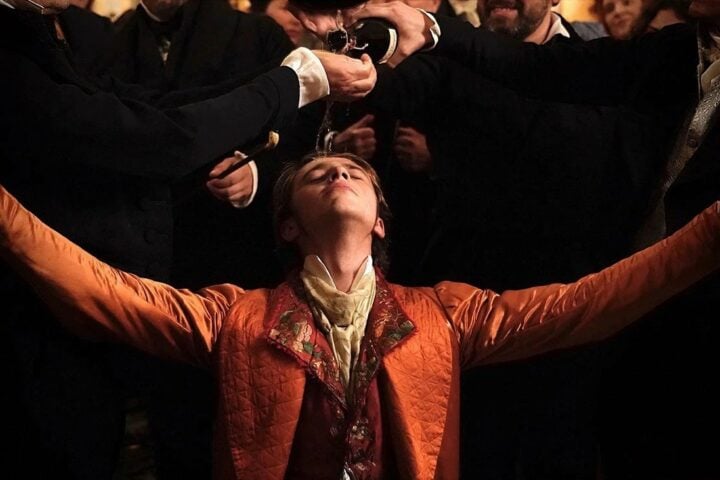
Benediction recounts the life of poet Siegfried Sassoon from his early days as an anti-war conscientious objector through his later years desperately seeking redemption in the sphere of institutional religion. Yet Davies organizes the journey according to emotional logic rather than chronological order, a structure resembling memory more than biography.
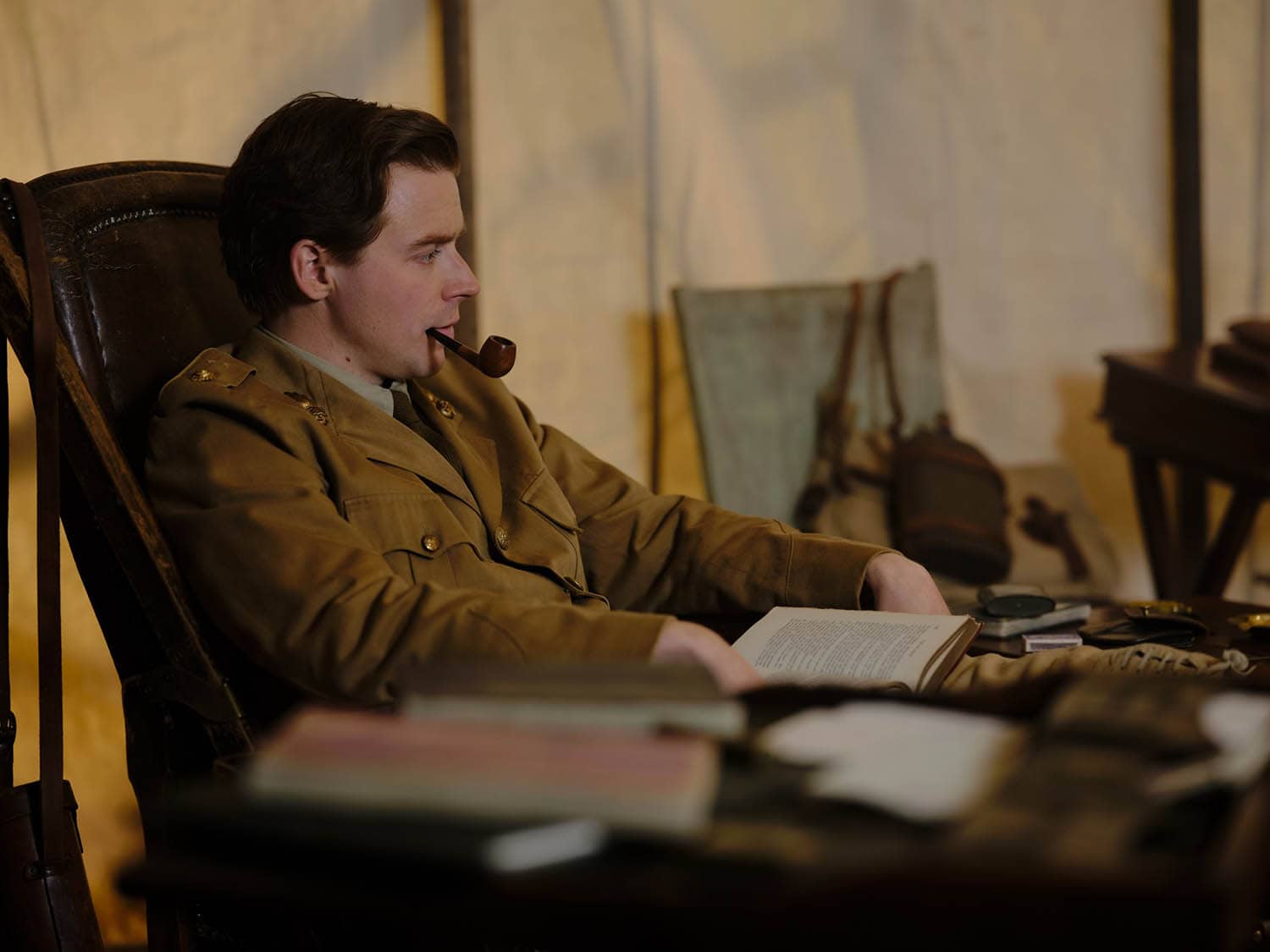
While Peter Capaldi portrays an older Sassoon beset by regret and doubt, the author is primarily played by Jack Lowden, who imbues the younger Sassoon with all the thorniness of his contradictions: confident in his activism, curious in his romantic courtship of other men, and irresolute when it comes to finding the arrangements that will bring him contentment. In Lowden’s hands, the apparent discordance of Sassoon’s life rings with symphonic grace.
I spoke with Davies and Lowden shortly before the theatrical release of Benediction. Our conversation covered their collaborative process, the ways that Davies incorporated autobiographical elements into his depiction of Sassoon, and how Lowden approached his charge to feel every moment rather than act it.
Jack, you’ve said you felt you were playing Terence as much as Siegfried in Benediction. Terence, is there truth in that?
Terence Davies: I think there’s probably a great deal of truth in it. If it’s a sort of portrait of me, I hope it’s portrayed warts and all for good and ill. Otherwise, you can’t sugar the pill, even at the expense of your own vanity.
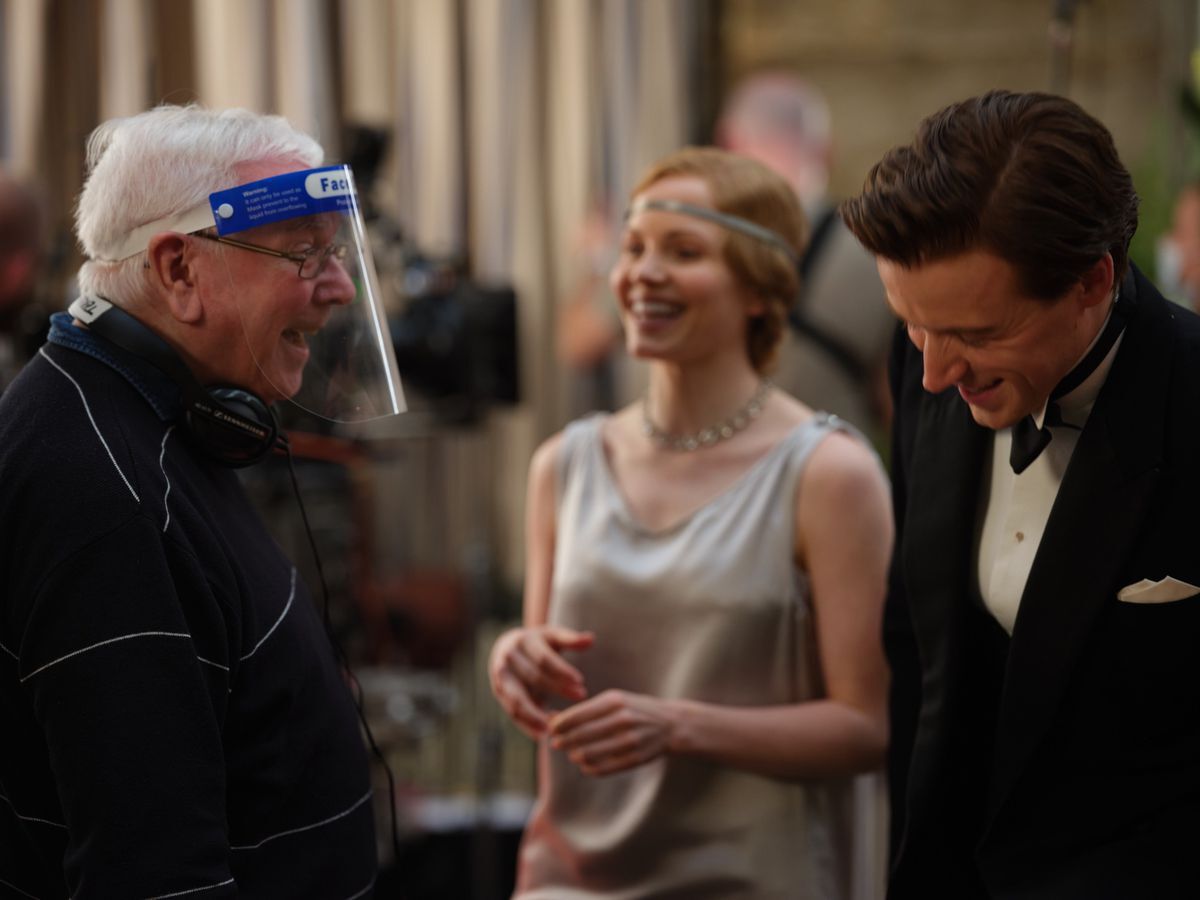
Jack Lowden: At certain points, it was quite a lovely thing to have the real McCoy on set, so to speak. I’ve done things before where I’ve played real people, and sometimes the real person or their family are there, and that can’t always be the most helpful. So it was quite a nice “meet me in the middle” kind of thing for us all to be left alone, but then also have the man who had written the script and who had put parts of himself into it. It was a really useful thing.
If you had any doubts, do you think you would probably err more on the side of capturing Terence?
JL: I think that there’s correlations in certain aspects, but there’s definitely things that I think Terence would agree are completely Sassoon-related in terms of the war, for example. None of us can really say that we could we have any experience of that. It was all there on the page in the script, so it was really just about sticking to that. [laughs]
Terence, one of the things that came up again and again in prepping for this interview was you insistence that you were done making anything autobiographical. What, then, makes you keep coming back to yourself?
TD: Well, to be truthful, I said that consciously. But, of course, everything you do has an element of that [subconscious] within you. When I said that, I meant that I wasn’t going to do anything more about me, my family, and Liverpool. But I do think, inevitably, that there are things in every film that you warm up to that are part of you as well. I know how Emily [Dickinson] must have felt only ever been published in the Springfield Republican. She’s the greatest American poet of the 19th century, and that’s all she got. I’ve had to struggle quite a lot myself. But at least I did get recognition. So a lot of that poured into it. Because I’m an ex-Catholic, and you can never get rid of being a Catholic. I’m full of Catholicism even now! Though, God knows, I was 22 when I gave it up. So, yes, there’ll always be bits of me. The thing that I really don’t understand, and I’ve tried my hardest not to do it, I seem drawn to staircases and windows. I’ve tried my hardest, but they get in there somehow!
Later in his life, Siegfried Sassoon would talk about what he believed was his own hypocrisy and contradictions. Were you all baking that into the younger version of him at all, or did you leave that to Peter Capaldi to convey as the older version?
TD: It’s a mixture of both. We see the result of somebody who has not been redeemed in whatever way that redemption might have come. Other people, marriage, religion, work, it doesn’t come. And because they were so inside the characters, very often you didn’t have to do anything. Sometimes they would come on set and say, “Can I go straight to work?” And I’d say, “Yes!” Other times, that wasn’t the case. This is what’s important about screen actors: It has to be felt, and they felt it deeply. The entire cast felt it deeply. When you feel it rather than acting, what’s captured by the camera is something inexplicable but magical. Even if you only have a closeup of someone apparently doing nothing, no face is ever in repose, and you could look at their faces forever because there’s always something there. That’s the magic of cinema. It captures something beyond what you’re literally looking at.
Jack, this isn’t the first time a film has ended on a close-up of your face. Between Calibre and Benediction, how do you approach being the final lasting image of a work?
JL: It’s always a scary place for an actor anyway [when], all of a sudden, this big machine and all the hopes and dreams turn around onto you. It doesn’t matter how many films I do; you don’t really get used to that. Not speaking of myself here, but great actors that can do that at every take and turn are rarer than gold. I’ve always had enormous respect for screen actors because all of that faffing turns around onto you. Everybody’s told to shut up, and you’ve got to transport people. So it’s an incredibly difficult thing to do, but for a large part of it, you’ve just kind of got to go for it and not think too much about it. I was helped enormously by the reading of Wilfred Owen’s poem. There was a young actor in a wheelchair, that the shot actually cuts back and forth between, who sat in my eyeline. You’re helped enormously. We didn’t have many goes at it, we wanted to shoot at a certain time of night. You just have to sort of go for it and try to get in the car at night not regretting anything.
How do you translate poetry into the grammar of cinema?
TD: I think whatever you put in the script has to be felt. Poetry is like music, it’s felt, and the poems will tell you which ones want to [be used]. In a way, the closing sequence, I’d always known that I did not want to hear “disabled” when Siegfried reads it to Wilfred Owen [played by Matthew Tennyson]. One for its dramatic meaning, but also, if you suggest something—and you can do this in a film—and 40 minutes later, you actually resolve that request by giving it, it’s so satisfying like music. You have to listen to the material. Content dictates form, and that will tell you what to do. But the whole process of shooting it is a different thing. I mean, once the film is shot, I never look at the script again because the shot film has got to live. You’ve got to find it then. You’ve got to find subtextual meaning at every single shot. Every bit of music, every bit of poetry has got to earn its keep, or it gets cut. But it’s felt.
There’s such a comfort in the pauses and silences in Benediction. How do you all find the proper timing to give a scene the breathing room it needs?
TD: Silences and pauses have to be felt. You can’t tell an actor, “This is a pause. No, that’s a silence!” You can’t do that. It’s so wonderful watching actors do things that you hadn’t thought of. That’s even more thrilling. I always said, “Play the silences.” Then it’s felt, because you also get a little bit of tension. Inevitably, you’re going to think as an actor, “When do I end the silence?” And that gives us an extra fizzle. But you can’t direct them. No one can. I can put it in the script, but it’s the actors who pull it off—and they have pulled it off. Their sensitivity towards things like silence was quite remarkable. There were one or two scenes in the office of Dr. Rivers [played by Ben Daniels] that I could honestly say, I’ve never said to any actors in 45 years, “That playing was sublime.” I’m immensely proud of them.
JL: I only sort of started thinking about it recently, as I come from theater. I spent most of my early career in theater, and I didn’t go on camera until my mid-20s. Theater, for me, is a lot more about timing and rhythm because that’s all you have. There’s no editing or anything like that on the night, so it’s in the hands of the actor. With a script like this, where it’s so well written, the timings and rhythms of the silences that Terence is talking about were all very apparent before we even turned up. It was a lot more akin into being on stage learning the rhythms and feeling the scene drop or stay tight.
Was finding the rhythms of the poetry recitation a similar process?
JL: We did them all before we shot a frame because they played such a massive part in the film. Terence and I recorded them in one morning. I was most nervous about his declaration against the war, and it did strike home more so than the poetry as soon as we started reading that. The thought and what was at stake by him writing that hit home.
Terence, you’ve noted that Siegfried was somewhat of a passive figure in his own life. Given that so much of what audiences know from contemporary acting is based around the idea of a character’s active pursuit of what they want, what challenges did Siegfried’s nature present in dramatizing him?
TD: It’s not so much of a challenge because I don’t see acting like that. I can remember when On the Waterfront came out, and it was a revelation. We’d never seen that kind of acting before. It came out in the same year as Young at Heart, another film I fell in love with because I fell in love with Doris Day, would you believe? What’s happened with the so-called method, it’s ossified into mannerism. That’s all you get now. That’s not interesting. I’ve said to everyone on every film, “I don’t want you to act. I want you to feel it.” Because then it’s true. What film does, it exposes insincerity. It just does, and you cannot get away with it. So I said to everyone on this film, and all the others, “Don’t act, just be.” That’s much more difficult because, in a way, it’s more amorphous. But when it’s right, the light goes on, and you see the arrow hitting the bullseye. Of all forms of acting, acting for film is the most difficult, it really is.
JL: Acting can be very useful at points to dig yourself out of the hole when you can’t be. It’s in our arsenal there to use. Whether or not anyone knows if you’re acting or being is, it’s up to you, really. Sometimes you need it, and sometimes you need to use other things. Some things are very easy to feel, and some things creep up on you that you didn’t think you would feel and you thought you would have to work harder. So it’s routinely about how hard you have to work and what part of yourself you have to tap into. Because it’s a very unnatural place to be, a film set. It’s like acting on a building site. The natural place for acting is on a stage, that’s what’s been in our bodies since we could stand up. But it’s just how many tricks you need to use and hopefully, as much as you can, you are just being.
Jack, this is now at least the second time after Mary Queen of Scots you’ve played a historical figure who doesn’t snap neatly into his era’s heteronormative masculinity. Given that we experience sexuality as a more fluid concept now, how do you tackle the challenge of embodying their understanding of it from a more black-and-white time?
JL: I always find it interesting that we have this opinion of ourselves now that we’re far more in touch with the fluidity of sexuality. I’m reading a book at the moment about the East India Company, all about the Mughal Empire and the different empires in in India, and how sort of sexuality was very fluid. I’m also reading a book at the moment about the French Riviera and the amount of affairs and things that went on there, and I think that we need to be careful given ourselves such a pat on the back that we’ve had this great moment of awakening.
The thing they have in common is the class in the society in which they are happening. That was always something that Terence always very keen to point out. This film, when it explores being gay in the 1920s and ’30s, we’re in the upper echelons of society where people have immense connections and very powerful friends where it was probably a lot easier to be a gay man. I think, at the time, you could go to jail for three years or something like that. We have to keep that in mind when watching this. But certainly, if you’re talking about Lord Darnley in Mary Queen of Scots, I think sexuality has always been fluid. It’s just been whether or not you can admit to it or publicly speak about it. But it’s always been there.
Jack, you’ve said you have a long-term goal of moving behind the camera. What did you learn about directing from Terence that you’d look to apply to your own projects?
JL: The greatest thing about working with Terence was the fact that he knows exactly what he wants. It’s a terrifying place to be when you’re with a director that doesn’t. It’s the most valuable thing, I think, as an actor to be under the stewardship of somebody who knows exactly what they want. Terence doesn’t rehearse, particularly. He knows exactly when he’s got the take that he wants. We shoot quite quickly. Steve McQueen shoots as quick as Terence. Both directors know exactly what they want, and they know when they’ve seen it…whatever it is. That clarity of thought and conviction is what I definitely took away from Terence.
Terence, how did you develop that muscle to know what’s right?
TD: I’ve never known. I wish I did know, but that’s part of the magic of making it. Again, it’s like music. Why do you go on a two-hour journey with Bruckner as I do, because it’s my greatest love, when I couldn’t sit through Wagner for five minutes? I don’t know why! I just get a feeling in my stomach and think, “That’s it.” Vague as that, I’m afraid.
Does that make the editing of it easy?
TD: Oh, no, that’s a completely different experience! Because I never look at the script again. You have to find the film there. Sometimes that’s very hard, especially if there’s a shot that you really love. The shot that you think you really love…you really should drop. It’s usually because it’s pretty. A shot can be on a knife and fork and have immense power—something that’s gorgeous to look at, none at all. You’ve got to be wary of self-indulgence. It’s difficult when you’re that close to it when you’re you write it as well. But there are certain things that I know are right. There were some things that Alex Mackie, who cut it for me, did wonderful things with. She brought the most wonderful commitment to it. And sometimes it’s very simple. The script begins over black, “Benediction.” Then, “London 1914.” She put that “London 1914” at the end of that first crane down. It’s a tiny thing, but I said, “That’s so right!” And when someone does that for you, whether it’s a technician or the actors, that’s where it’s really thrilling. Because you think, “I wouldn’t have thought [that]!”
Since 2001, we've brought you uncompromising, candid takes on the world of film, music, television, video games, theater, and more. Independently owned and operated publications like Slant have been hit hard in recent years, but we’re committed to keeping our content free and accessible—meaning no paywalls or fees.
If you like what we do, please consider subscribing to our Patreon or making a donation.