 Maverick Chilean filmmaker Alejandro Jodorowsky first came to prominence in Paris in the 1960s, where he co-founded the Panic Movement, a performance art collective inspired by Antonin Artaud’s Theatre of Cruelty, alongside Fernando Arrabal and Roland Topor. Their provocative public performances were part secular ritual, part intentional scandal, replete with copious nudity and blasphemous religious imagery (elements not entirely lacking in Jodorowsky’s later films). Working in Mexico in 1968, Jodorowsky filmed Arrabal’s deliriously dystopian play Fando y Lis using only a one-page script and his memory of the stage production. The majority of the film consists of Fando (Sergio Kleiner) leading crippled Lis (Diana Mariscal), who’s largely confined to a pushcart, across a postapocalyptic landscape, seemingly populated by an endless parade of assorted grotesques, in search of the mythical city of Tar.
As with most of Jodorowsky’s films, Fando y Lis fuses elements of broad social commentary and a deep concern for spiritual illumination. The former can be detected most obviously in a matched pair of flashbacks that illustrate the eponymous couple’s traumatic childhood experiences: Lis is assaulted by a gaggle of degenerate aristos, while Fando witnesses his mother’s fatal denunciation of his father as a political radical. It’s a critique that’s later deployed in a more succinctly surreal fashion with the image of woman in formal attire playing a piano that’s on fire. The more spiritual aspects in Jodorowsky’s works are almost always depicted through a symbolic death and rebirth, never more literally than in this film.
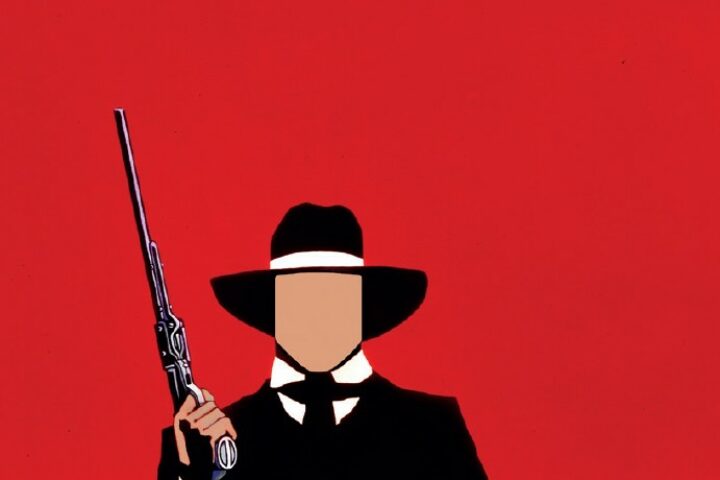
Singlehandedly inaugurating the midnight-movie craze upon its release in 1970, El Topo combines the arid landscapes and ultraviolent showdowns of the Italian western with the dogged quest for spiritual illumination that’s at the heart of King Hu’s Touch of Zen. Clad in a black leather ensemble inspired by Elvis Presley’s televised concert from 1968, Jodorowsky himself plays the eponymous gunslinger, first seen instructing his naked son (Brontis Jodorowsky) in the fine art of putting away childish things by burying them in the sand. Despite plenty of bizarro flourishes, the first part of the film is its most conventional. El Topo tracks down a dissolute Colonel (David Silva) behind the brutal massacre of an entire village. What transpires wouldn’t be out of place in a film like Sergio Corbucci’s Django.
After retribution has been assured, the film enters upon a more abstract phase. El Topo faces off against four masters of the gun, each of whom embodies a different philosophical or spiritual path. The exchanges between El Topo and these gurus is often leavened with off-kilter humor and visual details: There’s a Zen meditation involving freshly laid eggs and a corral that encloses dozens of white rabbits, Lewis Carroll’s Alice in Wonderland being the obvious referent. The final part of the film brings things full circle. Now doing duty as a shaven-headed monk, El Topo enters a desert town, hoping to be of some service, only to find the place entirely given over to exploitation, cruelty, and corruption. The finale doubles down on the brutality of the opening. Moving beyond failure and the death of the ego, Jodorowsky leaves things wide open for a new beginning of sorts (not to mention a sequel).
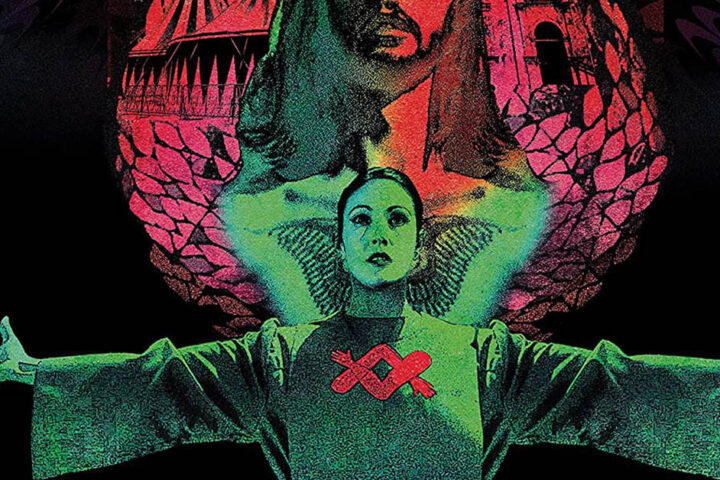
Given free rein after the international success of El Topo, Jodorowsky’s follow-up was 1973’s The Holy Mountain, a hallucinatory allegory about the quest for enlightenment that delves even further into the mystical ideas and occult symbolism of the earlier films. The Holy Mountain encompasses a heady brew of Eastern and Western thought: alchemy, tarot, the Kabbalah, and especially Zen Buddhism. Viewed superficially, the film might seem like an almost random assembly of visual and symbolic non sequiturs. But there’s method in Jodorowsky’s psychotronic madness, and anyone with half an interest in these matters doubtless will have their mind blown by the bold colors, striking set design, and surreal imagery alone. The unforgettable score by Jodorowsky and jazz trumpeter Don Cherry just lends a further, suitably psychedelic haze to the proceedings.
The film’s first act addresses the woes of modern civilization, from student massacres to religious hypocrisy. The second introduces nine personality types, each astrologically associated with a different planet, and proceeds to explore their principal predispositions in a series of often amusing blackout gags. After the deliberate artificiality of the first two sections, the film’s final act almost morphs into a verité documentary that follows the group of seekers, led by the Alchemist (Jodorowsky), as they make their way up the sacred mountain. In the end, Jodorowsky goes meta by turning the camera back on the very act of filmmaking. It’s a narrative conceit that has been done before and since, but rarely does it pack both the symbolic logic and narrative punch that closes The Holy Mountain.
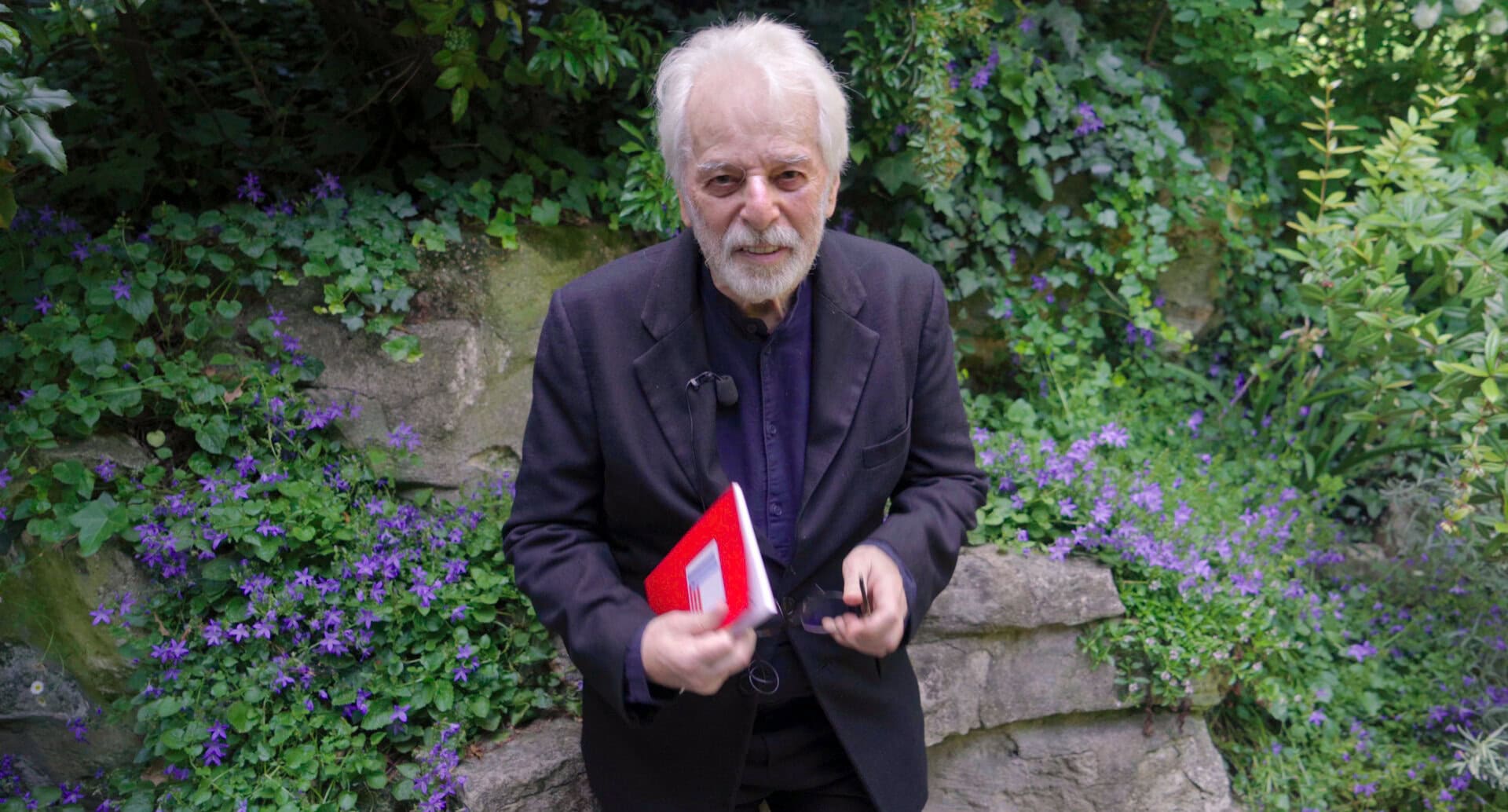
In his first-ever documentary, Psychomagic, a Healing Art, Jodorowsky, near 90 at the time of filming, offers up a moving, visually striking exploration of the unconventional psychotherapeutic techniques that he’s developed over a lifetime spent reading tarot cards and studying various psychological systems and an astonishing variety of Eastern and Western spiritual practices. The film is effectively a daisy chain of individual interventions that seem to vary in format only slightly from case to case. After a brief introduction, during which Jodorowsky lays out the major tenets of his technique, we witness a selection of individual case histories. He recommends a course of treatment, a sort of symbolic activity that seems pitched somewhere between ritual and performance art. Then a follow-up interview permits the participants (some of them couples) to describe the therapy’s impact on their lives.
These episodes are often intercut with a similar moment from one of Jodorowsky’s earlier films—from El Topo and The Holy Mountain to his more recent self-reflexive and semi-autobiographical films, The Dance of Reality and Endless Poetry—as though to emphasize the continuity of his vision from narrative cinema to documentary. Where the earlier films show Jodorowsky arriving at private rituals and symbolic acts to deal with his own issues, Psychomagic expands his sphere of influence to include men and women who find themselves in a cul-de-sac of existential distress. Whether or not the 91-year-old director makes another film, this documentary could easily stand as a compassionate encapsulation of the themes of suffering and transcendence that have run through his entire career.
Image/Sound
Fando y Lis, El Topo, and The Holy Mountain are presented in new 4K restorations, and each looks pretty spectacular, marking a significant improvement not only over Anchor Bay’s 2007 DVD editions, but also over the individual Blu-ray releases of El Topo and The Holy Mountain from 2011. The monochrome Fando y Lis boasts deeper blacks and greater clarity of fine detail than ever before on home video. El Topo is presented in 1.85:1 widescreen for the first time ever, an aspect ratio meant as homage to Sergio Leone. It’s also available in the more familiar 1.37:1 full frame format, and (presented as an extra) in a separate English dub that’s also full frame. The widescreen format does lend a more epic feel to scenes of wholesale carnage and shots of sprawling desert vistas, though the framing of tighter shots can get a bit cramped. With The Holy Mountain, those psychedelic colors appear more deeply saturated, and grain levels look well-regulated. Considering its digital production and incorporation of various AV formats, Psychomagic, a Healing Art looks perfectly acceptable.
On the audio side, Fando y Lis is available in Spanish LPCM mono, which does a fine job of supporting the protean score and ambient sound effects. El Topo comes with both Spanish Master Audio mono and surround (as well as the aforementioned English dub in Master Audio mono). The 5.1 surround mix nicely opens up the already solid mono track, lending some depth to Jodorowsky’s hallucinatory score. The Holy Mountain has both English Master Audio mono and surround tracks, both of which do well by the outlandish psych score from Jodorowsky and Don Cherry. Psychomagic offers an English Master Audio surround mix, which gives some decent channelization to whatever bits of music may arise.
Extras
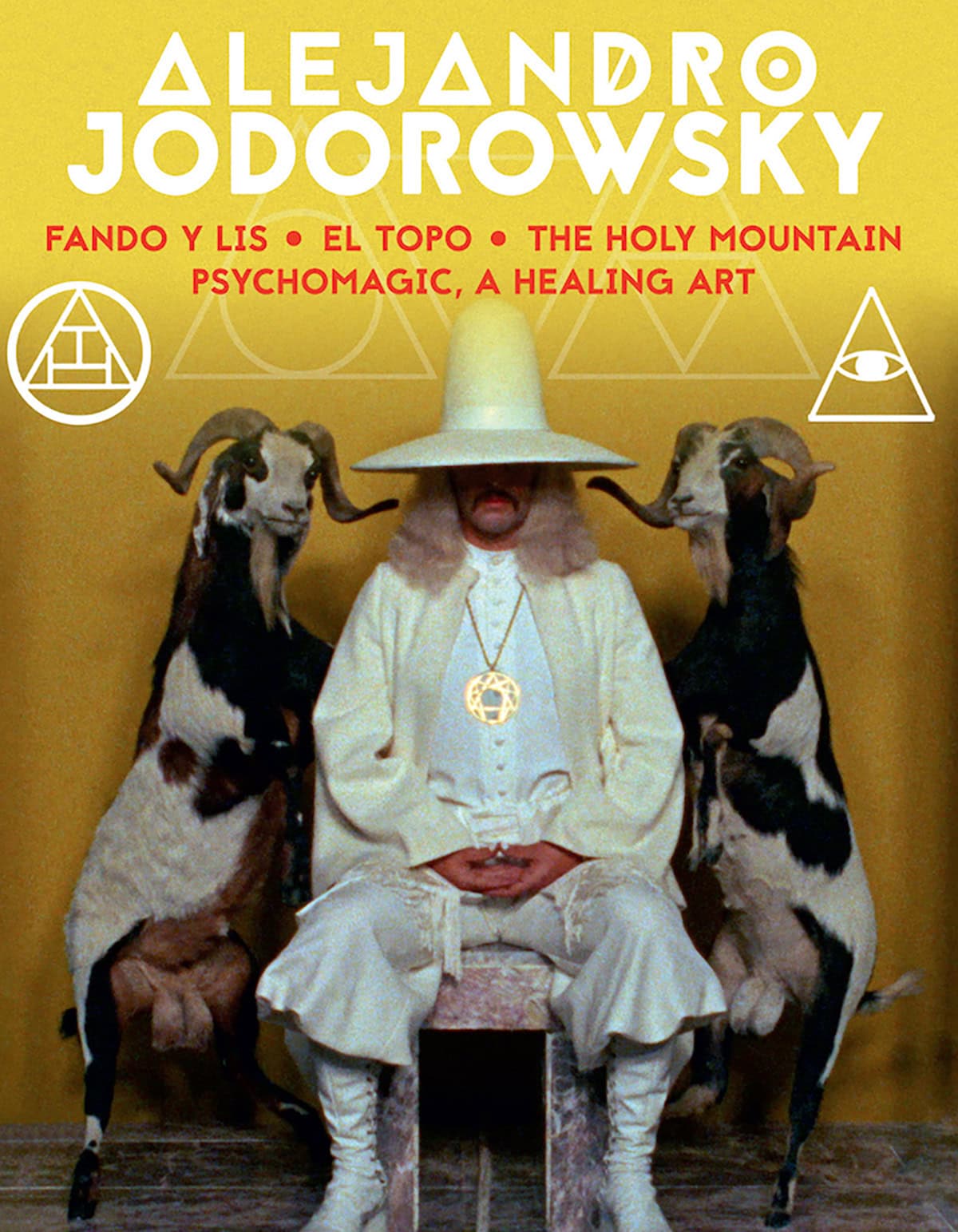
Each of the films comes in its own jewel case, all housed in a slipcase box, alongside a foldout two-sided poster, and a lavishly illustrated 78-page book replete with cast and crew information, essays on each film, a 1973 interview with Jodorowsky, and other ephemera. The El Topo and The Holy Mountain cases each contain a soundtrack CD. On their respective discs, the first three films come with an introduction from film scholar Richard Peña, a 2019 interview with Jodorowsky reminiscing about the film, and an archival commentary track from Jodorowsky. Taken together, these bonus materials constitute a master class in Jodorowsky’s early work, full of information about every aspect of the films from creation to reception, with particular emphasis on the occult and spiritual symbolism that runs rife throughout.
The Fando y Lis case holds six double-sided art cards: one side with images from El Topo, the other with ones from The Holy Mountain. The Blu-ray itself includes La Cravate, an early short film from 1957, based on a Thomas Mann novella, and told entirely in mime. It’s a colorful and charming tale of identity and loss and love. The feature-length documentary La Constellation Jodorowsky from 1994 features interviews with collaborators Fernando Arrabal and Jean “Moebius” Giraud, who worked with Jodorowsky on the aborted Dune project as well as numerous graphic novels. There’s some fascinating footage of a Panic Movement performance art piece, and a lengthy segment where Jodorowsky performs an early version of his “psychogenealogy” technique on the documentarian himself.
The El Topo disc has a recent interview with Brontis Jodorowsky, who appears in the film as the eponymous character’s naked son. He talks about meeting his father for the first time under circumstances that both mirror and diverge from incidents in the film, and gives an intriguing reading of El Topo and The Holy Mountain as spiritual companion pieces. A short archival interview with Jodorowsky from 2007 touches on the phenomenon of the midnight-movie craze inaugurated by screenings of El Topo at New York’s Elgin Theater in 1970.
The Holy Mountain Blu-ray has an occasionally emotional interview with Pablo Leder, who worked for Jodorowsky as both cast and crew member on several films. He offers some fascinating (and one or two pretty amusing) anecdotes about Jodorowsky’s on-set antics. “The A to Z of The Holy Mountain,” a video essay from Ben Cobb, provides an abecedarian assemblage of random tidbits about the film that range from Penthouse interviews to a recipe for your very own edible Jesus statue. Finally, there are five minutes’ worth of deleted scenes with commentary from Jodorowsky, including a brief look at an alternate ending, followed by nearly half an hour of silent outtakes billed as “newly discovered.”
Overall
Diving headfirst into ABKCO’s gorgeously assembled box set is bound to be a mind-altering experience for Jodorowsky fans and novices alike.
Since 2001, we've brought you uncompromising, candid takes on the world of film, music, television, video games, theater, and more. Independently owned and operated publications like Slant have been hit hard in recent years, but we’re committed to keeping our content free and accessible—meaning no paywalls or fees.
If you like what we do, please consider subscribing to our Patreon or making a donation.