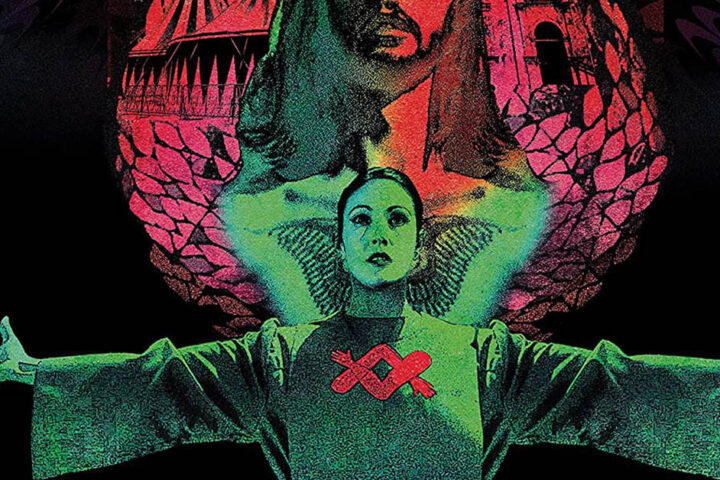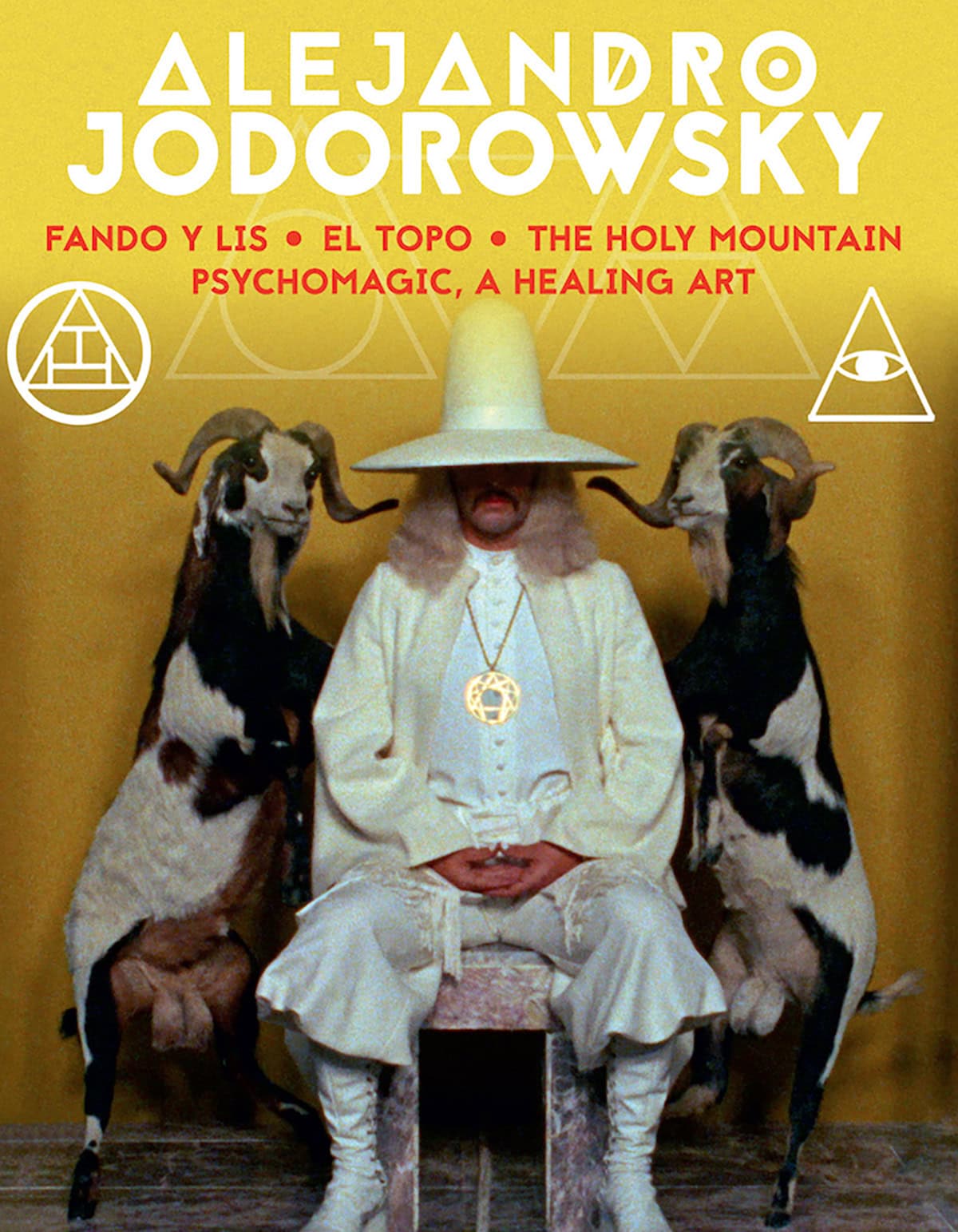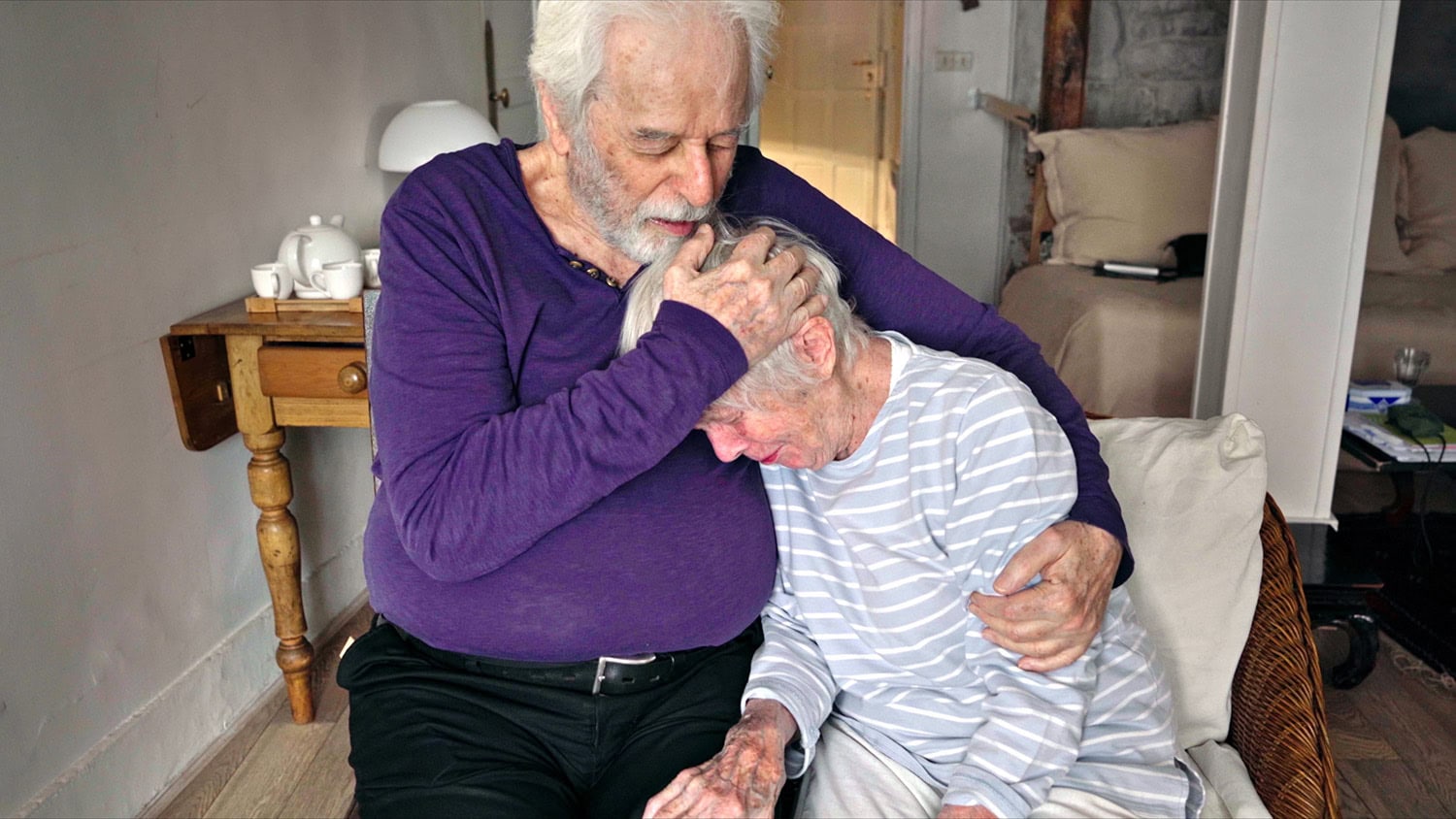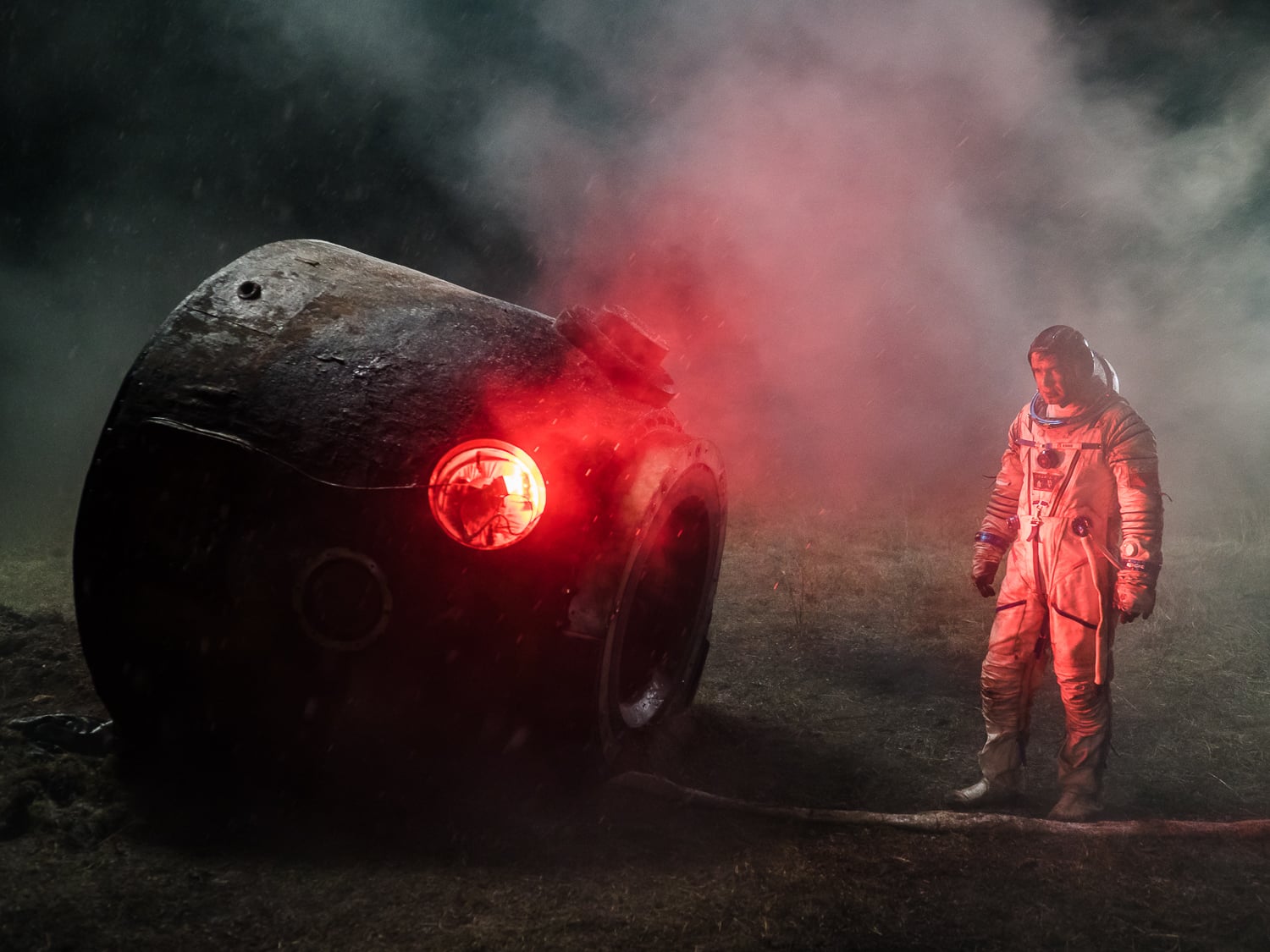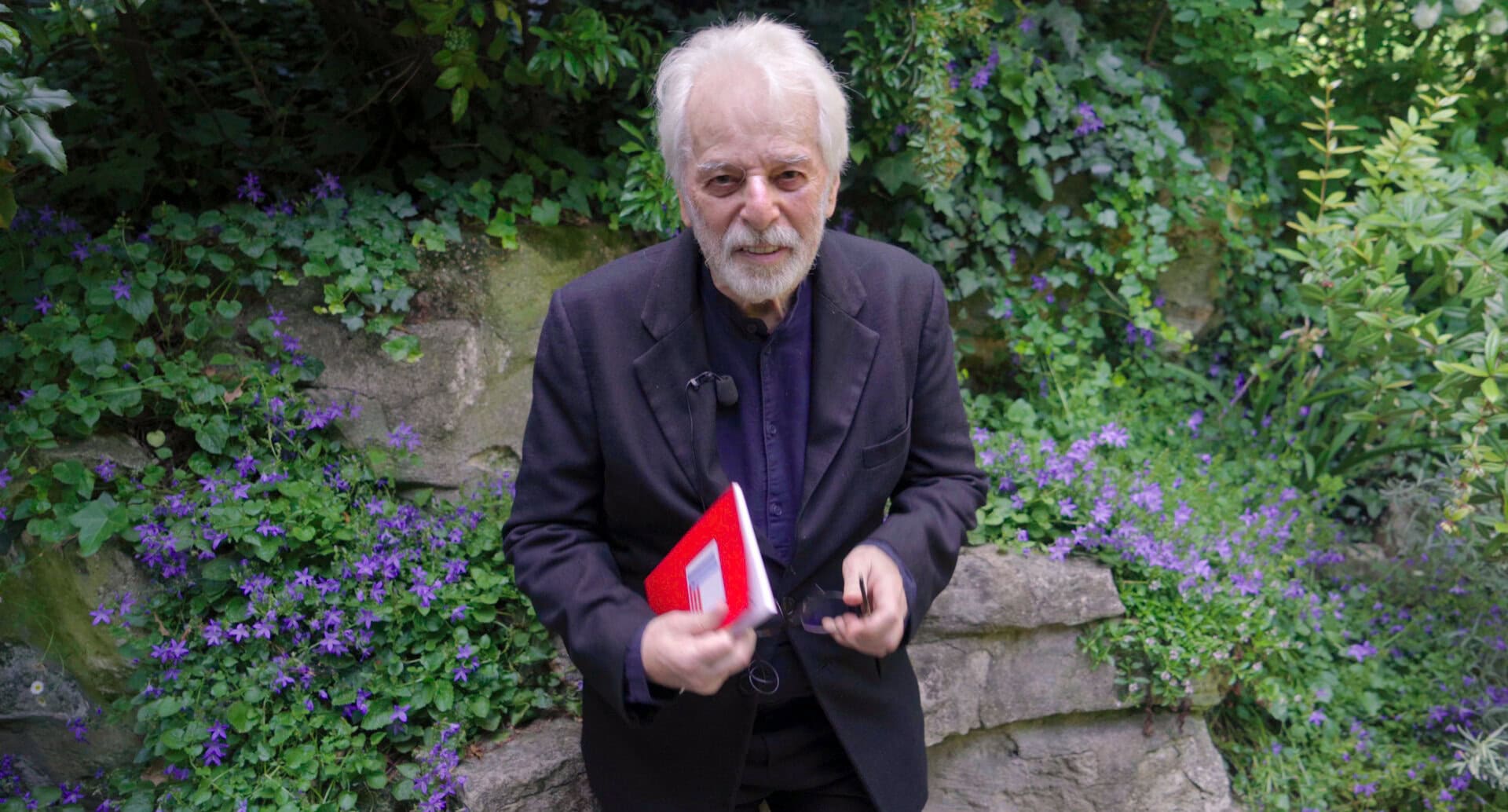
At the age of 91, maverick Chilean filmmaker Alejandro Jodorowsky has made his first ever documentary, Psychomagic, a Healing Art. In many ways, it’s a companion piece to his recent self-reflexive and semi-autobiographical films The Dance of Reality and Endless Poetry, in which Jodorowsky inserted his present-day self into the narrative of his own boyhood and youth. Where the earlier films show Jodorowsky arriving at private rituals and symbolic acts to deal with his own issues, Psychomagic expands his sphere of influence to include men and women who find themselves in a cul-de-sac of existential distress.
Essentially a daisy chain of case histories, the film allows Jodorowsky to demonstrate the unconventional psychotherapeutic techniques he’s developed over a lifetime spent studying various psychological systems and an astonishing variety of Eastern and Western spiritual practices. As you might expect from the man behind El Topo and The Holy Mountain, it can be a wild ride, full of sometimes totally bonkers, even grotesque imagery, yet also betraying Jodorowsky’s full-blooded compassion for the vicissitudes of human suffering.
Ahead of the VOD release of Psychomagic, I had the opportunity to speak with Jodorowsky via Skype. We touched upon a far-ranging assortment of topics including working with the tarot, Antonin Artaud’s Theater of Cruelty, the “last days” of the surrealist movement, and the films of Dario Argento and Luis Buñuel.
Early in your new documentary you mention your work with the tarot deck. How did that contribute to your development of psychomagic?
For me, the tarot isn’t magic that let’s you see the future. It’s only a language to open the unconscious. That is all. It’s to work with the dreams like Sigmund Freud worked with dreams. My films help me to speak about dreams, and put you on the table [in a tarot spread]. I use tarot to do that. But, in order to do that, I needed 50 years of working with the tarot, learning how to memorize the tarot deck. I memorized every line, every color, every meaning. [Jodorowsky proceeds to give a quick three-card tarot reading.]
Psychomagic techniques seem to involve a dreamlike, poetic logic. How do you arrive at the specific details of the treatments?
When you’re working with me, first I make your genealogical tree. You have the son, you have the partner, the father and mother, the grandfather. Then I know where you are, what formed you. And then, when I know that, I will not experience you in a psychoanalytic way, an intellectual way. That is for psychoanalysts, who take dreams and teach you what is real life. I am different. I take what you think with the reality and I put it into the image of the dream. I use the language of acting, not speaking, doing things you never did before. New things. I am breaking your psychological defense with an image to go do something. I will say, “Paint your beard gold and kiss a woman, or a man, who has silver hair.” I will say that’s an image. That will open to you the unconscious, something you will discover. That is the work of psychomagic.
With most of the participants in the film, all we see is their short-term response to the treatment. What made you follow up with the woman who had throat cancer after almost 10 years?
What I did in the theater was an experience. Because I had a theater. I had to pay to have that theater. Because every healing I do is free. I’m not a psychoanalyst, so nobody paid me. It’s free. Because I had a big theater, and in Chile I am very well known, I will have a conference in the theater. Five thousand people came. And then I decided to make an experience. I didn’t know if collective thinking, like quantum theory says, could change reality, if we have a group of people who do the same thing. Can we heal this woman? She thinks she will die very quickly. And then I take the woman and I make the experience. And then I didn’t speak with her. And then, when I made the picture 10 years later, I wanted to know, because I never repeated it. In order to teach healing, you need 5,000 doctors! It’s a once-in-a-lifetime experience. I wanted to know, with thinking, do we or don’t we have the power? The cancer, they say we cannot heal that. I don’t know if they fought the cancer for years because it’s a big, big business, and they don’t want to find the solution. That I don’t know. When healing becomes a business, it cannot heal for me. Healing is an act of love. You have to take the person in your arms. The psychoanalyst doesn’t take you in his arms!
And then I get a telephone call from a friend of the woman, a student of mine. I asked him if she had died. He said no, she’s alive. I asked if I could make an interview for the film. She tells how the experience was. She said it was very good. I don’t know if it was a placebo. Placebos can be good also.
Yes, if it works, it’s good.
But it was only an experience that I did once. I can’t find 5,000 people for every person who has an illness.
Psychomagic includes short clips from many of your earlier films. Do you see this film, and the therapeutic work it illustrates, as an encapsulation of your entire career?
From the theater I came to the “happening,” improvised theater, the theater of action, then to psychomagic. I came to it. I didn’t create it. But, in all my pictures, I was searching for something. I respect very much the industrial movies. Movies from the beginning were an industry. Their goal from the beginning was to make big money. And then they discovered Hollywood and all that. But there was not one real truth, one real feeling, it was acting feelings. The show must go on! But for me movies are not a show, they’re an art.

What is art? It’s open for the person who does the work, new horizons, they will open the human soul. That’s what I did in my pictures. I started to put real things into the picture. Reality says, “Problem! I am having problems with my mother, problems with my father.” I was telling it all. Step by step, I was coming to introduce my real life into the pictures. I was having problems with my father in Endless Poetry, and I was shooting, and suddenly I jumped into the picture! Psychomagic is only real feelings, not an imitation. And that’s what I was searching for. I put examples in my pictures, saying I am speaking always of the same thing, but in an artistic way. I show a guy closed in a tower [in El Topo] and in Psychomagic I show a guy breaking pumpkins. I did that in El Topo, but in a metaphorical way, not directly. And then I show in my film that it was the same position, but in another language: artistic language, therapeutic language.
Can you tell me something about your encounters with André Breton and other surrealists in the Paris of the 1960s?
I will speak about that in my third film. It’s a trilogy: The Dance of Reality, Endless Poetry, and Essential Journey. That’s number three. I hope, if I am alive, because I am an old person, to start it in January. The script I’ve done already. I am very happy with it. I speak about that time, until I started to be a movie director. I stop there. In it, I am going to France to work with the surrealists, with the theater of Marcel Marceau, with the philosopher Gaston Bachelard. I have those three worlds.
My mind was opened with philosophy. With surrealism, I think I am the last surrealistic moviemaker who’s really surrealistic. But I am a little step farther, because surrealism doesn’t show, doesn’t explain. It’s the mystery of something you don’t understand. That is surrealism. A dream image you don’t understand, you have no need to explain that. In the art I do, you know what you’re doing. It has a finality. It has to solve your problem and come to felicity. Felicity of life. That’s what I feel with the idiotic love story. Love is not like love with a star. Love is love. We need to show what love is. Tell the things that are true, make you go to happiness. Not an idiotic happiness, not Disneyland, a real internal life. Happy to be alive. I am alive. It’s fantastic. What an incredible thing. Art has to give you with possibility to be what you are, not what the moviemaker is. Not what the actor is, you. It’s complicated, no?
Speaking of surrealistic filmmakers, what do you think about the films of Luis Buñuel?
He was a surrealist, yes, but he’s too realistic for me. He was a real person, in the real. And for me the pictures have not only a meaning, they’re a painting. You can shoot something like that [mimes different angles], traveling shots, etcetera. Everything speaks. Buñuel’s show only one point of view. He’s sitting and everything is in the size of someone sitting. But he doesn’t go out [he mimes leaving the Skype frame], he doesn’t make other things. Hollywood discovered camera movement. Camera movement is fantastic! I need to have Buñuel in Hollywood and that would be good. He could show a deep meaning but with greater freedom of form.
When you worked with Claudio Argento on Santa Sangre did you know anything about the films of his brother Dario?
Yes, I like them a lot. He was a guy who doesn’t give too much importance to the script. He can be not logical. The pleasure to shoot something that’s weird! And I liked that. No message, no meaning. Very aesthetical.
Do you have a favorite film of his?
I am very old. I don’t remember the names. I’ve seen it a lot of times, this picture. He goes into a building, he goes inside the house.
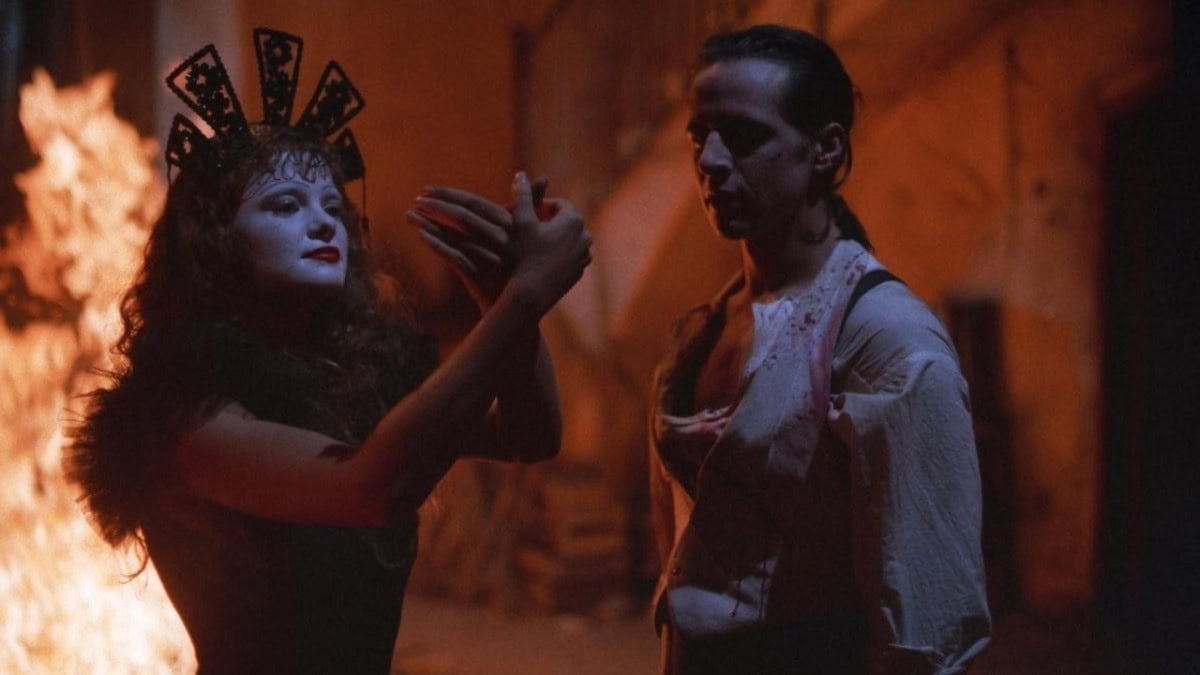
Deep Red. Profondo Rosso.
Yes! Profondo Rosso. Fantastic picture. A film like that, for his time, he made explosive cinema. Because it was the film of a director. Generally, in the industrial film, the director is an employee. The studios are surveying the script. You aren’t free with the script. You need to shoot what’s right there. Because, when you’re free, you make the script to start the picture. But in the middle of the picture you can change whatever you want and put new things in. Because there are magic things that happen when you’re shooting. In Santa Sangre, when the father commits suicide, the naked father, it was in Mexico, in the street. A very old woman was singing, drunk. There were a lot of bars there. I said, “Go find me this drunk woman, because it’s the music I need for that suicide.” And then he will kill himself, but in the image there’s a real song of a person who’s really suffering. And it’s fantastic, like that. You need to be free. When you make the picture, the director is the poet. In Hollywood, the poet is the money. More money, more happiness. I say, “No.” More poetical, more artistical—that is good. Like the tarot, that isn’t a business. I know I’m crazy, but you need some crazy person in the generality, then somebody will use it in another way.
We certainly need more people in the world who are crazy in that way.
Yes, because crazy people aren’t crazy. They’re just using their mind in another way. And it’s very interesting.
How closely did you collaborate with David Lynch on your King Shot project?
He was very gentle with me. He said, “Maybe we can make a picture.” But my project was so crazy. Maybe I wanted to shoot in Spain. I wanted to do what I always do. But he had a little company at that moment. He was not able to have the money to do that. So, since I didn’t have the money, I didn’t do it. It was too expensive.
What can you tell me about your time with Arrabal and Roland Topor in the Panic Movement?
That was really a fantastic moment in my life. Because we were accepted within the surrealist group. That was the end of surrealism. A lot of surrealists were into politics. They were Trotskyists. Into the Romantic realization of the woman, not the real woman. Arrabal, Topor, and I were searching for absolute freedom. The artist needs to be inside the play, for example, inside what you’re shooting or playing. You need to be inside, in your body. You are there. Not out of the work. You need to go farther than the intellect, farther than the unconscious. Farther than the religions. You need to find the panic. Panic isn’t fear, panic is the totality. You need to find what a man is in totality. And then, if you are an artist in totality, you need to be a painter, dancer, mime, cinematographic creator, marionette. All the things I did. Because it’s the totality. Searching the totality of expression, that’s what we did. It wasn’t a movement, it was only three persons. And we called it a movement. We wanted to show that culture was fake, was an illusion. Because three persons will go into history as a movement that doesn’t exist!
Your performances sound a lot like what was called “happenings” in other countries or what the Vienna Aktionists were doing with their films. Would you say that’s accurate?
No, the happenings were going on in the milieu of painting and sculpture. It was a way to develop the plastic arts. I made ephemera. Ephemera is not that. Ephemera is a kind of theater, psychoanalysis, dreams, surrealism. The language of art, with meaning. Happening is an expression of freedom, but only freedom.
So the performances were closer to what Antonin Artaud was talking about with his Theater of Cruelty?
I was a big admirer of The Theater and Its Double. I started from there. He opened my eyes. In Fando y Lis, you have a little influence of Artaud. I had a theater play of Arrabal, with Fando y Lis, but I didn’t use the play, I used the memory I had as director of the play. With a lot of violence coming from Artaud. And then in El Topo, I had a Japanese Zen Master, Ejo Takata. Zen meditation, not like a hippie, real Zen meditation. Seven-day meditating without sleep. I was sleeping every night for 30 minutes, that’s all. Terrible, incredible! I brought this experience to El Topo. Because Artaud made the Theater of Cruelty. When you see the cruelty, you are open. But then I didn’t want any more cruelty. I decided I wanted to make the encounter with our self, make the cathedral [forms a steeple with his hands]. You are a cathedral. You aren’t a butcher. You’re creating the sacred. Some religions are fanatical. But I read the teachings of the Buddha, and I think there’s something more true than Artaud.
Is it true that René Daumal’s novel Mount Analogue was an influence on The Holy Mountain?
Yes. I love René Daumal, because I love his teacher. He had a great teacher, who was Gurdjieff. And in that novel, Daumal is speaking about his experience with Gurdjieff. More than surrealism, Daumal took it a step farther: The Great Game [a “counter-surrealist” journal founded by Daumal and friends]. He started to choke himself to see how it was to almost die. He was searching for stronger things, real metaphysical searching. I wanted to do his unfinished novel, Mount Analogue. He never finished it because he died very young from tuberculosis. But the family didn’t want to give me the rights. I said, “Well, I will make my own Holy Mountain!” What I directed depicts Daumal’s book. It’s a group that goes with a teacher to find immortality on a mountain. That I took. Then I developed my ideas.
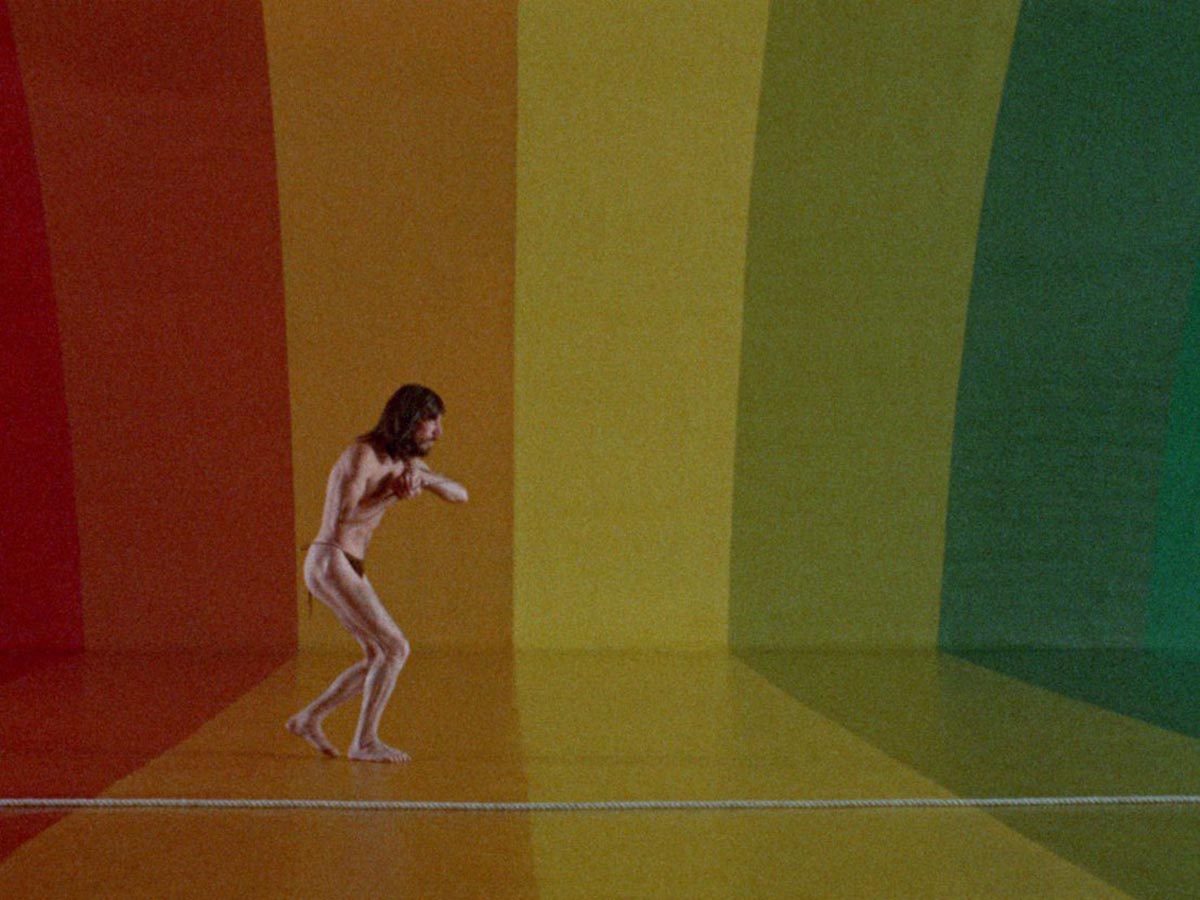
So, at the end of the film, when we see the making of the film, when you turn one camera on another, was that a way of opening it up to the interpretation of the viewer?
I never thought of it the way you are saying now. Maybe, yes. I went to a real mountain in Mexico. I brought a tiger, a monk, actors, all that. And the Mexicans told me it was dangerous. Why? “Because there are tempests, and when there are tempests, you can die. Be careful.” No, I will go, because it’s beautiful, the weather is so fantastic. I shoot what I shoot, and when I finished shooting, the tempest came. And then we started to run in concert, to get off the mountain, because it was dangerous! I was running and I slipped and [mimes rolling down the mountain]. But I had a hammer and [mimes jamming it into the ground]. “No! I don’t want to die, I need to finish this damn picture!” I am making a picture. Like this, I will finish. This is the end of the picture, because it was the real end. It wasn’t as good, but I put in reality into my film. I wanted to make real things, and that, for me, was a real thing!
We’re making a picture. It’s not a comedy. There are real sentiments, because all those people I found were not actors. Every person I showed had the problem I show in the picture. Real people I used, real tiger! I’m not a Hollywood company making fake everything. I asked Hollywood that I want a stampede of tarantulas, big spiders on a body. They made fake ones. So we went out and bought spiders and had their fangs cut out. We made up the body and then we used the spiders. Real spiders came out there. And the person who did that, also myself, never liked spiders! There he was, suffering something enormous with those spiders!
Are you currently working on any new graphic novels?
Graphic novels. That is my industrial business. Because I have The Incal, Metabarons, Sons of El Topo. That I am doing all the time. That is normal for me, because I have a big imagination. If I didn’t have imagination, I would die. I am taking a step farther than Psychomagic with Psychotrance. It’s a kind of literature, but at the same time you’re reading, I’m giving you exercises. It’s mixing a lecture with exercises to inspire what you do, the impact of having a trance. With drugs, you have a trance. I say no drugs. We can do it without drugs. How to do it like this. Not only meditation. Go farther than meditation. Go immediately to what you are when you’re not intellect. What is in you? You don’t need to take LSD. You don’t need to take ayahuasca. Because those are dreams. I am saying do the same thing I do in movies. In movies, in a century of fake feelings, I am making real feelings. In a culture full of drugs, psychological drugs, I am putting in a real hallucination, guiding how you can do it.
Translation by Pascale Montandon.
Since 2001, we've brought you uncompromising, candid takes on the world of film, music, television, video games, theater, and more. Independently owned and operated publications like Slant have been hit hard in recent years, but we’re committed to keeping our content free and accessible—meaning no paywalls or fees.
If you like what we do, please consider subscribing to our Patreon or making a donation.