The House Next Door

Doctor Who, Season Three, Ep. 8: "Human Nature"

By Ross Ruediger

"Human Nature" has a myriad of fascinating aspects marking it, but one of the most noteworthy is that it's the first televised Doctor Who story based on a book. Paul Cornell's Human Nature was published in 1995 as part of Virgin's New Adventures series, and it quickly became the standard by which all other Who novels would be measured. The book featured the Seventh Doctor altering his DNA so as to better understand the suffering of his companion Bernice, who in the previous novel had lost someone dear to her. The TV adaptation, also written by Cornell ("Father's Day") shakes the premise up a bit and finds the Doctor and Martha on the run from a vicious group of aliens, but the lyrical song remains the same.

The Doctor: "I'll have to do it. Martha, you trust me. Don't you?
Martha: "Of course I do."
The Doctor: "Cause it all depends on you."
Martha: "What does? What am I supposed to do?"
The Doctor: "Take this watch, because my life depends on it. This watch, Martha, this watch is--"

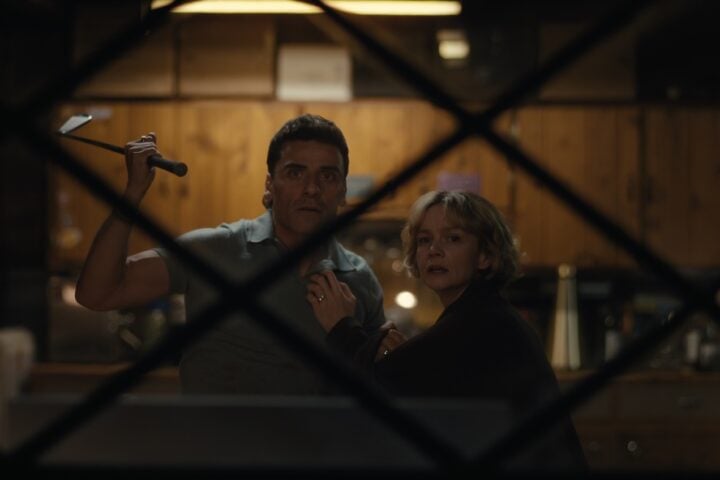
The story begins with the above, frantic exchange and immediately cuts to Dr. John Smith (David Tennant) waking up in bed from the dream. He's a quiet, reserved English schoolteacher in 1913 who seems to have numerous dreams wherein he is someone else, and he proceeds to explain them to his maid, Martha (Freema Agyeman). Maybe because I was familiar with the source material, I was able to more or less see from the beginning what, exactly, was going on here; I'd like to believe, however, that to someone seeing the setup for the first time, it would be confusing, magical and dreamlike. How far has Doctor Who gone this time, and what kind of story is this?

John Smith: (to Martha) "Sometimes I have these extraordinary dreams...I dream I'm this adventurer, this daredevil—a madman! 'The Doctor' I'm called...and last night I dreamt that you were there."

The idea of the Doctor becoming human is grand. His alien nature is the one thing that's always separated him from humanity, which is obviously his favorite species. When all of sudden he is finally one of us, it's disorienting; because of this development, Cornell's story is undoubtedly one of the most important Who tales ever.

As the episode unfolds, the pieces fall into place. The Doctor and Martha were on the run from a group of aliens with a limited lifespan and thus his solution is that the pair hides out until they die (three months precisely). He does this with a device called a chameleon arch, which rewrites his internal DNA as well as wipes his memory. Everything that is "the Doctor" is stored in a fob watch, which should be opened only under the direst of circumstances, which would mostly be if the aliens should find them. He's left this instruction along with a set of rules in the powered-down TARDIS. Luckily he gave Martha a key in "42" so she can visit the machine for consultation from time to time. She is his protector at this point, yet the human John Smith doesn't know it. But the one instruction he failed to give Martha is, what if he should fall in love? This spanner thrown into the works causes more problems than any other when Smith falls for the school nurse, Joan Redfern (Jessica Hynes). And maybe Martha should've taken better care of the fob watch, too, because a rather odd student, Tim Latimer (Thomas Sangster, Love Actually) not only nicks it from Smith's study, but opens it. Before long, the aliens come a knockin' and scarecrows across the countryside start coming to life. Where is the Doctor when everyone needs him? Well, he's something of a quivering, human mess, and the fob watch is nowhere to be seen.

"Human Nature" has a lot going for it, but much of whether it works or not comes down to David Tennant, and his ability to play someone that isn't recognizable as the Doctor. It's tough for a while because we aren't even sure what he knows and doesn't know, but as the episode moves on, it becomes clear that he's indeed out of the loop. One of the great scenes is when he shows Joan his "Journal of Impossible Things," a chronicle of his dream state. The volume contains text and illustrations of Daleks, Cybermen, Autons, K-9, Rose ("She's just an invention", he says), and the TARDIS. One of the great pictures that sets most any Who nut's heart all aflutter is the page full of old Doctors (pictured at the top of this article): Sylvester McCoy, William Hartnell, Colin Baker, Peter Davison and, oddly, Paul McGann, who's front and center. He waxes bizarrely nostalgic with Joan in the scene (as Martha looks on), blissfully unaware of why he has these dreams, yet quite proud of their diversity and imagination. David Tennant sets John Smith a universe away from the Doctor, and his performance is the backbone of the story. To watch the man we know is the Doctor falling in love while knowing that it must ultimately not work out is heartbreaking.

But lest ye think this is a simple tale of "Hey, Won't You Play Another Somebody Done Somebody Wrong Song," evil lurks on the periphery. It closes in on the school dance in the episode's final moments and demands that Doctor come forward, as the series issues what may be the best cliffhanger sting it's yet unveiled.

________________________________________________
Ross Ruediger is a San Antonio-based critic and columnist, a contributor to The House Next Door, and publisher of The Rued Morgue.

NEXT WEEK: Nothing! Even a Time Lord masquerading as human needs to take a break. Sci Fi gives Doctor Who the Labor Day weekend off. Tune in in two weeks for "The Family of Blood".

Classic Who DVD Recommendation of the Week: Check out Peter Davison's first story, the M. C. Escher-inspired, "Castrovalva".


Tags: , ,

16 Comments »

16 Responses to “Doctor Who, Season Three, Ep. 8: "Human Nature"”

  1. Matt Zoller Seitz says:

    I haven't watched the episode yet — it's on my DVR waiting for me — but I wanted to say how moved I was by your descriptions of the Doctor's predicament. If the episode is half as heartfelt as your reaction to it, I'm going to be a bit of a wreck.

  2. Noel Vera says:

    It's pretty good to terrific, but I wish the directing was better. The incident with the baby carriage needed some clear staging, editing, and camerawork. I got the idea, but I was hoping for something Keaton-ish.

  3. Joan says:

    Matt: brace yourself.

    Ross — bang up job, mate — this is by far the most compelling episode we've had in S3. As always with 2-parters, though, I'm holding my breath (for 2 weeks! arg!) to see the resolution, hoping they don't screw it up.

    I loved the business with the croquet ball; the kids did, too. But they were all, "Oh no, oh no!" when John Smith got all smoochy with Matron. They just know that's not supposed to happen!

    It's a good thing I've got a lot going on around here, otherwise I'd be really frustrated at having to wait so long — as it is, I'll probably rewatch this a couple of times just to get all the nuances. And if anyone's paying attention, I'm sure there are a small legion of fans who'd love to have a copy of the Journal of Impossible Things — I know I would.

  4. Ross Ruediger says:

    Matt –

    A big part of the romance I infused into this piece was probably brought on by having seen Part Two as well.

  5. Sheik Yerbootie says:

    Wow – I have not had the chance to see it yet as I was traveling back from South Carolina yesterday, but it's taped and in the machine ready for viewing. Once I get caught up with all the doings here at the house, I'll watch it.

    However, I can't let Saturday pass by without a comment and I must say that this is one fine bit of review/critique – probably the best I've ever seen you do. I can't wait to watch the episode.

    Dude- that's some writing.

  6. anon says:

    Ross,

    I liked this episode, but I guess the timeline bothered me a bit. As you made clear in your review, the Doctor's supposed to be hiding for three months. In the episode Martha suggests there's somewhere around a month to go. That means that John Smith and the Matron's relationship is only about a month old. This seemed to make the Doctor a pretty fast operator.

    I guess I empathize with Martha's predicament a bit more than the Doctor's. I liked the role reversal which makes her responsible for Doctor's safety, and I appreciated her predicament with regards to what to do with the watch. But I guess I thought it was cruel of the TARDIS to choose an era that would make it so difficult for Martha to perform her task, and the "Doctor in love" storyline with the Matron just seemed like a crowning indignity.

    But, as always, the show finds a way to create horror with simple effects. Never has sniffing been so menacing.

    Anon

  7. Joey Sims says:

    "I’d like to believe, however, that to someone seeing the setup for the first time, it would be confusing, magical and dreamlike."

    Yep, that's exactly how it was for me. On my first viewing I pretty much had no idea what was going on – even after the explanatory sequence halfway through.

    But that was mostly because I was revelling in how bizarre it all was. I kind of liked being in the dark, as it made such a change.

  8. Ross Ruediger says:

    Noel –

    I'll give you that the Mousetrap/Rube Goldberg (sp?) sequence could've been directed better. That said, I enjoyed the idea of it immensely. The rest of the ep's direction I quite liked, however – very leisurely and in keeping with era in which the story's set.

    Joan -

    I agree that taking a week off in the middle of a two-parter is not cool. IIRC, they did the same thing last year with The Satan Pit two-parter.

    And yes! I'd kill to have a copy of the Journal!!

    Thanks to all for the kudos on the writing – I'd have to say that a piece like this only comes from having a great story to talk about.

  9. Ross Ruediger says:

    Anon -

    Your criticisms are valid, although they didn't really occur to me. Had I one major bitch for the ep, I wish the aliens hadn't arrived until after Tim Latimer opened the watch – that would've made more sense I think.

    Speaking of Latimer, an argument could be made that the TARDIS chose him as a sort of landing point. One thing that needs to almost be assumed about this series is the TARDIS has a way of “finding” the right places & times in which to land – situations where the Doctor is needed. It’s the only way to rationalize him always being in the right places & times.

    Another cool tidbit – when John Smith says his father was Sydney and his mother was Verity — that was a major nod to DW's past: Sydney Newman created DW and Verity Lambert was the show's first producer.

  10. Sheik Yerbootie says:

    Well…

    I'll reserve commentary on the whole of this story until after I see the second half.

    I cannot let pass one comment though. If anything proves my point about Tennant, this episode is the prime piece of evidence.

    As a straight actor, the guy is good – no doubt about it. His John Smith is wonderful with a bit of the comic and a bit of the drama.

    More when I see the second half.

  11. Ross Ruediger says:

    Sheik wrote:

    I'll reserve commentary on the whole of this story until after I see the second half.

    I, in turn, shall reserve commentary on your commentary until after you see the second half.

  12. Chris Hansen says:

    This episode, and it's conclusion, was some of the finest storytelling I've ever seen on DW, especially the later scenes in next week's episode. I was really taken aback with how emotional and romantic the story was, and I really want to see it again…

  13. Matt Zoller Seitz says:

    Just wanted to check in and say I saw it, and you did not exaggerate. It was lovely. And I concur with the Sheik — Tennant took me places I didn't know he could go. I am eager to see part two.

  14. Anonymous says:

    RE: "That means that John Smith and the Matron's relationship is only about a month old. This seemed to make the Doctor a pretty fast operator."

    Anon- I thought having the Doctor fall in love so quickly when not being burdened with knowing who he is added to the poignancy of the episode. You have to wonder what else he is keeping bottled up…

  15. James Hudnall says:

    This two parter is awesome. I have seen them both.

    This season started off rough, but it ends extremely strong. Each episode that follows is even better.

  16. [...] for example, Steven Moffat's "The Empty Child" in 2005, or Paul Cornell's "Human Nature" in 2007. Unfortunately, this year that run of success is broken. Appropriately for an episode that [...]

Leave a Reply

Login to post a comment.

or Create an Account