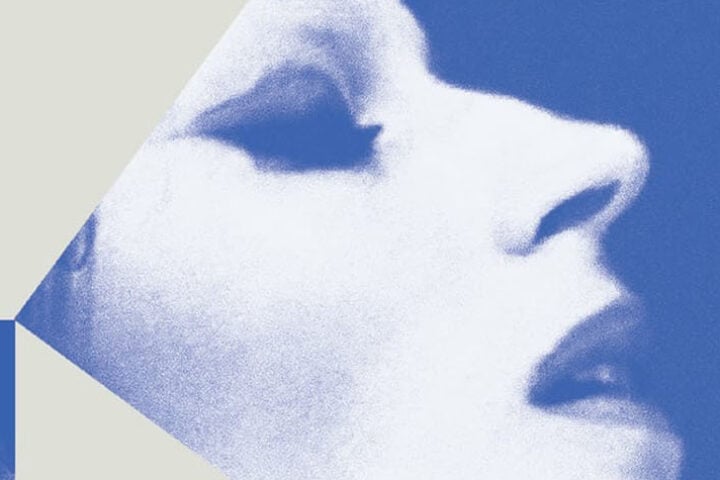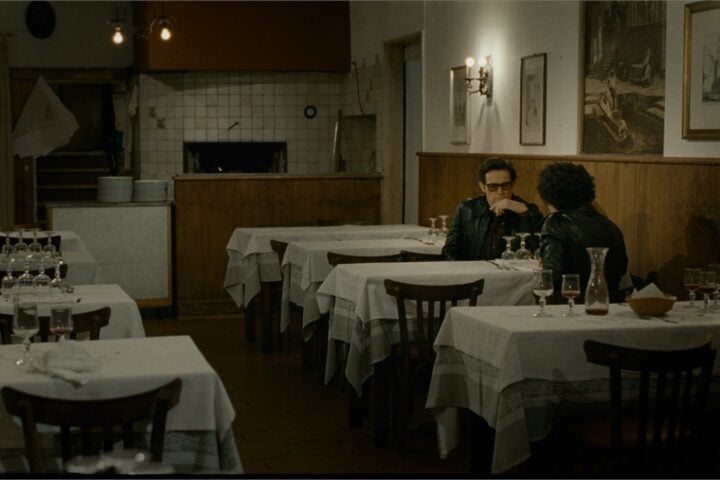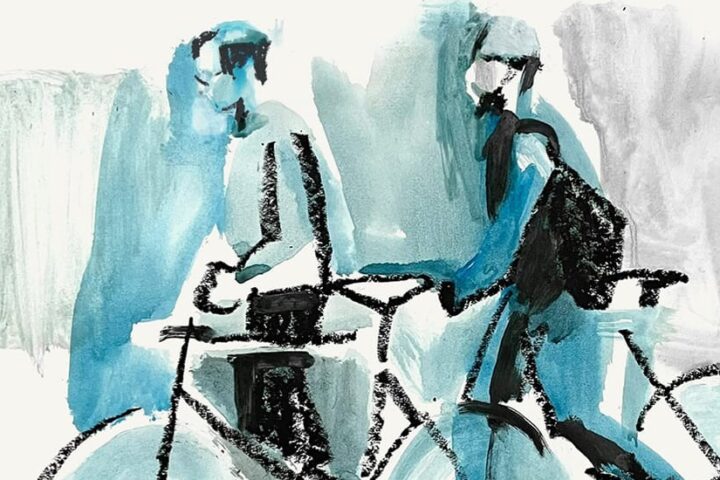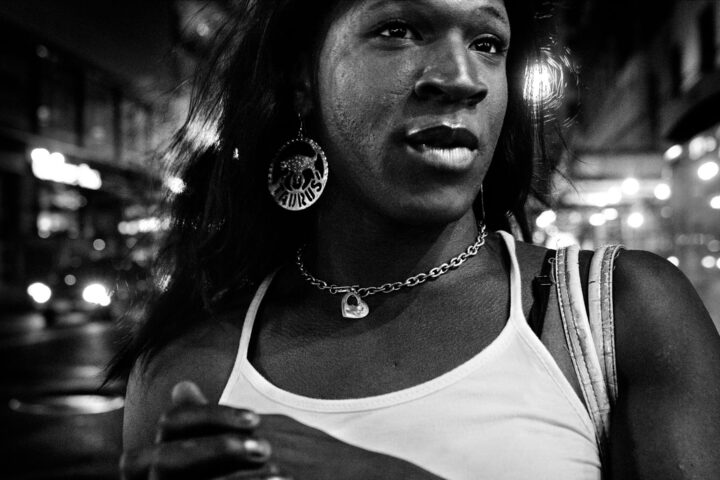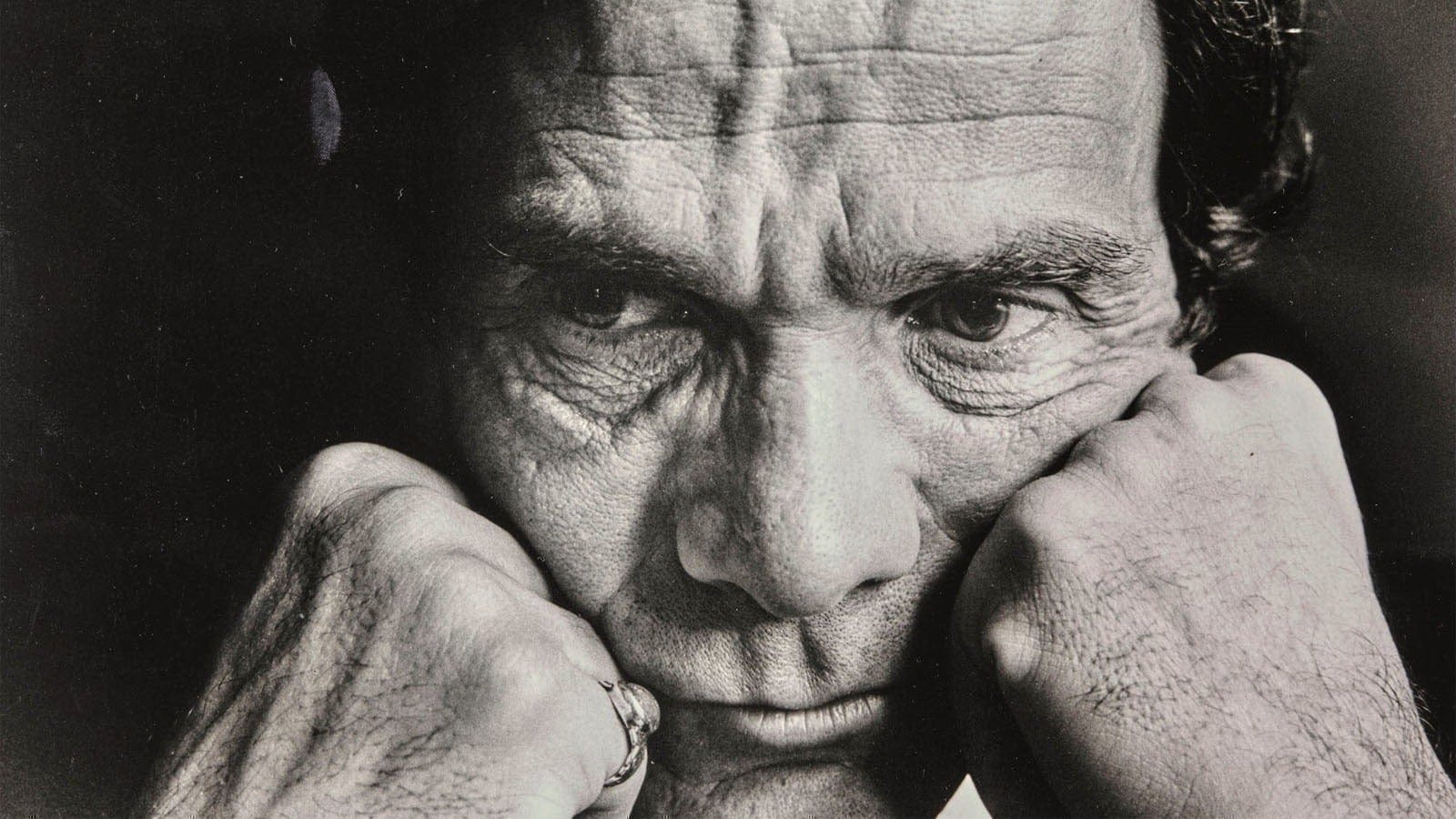

A kindred spirit of Luis Buñuel, but one whose existential compulsions are more palpable, Pier Paolo Pasolini perpetually rebelled against moral hegemony, commiserating with outcasts and creating and dying as one. Today, his canon has been co-opted by forces on the right and left, the faithful and the secular. Which is to say, he belongs to us all.
The Criterion Collection’s new box set, Pasolini 101, represents the most comprehensive collection of Pasolini’s films to date, collecting nine of his features, as well as two shorts (1963’s La Ricotta and 1969’s The Sequence of the Paper Flower) that he made for anthology films and two documentaries that he shot during his travels. In addition to his own work, the set’s extensive and richly informative extras, among them two commentary tracks and a 100-page book featuring an essay and notes on the films by critic James Quandt, remind us of how forcefully the poet provocateur’s work still resonates with the “thunderous sound of plaint innumerable” proclaimed in Dante’s Inferno and cited in the director’s Mamma Roma.
Pasolini’s first film, 1961’s Accattone, was the original Hustle & Flow. As the story of a Roman pimp’s demise—one that articulated his sense of social and emotional deprivation—Accattone created a humane precedent that continued well into the filmmaker’s career. Accattone may also be seen as a post-neorealist where-are-they-now sequel to Vittorio De Sica’s iconic Shoeshine, but Pasolini’s realistic grasp of human and social progress—with De Sica’s shoeshine boys growing up to be pimps, not good state cogs—was too much for the fascist powers-that-be, as was the director’s ballsy Christ-to-man correlations. In the film’s most significant scene, a homoerotic Pietà takes shape as Vittorio “Accattone” Cataldi (Franco Citti) weeps on his friend’s shoulder. Pasolini was not sentimental, but his sympathy for layabouts was an affront to capitalist Italian society, which relegated undesirables like Accattone to the periphery.
It was in these precarious margins that Pasolini felt most comfortable—among hustlers, whores, petty thieves, and loafers. Mamma Roma, from 1962, essentially rewrites Accattone from a female point of view, but it’s more structurally provocative, the first of many Pasolini pictures to hinge on dueling narratives. Anchored by a contentious, manic-depressive performance by Anna Magnani, the film contrasts the fates of a mother and son separated by gender and generation. Its finale is a heartbreaking coup de grâce, as is the pair of majestic tracking shots that conceive Mamma Roma as a celestial body circling a solar system of hookers, pimps, and streetlights—the poetic expression of a woman struggling to define her place in the world.
Filled with shrewd references to religious iconography and Renaissance art, Accattone and Mamma Roma form a diptych of modern spiritual crisis that embodies Pasolini’s Marxist beliefs and conflicted sense of faith. Having equated Accattone to Christ and Mamma Roma to the Madonna, it was only natural that he would eventually direct his gaze on Christ himself, first in La Ricotta and then in the subsequent year’s The Gospel According to St. Matthew—two studies of faith and devotion that together demonstrate the director’s canny gift for satire and even cannier talent for playing it straight. Pasolini’s volatile artistry was such that the one earned him jail time (later commuted), the other a spot on the Vatican’s list of best films.

The popular critical line on The Gospel According to St. Matthew, then and now, is that Pasolini presents the story of Christ through a Marxist prism, which is true insofar as the filmmaker understood Christ as an outcast whose consciousness, like that of Accattone and Mamma Roma, was shaped by class struggle and harsh social conditions. But this line too often misrepresents the film as an intellectual soapbox, trivializing its stark, unpretentious, elegantly tossed-off beauty. The Gospel According to St. Matthew is a lament for a bygone era and a celebration of Christ’s life, work, and death, told without cynicism, irony, or doubt, where every plangent image embodies Scripture at its most rapturous. (Yes, this is the Vatican favorite.)
With each new film, Pasolini ventured deeper into a mythic past, tortured places inhabited by bawdy women and beautiful men. And the further back he went, the more tightly, and passionately, he entwined the corporeal and the spiritual. That’s evident in everything from the films in his Trilogy of Life to 1967’s Oedipus Rex and 1969’s Medea. These works are occasionally dissonant for the way they threw the complexity of human psychology to the wind. But that was by design. Indeed, wherever Pasolini ventured, his juxtaposing of crude impulse with inescapable destiny reveals a profound sensitivity toward humanity.
Pasolini saw his characters as living in an inescapable social hierarchy. That’s very much the subject of 1966’s picaresque road movie The Hawks and the Sparrows, which is the ultimate expression of Pasolini’s “free indirect discourse” style of filmmaking. The film, which is concerned with nature being explicable according to laws of cause and effect, feels driven by a notational abstraction that recalls Buñuel’s The Milky Way. But it’s also livelier in the way that it looks at the battling forces of nature and ideology, and whose influence is fascinatingly felt in the films of Alice Rohrwacher. (Futura, which Rohrwacher co-directed with Pietro Marcello and Francesco Munzi, is also impossible to imagine without 1965’s Love Meetings, in which Pasolini interviews people across Italy about their attitudes toward sex.)
Though Teorema, from 1968, may feel like an anomaly in Pasolini’s career, this modern-day story about the effect of Terrence Stamp’s cock on an upper-class family unit makes sense as another Christ parable. When Stamp’s mysterious visitor exits the film, his absence brings out the best and worst in everyone, provoking the family’s son to unconventional artistic expression and the maid to miracle work but dooming the mother to worship false idols between her legs, the daughter to the prison of her own body, and the father to exile across an arid, primordial landscape (shades of 1969’s Porcile). Teorema is Pasolini’s funniest cherry bomb—a surgeon general’s warning that he might have placed on every Bible if given the chance.
Death tolls loudly throughout Pasolini’s canon, and his famously unsolved murder may be seen as poetic irony, in keeping with the lives of the many characters he created and considered castaways to history. For his final artistic statement, it seems only fitting that it should have been the tongue-ripping, shit-eating, ass-raping bad time of 1975’s Salò, or the 120 Days of Sodom. The film isn’t included in Criterion’s box set, but it’s impossible to not bring up given its multifaceted allegory of absolute power and the nature of Pasolini’s demise. Arresting, vulgar, thought-provoking, ageless, borderline fatuous, and impossible to dismiss, Salò is every bit the work of a rebel whose cause was to be irreducible as an artist and man.
Pasolini 101 is available on June 27 from the Criterion Collection.
Since 2001, we've brought you uncompromising, candid takes on the world of film, music, television, video games, theater, and more. Independently owned and operated publications like Slant have been hit hard in recent years, but we’re committed to keeping our content free and accessible—meaning no paywalls or fees.
If you like what we do, please consider subscribing to our Patreon or making a donation.