The Montreal-based Fantasia Film Festival, which kicked off August 20 and concludes on September 2, offers a superb illustration of the losses and—yes—the gains of having to virtualize everything in the midst of a pandemic. Lost, of course, is the traditional form of community, in which filmmakers, press, and committed fans get to interact with one another, grabbing quick drinks and food between screenings and symposiums and later sharing their impressions over loud music at after-hours get-togethers. The sense of discovery and spontaneity of film festivals, the sense they impart of a quickly formed and just as quickly dissolved society unto themselves, is reminiscent of long wedding weekends or college orientations.
The exhilaration of virtual film festivals, which could and should prove revolutionary, is that they radically expand the access and means of audiences. Travel necessities are eliminated, and speaking events can now be seen by many more people. The virtual dimensions also offer a subtler democracy, as you’re under no pressure to dress and socialize beyond your comfort zone—which is to say that the stressors associated with work have also been lifted. In short, it’s an introvert’s dream. My experience with Fantasia was less socially adventurous, by necessity, than my experience with past festivals, but I felt more of an undistracted communion with the dozen or so films I saw and with the discussions that I watched, the latter of which are currently archived and available for free on Fantasia’s website (Live post-screening Q&As were allowed to expire however, perhaps and understandably to maintain certain elements of the you-have-to-be-there festival experience.)
The new age of film festival interaction was evident in Fantasia’s Master Class with filmmaker John Carpenter, who first attended the festival in 1998 with Vampires and who was given a lifetime achievement award, the Cheval Noir, this year. Carpenter answered questions for 45 minutes, which included standbys about potential sequels and remakes in addition to new projects he might have on the burner. These were fan-centric questions, and Carpenter was good-natured yet often vague, his casual aura suiting the milieu of the homey Zoom-esque presentation. The event felt less like a class than the fulfillment of a fan’s dream to have a beer with a legend, and incisive criticism was provided in one respect, with an opening seven-minute-ish montage of Carpenter’s films that emphasized their poetry and especially their sense of loneliness, even in maligned projects like Memoirs of Invisible Man and his remake of Village of the Damned. (Other special events included a lecture on Afrofuturism and a discussion with the Rue Morgue staff about the status of the press.)
The titles I saw among the 100 movies offered this year provided a vast spectrum of tones, aesthetics, and point of views. Fantasia’s name suggests a specialty in genre flavors, which is generally the case, though the festival offers an exhilaratingly vast interpretation of this idea. In fact, I didn’t see one typical meat-and-potatoes thriller or horror film, but rather documentaries, character studios, and biographies that reinvigorated genre concepts with radical formal devices, subtexts, and empathy. The films featured in this festival are also vastly international, underscoring the voices of various genders, colors, and ages.
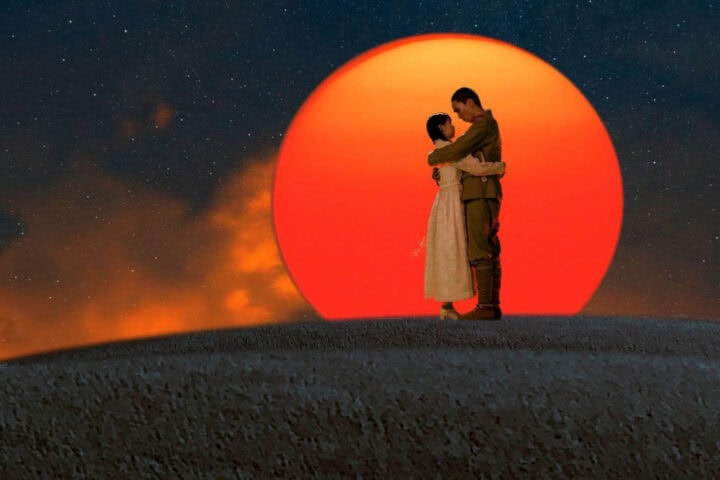
The most ambitious and exhausting film I saw at Fantasia was Labyrinth of Cinema, a three-hour rumination on war and cinema by Ōbayashi Nobuhiko, who’s most famous for the 1977 cult classic House. Imagine an even more maximalist variation of that film’s gonzo aesthetic and you’ve got an idea of Labyrinth of Cinema, in which several teenagers are whisked into a cinema screen and teleported into sequences that represent the Boshin War, the second Sino-Japanese Conflict, and, most agonizingly, the bombing of Hiroshima.
Ōbayashi isn’t much interested in literal coherence, especially in the dizzying 90 minutes that open the film. Instead, he fashions a slipstream of formal devices and flourishes—feverish Technicolor hues, cheekily obvious uses of blue screen, kinetic samurai battles—that suggests how war is mythologized and in the process sanitized by cinema. Ōbayashi complicates this mythology by emphasizing for prolonged stretches of time the dread of impending death and repeated loss, particularly as embodied by an innocent young girl who dies again and again throughout the ages. Ōbayashi died earlier this year at the age of 82, and Labyrinth of Cinema may eventually come to be seen as his ultimate testament to the glories and delusions of his art form. This “elder” film has an audacity that should shame many young bloods in the game.
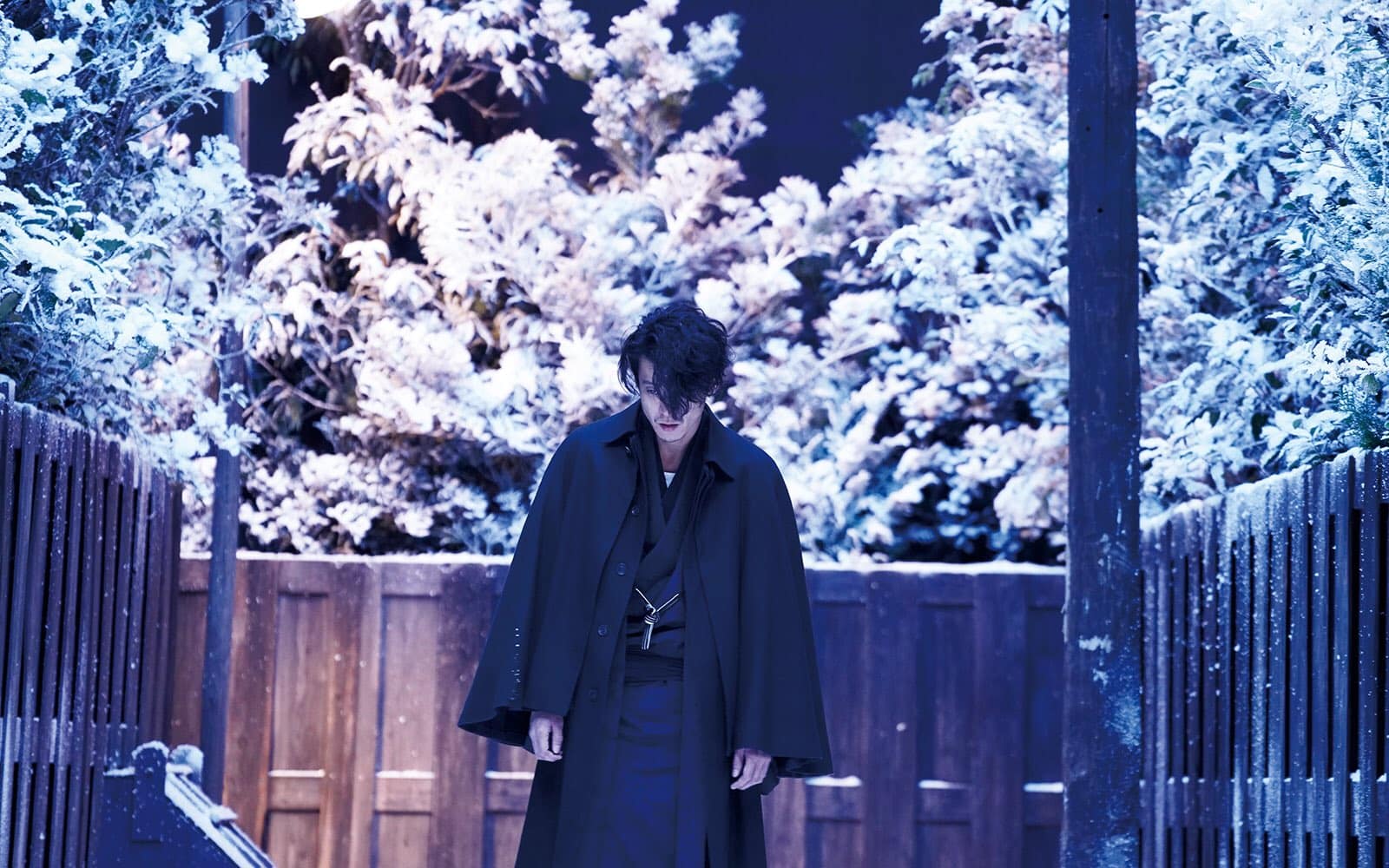
Another Japanese film examines insidious clichés not with maximalism, a la Ōbayashi, but austerity. Filmmaker and photographer Ninagawa Mika’s No Longer Human, a 2019 adaptation of the oft-adapted 1948 autobiographical novel by Dazai Osamu, is a stark chamber play that conveys a painfully matter-of-fact apart-ness, recalling David Cronenberg’s Naked Lunch without the surreal special effects. Mika reworks the source material, placing the author directly in his own narrative, which has been narrowed here to the late ’40s, when Dazai (Shun Oguri) was in the final stages of his life, suffering from depression and tuberculosis and drinking himself to death while on the verge of writing his most famous novels, including No Longer Human. The film is pointedly apolitical—World War II is never mentioned—though Mika parallels the macho military notion of “dying in honor” with the stereotype of the great male writer-boozer and detonates both in the process.
Dazai drinks and screws endlessly, actions that Mika and Shun somehow manage to drain of vicarious pleasure. Dazai essentially lives at bars, spouting obnoxious jibberish that’s typical of drunks. Mika lingers on the pain of addiction, especially on the alienation that it fosters—a feeling that one, always fucked up, doesn’t belong to clockwork society. When Dazai is in the midst of a sexual conquest, Mika emphasizes less the heat of the action than the deliberate and inadvertent miscommunications that seem to be necessary to broker the act, as well as the physical limitations that come with being a sick addict. No Longer Human’s most moving moment finds Dazai alone in an alley after being caught with a woman, regarding his family as they vanish into the night. It’s a moment of unmooring loneliness, intensified by stylized colors that underscore the film’s artificiality. We’re seeing merely a reproduction of a miserable, brilliant, vanished man.
John Hsu’s Detention also explores real atrocity, which it merges with a surreal scenario. The film is set in Taiwan in 1962, when the country was governed under martial law and punished with torture and death anyone who spread left-wing ideologies. In a high school, children are secretly taught forbidden literature and, just as the stage is set for a higher-stakes Dead Poets Society, Hsu jarringly upends the film’s sense of reality. Suddenly, two children wake up in a condemned version of the high school, a nightmarish realm with heightened colors and frightening monsters that suggests a Mario Bava adaptation of Silent Hill. The disorientation Hsu nurtures is more than cinematic game-playing, as this irrational hellscape suggests the confusion that totalitarian regimes sow in their populaces with cruel, nonsensical rules that ultimately serve to inspire terror and accommodation. Resonantly, the ghosts and monsters of Detention have no eyes, as they are products of a government that destroys free will and most of history.

The documentary Morgana focuses on an overweight, middle-aged Australian woman as she reinvents herself as a porn star named Morgana Muses. Filmmakers Josie Hess and Isabel Peppard interview Morgana as she recalls her weight gain and her husband’s increasing hostility and shame. Yearning to be touched again, she eventually hired a male prostitute for a sexual encounter that was to be her last before suicide. There’s no sense of canned recitation in these recollections. Morgana is still viscerally haunted by her past rejections, continued feelings of inadequacy, and convictions that she’s worthless and should die unmissed by husband, children, or friends. Anyone whose experienced depression, or addiction, knows that such demons never leave you; they abide, perhaps starved, waiting for an opportunity to regain dominion. Or least that’s how recovery feels, and Morgana fearlessly conjures these emotional currents for the filmmakers.
A sensitivity to pain and the perils of fearlessness prevent Morgana from becoming a fashionable totem of pop “empowerment,” even as Morgana’s fling offers her an unexpected catharsis. This film isn’t comfortably progressive in certain fashions, as Morgana’s productions occasionally center on fantasies of rape and domestic violence, drawing the ire of feminists who believe in a singular, approved-in-advanced form of freedom of expression. No, Morgana’s central, forgivable problem is its brevity. In 70 scant minutes, we’re given an origin story, a rebirth, a move from Australia to Berlin as a cult celebrity, a relapse into depression, and eventually a qualified happy ending. There should be much more footage of Morgana’s films, which are truly erotic and show that notions of hotness and sexual democracy needn’t be mutually exclusive.
Martin Kraut’s La Dosis features another middle-aged, overweight, lonely person whose perilous connection to society is challenged. Marcos (Carlos Portaluppi) is a veteran nurse at a hospital who’s both beloved and resented in the manner of many people who live only for their job and subtly lord it over everyone else. Kraut captures realistic tremors of physical tension among the characters, and much of the film’s first half is a captivating, slow-burn study of the protagonist in his setting. Marcos’s principal co-worker, Noelia (Lorena Vega), regards the man with a mixture of tenderness and pity that’s familiar to relationships between beautiful people and lonely hearts, while other co-workers exclude Marcos from social activities. The most poignant element of these passages is Marcos’s quiet, unyielding dignity; he knows how he’s perceived and he refuses to sully himself by asking for sympathy or inclusion. Marcos’s greatest sense of connection and duty is, troublingly, is his willingness to secretly euphonize hopeless patients.
A new nurse, Gabriel (Ignacio Rogers), threatens Marcos’s sense of place in the hospital. Gabriel is younger, relatively attractive, and gets along effortlessly well with everyone on the staff, especially Noelia. Gabriel doesn’t bow down to Marcos as a neophyte often does to a veteran, treating him instead as an equal and, later, rival. There’s no need to reveal how La Dosis morphs into a thriller, as Kraut exploits that mystery for a great deal of tension. And the thriller mechanics serve to explode Marcos’s alienation—his fear of losing a life that he’s already had to settle for. Marcos’s increasing panic renders him more obnoxious and eventually stronger, willing to step up for what’s his. The film’s final shot is a tragically casual image of someone embracing, of all things, a return to stasis. It’s the sort of moment that inadvertently resonates with our Covid-addled times, during which we’re often tasked with settling for facsimiles of past ambitions and pleasures.
The Fantasia International Film Festival runs from August 20 to September 2.
Since 2001, we've brought you uncompromising, candid takes on the world of film, music, television, video games, theater, and more. Independently owned and operated publications like Slant have been hit hard in recent years, but we’re committed to keeping our content free and accessible—meaning no paywalls or fees.
If you like what we do, please consider subscribing to our Patreon or making a donation.