Quinoa a la Lynch
By: Ed Gonzalez On: 07/30/2007 17:49:02 In: Directors Comments: 7

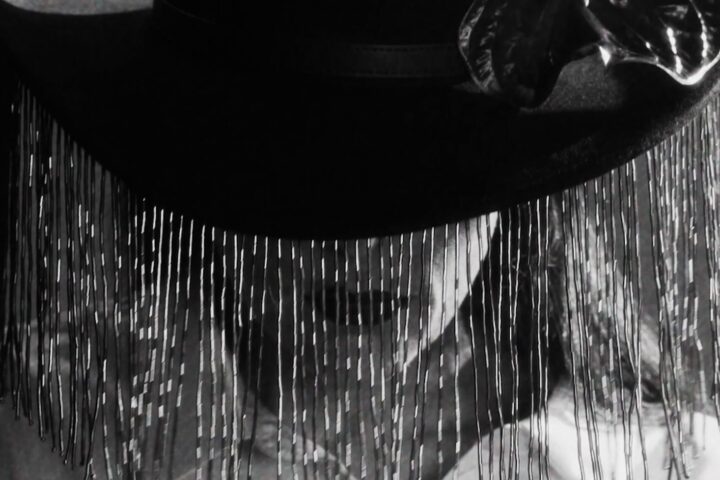
Watch the fuck out Rachael Ray, here comes Iron Chef David Lynch! One of the stranger extras on the upcoming two-disc DVD edition of Inland Empire is an ominously scored, black-and-white feature with the director cooking up a batch of quinoa (he calls it "keen-wa," but I say "kee-noh-uh"—though both are acceptable pronunciations), a high-protein goosefoot plant native to the Andes that isn't very popular outside Latin kitchens. The director, who doesn't appear to own a pair of oven mitts (hence the necessity to use a folded paper towel to grab onto the handle of his copper-lined pot, which he refers to as a pan), absurdly drags out the cooking of this rather rudimentary dish, at times focusing less on the actual ingredients (and how much to use) than on the journey to and fro his stove, refrigerator, and sink. The anecdote he relates to the camera, about a surreal encounter he had some 40 years ago with two different vendors in the former Yugoslavia, will blow your fucking mind, but if you're interested in having a Lynchian dinner this evening and the director's instructions to use "this much" of everything are impossible to wrap your head around, here is a less avant-garde guide with a few tweaks that will guarantee a 100% hippie-friendly eating experience.
INGREDIENTS
½ cup organic quinoa
1 cube organic vegetable bouillon
10 organic broccoli florets
1 teaspoon uniodized sea salt
1 tablespoon organic extra virgin olive oil
1 tablespoon liquid amino acid
In a small pot, bring two cups of distilled or filtered water to a light boil.
Crumble up one organic vegetable bouillon cube and put aside.
Add ½ a cup of organic quinoa to the water, stirring in approximately one teaspoon of uniodized sea salt and making sure the ashes from your cigarette (or joint) don't get into the pot. Reduce "nice hot flame" to a simmer and cover pot, allowing the quinoa to cook through for approximately eight minutes. (Quinoa is readily available in the Latin food aisle at your local supermarket, though you may have to go to some bourgeois-bohemian health food store to locate the organic variety.)
Pour yourself a glass of red wine and drink liberally.
Add about 10 organic broccoli florets and lightly stir, returning the lid to the pot.
In approximately nine minutes, when the water has almost completely evaporated, begin to mash together the quinoa and broccoli, incorporating the crumbled bouillon cube into the mix until it is no longer visible. (You could incorporate the cube into the water along with the broccoli in the previous step but the taste of the dish will be less intense.)
Pour mash into a small bowl and top with a few squirts of liquid amino acid (Lynch advises that it tastes just like soy sauce) and organic evoo.
Enjoy with your wine and follow up with a cup of one of Lynch's Signature Cup gourmet coffees.


Watch the fuck out Rachael Ray, here comes Iron Chef David Lynch! One of the stranger extras on the upcoming two-disc DVD edition of Inland Empire is an ominously scored, black-and-white feature with the director cooking up a batch of quinoa (he calls it "keen-wa," but I say "kee-noh-uh"—though both are acceptable pronunciations), a high-protein goosefoot plant native to the Andes that isn't very popular outside Latin kitchens. The director, who doesn't appear to own a pair of oven mitts (hence the necessity to use a folded paper towel to grab onto the handle of his copper-lined pot, which he refers to as a pan), absurdly drags out the cooking of this rather rudimentary dish, at times focusing less on the actual ingredients (and how much to use) than on the journey to and fro his stove, refrigerator, and sink. The anecdote he relates to the camera, about a surreal encounter he had some 40 years ago with two different vendors in the former Yugoslavia, will blow your fucking mind, but if you're interested in having a Lynchian dinner this evening and the director's instructions to use "this much" of everything are impossible to wrap your head around, here is a less avant-garde guide with a few tweaks that will guarantee a 100% hippie-friendly eating experience.
INGREDIENTS
½ cup organic quinoa
1 cube organic vegetable bouillon
10 organic broccoli florets
1 teaspoon uniodized sea salt
1 tablespoon organic extra virgin olive oil
1 tablespoon liquid amino acid

Robert Altman (1925 - 2006)
By: Ed Gonzalez On: 11/22/2006 11:53:12 In: Directors Comments: 97

Yesterday I learned of Robert Altman's death as I might have the passing of a relative: through a phone call from a friend. Sometimes this man did feel as if he were a relation, perhaps because this greatest of American directors understood our world as a vast family tree of entwined dramas—torn asunder by the politics of sex, race, and class, but never uprooted. (This is why everyone who seriously cares about film culture will mourn this maverick director's demise.) No filmmaker understood our human value so acutely and complexly, and the power of his unique vision—seemingly casual but, in truth, meticulously detail-oriented—was such that to watch a film like McCabe and Mrs. Miller was not unlike experiencing the birth of our great nation, and his last film, the almost alien A Prairie Home Companion, suggests its death.
Many years ago, when Popeye and M*A*S*H were the only Altman films I had ever seen, The Player came to me like a revelation. I was only 16, uncertain whether I wanted to spend the rest of my life devoted to painting, psychology, or film, and The Player revealed to me a way of looking at the world and the people who live in it in a way I never thought imaginable. The Player was largely responsible for me applying to film school at NYU, though it would take me years to realize that I didn't want to make films so much as study them—to look at them in the same way Altman looked at us: closely, madly, and deeply, always trying to cut through the bullshit. Like the incidents of fate that bind so many of the characters in Altman's films, the director would follow me in strange and mysterious ways, from a sexual tryst, no joke, that hinged on my affections for The Player to internships at Sandcastle, Altman's production company, and October Films that came to me almost by chance.
Working for Altman seemed like a given to me—a means of giving back to a man who had given me so much. At Sandcastle, two days a week for one semester, I did little at first other than general office work, gawking during my downtime at his countless awards (a gold record for the Ready to Wear soundtrack, his Palm d'Or) and looking through the screenplays of Angels in America he was possibly going to bring to the screen (a project Tony Kushner, per a conversation he gave at the Tisch School of the Arts, was hoping the director would be allowed to take on) and letters of gratitude from people like Jim Jarmusch (who had just released Dead Man), thanking the man for the influence his work had on their own careers.
I would never meet Altman: He came into the office only once, after finishing work on The Gingerbread Man, on my very last day, looking fragile and chatting with Harry Belafonte for an hour or so before laying down to sleep on a couch. Before I walked out the door, after having worked for several weeks organizing part of his archives (bound for his hometown of Kansas City in Missouri) and transcribing Kansas City to script format for publication, I didn't have the heart to wake him and say goodbye. Little did I know at the time that he didn't have the heart he once had either and probably needed all the rest he could get.
An ill-timed internship at October Films would later hinge on my having worked at Sandcastle. I didn't do anything there that was very notable (getting coffee and answering phones for some bigwig I don't care to remember, taking over one person's job for a few days when they were sick, and placing postcards for the company's films all over the city), except for buying the cookie jar the company was going to feature on the poster art for Cookie's Fortune. That day in SoHo, I put some thought into picking out a jar that would personify the spirit of Altman's film, which I hadn't seen yet but could imagine what it was like. The essence of that jar may or may not have mattered as much to anyone else, but I knew it would for Altman, whose films were all about the fine details.
Many years later, when so many critics were ragging on The Company, it gave me pleasure to be quoted in ads for the film (I had named it my favorite film of 2003), because it felt as if I had done something to help bring more people to this great film. This year I passed on interviewing Altman prior to A Prairie Home Companion opening, partly because I wasn't crazy about the film, but mostly because I felt that meeting him would somehow demystify the pull he has had on my life. This is not a decision I regret. Altman certainly didn't need another person to tell him what he already knew: that his films have a great effect on the people who see them. Today, it feels right that I only got to know him from afar, another little planet to circle and orbit near this great sun in a vibrant universe of people and dramas that took him more than 50 years to create.

Yesterday I learned of Robert Altman's death as I might have the passing of a relative: through a phone call from a friend. Sometimes this man did feel as if he were a relation, perhaps because this greatest of American directors understood our world as a vast family tree of entwined dramas—torn asunder by the politics of sex, race, and class, but never uprooted. (This is why everyone who seriously cares about film culture will mourn this maverick director's demise.) No filmmaker understood our human value so acutely and complexly, and the power of his unique vision—seemingly casual but, in truth, meticulously detail-oriented—was such that to watch a film like McCabe and Mrs. Miller was not unlike experiencing the birth of our great nation, and his last film, the almost alien A Prairie Home Companion, suggests its death.
Many years ago, when Popeye and M*A*S*H were the only Altman films I had ever seen, The Player came to me like a revelation. I was only 16, uncertain whether I wanted to spend the rest of my life devoted to painting, psychology, or film, and The Player revealed to me a way of looking at the world and the people who live in it in a way I never thought imaginable. The Player was largely responsible for me applying to film school at NYU, though it would take me years to realize that I didn't want to make films so much as study them—to look at them in the same way Altman looked at us: closely, madly, and deeply, always trying to cut through the bullshit. Like the incidents of fate that bind so many of the characters in Altman's films, the director would follow me in strange and mysterious ways, from a sexual tryst, no joke, that hinged on my affections for The Player to internships at Sandcastle, Altman's production company, and October Films that came to me almost by chance.
Working for Altman seemed like a given to me—a means of giving back to a man who had given me so much. At Sandcastle, two days a week for one semester, I did little at first other than general office work, gawking during my downtime at his countless awards (a gold record for the Ready to Wear soundtrack, his Palm d'Or) and looking through the screenplays of Angels in America he was possibly going to bring to the screen (a project Tony Kushner, per a conversation he gave at the Tisch School of the Arts, was hoping the director would be allowed to take on) and letters of gratitude from people like Jim Jarmusch (who had just released Dead Man), thanking the man for the influence his work had on their own careers.
I would never meet Altman: He came into the office only once, after finishing work on The Gingerbread Man, on my very last day, looking fragile and chatting with Harry Belafonte for an hour or so before laying down to sleep on a couch. Before I walked out the door, after having worked for several weeks organizing part of his archives (bound for his hometown of Kansas City in Missouri) and transcribing Kansas City to script format for publication, I didn't have the heart to wake him and say goodbye. Little did I know at the time that he didn't have the heart he once had either and probably needed all the rest he could get.
An ill-timed internship at October Films would later hinge on my having worked at Sandcastle. I didn't do anything there that was very notable (getting coffee and answering phones for some bigwig I don't care to remember, taking over one person's job for a few days when they were sick, and placing postcards for the company's films all over the city), except for buying the cookie jar the company was going to feature on the poster art for Cookie's Fortune. That day in SoHo, I put some thought into picking out a jar that would personify the spirit of Altman's film, which I hadn't seen yet but could imagine what it was like. The essence of that jar may or may not have mattered as much to anyone else, but I knew it would for Altman, whose films were all about the fine details.
Many years later, when so many critics were ragging on The Company, it gave me pleasure to be quoted in ads for the film (I had named it my favorite film of 2003), because it felt as if I had done something to help bring more people to this great film. This year I passed on interviewing Altman prior to A Prairie Home Companion opening, partly because I wasn't crazy about the film, but mostly because I felt that meeting him would somehow demystify the pull he has had on my life. This is not a decision I regret. Altman certainly didn't need another person to tell him what he already knew: that his films have a great effect on the people who see them. Today, it feels right that I only got to know him from afar, another little planet to circle and orbit near this great sun in a vibrant universe of people and dramas that took him more than 50 years to create.
The M. Night Shyamalan Screenwriting Grab Bag
By: Ed Gonzalez On: 07/20/2006 00:30:47 In: Directors Comments: 10
A recent episode of South Park hypothesized how the creators of the asinine Family Guy came up with ideas for their show: manatees! This, of course, was an insult to manatees, but the gist of it was that these animals, from inside an aquarium on the FOX lot, were moving balls with random words scrawled on them (for example: Mexico, crack cocaine, anal beads) into a tube, thus providing Family Guy's creators with the wild context for one of Peter Griffin's "remember that time" daydreams, which often feel as if they make up entire episodes of the show. Though he can probably afford such a think tank, the gassy M. Night Shyamalan is too self-absorbed to ever let anyone determine the thrust of one of his movies, yet the batshit-crazy Lady in the Water shows its Frankenstinian scars so plainly as to suggest it was built programmatically—as if pieced together from tiles of words or images that indicate his deepest psychological traumas and pop cultural affinities, picked out of a magical screenwriting grab bag after the wounded director sat down to write his follow-up to The Village. This is what he might have pulled out of that bag:


A recent episode of South Park hypothesized how the creators of the asinine Family Guy came up with ideas for their show: manatees! This, of course, was an insult to manatees, but the gist of it was that these animals, from inside an aquarium on the FOX lot, were moving balls with random words scrawled on them (for example: Mexico, crack cocaine, anal beads) into a tube, thus providing Family Guy's creators with the wild context for one of Peter Griffin's "remember that time" daydreams, which often feel as if they make up entire episodes of the show. Though he can probably afford such a think tank, the gassy M. Night Shyamalan is too self-absorbed to ever let anyone determine the thrust of one of his movies, yet the batshit-crazy Lady in the Water shows its Frankenstinian scars so plainly as to suggest it was built programmatically—as if pieced together from tiles of words or images that indicate his deepest psychological traumas and pop cultural affinities, picked out of a magical screenwriting grab bag after the wounded director sat down to write his follow-up to The Village. This is what he might have pulled out of that bag:

Old Dude in the Wheelchair
By: Ed Gonzalez On: 08/23/2005 01:11:33 In: Directors Comments: 0
I only learned last week that Paul Thomas Anderson apparently helped Robert Altman shoot parts of The Prairie Home Companion. This isn't the kind of news you can count on tabloids or gossip blogs to report because pandering to a populace's sick obsession with the private lives of celebrities takes precedent over serious news affecting film culture. I was, though, able to figure out that Altman wasn't in very good shape after reading this post on PerezHilton.com, a site operated by a friend of mine (and fellow Cubano) from NYU, over a month ago. Though I certainly applaud the success of my friend and his site in the past year, not to mention the sense of humor he brings to his work, I did take issue with the following line from his post about Lindsay Lohan on the set of Altman's film: "Lohan has a new man, and—no—it isn't the old dude in the wheelchair coping a feel." I can forgive my friend because he seems to know who Altman actually is, but this insensitivity simply feeds and encourages the far more callous responses written by the site's readers that quickly appeared in the blog entry's comments section. It's really sad to me that when a picture like this one crops up, what captures the imagination of a group of people is not a man's debilitating state but how skinny and pale a celebrity has apparently allowed themselves to become. The general public's (and popular media's) lurid obsession with celebrity will never cease to amaze me, if only because I simply do not understand it at all. I'm probably just being naïve here by letting my respect for Altman cloud my rationality, but if you prefer the above coverage of Prairie Home Companion to this two-week-old post that appeared on Cinematical, well, I don't know if there's much to separate you from your garden-variety stalker.
Categories
Archive
Links
- Cinematical
- Cinephiliac
- Elusive Lucidity
- Film Experience
- Film Freak Central
- fourfour
- Girish
- GreenCine Daily
- Hell on Frisco Bay
- The House Next Door
- IFC Blog
- Some Came Running
- Like Anna Karina's Sweater
- Movie Love
- The Nick Schager Film Project
- Nick's Flick Picks
- The Projection Booth
- The Reeler
- Reverse Blog
- Scanners
- Sergio Leone and the Infield Fly Rule
- Shooting Down Pictures
- SpoutBlog
- The Stranger Song
- Termite Art
- Shut Up and Deal
- When Canses Were Classeled
Website