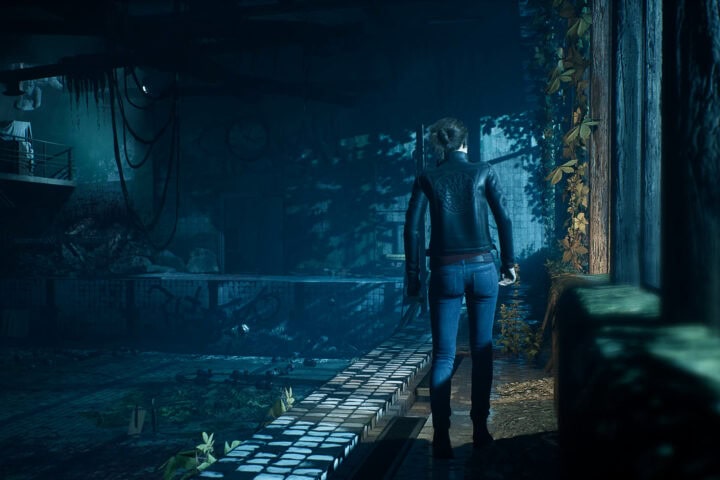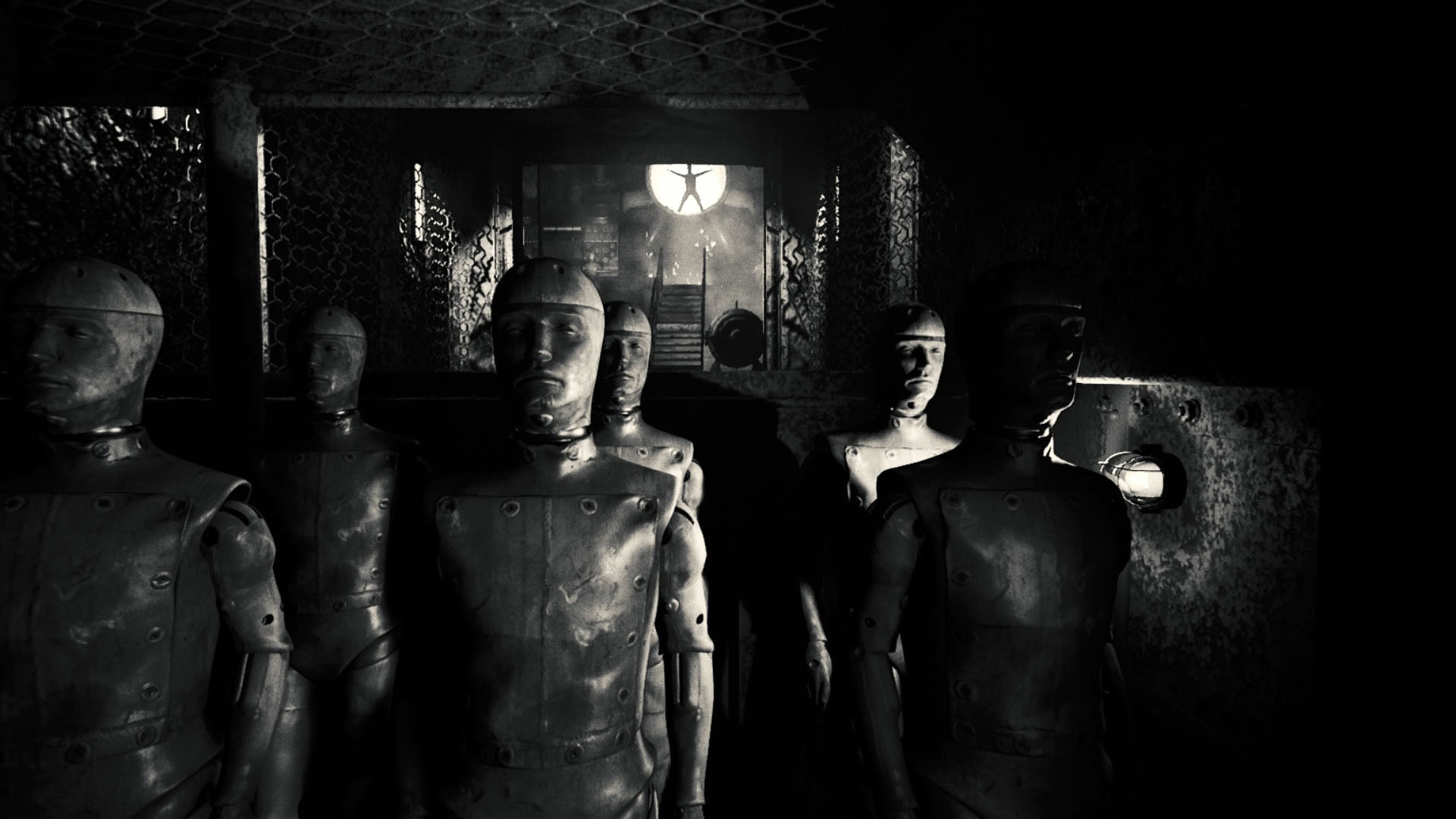
Bloober Team’s latest, Layers of Fear 2, puts you in the shoes of an actor trying to find his or her character, in both the literal and figurative sense of that phrase. From a physical perspective, this means interacting with all sorts of horrific sights aboard a luxury cruise liner’s cabins: the dioramic creations of an enigmatic director (voiced by Tony Todd of Candyman fame), each designed to trigger the actor’s suppressed childhood memories. And from a psychological perspective, this means losing one’s grip on reality, as the line blurs not only between the role the actor has been tasked with playing and the actor’s past, but between a film production’s props and sets and what the actor becomes convinced he or she is seeing: hedge mazes, pirate coves, industrial cityscapes, and so on.
You’ve been hired to star in a film being shot aboard the 1930s-style Icarus Transatlantic, but over the course of the game’s five linear acts, it becomes clear that something else is happening on the curiously empty ship. Players set out from an increasingly dilapidated dressing room, exploring not just the ship itself—everything from the coal-lined engine rooms to the kitchens and first-class cabins—but a variety of on-board sets that have been built by the director, such as a pirate ship that’s surrounded by papier-mâché waves, and a recreation of a private screening room. Such visual touchstones and their recurring motifs are the layers of fear of the game’s title, opening themselves up to multiple meanings, like the playing cards that reference Alice in Wonderland but also point to a relative’s gambling addiction.
The game’s first few acts are its finest, particularly for their strong sense of physicality and connection to filmmaking methods and aesthetics. The simple puzzles require you to operate slide projectors until you’ve found the perfect shot, to use turntables to position your mannequin co-stars, or to follow chalk-drawn blocking notes across the various dioramic film sets. Even though some effects are logically impossible, such as the way flickering projector beams pierce solid walls, so that the ship’s cabins sometimes seems as if they’re bleeding pinpricks of light, the director’s manipulations are so clever that you convince yourself that it’s all somehow just a practical effect, or a really good perceptual illusion, as with the various doorways that vanish if you so happen to break your line of sight with them.
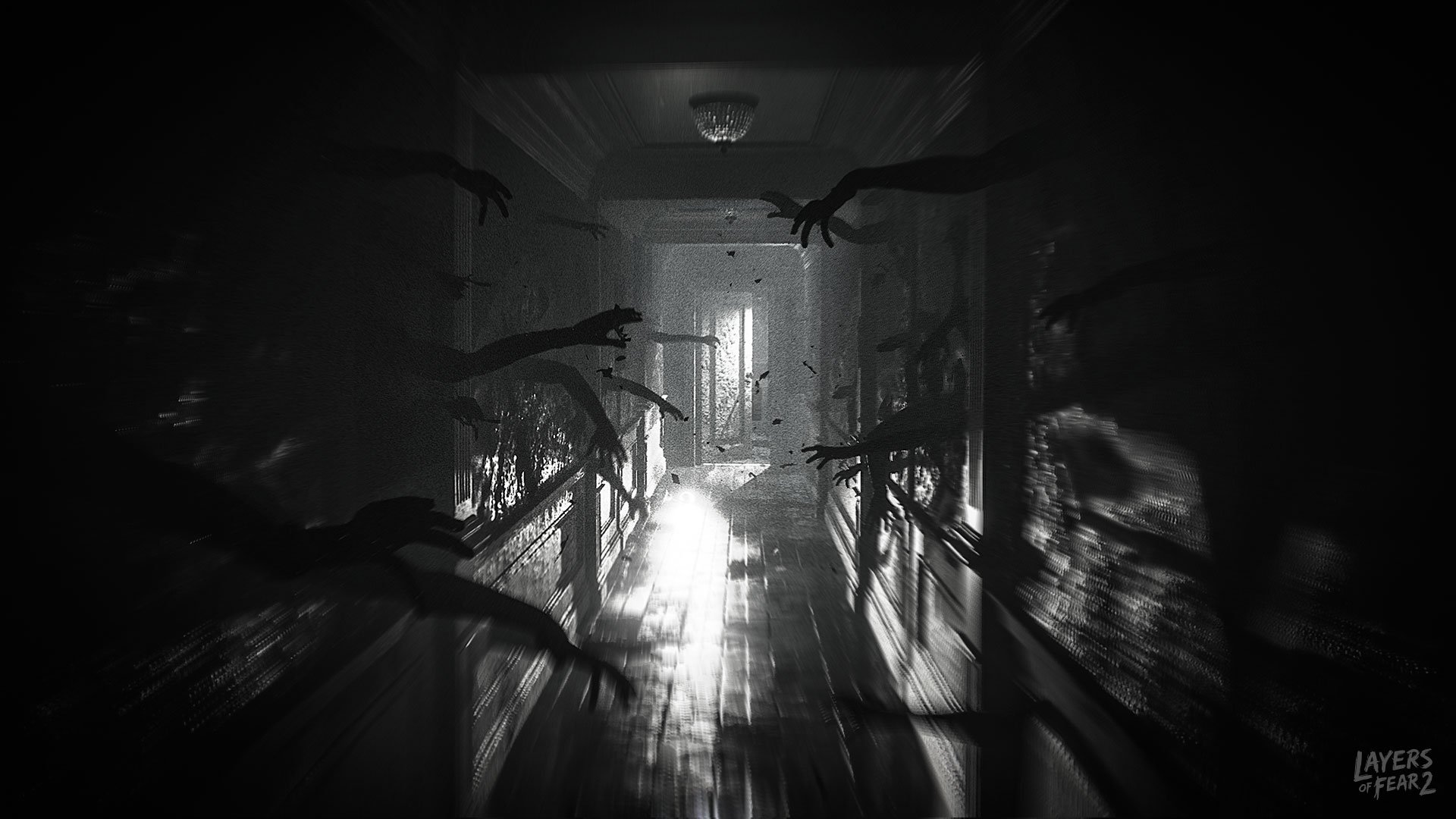
As Layers of Fear 2 reaches its conclusion, however, and the protagonist becomes more defined, we become disassociated from what should be the game’s most unnerving effects, like red-gel-lit hallways lined with squirming body parts. At times, it feels more like you’re watching a scary film from the comfort of your living room than actively participating in one. An early sequence that draws inspiration from Fritz Lang’s Metropolis—its giant brass pipes, its columns of steam—is particularly strong for its function as a filter through which the actor processes whatever horrors he or she is actually seeing in the boiler room. But it’s not long into the game before it starts to feel as if films are being referenced as a matter of course. Indeed, no narrative purpose is served by the awkward mini-game in which you fly, and in hallucinatory fashion, the rocket ship from Georges Méliès’s iconic silent short A Trip to the Moon, or the appearance toward the end by the twins from Stanley Kubrick’s The Shining.
Still, even when these references and recreations fail to connect to the game’s grand design, they’re at least arrestingly vivid in their aesthetics and often quite unsettling. Layers of Fear 2 doesn’t explain or justify these sequences, which makes them all the more striking. You may ask, “What, exactly, have I stumbled upon?” By contrast, the many artifacts and collectibles that you pick up throughout are frustrating for the way they elaborate upon the game’s horrors instead of deepening them: Watch as art imitates life, they seem to say to you, specifically the fateful choices made by a brother and sister who once stowed away on a ship very much like the one you’re trapped on. These narrative moments provide a safe harbor from whatever else is more immediately going on around you, giving truth to the game’s binary choice to either “Lose the character, find yourself” or “Find the character, lose yourself.”
Because Layers of Fear 2 is a game about the madness that lies within one’s imagination, it’s no surprise that the moments that hint at unseen horrors—and the 3D audio is particularly effective on this front—are more unsettling than those that explicitly show them. The sequence in which you’re trailed by ogre-like footsteps is infinitely more unnerving than the one in which your pursuer is depicted as a fire-breathing titan, whom you can easily hide from. The more that Layers of Fear 2 offers players a peek behind the curtain, the more it leans on redundant trial-and-error chase sequences, effectively leaving psychological complexity in the rear-view mirror and making it harder for us to get lost in its illusory horrors.
The acting conceit of Layers of Fear 2 presents a compelling psychological dive into what it means to create a character, to truly imagine yourself as someone else. But each time players might be swept away into something truly unsettling, the director’s demands snap things back to a comfortable reality. For all its unsightly imagery, the overall arc of the game conforms to a familiar structure (especially in the ineffective New Game+ mode), forgetting that its scariest moments are those unexpected ones between the instructions given to you by the director. Layers of Fear 2 can be terrifying, but only when it stops clinging so tightly to its script.
This game was reviewed using a download code provided by Evolve PR.
Since 2001, we've brought you uncompromising, candid takes on the world of film, music, television, video games, theater, and more. Independently owned and operated publications like Slant have been hit hard in recent years, but we’re committed to keeping our content free and accessible—meaning no paywalls or fees.
If you like what we do, please consider subscribing to our Patreon or making a donation.