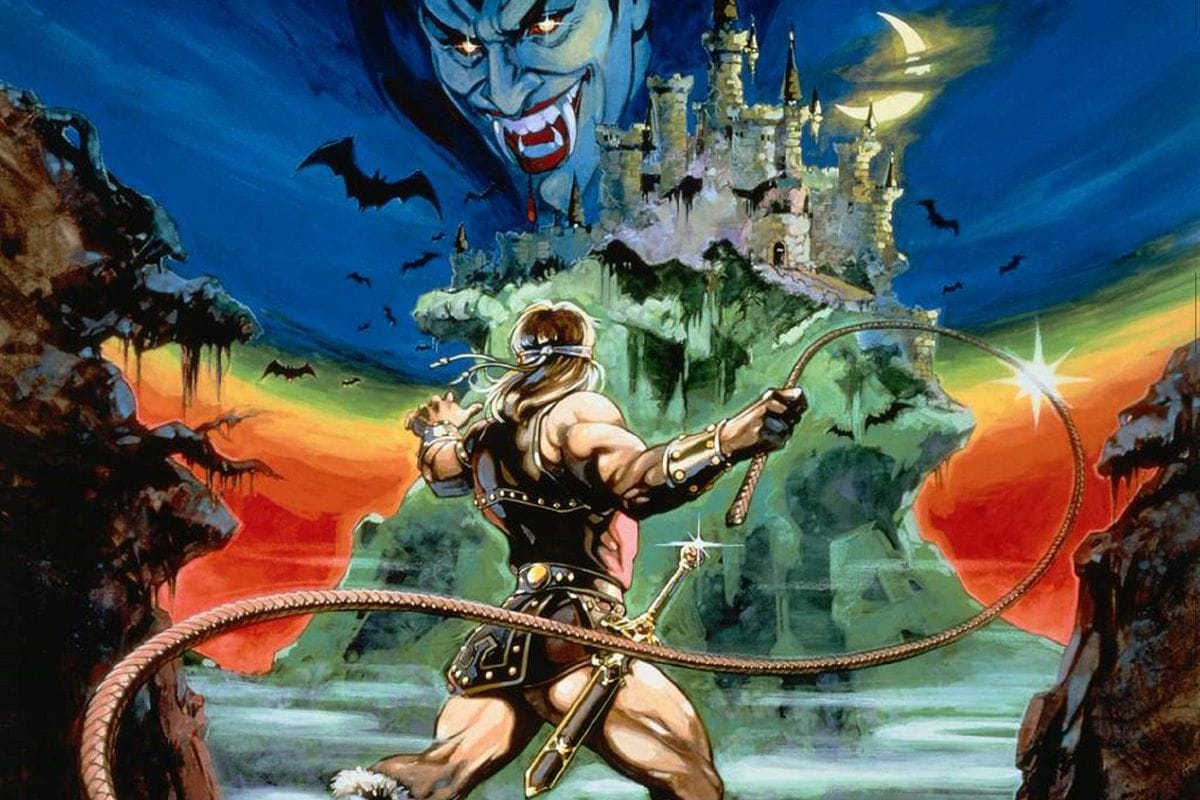
The prospect of the widely detested Konami of 2019 turning a jaundiced eye toward the best franchise the beloved Konami of yore produced was, rightfully, a frightening proposition. After all, this is a publisher that’s had no qualms about charging $10 for an extra save slot, or canceling entire games, regardless of positive reception or earning potential, based on a grudge against creators. Remember that Konani’s last major contribution to the Castlevania series was a pachinko machine. So, it’s almost a tiny blessing that the worst thing visited upon the Castlevania Anniversary Collection is a sort of benign neglect.
Out of the series’s history, the Anniversary Collection includes the three NES titles (Castlevania, Castlevania II: Simon’s Quest, and Castlevania III: Dracula’s Curse), the first two Gameboy titles (Castlevania: The Adventure and Castlevania II: Belmont’s Revenge), Super Castlevania IV (originally released on the SNES), Castlevania Bloodlines (originally released on the Sega Genesis and outside the United States and Japan as The New Generation), and the NES port of Kid Dracula, which was only released on Gameboy in the U.S. Want to play Haunted Castle, the obscure arcade game that serves as the mechanical basis for the first NES Castlevania? Or Dracula X: Rondo of Blood, the beautifully ambitious PC Engine CD spinoff? You’ll have to purchase those, and a sizable list of other Castlevania titles, separately. Which is a shame, because it only takes about five minutes of playtime apiece to realize that the Gameboy titles are taking up valuable real estate here that could easily have been filled by better and more interesting games in this series. The same can somewhat be said of Kid Dracula, an old-school mascot platformer that’s adorable but ultimately expendable.
The big question to be considered with any sort of collection or remaster effort is one of purpose. Is it to bring a game visually or mechanically up to modern standards? Or is it to preserve its code? In recent years, we’ve seen Sega accomplish both with their Genesis Collections, Capcom with their Anniversary Collections of Street Fighter and Legacy Collections of Mega Man, and SNK with their 40th Anniversary Collection. The list goes on and on. Ultimately, for a collection supposedly celebrating a series’s 30th anniversary, the amount of effort put into this release suggests a relationship long dead.
There are countless stories and questions about the creation and advancement of the Castlevania series that remain untold and unanswered—stories you can tell either through the inclusion of the later games that showcase that evolution, or through the inclusion of ancillary materials that tell the story more directly. Many a developer has made that effort in bringing games of this age to modern players. Konami simply doesn’t, and it’s not for a lack of proof to draw from, given how different latter-day titles in this series became in the PlayStation/Nintendo 64 era. There’s an entire thriving genre of video games co-named after this series. That alone is a grand reason to chronicle the how and why of this series’s legacy in thorough detail. Yes, putting the effort in to localize Kid Dracula certainly took work, but it’s also the least relevant game to said chronicle. This is a collection that feels loveless as a result, as it lacks so much context or respect for the place these games hold in gaming history.
Konami—partnered again with developer M2, a studio renowned for their work on similar compilations for Sega and SNK—takes a similarly haphazard approach to the more restorative aspects of this collection. Aside from a manual Quick Save system, a few perfunctory graphics filters, and screen frames, the games are, well, essentially ROM dumps. The only major concession to posterity at the moment of this review—post-launch content is planned—is a digital book, with rough concept sketches for all the games, and one admittedly excellent interview between famed series composer Michiru Yamane and Adi Shankar, show runner and executive producer of Netflix’s fantastic animated Castlevania series.
Even just the small favor of including one or two of the basic graphics-smoothing options that even the most rudimentary emulator can provide would’ve shown some level of forethought and consideration went into the Castlevania Anniversary Collection. Putting aside that it’s being released at a time when archival efforts for gaming are in full swing, this collection feels almost begrudging of the series’s existence. Given Konami’s current rep among both those who play and develop games, it’s not a stretch to consider that that may be the case.
Thankfully, whatever enmity Konami holds toward its glory days as a developer doesn’t affect the games whatsoever. The meat of the collection is, of course, the NES, SNES, and Genesis titles, which have all held up extraordinarily well to time. The original Castlevania remains quite difficult, but there’s very little in the game that goes beyond “tough but fair” aside from an infuriating fight with the Grim Reaper toward the end. Simon’s Quest is the most troublesome of the bunch, in that it’s so obtuse in its clues and RPG elements that it’s essentially impossible to progress without the aid of a strategy guide. But it’s also the most academically fascinating game in the collection. Many of its puzzles, designs, and mechanics are easily decades ahead of their time, even if they’re poorly implemented into the game.
Dracula’s Curse, Super Castlevania IV, and Bloodlines represent the series hitting a creative stride, the 8-bit Hammer horror trappings of the first two games making way for the series to develop its own identity. Dracula’s Curse and Bloodlines both bring a playfulness and mechanical ambition to the fray. The former does this via a grand experiment with branching paths and character swapping, the latter through a series of hardware-pushing special effects and optical illusions. Despite being a first-generation SNES title, Super Castlevania IV remains one of the system’s crowning achievements, especially in the sound department. Adventurous beats and melodies give way here to impressive facsimiles of an orchestral experience, featuring haunting choirs, evil organs, and ethereal, synth atmospherics that create a soundscape unlike anything else produced at the time. That, and the game’s organic, painterly aesthetic brings a dose of legitimate unsettling terror and dread far beyond the abstract pixels of the NES games or the bloodier but more cartoonish aesthetic of Bloodlines.
It’s not greed in this day and age to expect publishers to respect and preserve their history. At this point, it’s an artistic responsibility, and for a series as creative and ambitious as Castlevania, simply tossing a few barely touched ROMs at players and calling it a day can’t help but feel a little insulting, all the more so because the games presented in this collection make a rock-solid case that they’ve never been more worthy of the attention.
This game was reviewed using a download code provided by Hill+Knowlton Strategies.
Since 2001, we've brought you uncompromising, candid takes on the world of film, music, television, video games, theater, and more. Independently owned and operated publications like Slant have been hit hard in recent years, but we’re committed to keeping our content free and accessible—meaning no paywalls or fees.
If you like what we do, please consider subscribing to our Patreon or making a donation.