Capcom might just be the last AAA publisher doing well enough that developing PS3-era “one for us” titles is still viable in 2026. And we’re not complaining, because the type of game that Pragmata represents is more than a little endangered: a single-player, feature-complete, narratively driven third-person shooter that trades bleeding-edge graphics for strong, used-future art direction, with an emotional hook that doesn’t insult the audience.
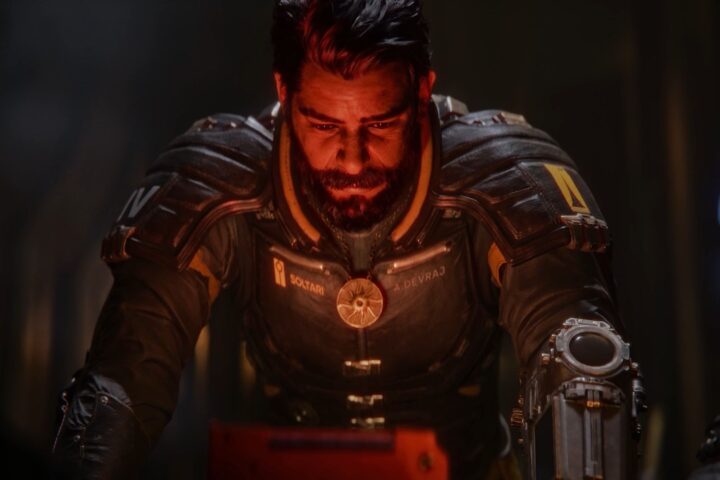
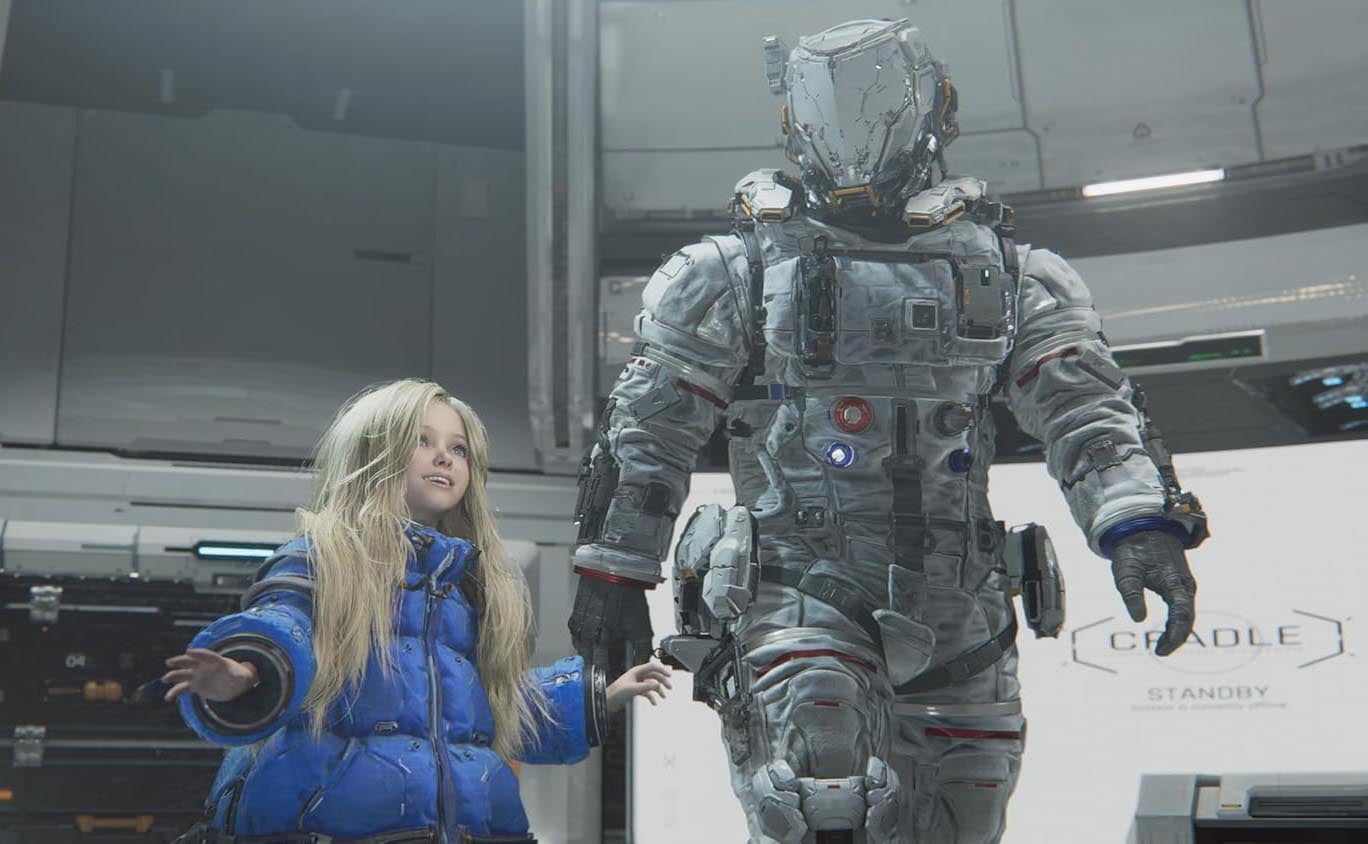
The game is also special for injecting a much-needed dose of emotional honesty and wonder into what could have been, on paper, a tired story of a grizzled protagonist coming across a little girl in his travels who teaches him to love again. Specifically, our hero, Hugh, is an engineer in the near future sent to an American mining colony on the moon to find out why the A.I. running the place hasn’t been communicating with Earth. When the other engineers he’s sent with are killed by one of the obviously rogue A.I.’s robot helpers, and Hugh finds himself violently thrown into a restricted area of the base, he meets Diana, a fully artificial girl who’s endlessly curious about the first actual human she’s ever met, and willing to help him get back to Earth.
Gaming tradition says Hugh should be a gravelly hard-ass toward Diana’s endless queries, and Diana should be annoyingly anime-like about it, but Capcom avoids the obvious with their relationship. Hugh, rather organically, falls into the role of a patient, playful caretaker, and while Diana is portrayed with a bit of broad kawaii-ness to her, she’s also excited and random and curious in ways you rarely see children portrayed as in a video game. Also believable is the way Hugh respects the responsibility thrust upon him. As such, he comes across as one of the most empathetic and noble protagonists of the current generation.
The rest of Pragmata isn’t as refreshingly unique as Hugh and Diana’s relationship, but, as with the story, the combat is greater than the sum of its parts. The shooting, traversal, even the tile-based hacking mechanic Diana uses while travelling with Hugh are all elements we’ve seen before, but they do all interplay with each other with a certain elegance.
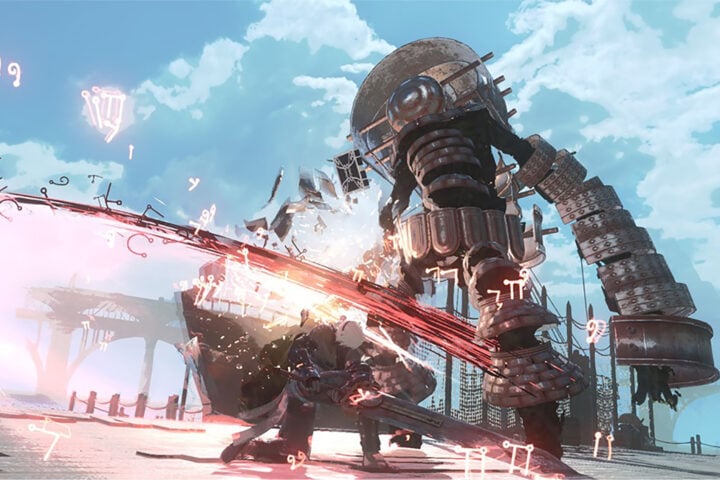
Capcom excels at action titles that give players options without overwhelming them, and Pragmata is very much cut from that cloth. Getting the most out of Hugh’s ever-expanding arsenal means multi-tasking with getting lightning-fast with Diana’s hacking minigame, and, somehow, the two mechanics don’t conflict. In the heat of the moment, fights against the creepy insectoid/humanoid robots feel like you’re playing as both of NieR Automata’s android protags at the same time. It should be a clunky mess. Instead, it’s satisfying for hours on end.
Even if it wasn’t, it’s not like Pragmata outstays its welcome. True to its throwback, secret-abundant pedigree, Pragmata can be completed in a weekend by a dedicated player, and the latter beats of its story will more than likely leave you misty-eyed. This is the type of game that used to be Capcom’s bread and butter, one that could sit proudly alongside the likes of the underappreciated P.N. 03, Remember Me, and pretty much everything Clover Studios made under the publisher’s umbrella. Now, it comes off as a special little gem in a stagnating field.
This game was reviewed using a retail copy purchased by the reviewer.
Since 2001, we've brought you uncompromising, candid takes on the world of film, music, television, video games, theater, and more. Independently owned and operated publications like Slant have been hit hard in recent years, but we’re committed to keeping our content free and accessible—meaning no paywalls or fees.
If you like what we do, please consider subscribing to our Patreon or making a donation.