Following boundary-pushing works featuring recreation and reenactment such as Kate Plays Christine and Bisbee ‘17, Robert Greene’s Procession further centers performance as its subject. It feels only natural that the filmmaker would eventually make a film involving drama therapy, a practice meant to help people uncover internal truths through role-playing. Here, he formalizes the connection as he explores its possibilities for mending the deep distress inflicted on children by sexually abusive Catholic priests and clergy.
Greene collaborated closely with six adult survivors in the Kansas City area, each of whom receive credit on equal footing with him for the film’s creation. Beginning with a framework rooted in drama therapy, the men craft filmed scenes designed to explore their childhood experiences, and thus reclaim power over spaces and symbols that kept them in silence and shame. The catharsis of parsing reality through dramatization is something they experience not only individually, but collectively as they support each other along the journey. Procession movingly documents the power of what Greene’s collaborators place within their frames, as well as the raw emotion and painstaking processes just outside of them.
I spoke with Greene prior to the film’s theatrical release. Our conversation covered the ways he merged the processes of drama therapy and filmmaking, how he avoided retraumatization of the subjects, and what sharing the film with audiences has added to its impact.
What would this movie be if the drama therapy experiments had failed or didn’t induce the kind of catharsis you had hoped in your collaborators?
We didn’t set them up to be a success or failure. Day one of filming, that meeting you see with everybody meeting in the room, that wasn’t a meeting to just talk about our ideas. That was also a meeting to decide whether we wanted to do it or not. Every single time we met up and filmed over the course of the years that we were filming with these guys, there was always a conversation about whether we should proceed. We didn’t ask, “Are we going to succeed or fail?” It was more like, “How helpful is this?” And if it wasn’t helpful, then we would have stopped. It was that simple. That was always the sort of relationship.
The other thing is that drama therapy is a huge part of the film, and it’s really important to the framework of the film, but it’s not the film. We had a drama therapist, Monica [Phinney], on board. But success or failure wasn’t dictated by the drama therapy. It was dictated by the relationship between the guys, the relationship between us and the guys, and how the guys wanted to use the camera to go do things. There was never a zero-sum sort of thing.
Did you envision the reenactments at all similarly to Kate Plays Christine, where they are meant to be a bit flimsy so they might fall apart and cue the viewer into the artifice?
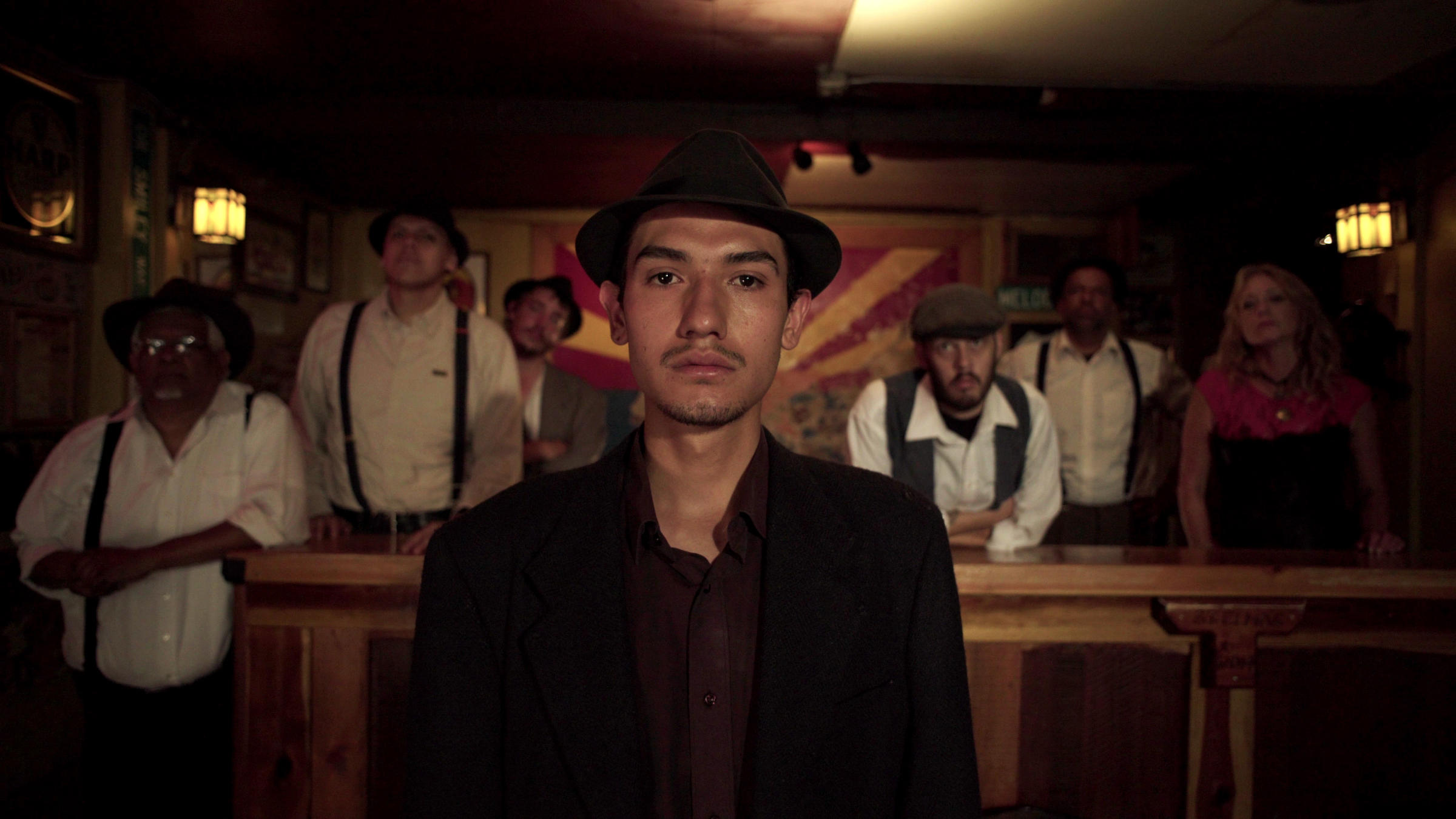
In Kate Plays Christine, there was a very specific idea that we were working toward. This is more like Bisbee ‘17, in which [the idea] is more like, “What is the imagination of the participants in the film? What can they conjure up? What are you experiencing as a translation of that imagination through the staged scenes?” A B-movie, horror vibe is the way some of them feel. Some of them feel much more intensely psychological and dramatic, while some of them are much simpler and starker. The point of that really is, “What are the possibilities of filmmaking as a way to see things that you can’t see otherwise?”
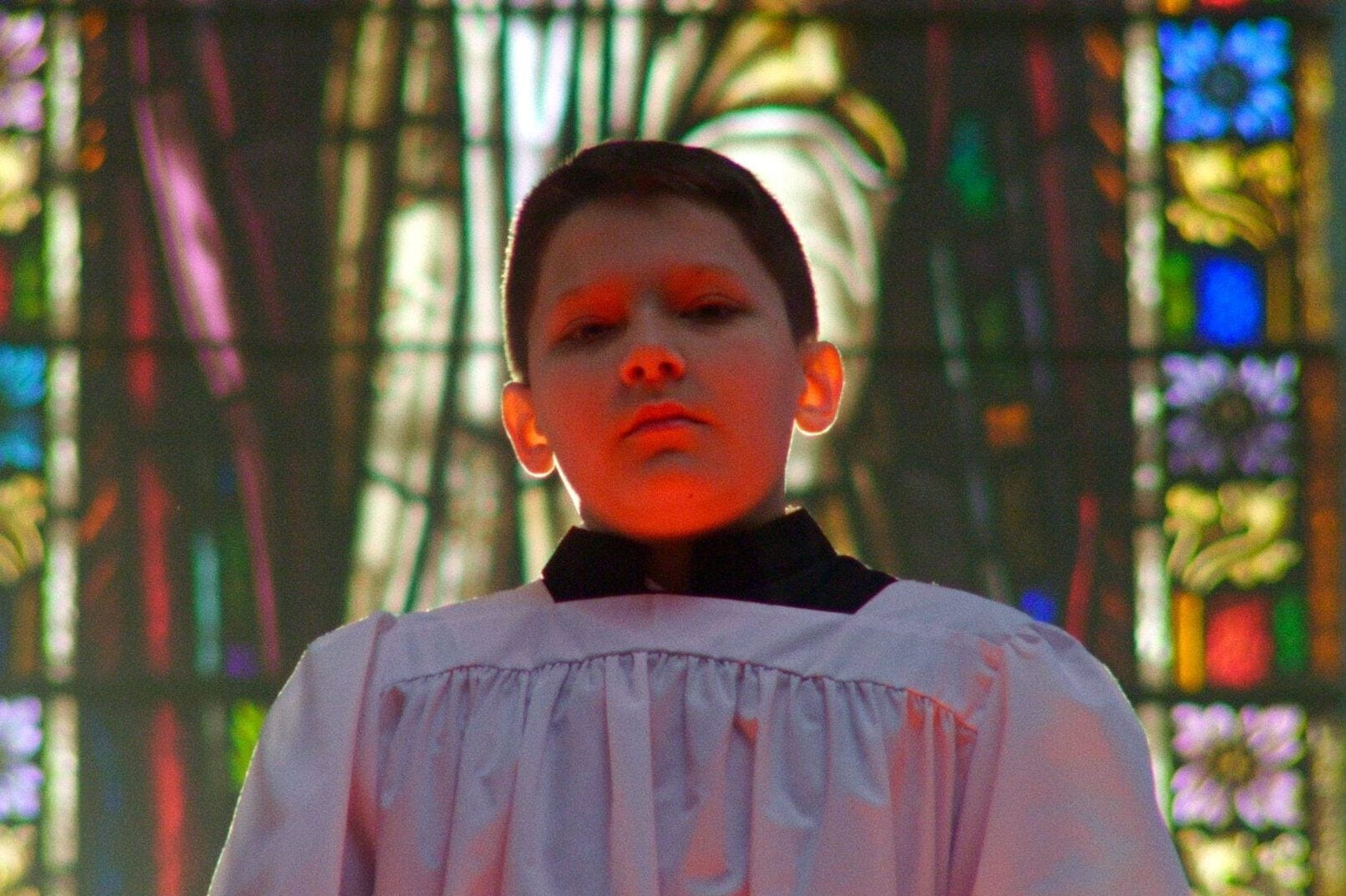
These guys were abused by a system as much as they were abused by their abusers themselves. Transforming that church into a horror-movie space is such an act of defiance. [They’re] taking power back from rituals and symbols that were used to create silence around this abuse. We’re trying to combat the silence, and we’re doing it with noisy genre conventions that are meant to get into people’s heads in a different way. A way that a news story can’t get into.
You’ve cited The Body Keeps the Score, Bessel van der Kolk’s book about how people store trauma physically, as an influence. Was accessing this physicality through performance as important as anything mental in developing the scenes?
I don’t know that the guys got as much viscerally from playing the roles of priests. I think they did that largely to support the other guys, so that certainly was a big part of it. I think the visceral staging like the lights, costumes, and extras served a purpose of transformation. Drama therapy is about role play in order to get at deeper things that you may not understand. This was that to some degree, but really it was control and taking power. Being able to demonstrate their own creative ideas in these spaces, that’s what was visceral.
When Ed [Gavagan, collaborator] yells cut at the end of his scene, that’s an absolutely physically transforming moment. The fact that they could go back into these spaces…at the beginning, Ed says, “Just walking down this aisle with these guys, it’s helping me start to connect with the boy inside me.” They lived with such shame for such a long time. Grabbing ahold of that and alleviating that shame through brotherhood, creative work, actually doing it, and not being afraid is what released the power. Joe goes back to the house [where he was abused], and the house is tiny. It’s not a scary place. Then the next day his nightmares that have plagued him for 20-plus years were done. Physically, he was able to take back power from a location. He was sweating going through an actual physical transformation in that space. It’s not always roleplay, at least in this film for us, at least in this film. It’s more about power.
You shaped the contours of Procession in consultation with some professional drama therapists. Where or how did they guide the film in unexpected directions?
We went in with Monica, me, the crew, Rebecca Randles, Sasha [Black, Randles’s partner], but we didn’t know at first what it was going to be like. Originally, we had a whole other idea of maybe making one stylized, staged film together and then revealing who made the film. And then it was clear early on that each guy would need their own things to do. They were going to go on their individual journeys and be supported by each other. That was apparent on day one. It was like, “This one idea we have, maybe we don’t do that at all.” And that was driven directly by the guys and their responses. On day one, Ed came up with the idea of “it’s showtime” and the All That Jazz aspect of it. On day one, other guys were talking about other things.
The way we look at it is drama therapy infused with filmmaking. It’s influenced by drama therapy, but it’s not drama therapy. Drama therapy is a rigid, therapeutic process. It’s got five stages, so it’s a very specific thing. Filmmaking has its own therapeutic qualities and possibilities. We found ways for these things to talk to each other. That’s really how we thought of it. But we never planned, for example, to go back to places of abuse. That was never the goal. Going back to actual locations, that came from Ed. [He] said, “Hey, can we go back and maybe film some in this church I haven’t been to in 35 years?” And we said, “Sure, let’s try it.” When he goes and he rings this bell, it was so emotionally cathartic for him that then the other guys saw the possibilities. [They] grabbed that bull by the horns and said, “I want to do my version of that.” That was one very key thing that they added to the process that we would have never even predicted that we would want to do that.
Were there any worries about retraumatization?
Retraumatization is why we had Monica, Rebecca, Sasha, and family members there. We knew it would be incredibly difficult to go back into these places. I had this situation where someone was asking me a question in a Q&A. This nice old lady who was a therapist for many years basically stood up and was just like, “Retraumatization comes from continuing to take power away.” You’re worried about retraumatization as a non-survivor, but what in fact you need to worry about is power. You need to be worried about giving power or taking power away.
Rebecca Randles, the lawyer who cast the film, is the center of the makeshift family that we came up with. She was just so smart about how she prepared me to go into this. One of the things she said was, “As long as you never take power away from them, you’ll be okay.” That’s a very difficult thing to do when making a film! The power dynamics of filmmaking are so strange themselves. But, also, the guys just didn’t want to be treated with kid gloves. Basically, once we locked into the sort of real journey of the film at the heart of the movie, the guys had formed such strong bonds. No one can talk to each other like each of these guys. They know what their triggers are, they know what they can handle, and they know when to push each other. We basically just had to let them do it and give them as much safe support as we could. They’re doing this for you, the viewer, so that they can be seen.
You’ve talked about making films with an ideal viewer in mind, one who’s constantly questioning the reality they’re being presented. Does that conception of your obligation to the viewer change as you are tackling weightier issues where there might be other considerations, such as the well-being of the subjects?
The well-being the participants in the films always come first, period, especially in this film. To me, I’m always thinking about how a viewer is going to take in information. We’ve really seen how the film has affected individual viewers and the collective of viewers. We’ve really seen how it can trigger things in, so far, positive ways. Seeing these guys be able to tackle this in the way that they do has given viewers the chance to see how they might tackle their own things. I knew that that was going to be possible because, frankly, it helped me tackle my own things. I was feeling that firsthand, and I wanted to make sure the viewers could feel that as well.
Has showing the film to people changed your understanding of the project?
The guys were a huge part of the editing process, and they’ve been a huge part of the release process. To directly answer your question, Mike Foreman is so angry in the film, as he has a right to be. His anger is completely justified. But that anger can be very repellant in some ways. It’s hard for Mike to understand, because Mike is like, “How could you not be angry?” He can push people away with his anger a little bit. And seeing the reaction to his scene at the world premiere of Telluride, and then several screenings since, people have cheered after he unleashes holy hell on everybody. To me, that transformation of the anger from being debilitating to being stimulating and forceful has been amazing to watch.
Since 2001, we've brought you uncompromising, candid takes on the world of film, music, television, video games, theater, and more. Independently owned and operated publications like Slant have been hit hard in recent years, but we’re committed to keeping our content free and accessible—meaning no paywalls or fees.
If you like what we do, please consider subscribing to our Patreon or making a donation.