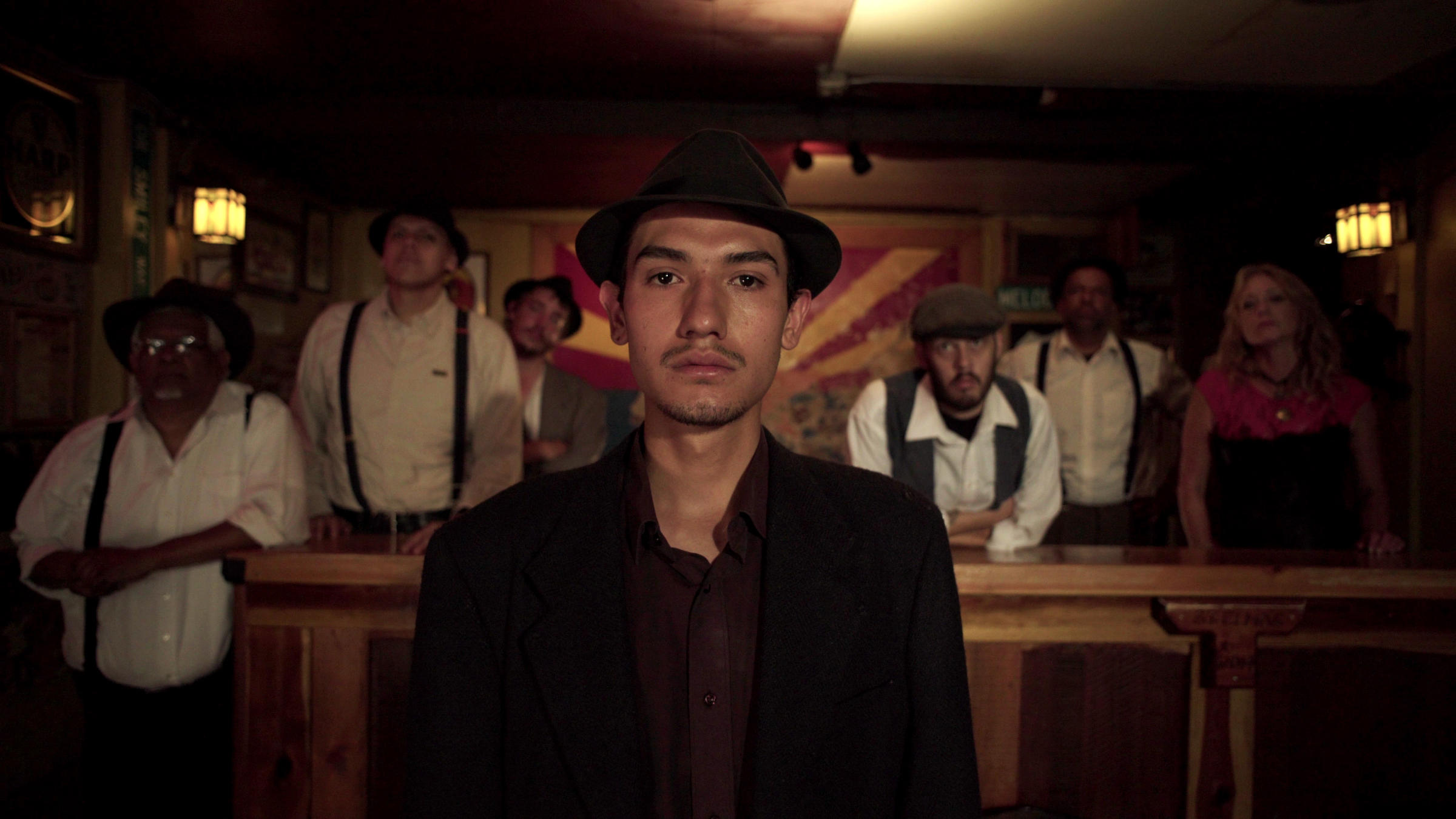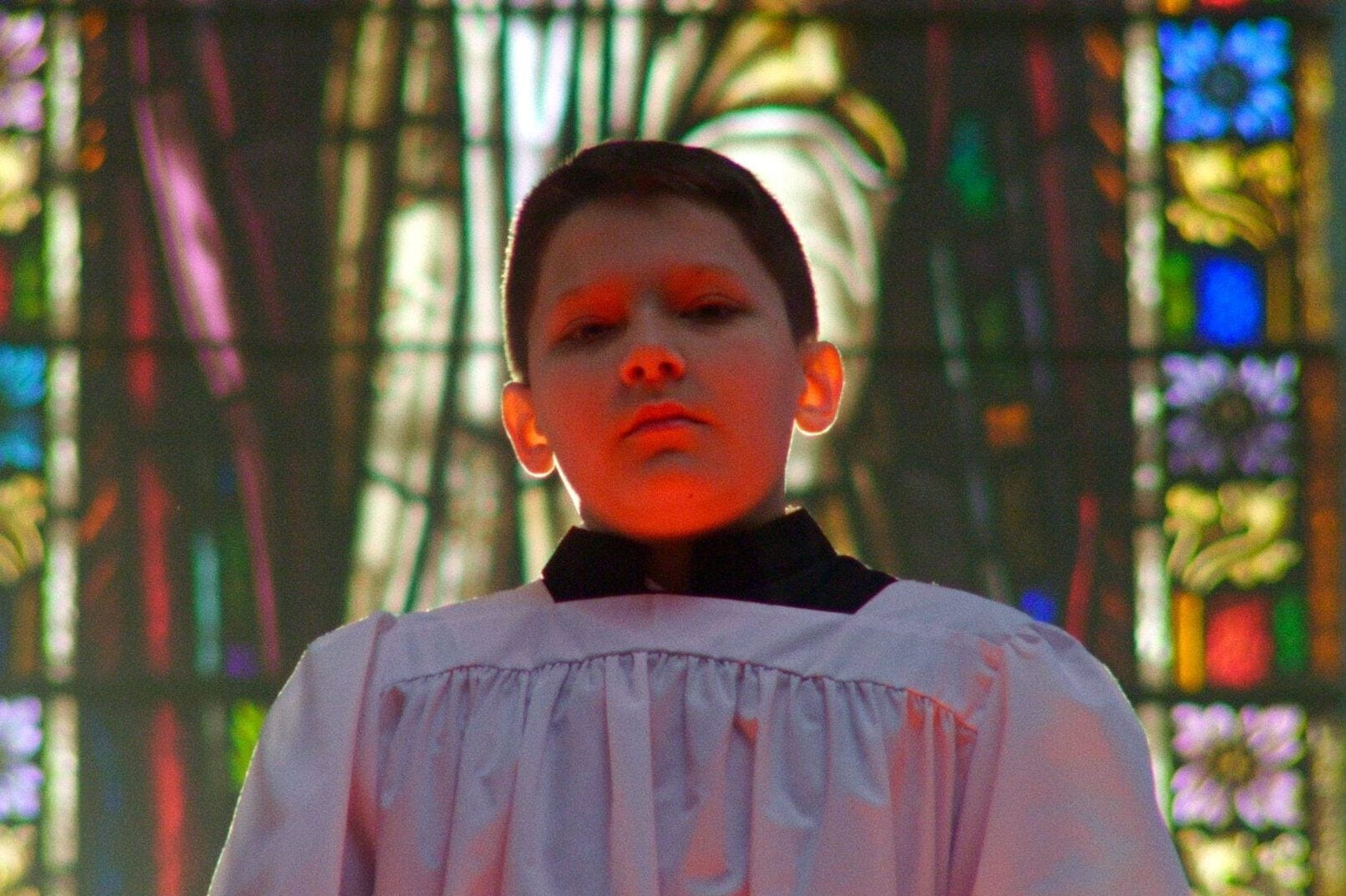
Robert Greene’s Procession hinges on an audacious concept: Middle-aged men were asked by the filmmaker to write, direct, and act in recreations of their sexual abuse by priests. Greene is playing with dynamite and he knows it. Asking actors to interrogate their process of preparing for roles, as Greene did in Fake It So Real, Actress, and Kate Plays Christine, underscores the risk of personal exposure in art-making. But asking sufferers of unfathomable pain to conjure their deepest traumas isn’t only risky and potentially tasteless, it’s dangerous—possibly opening psychic wounds. Such a concept cuts to the heart of Greene’s ongoing obsession with acting as a bridge between multiple realities and personalities.
The riskiness of this project somewhat hems in Greene’s instincts, while opening new avenues of expression. Understandably given the subject matter, Procession is his most solemn and relentless film, as well as his most formally straightforward. At its broadest level, it’s two hours of men, often in close-up, attempting to reconnect to the world via recovery speak. Where Greene’s other films hum with various ideas, Procession is very much about one thing: the profound pain of sexual abuse, and its alienating ripple effects for the victims.
No film that this critic has seen has wrested this pain onto the screen as forcefully as Greene has here, and his relentlessness steadfastly opposes the pat way that media fixates on “healing” as a box to be checked. The six men who participated in Procession—Mike Foreman, Joe Eldred, Ed Gavagan, Dan Laurine, Michael Sandridge, and Tom Viviano—are seen hurtling from catharsis to despair and back again sometimes in a matter of seconds. One step forward, another backward, over and over again in a perpetual and agonizing tailspin.
The film opens with the project’s inciting incident: a Kansas City press conference in August 2018 in which lawyer Rebecca Randles stood with three of the men and announced that they could identify hundreds of sexual predators in Missouri Catholic churches. Greene approached Randles about the idea of asking these men to re-stage their stories, under the supervision of registered drama therapist Monica Phinney. Randles tells the camera that she was initially skeptical, referencing an earlier meeting with Greene that isn’t in the film, though the project commences. Soon, the men are meeting in a nondenominational church and airing their emotions. Foreman, the most confrontational of the men, has developed a mantra: “It is an absolute poverty that the statute of limitations is a crown jewel of the Catholic Church.”
This sentiment is inarguable. Anyone who reads the news, or has seen Tom McCarthy’s Spotlight (which is referenced here), knows that the Catholic Church is devoted to covering the tracks of the thousands of pedophiles in its ranks, an aim which is further enabled by the blind faith that people are culturally indoctrinated to accord the church. Intertitles throughout Procession identify the priests who raped each child, and none of them as of the making of the film have faced any kind of real consequences. The victims, however, have often been vilified or ignored. As Foreman observes, the police are quicker to arrive to disrupt his protest of a church than to respond to a sexual abuse allegation. Greene’s gaze is an attempt to accord them the dignity of attention, utilizing cinema as a form of emotional due process.

Unlike Spotlight, Procession isn’t especially interested in the particulars of attempting to bring the Church to justice. The detective work that we see in the film, which unfolds in three primary threads, is of the psychological and emotional variety. Greene homes in on the men’s recollections to one another and to the camera of what happened to them; their search for the places where the abuses occurred, in an attempt to lance the pain of their childhood memories; and the short films that they make in an effort to bridge the first two threads, revisiting their trauma and lending it a sense of containable place, which in one case is a set that can be symbolically destroyed when the shoot is over.
With an anguished, enraptured intensity, Greene’s camera vividly captures every minute gesture of the men’s bodies as they remember, lash out, break down, and attempt to hide behind defenses. Each man is a distinct, unforgettable personality, with the enraged Foreman contrasting against the mild and erudite Sandridge, who contrasts further against Gavagan, a city tough-guy type who can “chew the ass out of a contractor” in a negotiation but can barely mention having been 12 years old without crying, while Viviano, a large and towering man, suggests a gentle giant. Greene’s empathy lends itself naturally to dread, of what Eldred describes as the overwhelming evil that haunts his nightmares.
Staring into these men, shooting the landscapes that haunt them with a tactile, pared-down sense of insinuating naturalism, transforming banal, everyday settings—a swimming pool, a lake, a trail, many, many churches—into hollowed-out places of horror, Greene allows the men’s awful past to attain an almost material malignancy. There are many haunting moments in Procession; one of the most powerful is when Laurine, seemingly one of the best adjusted of the men, breaks down when finally finding a trail to a lake house that figured significantly into his violation. And the stories the men tell are similarly, devastatingly detailed. We learn where priests took the boys, the practices of shame they utilized, even how they showed the boys off to other priests as prized possessions. In one of the nastiest anecdotes, a mother drops a boy off at a priest’s house with a chocolate cake, even after the rumors have started.
The first two threads are stunning, while the third is oddly disappointing, especially for a master of metatextual sleights of hand like Greene. This third thread in fact illuminates a gaping absence at the center of Procession: Greene doesn’t interrogate his own presence in this film, and so the recreations at the heart of the film ring hollow, or at least incomplete. The recreations, which we’re allowed to assume were spearheaded by the men, are lurid, bridging the men’s experiences with horror-movie symbolism. But what of Greene’s influence? His elision of his meeting with Randles is the first of many “off” notes in this regard, and his hesitancy to include himself in the film is understandable, if artistically incomplete: He wanted the men to have center stage, and to speak for themselves. Greene has magisterially achieved that aim, and his empathy is undeniable, but by removing himself from the on-screen equation he’s limited the purview of his hall-of-mirrors aesthetic.
Since 2001, we've brought you uncompromising, candid takes on the world of film, music, television, video games, theater, and more. Independently owned and operated publications like Slant have been hit hard in recent years, but we’re committed to keeping our content free and accessible—meaning no paywalls or fees.
If you like what we do, please consider subscribing to our Patreon or making a donation.