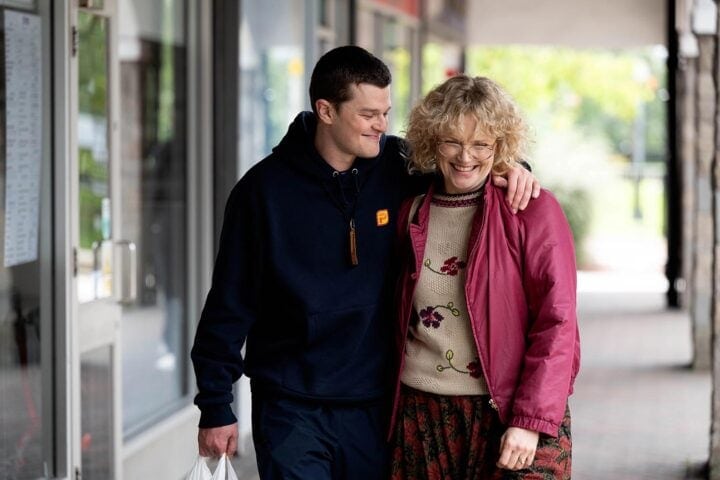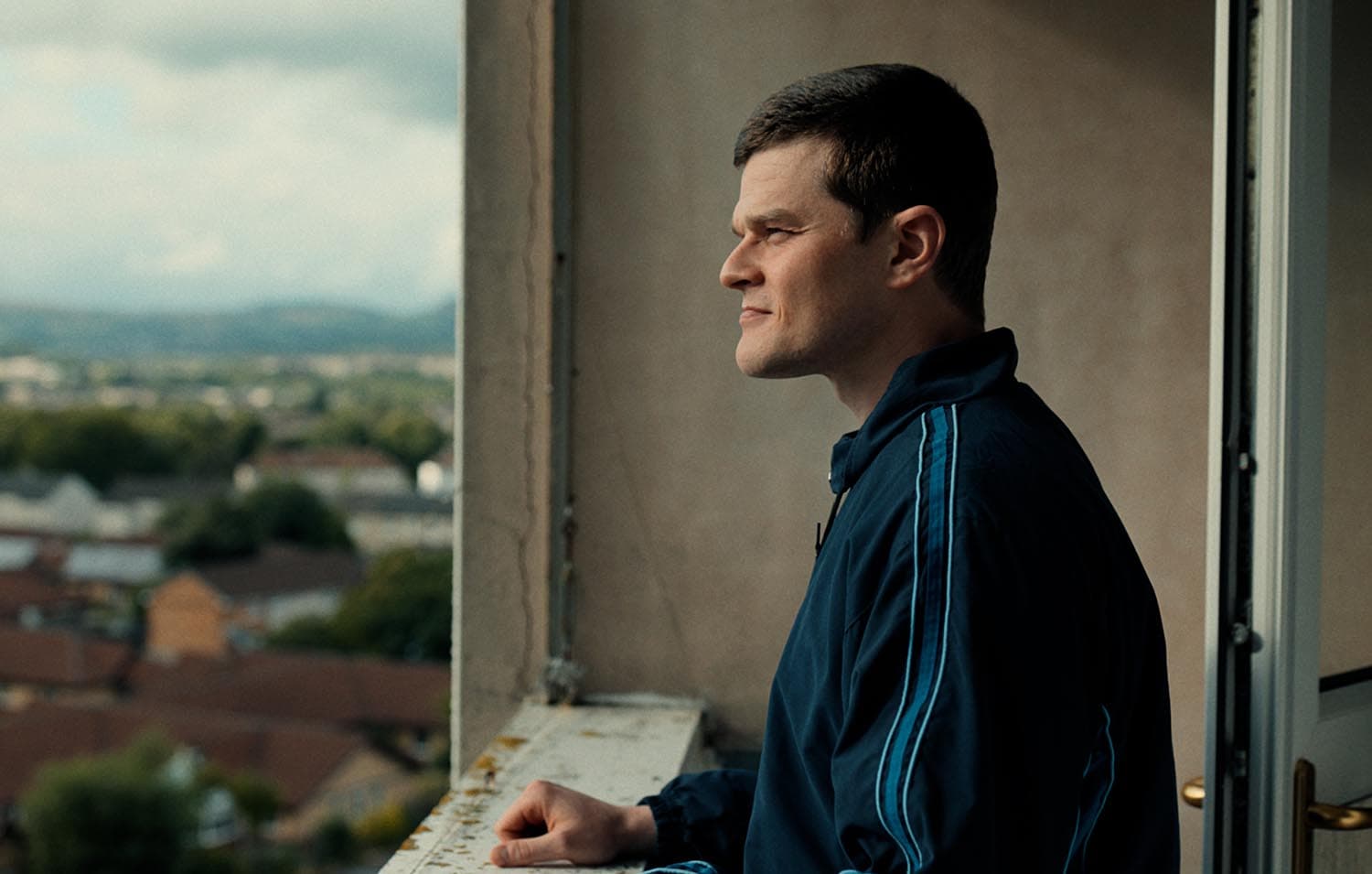
To the surprise of no one who caught Kirk Jones’s I Swear prior to this year’s BAFTA ceremony, Robert Aramayo earned a well deserved award for best actor, as well as one for rising star, for his portrayal of John Davidson, a Scottish activist and campaigner for Tourette syndrome. Aramayo deftly captures Davidson’s tics and his anxieties trying to live in a world where most people misunderstand him or are afraid of him.
Aramayo’s performance, thankfully, never feels gimmicky. He’s convincing as he curses wildly, occasionally punches people, or kisses lampposts, which is one of Davidson’s compulsions. But Aramayo is also remarkable in quieter moments, as in scenes where John is exhausted and crying in a hospital bed, or bonding with a young woman who also has Tourette’s.
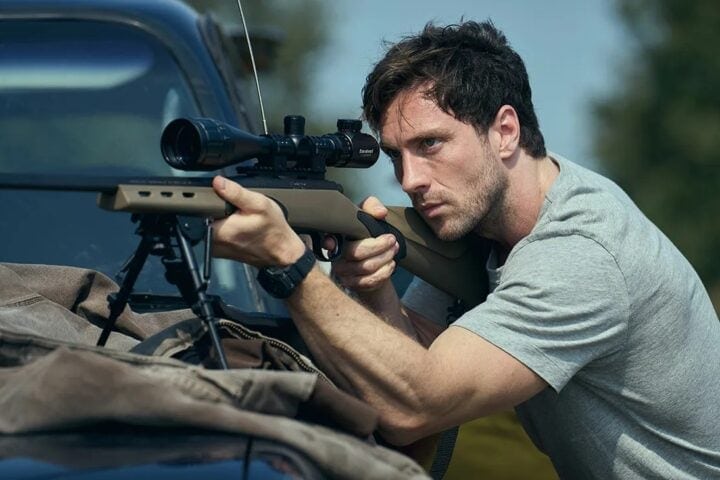
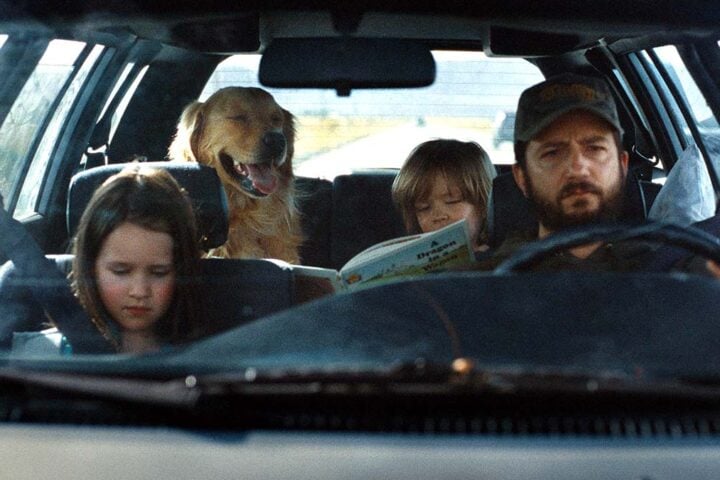
Aramayo’s performance here is career-defining, but the actor, who until recently was best known for his work on Game of Thrones and The Lord of the Rings: The Rings of Power, has been delivering strong supporting turns in films as diverse as Henry Dunham’s 2018 thriller The Standoff at Sparrow Creek and Will Seefried’s 2024 gay period romance Lilies Not for Me.
Shortly before the stateside release of I Swear, I sat down with Aramayo to discuss how he approached his portrayal of someone with Tourette’s.
The film will certainly educate people about Tourette’s. What did you learn about the syndrome from meeting, talking with, and observing John?
John was the main focus of the prep period. Just being around him, I learned so much in direct ways, with him telling me things, and in indirect way, spending as much time around him and seeing how he feels about the world, or what his daily routine is. Obviously, I had an enormous education about Tourette’s, but also my main interest was learning about John and who he is.
What did you learn or what surprised you that informed your performance?
A big thing is how unique Tourette’s is to the person, rarely existing on its own. John is passionate about increasing awareness on the neurodiversity that lives with Tourette’s in the diagnosis. It’s rarely there on its own. That was a big thing we wanted to represent in film—to show OCD or other things that someone can live with when they have Tourette’s.
I’m curious to know about specific decisions you made in how you approached the compulsions undergirding the quieter moments in relation to the character’s twitching and outbursts?
One thing that I think is really awesome about John is that there’s a lot of positive, healthy masculinity in John. He’s a man who I admire. That, to me, aside from the Tourette’s, is something that I’m really interested in. That was important to play. And those moments where we can explore something more subtle is maybe more heightened because of the nature of John’s condition can be so loud. The library scene is one where we and John experiences silence in a really different way. There were lots of little things that we were really passionate about.
Did you have a favorite outburst? I quite appreciated you shouting, “I have a big fucking rabbit up my ass!”
I wouldn’t say I have a favorite outburst, but I will say that there are tics that John just found funny. That was something that we spoke about in the prep period, and that was something we wanted to make sure we included. John tells stories all the time, like the moment with the queen. That actually happened in his life and it’s a humorous story when John tells it.
John has very low self-esteem and is often misunderstood and treated unfairly. He struggles for independence and confronts considerable bad luck. What did you think about how he made his way through the world?
That’s what I was saying earlier about how he’s amazing. He’s a really empathetic, vulnerable, wonderful person who you do just root for. That was my experience of him. He’s a person you just want to succeed in life. It was integral to us that that warmth was in his character.
John’s relationship with his mother is fraught, as evidenced by the painful scene where he doesn’t tell her that he was hospitalized, and his relationships with Dottie and Tommy help him develop a sense of purpose. How do you view him in terms of those relationships?
They all teach him something different. One of my favorite scenes in the film is when Dottie tells him he doesn’t have to apologize in her house; the apologies aren’t necessary. That’s a big part of John up to that point in the story: He’s constantly apologizing for everything. When she says that, it takes him a bit of time to adjust to it, but it’s a massive turning point in his character. Tommy gives him the opportunity to get a job, which is a dream of his. It’s obviously a complicated relationship with his mother, but an important line is when he tells her, “I don’t know if I could have done any better.”
How intimate are you with John’s advocacy work? I’m also thinking of the treatments that he was receiving to curb his impulses that the film shows?
The Tourette’s weekends have been a big part of what he and Dottie have done—putting on weekends for people with Tourette’s to meet each other. There are still people out there who’ve been diagnosed but don’t know anyone else who has Tourette’s. He has done amazing work in Scotland. The band [to curb his impulses] is a tool. It’s not out yet. It’s still in development, I think. There are other tools John has tried. Some tools help people living with Tourette’s and have the opposite effect, or no effect on other people. John would say it’s about the individual.
Since 2001, we've brought you uncompromising, candid takes on the world of film, music, television, video games, theater, and more. Independently owned and operated publications like Slant have been hit hard in recent years, but we’re committed to keeping our content free and accessible—meaning no paywalls or fees.
If you like what we do, please consider subscribing to our Patreon or making a donation.