Roger Ebert often referred to his “Stanton-Wash Rule,” which held that “no movie featuring either Harry Dean Stanton or M. Emmet Walsh in a supporting role can be altogether bad.” Some actors, he suggested, bring a grounded reality to whatever character they tackle that stands out no matter the quality of everything else around them.
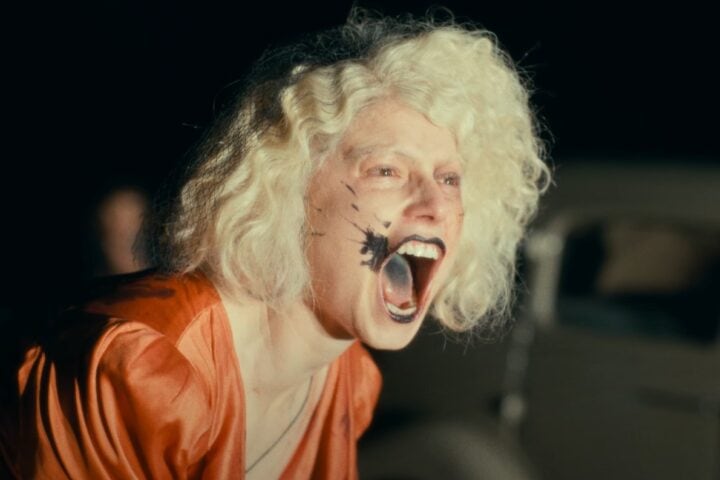
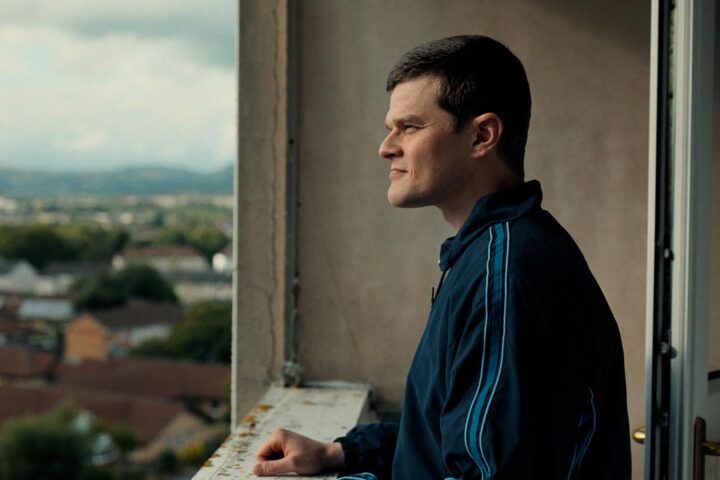
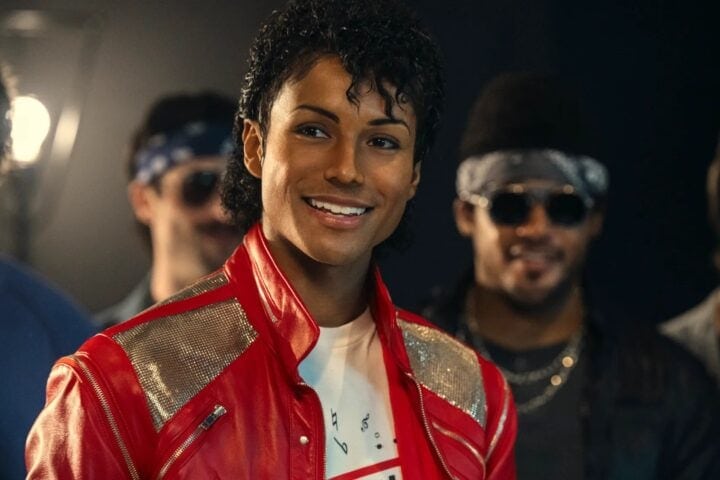
If the legendary critic were still with us, perhaps he’d extend the rule to apply to John Magaro. The 43-year-old is consistently one of highlights of the many projects across his résumé, no matter the size or style of his role. Over the last decade, standout ensemble turns in Todd Haynes’s Carol and Adam McKay’s The Big Short have given way to meatier supporting roles in films like Celine Song’s Past Lives and Tim Fehlbaum’s September 5.
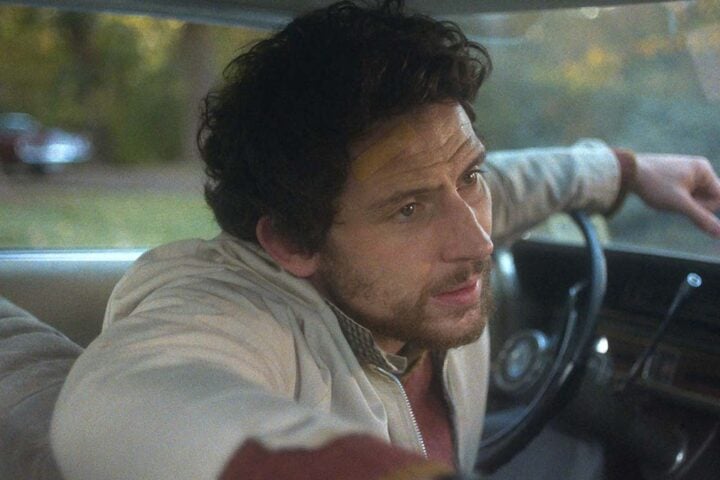
While Magaro’s comfort dwelling in subtlety and silence often makes his characters a compelling counterweight to more demonstrative protagonists, several directors have been able to build an entire film around his unvarnished emotional honesty. Vulnerability and veracity mark Magaro’s leading men, all of whom complicate the notion of traditional heroes. Like David Chase’s Not Fade Away and Kelly Reichardt’s First Cow before it, Cole Webley’s family road trip drama Omaha puts the struggles of Magaro’s character to find status and security at its core.
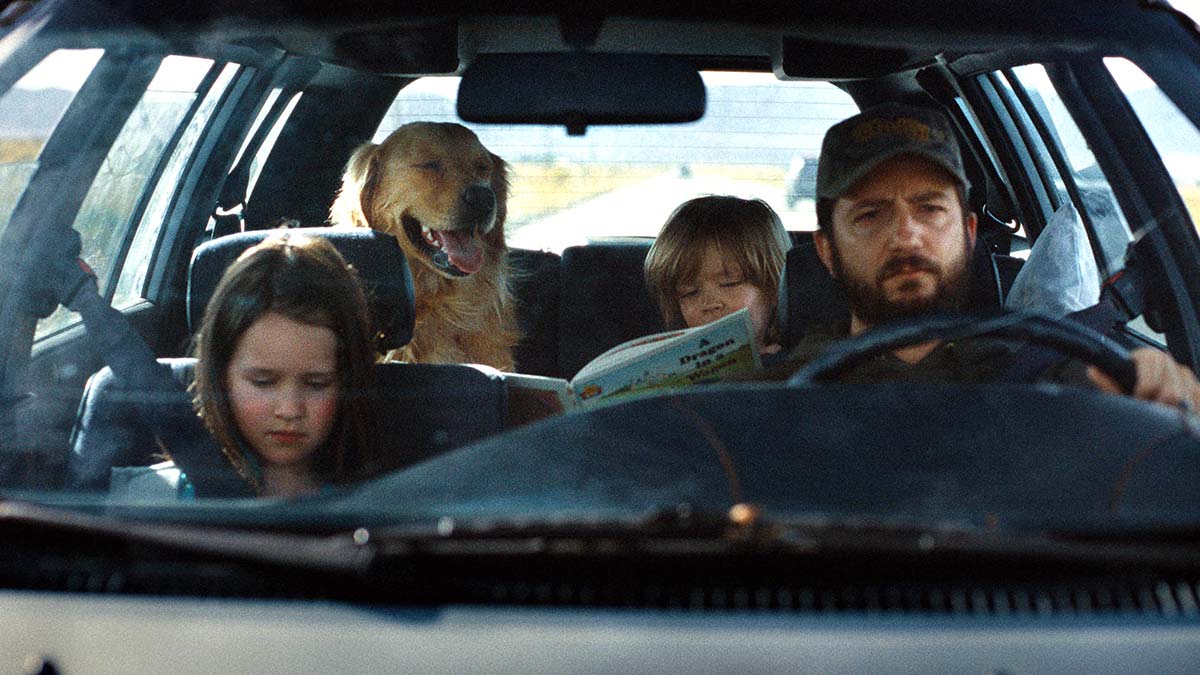
Omaha allows Magaro to peel back the layers of a struggling father, known only as “Dad,” hiding behind a mask of stoicism. Dad’s laconic demeanor isn’t a dead end for character development but a protective armor shielding his two young children, Ella (Molly Belle Wright) and Charlie (Wyatt Solis), from the truth of their tenuous economic situation following a home foreclosure. While the kids experience the ensuing cross-country trek like a slightly more stressful family vacation, their father’s solemn contemplation throughout the journey points toward a tragic outcome awaiting them at their Nebraskan destination.
I spoke with Magaro ahead of Omaha’s theatrical release. Our conversation covered how he developed his aptitude for screen acting, where he found the honesty in Robert Machoian’s script, and why he thinks audiences have understood his character’s controversial choice.
“Honest” is the word I notice you use the most to describe your acting. What does that word mean to you in the context of your approach to performance?
I think it’s a verité style. How humans really behave, even in a heightened situation, why they’re doing it, and [whether] it’s possible that someone would really behave this way. I think we all know it. There’s an honesty in being false, but it’s still an honest portrayal of being a liar. In this film, the dad is lying to the kids, and I’ve played characters who are tricking someone or being phony. But, hopefully, there’s an honest portrayal of those qualities.
Then, there’s also what people want to be true. I understand the escapism of film, but it would be harder for me because I’m more interested in showing in my portrayals what it really means. I think a great example, talking about a heightened situation where that’s portrayed really well, is Alex Garland’s Warfare, showing the stress of war and the poetic nature of what it means to be a hero in those situations. But it’s very honest. That’s what I’m going for in my work.
How do you find honesty in a movie like Omaha?
Usually, it starts with the writing. [Most] of the time, when things are going to be false, it usually is in the writing. You’ll constantly hear [about] these battles that actors have, and it happens almost every day on sets where an actor comes in with the pages and says, “What’s my motivation?” That’s the classic thing. It’s a weird word that doesn’t make sense, but I think, “Why would I say this? Why would someone do this?” And if there isn’t a real justification for that, then I think you have a problem with the writing. A lot of the reason why is to move the story along. But if you’re finding something nebulous or vague, then you have a problem. Then, it’s just a writer who wants somebody to say something because that’s what they wrote.
Something like Omaha, Robert wrote a very honest script. As a dad myself, it’s what I see [in fatherhood]. Obviously, giving away the kids is something heightened and different. But in the general interaction of Dad with the kids, it’s very much how I behave with my children, and what I think Dad is for most of the movie. When he interacts with the kids, he’s trying to give them a good experience, keep them happy, be responsible, and keep them safe. Going to the store and buying kites, [telling] them to pick one thing and pick and come back…a kid, when you go into a store, wants everything. I couldn’t count how many times with my daughter I’m like, “You can pick one thing, that’s it!” It felt very real and authentic.
And what about the decision he makes at the end of the film?
We had a lot of discussions and actually altered the ending somewhat through them. These are guys, like my dad, that I grew up with, the idea of a strong, silent type, where you’re going to carry these problems with you and die on the hill with them because you’re not going to ask for help or you’re stubborn. I see a guy who’s fallen on hard times in 2008. He was in contracting, so probably he’s out of work now. The housing market has fallen apart. He’s running out of money. His wife is gone and probably dead. He’s stuck with medical bills and a lot of debt. He’s mentally spiraling, probably a lot of depression and anxiety, so he can’t work.
And then, this thing comes with Nebraska’s loophole in the law about safe haven, and he thinks, “Well, maybe I’ll just take them because I can’t provide for them. I’ll drop them off, but they’ll be taken care of. I’ll get back on my feet, and I’ll get them back again once I get my life together.” When there are these tough economic times, you’re going through something where your head goes like, “I’ve got to get over this. I’ve got to try and solve this thing, that way I can take care of that.” You compartmentalize, and I think that’s what he’s doing. He thinks this is the best solution, because he’s a working-class guy. He doesn’t understand the bureaucracy of foster care and adoption when a kid is in the system. He doesn’t realize it’s not going to be that easy.
Was Dad any wordier on the page?
No, not really. We might have discussions, but most of the time, [we’re] pretty straightforward in the conversations we have. In every aspect of life, unless you’re at work, most conversations between people who are familiar with each other are pretty brief. Maybe a few times a day, you get in a longer conversation with your spouse or your kids. But it’s not a majority of the conversations, so that resonated with me as truthful in the writing.
We had to pivot, in a way, shooting this film. You can have a script, but then when you get a six-year-old on set, it’s going to change. We quickly realized this with Wyatt Solis, who plays Charlie. The reason he was cast was that he’s a child actor capable of being incredibly real. When you capture it, it’s like capturing lightning in a bottle, but it’s extremely difficult. We realized you couldn’t just have the page or the sides and do that as you would do with an older actor. We realized it’s going to have to be, “What’s the purpose of the scene? What’s the framework? Where do we want to get to by the end of it?” It really became improvisational, where I would prompt the kids. We would be talking, and sometimes that actually made more language.
Other times, it made for less language. There’s a scene where we’re in a McDonald’s that became totally improvised, but it became more wordy in the sense that we’re talking about what goes into the meat. There was a lot that wasn’t on the page; that’s just us having a discussion.

Given how internal your performance in Omaha is, it caught me by surprise to hear that screen acting wasn’t a skill that came naturally in your earlier days, when you thought you would be a theatrical actor. How did you come to gain more control over that craft?
When I said “theater actor,” the stuff that I was responding to was much more in the vein of this style of cinema. This was the late ’90s and early 2000s, so I was looking at playwrights like Tracy Letts, Adam Rapp, Annie Baker, and Susan Lori-Parks. It’s not Shakespeare, where it’s all in the line. A lot is in between the lines and what isn’t said. That’s the kind of theater acting that I was inspired by and that I thought, “Oh, that’s what I’ll do.” I think it was also just because of ignorance. I didn’t know filmmaking. I came from Ohio. I’d obviously go to the cinema, but it was just so alien to me, and I didn’t understand it. We had one acting for the camera class in college, and it was the class that I got my worst grade in. I was like, “Maybe I’m just not cut out for being in front of a camera.” But my class didn’t know what it was talking about, really.
When I got to New York, I realized, “Well, if you’re going to be an actor, you’ve got to get in front of a camera. Otherwise, it’s going to be hard to have a career.” But I was lucky enough. I got cast in stuff. The first job I was cast in was a movie with Jodie Foster that Neil Jordan directed [2007’s The Brave One], and I was starting to get surrounded by good people. I’d get on a set, and I’d watch. I started to watch films differently because I started to understand them. I really had to teach myself how to act for the camera, and I was fortunate enough to have years where I was in these roles where there wasn’t much at stake, and I was able to learn. But it was a slow process, and it was a lot of learning on the job.
You’re one of the few actors I’ve ever heard willing to say that Stanislavski or Brechtian methods are born of their time, and acting paradigms continue to change and evolve. What feels contemporary or cutting-edge in your craft today?
Oh, geez. I mean, Brecht is more of an ideology of theater than a style of acting to it. The actor is like an instrument of his style of theater. Brecht was popular in East Germany and Russia, and then it translated to America, but it wasn’t the popular style. The closest to achieving that was probably like [Lee] Strasberg and [Elia] Kazan with the Actors Studio because they were all subscribing to this formula, and it also [made] the most popular films of the time. Brando was the most popular actor. Pacino and these guys were making commercial successes and also pushing the boundary of what it meant to be an actor. You go back to Brando, and you see him in A Streetcar Named Desire or On the Waterfront, he’s like an alien next to these other actors who are doing this arcane kind of thing. I think that’s the closest to where a style was the accepted universal style. Now, it’s all over the place.
I see actors who go to different coaches and subscribe to different theories, and at the end of the day, I think what everyone’s trying to achieve in the artistic/popular style is that verisimilitude. There’s a great playwright named Richard Nelson, who I worked with on a play called Illyria, who has discovered a new way of doing theater that’s extraordinarily honest and captivating. We’ve gotten really far with Brecht, the Theater of the Absurd, or even what Peter Brook and Julie Taymor were doing. But I think those have gotten too cerebral. I love it, but I don’t know if that can translate as a popular actor nowadays or a commercial actor that is so art-based.
I don’t know how you could go from that and then show up on a Christopher Nolan set! I don’t know if there is one formula anymore, which speaks to where film is at nowadays. It’s become so vast, yet so small and continues to shrink. But at the time, those weren’t necessarily considered the popular form. It wasn’t until time passed, looking back on it, that people were like, “Oh, that was a style.” That’s something that only time will tell.
How have people reacted to the character of Dad, especially after the ending? I find there’s such a narrow band of responses deemed acceptable for parents to show on screen, and people can judge their choices pretty harshly.
Maybe people aren’t saying it to my face, but for the most part, I think Dad comes off okay. People feel for him and don’t see him as a villain. That was important to us. The first discussion with Cole, when we went through the script, there was a moment in the car where Ella is out the window, and he pulls her back in. The original version of that was a little too aggressive, I thought, and maybe came off badly. Even when the kids go to the pool, [the script] was like, “The kids went to the pool,” and they were in the pool all of a sudden. I was like, “No, he has to say something like, ‘Don’t jump in!’” He has to show some sort of responsibility here. No parent, unless they’re a terrible parent, would do that. So I, and Cole, too, were protective of that.
We wanted him to be as good as he possibly could. We know where it goes, but I never wanted him to be a bad dad. I wanted him to be dealt a bad hand of cards, and I think Robert agreed with that. It wasn’t that he was a bad dad, because if it’s just a bad dad, there’s nothing there. It’s just like, “Well, good, fuck this guy! I’m glad he got rid of the kids.” I don’t think that’s very interesting. Like, what kind of story is that? Again, that’s not the story that Robert wanted to tell. We were all very conscious and protective of that.
Because of that, most of the reactions have been that they understand. They can see why he does what he does, and they hope he can figure it out eventually. But I’m sure there are still people out there who think he’s an asshole and a terrible person. I mean, it’s a terrible thing he does! He gives away kids. It’s fucking awful. But since we’re humans, we have frontal lobes, and we can rationalize things and can analyze things. I think if you start to ask those questions and have those discussions about Dad, then you can get why he does what he does.
Since 2001, we've brought you uncompromising, candid takes on the world of film, music, television, video games, theater, and more. Independently owned and operated publications like Slant have been hit hard in recent years, but we’re committed to keeping our content free and accessible—meaning no paywalls or fees.
If you like what we do, please consider subscribing to our Patreon or making a donation.