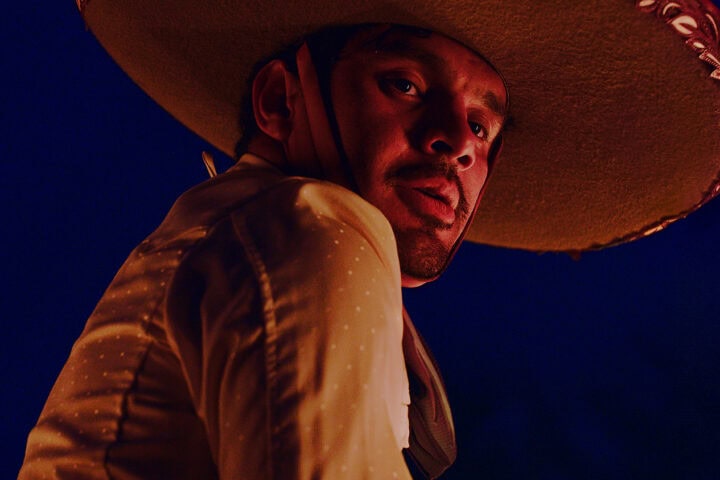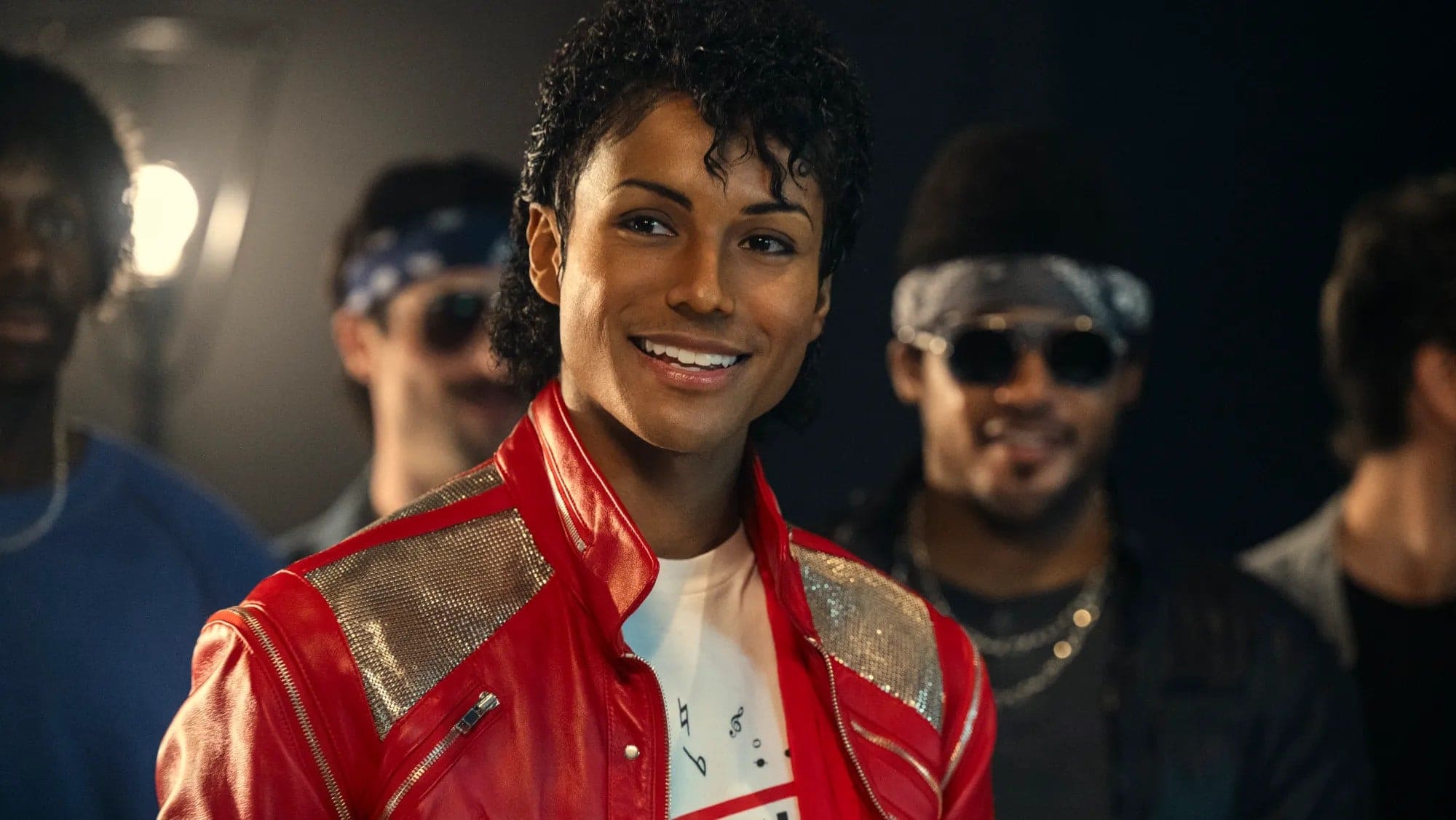
If Antoine Fuqua’s biopic about the King of Pop had a motto, it would be: “Make Michael Great Again.” By focusing so much on Michael Jackson’s troubled youth and ascent to superstardom, Michael conveniently sidesteps the scandals that plagued him from 1993 until his death in 2009 and soured the word “Neverland” in the pop-cultural lexicon. Indeed, Fuqua’s film, written by John Logan and approved and authorized by the Jackson estate, is interested less in exploring who Michael really was than in rehabilitating his public image.
The project’s lack of impartiality is also evident in the casting of Michael’s nephew, Jaafar Jackson, in the lead role. Jaafar’s vocal inflections, when speaking and singing, not to mention his immaculate dancing, are uncanny in how closely they mirror Michael’s. The stretches of the film that are most captivating are almost solely due to Jaafar’s ability to embody both Michael’s timid awkwardness off stage and his magnetic exuberance on stage.
Outside of its lead performance, though, Michael suffers from the same pitfalls as so many modern biopics, dutifully hitting all the genre clichés as it traces MJ’s life from his childhood years with the Jackson 5 through to his young adult years around the releases of 1979’s Off the Wall and 1982’s Thriller. The film touches on various milestones, both small and large, ranging from Michael learning dance moves from watching Little Richard on television and getting Bubbles the chimp to various iconic televised performances and tours.
Michael, though, remains so staunchly reliant on montages and extended stage performances that there’s barely any connective tissue stitching the thinly conceived story together. The one narrative through line is Michael’s contentious relationship with his father, Joe (Colman Domingo). By all accounts, the man was emotionally and physically abusive, and Michael certainly sees him as a narcissistic control freak. But while he emerges as a villain of sorts, who Michael had to break free from to become his own man and fulfill his artistic promise, the film stops short of depicting him as anything much worse than a domineering patriarch.
Domingo is given only a single note to play as Joe, and so, too, is Nia Long as Michael’s benevolent but meek mother, Katherine. For his part, Jaafar Jackson plays Michael as a saintly, passive eccentric whose increasingly outlandish obsession with animals leads him to buy a llama, giraffe, and a chimp, which he feels closer to than his own family. This tendency, though, is treated not at all as a psychological reaction to a deeply troubled childhood or the stresses of fame, but rather an endearing quirk that proves what Katherine and several producers tell Michael throughout the film: His talent makes him different from everyone else.
There’s irony in the acknowledgement of Joe’s obsession with expanding and protecting the Jackson brand, as the film is very much part of that ongoing effort, presenting Michael as a supremely talented, sensitive soul while smoothing over anything remotely troublesome. As magnetic as Jaafar Jackson is during the film’s musical performances, he still can’t quite capture his uncle’s protean, preternatural talents, as immortalized in countless YouTube clips, so even Michael’s more memorable moments seem beside the point when those clips are available at the click of a mouse. But even if he had, it would still be difficult to ignore just how much this almost surreally upbeat biopic looks at Michael Jackson with blinders on, turning the realities of a tragic, deeply complicated life into a sanitized popcorn film.
Since 2001, we've brought you uncompromising, candid takes on the world of film, music, television, video games, theater, and more. Independently owned and operated publications like Slant have been hit hard in recent years, but we’re committed to keeping our content free and accessible—meaning no paywalls or fees.
If you like what we do, please consider subscribing to our Patreon or making a donation.