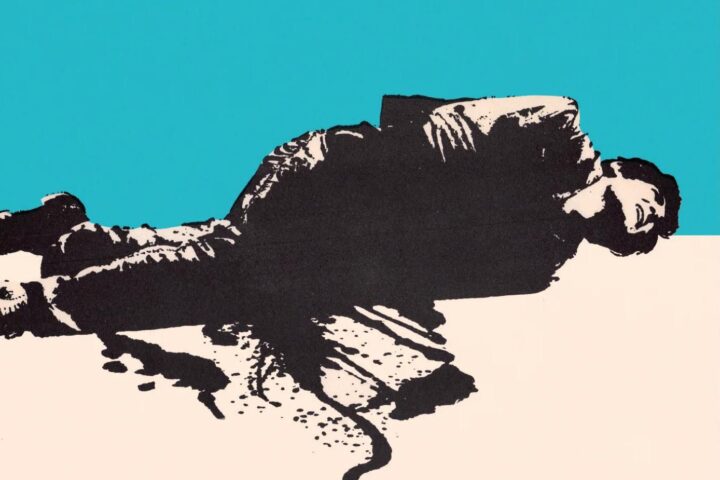
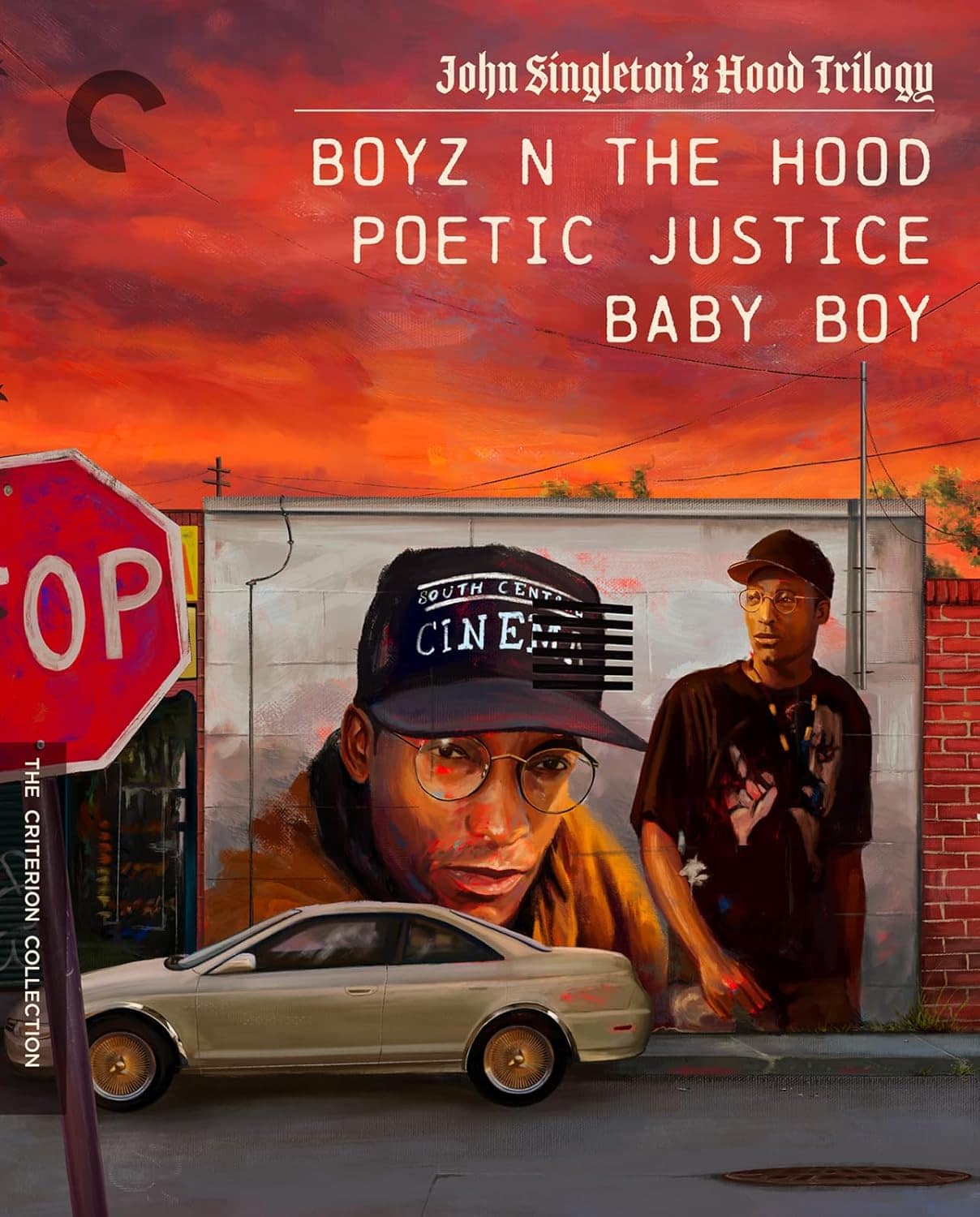
 John Singleton’s 1991 debut, Boyz n the Hood, is a coming-of-age film about living in a place where reaching adulthood isn’t a given. Set in South Central at the peak of its notoriety, the film nods to Rob Reiner’s Stand By Me in its opening minutes, compressing that film’s feature-length quest by prepubescent friends to see a dead body into a journey that barely stretches further than the nearest street corner. And for the children of Singleton’s film, the sight of a corpse has become such a quotidian part of life that they can only gaze upon it in boredom.
At the heart of this group is Tre (Desi Arnez Hines II), a bright but temperamental boy whose separated but equally present parents, Reva (Angela Bassett) and Furious (Laurence Fishburne), try to help him figure a way out of the cycle of degradation that’s eroding their community. But the odds are stacked against him, and when Boyz n the Hood leaps forward to find Tre now on the cusp of adulthood (and played by Cuba Gooding Jr.), he’s become only more ensnared by the limited horizons of his milieu and the constant tension and rage it inspires.
Bound less by a single narrative than an overarching atmosphere of pain, the film uses a vignette structure to touch on topics ranging from police brutality to gang violence to the first stirrings of gentrification. But while this can lead to some scenes feeling a bit too declamatory, Singleton always pulls focus back onto the emotional toll that the constant tension and helplessness takes on the characters and how suddenly their poses of bravado can crack from accumulated despair.
A scene of a cop holding a gun to Tre’s throat just to assert his authority is nerve-wracking, but the true payoff is in the young man returning home and bursting into tears from the terror he wouldn’t allow himself to show the officer. And in the first of many fruitful Singleton collaborations with musicians, Ice Cube plays his character as defined by the artist’s tough-edged persona. Doughboy, though, is keenly aware of the cycle of violence that he perpetuates, feeling powerless to break it, and his fate colors an already muted ending with a harsh reminder of how any kind of escape for individuals like him in South Central is a miracle.
Singleton would get even better performances out of his two musician leads in 1993’s Poetic Justice, in which poet Justice (Janet Jackson) and postal worker and aspiring rapper Lucky (Tupac Shakur) meet when accompanying their coupled friends Iesha (Regina King) and Chicago (Joe Torry) on a road trip to Oakland. Initially, both leads play into their established personas—Lucky reflects Shakur’s defiant, often misogynistic braggadocio, while Justice embodies Jackson’s take-no-shit feminism—only to add shades of nuance and contradiction to their performances as Lucky and Justice warm to one another. Shakur, for one, peels back Lucky’s hard exterior to reveal a sensitive side willing to listen when being called out.
More tonally wide-ranging than Boyz n the Hood, Poetic Justice finds a comfortable balance between broad comedy, bracing social realism, and sensual romance across its road trip narrative. It charts a clear through line in the contrast between Justice and Lucky’s and Iesha and Chicago’s respective relationships. The former deepens as Justice and Lucky bond over their use of art to channel the pain they’ve endured, while the latter disintegrates, as Iesha and Chicago’s only coping mechanisms are substance abuse and emotional defensiveness.
After subsequently working on larger projects, including 1995’s Higher Learning and 2000’s Shaft, Singleton returned to his South Central roots with 2001’s intimate Baby Boy. The title refers to the man-child Jody (Tyrese Gibson), a layabout who still lives with his mother, Juanita (Adrienne-Joi Johnson), and peacocks around town in his girlfriend Yvette’s (Taraji P. Henson) car, often on his way to cheat on her with various paramours.
Singleton’s first two features tacitly ran counter to racist stereotypes about absentee black fathers, depicting Tre’s dad and Lucky as physically and emotionally present figures in their children’s lives. Baby Boy, though, puts that stereotype under the microscope in a different way to question how someone like Jody can irresponsibly father children without feeling any obligation to help raise them. Indeed, the film offers a scathing assessment of the hypocrisies of performative masculinity, juxtaposing men’s flippant misogyny with their total reliance on women as emotional and domestic laborers. This is also Singleton’s funniest film, seeing in not only Jody but all the male characters various Oedipal complexes and false fronts barely masking a fragility far more brittle than that of any of the women who endure them.
Jody may guilt-trip his mother about kicking out his older brother, who subsequently died in a violent incident, but his paranoia about leaving the womb, so to speak, to live untethered in a community where men frequently die young isn’t unwarranted. And for every comically stunted man like Jody, there are others, like Vyette’s ex (Snoop Dogg), who manifest their emotional liabilities as physical and sexual violence. Even the film’s one seemingly put-together man, Juanita’s new beau (Ving Rhames), is an ex-con who struggles to keep his emotions in check to not revert to the person he was that got him incarcerated. Somewhat obscured in Singleton’s canon, Baby Boy is a poignant cri de coeur about the difficulties of overcoming one’s environment but the necessity of working on oneself to do so anyway.
Image/Sound
The Criterion Collection presents the John Singleton’s Hood Trilogy in Dolby Vision-boosted transfers sourced from 4K restorations, and all three preserve the integrity of each film’s naturalistic color palette. These transfers really accentuate the textural richness of the films, evident in everything from the cloudless skies with a tinge of brown from the L.A. smog to the interiors that are hazy with cigarette smoke. Perhaps most impressive is how well each transfer reflects the many shades of black and brown of the actors’ skins. Each film comes with a lossless stereo soundtrack that cleanly balances dialogue, background effects, and the many R&B, funk, and hip-hop songs on the soundtrack. Boyz n the Hood even comes with a new Dolby Atmos mix that’s most resonant in those music cues, giving added emphasis to bass tones.
Extras
Each film comes with an archival commentary track by Singleton, and in each case he unpacks the personal stories and beliefs that informed his scripts and, especially on the first two films, his crash course in filmmaking. Criterion also ports over a host of extras from prior video releases that range from making-of documentaries to retrospective evaluations by cast and crew to deleted scenes and music videos for some of the films’ needle drops.
Two new extras are also included. A conversation between filmmakers Ryan Coogler and Regina King is a chummy affair, with the pair paying tribute to Singleton and how he helped their careers, while a documentary covering his career and unique filmmaking style includes contributions from various crew members who worked on his movies. Finally, the accompanying booklet contains an essay by critic Julian Kimble that focuses on the evolution of Singleton’s storytelling strategies across the making of the trilogy.
Overall
John Singleton’s Hood Trilogy is one of the great achievements in African-American filmmaking, and Criterion’s extras-laden release gives the films their proper due.
Since 2001, we've brought you uncompromising, candid takes on the world of film, music, television, video games, theater, and more. Independently owned and operated publications like Slant have been hit hard in recent years, but we’re committed to keeping our content free and accessible—meaning no paywalls or fees.
If you like what we do, please consider subscribing to our Patreon or making a donation.