Alfred Hitchcock often explained the difference between suspense and surprise by describing a scene where a group of characters gather around a table. If their conversation is suddenly cut off by an explosion, that’s surprise. If we know that there’s a bomb under the table but the characters don’t, that’s suspense.
David Mackenzie’s new thriller, Fuze, finds an intriguing way to split the difference between the two by immediately letting the audience and the film’s extensive cast of characters know about the bomb while keeping us in suspense about the role it plays in a wider criminal scheme. But the most curious thing about Fuze’s approach—to both its benefit and its detriment—is that the film is much more interested in the bomb than any of the people.
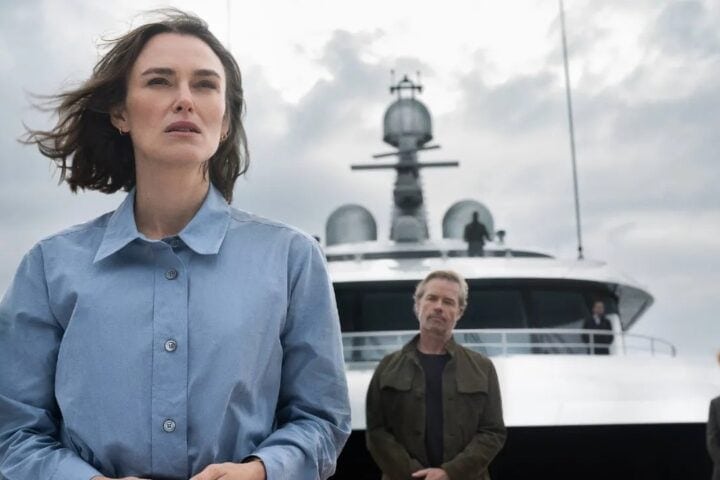
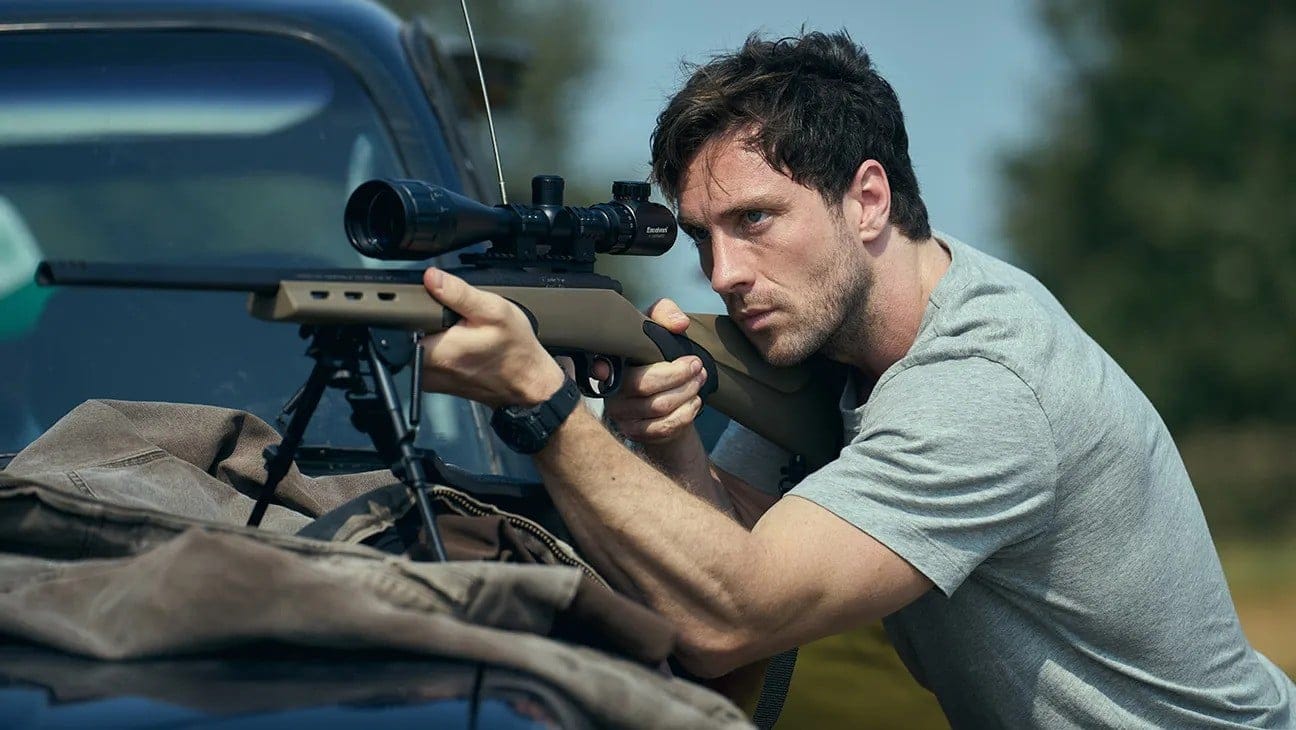
The “table,” in this instance, is a large portion of London where an unexploded WWII bomb has just been uncovered at a construction site. The authorities are quickly informed and emergency services are mobilized to deal with this unexpected threat. The police’s chief superintendent, Zuzana (Gugu Mbatha-Raw), orchestrates an evacuation of the immediate area while a military team led by Major Will Tranter (Aaron Taylor-Johnson) begins figuring out how to safely defuse the bomb. While all this is going on, a criminal gang led by Karalis (Theo James) and a man known only as X (Sam Worthington) quietly break into the underground vault of a local bank.
To reveal anything more about the plot would be doing Fuze a disservice, given how it branches off in a number of unexpected directions. The entire shape of the story is quite different than it would initially appear, and the film, as written by Ben Hopkins, successfully delivers a number of surprises that go far beyond the matter of if and when the bomb will explode.
There’s a tactile quality to the logistics of the bomb disposal effort—a mechanically minded approach that extends to the characters, who feel like moving chess pieces within the story. Taylor-Johnson delights in doing another fun accent and Worthington gets to scowl a lot, while Mbatha-Raw is reduced to staring at various screens while looking concerned. Each character has a job to do and a role to play in the story, but there’s no sense of who they are beyond that.
Perhaps sensing this, we get a flashback that shows us how the bond between certain important characters was first forged. It’s an action-packed sequence that’s quite entertaining in its own right, but it’s also bizarrely grafted onto the very end of Fuze, after the story has reached its conclusion and we’ve already been given all the information that the epilogue contains. To make things even stranger, it’s then followed up with a brief postscript that has a blokey, Guy Ritchie-ish humor to it, a tone that’s nowhere to be found in the rest of the film.
For much of its tight runtime, Fuze works quite well as a coldly mechanical thriller. It’s satisfying enough just to watch the various processes on show while trying to figure out how they play into the overarching criminal scheme. But the lack of investment in the characters does eventually dampen the drama because, when the dust settles after numerous twists and crisscrosses, and Mackenzie’s film reveals who the real winners and losers of the whole affair are, the audience is deprived of a reason to care.
Since 2001, we've brought you uncompromising, candid takes on the world of film, music, television, video games, theater, and more. Independently owned and operated publications like Slant have been hit hard in recent years, but we’re committed to keeping our content free and accessible—meaning no paywalls or fees.
If you like what we do, please consider subscribing to our Patreon or making a donation.