“Oh, the cleverness of me!” Peter Pan famously crows in the 1904 play and 1911 novel that bear his name. Come Away, a film that is part Peter Pan and Alice in Wonderland origin story, and part British family drama, often seems similarly caught up in its own cleverness at the expense of its far more convincing heart.
Peter (Jordan A. Nash) and Alice (Keira Chansa) are not—or, at least, not yet—the Peter and Alice you expect them to be. They’re two ordinary siblings spending their days in the woods—along with their brother, David (Reece Yates)—pretending to swashbuckle with pirates and host tea parties with a white rabbit. But after David’s death, grief threatens to tear the family apart: Their once-joyous mother (Angelina Jolie) turns to drink; their spirited father (David Oyelowo), a craftsman of model boats, amasses gambling debts; and a domineering aunt (Anna Chancellor) swoops in with hopes of raising Alice to be a lady. (The uncertainty of whether or not Come Away intends for us to read into the racial dynamics of a white aunt demanding the right to “civilize” her black niece is an early indicator of the film’s abidingly vague vision.)
Come Away winkingly suggests over and over that this Peter and Alice are en route to become the heroes of J. M. Barrie and Lewis Caroll’s adventures. There’s a charm in merging the two fantasy worlds’ mythologies, like an Into the Woods of British children’s literature, but the ways in which these stories intertwine with each other and with the narrative of a broken family tangle all the strands beyond repair. It’s never clear if Come Away uses two classic children’s tales to illuminate the plight of a struggling family or, instead, takes advantage of that struggling family to play neat allegorical tricks for fans of those stories.
Luckily, director Brenda Chapman has chosen a totally captivating pair of kids to carry the playful, scrappy heart of the film, while providing a series of opulent landscapes ripe for scampering. It’s not hard to imagine Nash and Chansa’s Peter and Alice, in their determined inventiveness, morphing into the gumptious, impertinent storybook characters that it’s suggested they’ll become. They frolic in verdant woods and luscious backdrops of imagined Never Lands and Wonderlands, which contrast effectively with the menacingly lit, smoggy shots of the London skyline as Peter and Alice venture into the city’s seedy underbelly.
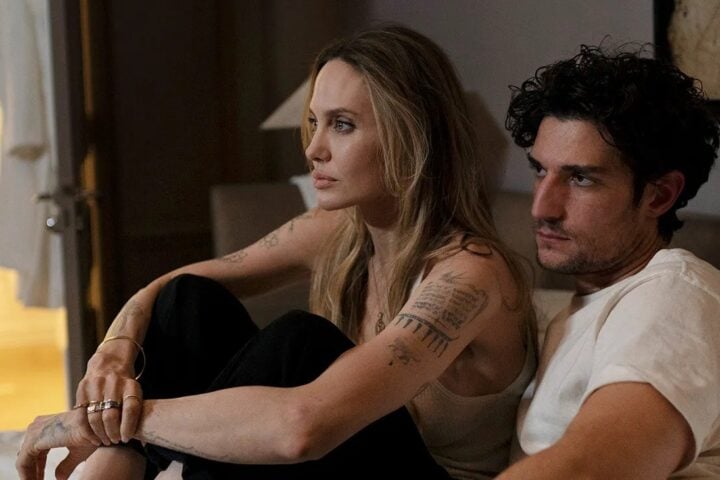
Though Jolie and Oyelowo maintain a credible balance between youthful sparkle and the despair of leading responsible adult lives, Come Away elsewhere squanders its grown-up talents. Derek Jacobi, Michael Caine, and Gugu Mbatha-Raw barely have enough screen time to make an impression. Somewhat more memorable, if inscrutable, is Clarke Peters’s daffy take on a pawnshop owner who almost exclusively speaks in Mad Hatter quotes.
At its sharpest, Come Away shows us what it’s like to have an active imagination. A spear slices through the air, but when it lands, it’s only a branch. A pirate ship bursts out of a lake, but look again and it’s only an overturned canoe. Pencil etchings on a table come to life, gesturing wildly for Peter to abandon his studies and take to the woods. But despite Come Away’s insistence, in its closing moments, that flights of fancy yield exclusively happy endings, imagination ultimately seems to act as a destructive force: imaginative play invites tragedy, imaginative pursuits bring on debts, and, in the film’s lowest blow to the positive power of imagination, eight-year-old Alice pictures her mother’s flask as that famous “Drink Me” bottle and takes a big swig. By film’s end, Peter has even surrendered wholly to a fantasy world that severs his relationship with his family, his moral compass, and objective reality.
Since 2001, we've brought you uncompromising, candid takes on the world of film, music, television, video games, theater, and more. Independently owned and operated publications like Slant have been hit hard in recent years, but we’re committed to keeping our content free and accessible—meaning no paywalls or fees.
If you like what we do, please consider subscribing to our Patreon or making a donation.