After the election of 2016, many shellshocked Americans sought out books to help rationalize Donald Trump’s victory over Hillary Clinton. One of those books was J.D. Vance’s Hillbilly Elegy, a memoir about the culture of his Kentucky Appalachian family, many of whom moved to Ohio but never quite adjusted to life there. Vance used his book to highlight what he saw as his people’s failure to raise themselves out of poverty, seeming to blame them for self-destructive cycles of addiction, violence, and dependency. While Ron Howard’s adaptation showcases those same societal ills, it takes a more personal and less sociological approach. By zeroing in so closely on Vance’s family melodrama at the expense of the broader forces at play, the film produces a generic narrative.
Rather than follow the thread of Vance’s life in chronological order, Vanessa Taylor’s screenplay telescopes the memoir down to a dramatic inflection moment when his old and new lives came into stark conflict. Having left Ohio, Vance (Gabriel Basso) is attending Yale Law School, where his service in the Marines and professed “hillbilly” pride make him an outlier. Getting a call from his at-wit’s-end sister, Lindsay (Haley Bennett), in inform him that his mother, Bev (Amy Adams), has just overdosed on heroin, Vance drives home to help out in the middle of setting up interviews for a desperately needed summer internship.
Howard uses Vance’s return to Ohio to highlight the crux of his dilemma: While proud of having escaped from his impoverished roots and not wanting to get drawn back into his family’s troubles, he’s a fish out of water with the coastal elites and cannot quite escape the pull of home. As Vance struggles with Bev’s histrionics, maxes out his credit cards to get her into a rehab clinic, tries to allay the fears of his girlfriend, Usha (Freida Pinto), and panics over getting back to New Haven in time for a crucial interview, the film layers in flashbacks from his childhood to illustrate what he’s having second thoughts about fleeing from.
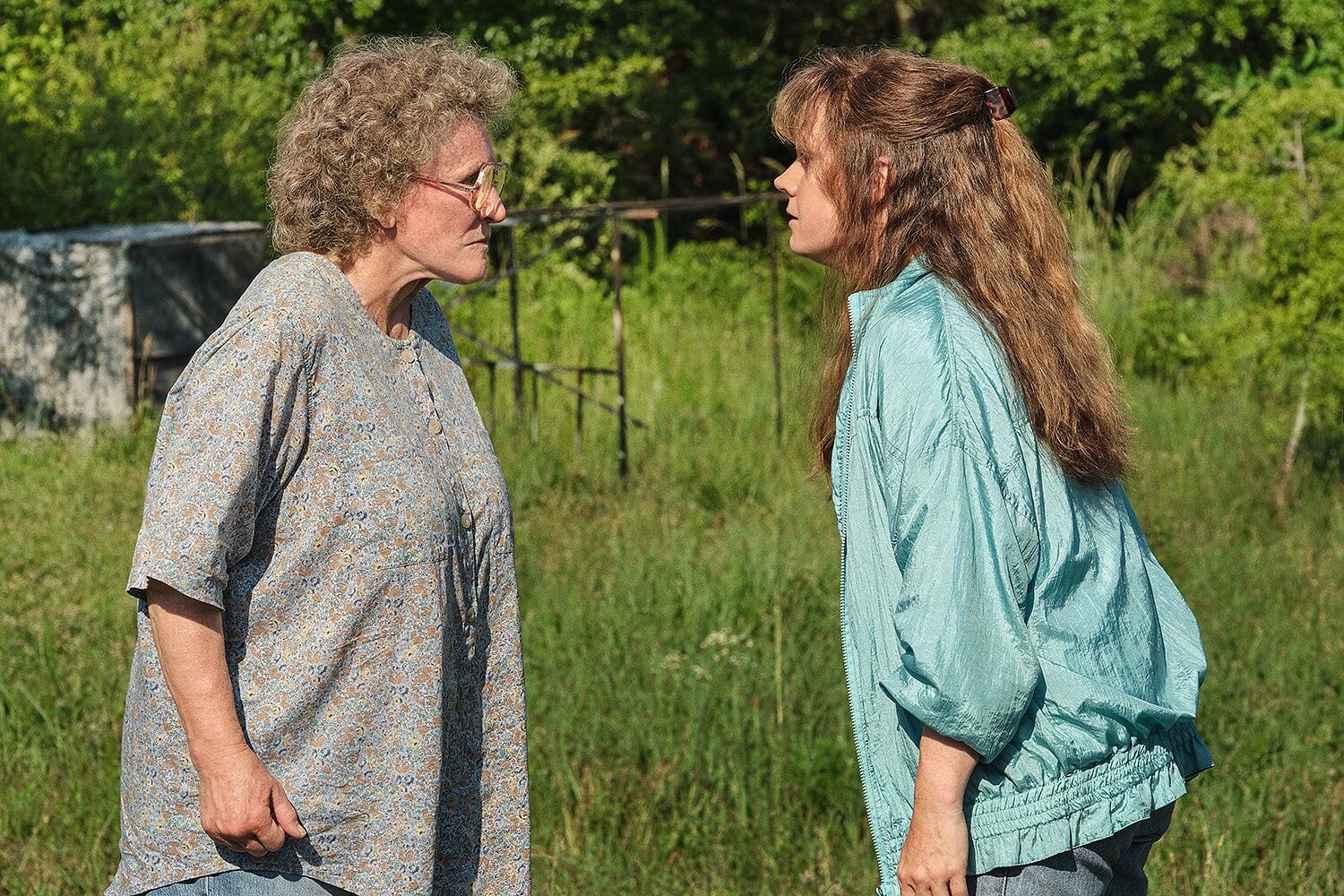
For the most part, those flashbacks feel dramatically flat, but Glenn Close imbues the role of Vance’s grandmother, the fiery and profane “Mamaw,” with a lived-in toughness. The actress is able to sell frequently sentimental dialogue like “Family’s the only thing worth a goddamn,” which is more than can be said for most of the other performances. Mamaw’s stolidly fixed nature provides the support that the insecure teenage Vance (Owen Asztalos) cannot get from Bev, who’s inattentive and prone to abusive flights of rage. While there’s an elemental charge to the power of some of these scenes—Adams is commendably unafraid of being unlikeable, even with the script’s need to give Bev somewhat unrealistic-feeling moments of redemption—too much of it feels familiar and untethered from the source material.
The film ends up cutting away most of the anthropological cast that made Vance’s book so intriguing. Except for a bucolic opening scene featuring Vance’s extended family back in Kentucky, with the implication being that their clannish behavior was firmly rooted in that place and caused them to be maladapted to life elsewhere, Hillbilly Elegy ignores most of what he had to say about the poor life choices made by so many people in his community.
The filmmakers also, by pruning away much of the book’s grimmer details of community violence and hopelessness, place the burden of those ills on Bev’s shoulders, making one individual’s struggle with addiction replace broader, more deeply rooted problems of class. The film’s straightforward redemptive arc ignores the complexities of how Vance’s drive to escape poverty and dysfunction clashes with his need for family. Without it, Hillbilly Elegy feels like a bland feel-good story rather than one part of a longer tragedy with no clear end.
Since 2001, we've brought you uncompromising, candid takes on the world of film, music, television, video games, theater, and more. Independently owned and operated publications like Slant have been hit hard in recent years, but we’re committed to keeping our content free and accessible—meaning no paywalls or fees.
If you like what we do, please consider subscribing to our Patreon or making a donation.